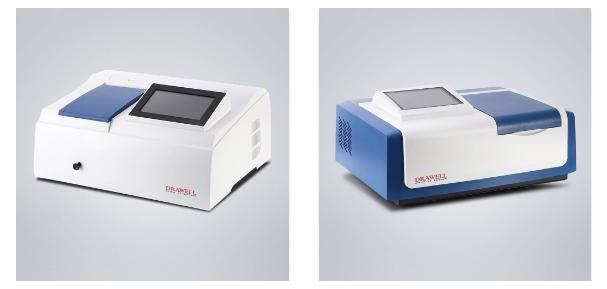
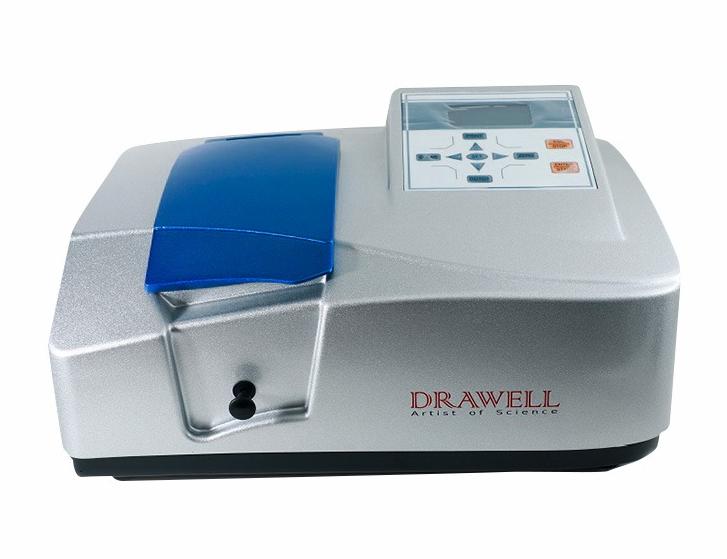
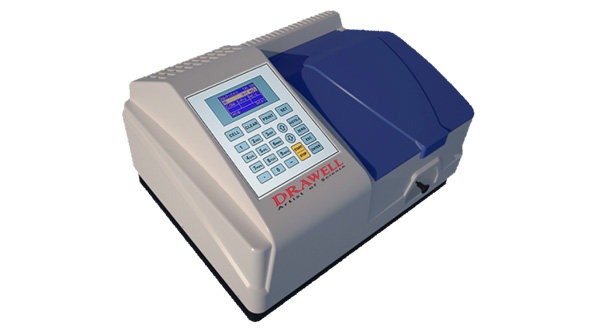
Water quality is a critical factor for public health, environmental sustainability, and industrial processes. Detecting contaminants, monitoring chemical composition, and ensuring safe water supply require precise analytical techniques. Among these, the UV-VIS spectrophotometer has emerged as a versatile and reliable instrument for water testing, providing rapid, accurate, and non-destructive analysis.
Understanding UV-VIS Spectrophotometry
A UV-VIS spectrophotometer measures the absorbance of ultraviolet (UV) and visible (VIS) light by a sample across specific wavelengths. Different compounds absorb light at characteristic wavelengths, allowing for qualitative identification and quantitative determination of substances. This makes it particularly suitable for analyzing water, which can contain a wide variety of chemical and biological constituents.
Applications in Water Testing
1. Monitoring Organic Contaminants
UV-VIS spectrophotometry is widely used to detect organic compounds such as pesticides, phenols, and hydrocarbons. Many of these compounds absorb light in the UV region, typically between 200–400 nm. By measuring absorbance at specific wavelengths, laboratories can assess contamination levels and comply with environmental standards.
2. Determining Nitrate and Nitrite Concentrations
Excess nitrates and nitrites in water can cause health issues such as methemoglobinemia. UV-VIS spectrophotometers can detect these ions using colorimetric methods, where chemical reagents react with nitrates or nitrites to produce a colored complex. The intensity of the color correlates directly with concentration, allowing precise quantification.
3. Measuring Phosphate Levels
Phosphates are essential nutrients but can contribute to eutrophication in water bodies if present in excess. Using UV-VIS spectrophotometry, phosphate concentrations can be determined through molybdenum blue or other colorimetric methods, enabling effective monitoring of water quality in rivers, lakes, and wastewater.
4. Detecting Heavy Metals
Certain heavy metals, such as iron, manganese, and copper, can be analyzed indirectly using UV-VIS spectrophotometry. These metals often form colored complexes with chelating agents, which can be measured at visible wavelengths. This provides a cost-effective alternative to more sophisticated techniques like ICP-MS for routine monitoring.
5. Assessing Water Turbidity and Organic Load
UV absorbance at 254 nm is commonly used to estimate dissolved organic matter (DOM) and overall water quality. High absorbance can indicate contamination from natural organic material or industrial effluents, guiding water treatment and purification processes.
Advantages of Using UV-VIS Spectrophotometers for Water Testing
Rapid and Sensitive: Provides quick results with low detection limits for many compounds.
Non-Destructive: Preserves samples for further testing or confirmation.
Versatile: Can analyze a wide range of contaminants, including organics, nutrients, and metals.
Cost-Effective: Requires minimal reagents and sample preparation compared to other analytical methods.
User-Friendly: Modern instruments offer automated wavelength scanning and software for data analysis, making them accessible even in small laboratories.
Final Thoughts
The UV-VIS spectrophotometer has become an indispensable tool for water quality analysis, supporting environmental monitoring, industrial compliance, and public health protection. Its ability to detect a wide range of contaminants with speed and accuracy makes it ideal for testing various water sources, including drinking water, wastewater, and natural water bodies. By integrating UV-VIS spectrophotometry into routine water testing protocols, laboratories can ensure reliable results, efficient monitoring, and better management of water resources.
Hex nuts are among the most widely used fasteners in industrial manufacturing, construction, automotive engineering, marine equipment, and machinery assembly. Their six-sided shape allows for easy tightening and loosening with standard tools such as wrenches and sockets. Although hex nuts may appear simple, there are many specialized types designed for different environments, load conditions, vibration levels, and installation requirements. Understanding the different types of hex nuts helps ensure proper fastening performance, safety, and durability in various applications.
Standard Hex Nuts
Standard hex nuts are the most common type used in general fastening applications. They feature a six-sided exterior and internal threads that match corresponding bolts or threaded rods. These nuts are typically manufactured according to international standards such as ANSI, DIN, or ISO specifications.
Standard hex nuts are widely used in machinery, structural steel assemblies, automotive parts, and household equipment. They are available in multiple materials including carbon steel, stainless steel, brass, and alloy steel to suit different operating environments.
Heavy Hex Nuts
Heavy hex nuts are similar to standard hex nuts but have greater width and thickness. Their larger bearing surface provides improved load distribution and enhanced strength. Heavy hex nuts are commonly used in high-pressure piping systems, structural applications, bridges, and heavy machinery.
Because of their robust design, heavy hex nuts are often paired with large-diameter bolts in demanding environments where high tensile strength and durability are critical.
Jam Nuts
Jam nuts are thinner than standard hex nuts and are commonly used as locking nuts. They are usually tightened against a standard nut to prevent loosening caused by vibration or movement. The thinner profile makes them suitable for applications with limited installation space.
Jam nuts are frequently used in automotive assemblies, electrical equipment, and precision machinery where maintaining bolt tension is important.
Nylon Insert Lock Nuts
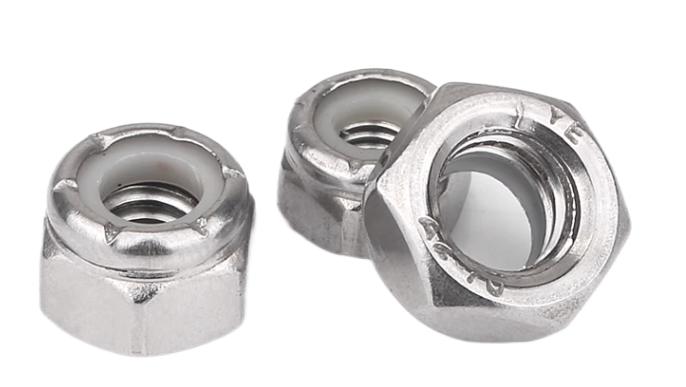
Nylon insert hex lock nuts, often called nyloc nuts, contain a nylon ring inside the nut. When the bolt is threaded into the nut, the nylon insert creates friction that helps resist loosening from vibration and shock.
These nuts are commonly used in automotive systems, aerospace components, household appliances, and industrial machinery. The nylon insert improves fastening security without requiring additional locking washers.
All-Metal Lock Nuts
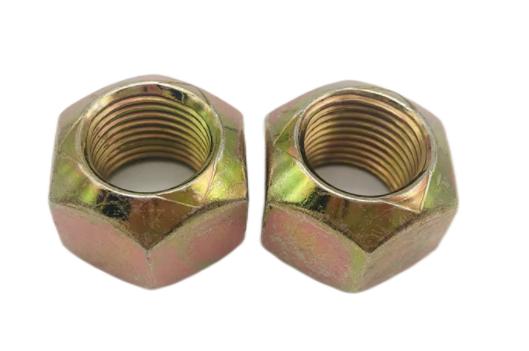
All-metal hexagon ock nuts provide vibration resistance without using nylon inserts. Instead, they rely on distorted threads or special metal locking mechanisms to maintain clamping force. Because they do not contain plastic components, they are ideal for high-temperature environments.
Applications include exhaust systems, heavy equipment, engines, and industrial processing equipment exposed to heat or harsh operating conditions.
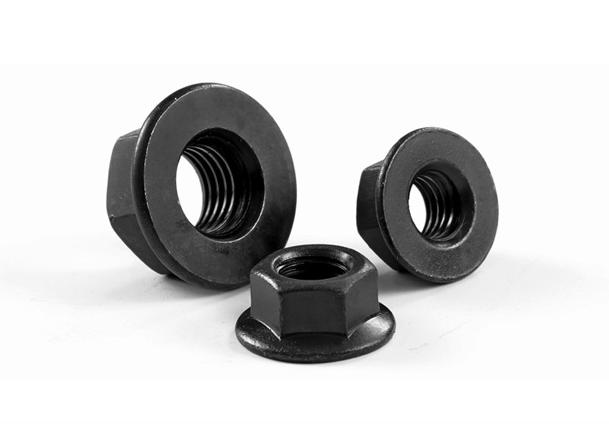
Flange Hex Nuts
Flange hex nuts feature a built-in washer-like flange at the base of the nut. This flange distributes pressure over a larger surface area and helps reduce the risk of damage to the connected material.
Some flange nuts also include serrated surfaces that improve locking performance by increasing friction. Flange hex nuts are commonly used in automotive manufacturing, sheet metal assemblies, and machinery installations.
Castle Nuts
Castle nuts, also known as castellated nuts, have slots cut into one end of the nut. These slots allow a cotter pin or locking pin to pass through both the nut and the bolt, preventing accidental loosening.
Castle nuts are widely used in automotive steering systems, wheel bearings, aircraft assemblies, and mechanical linkages where safety is essential.
Coupling Nuts
Coupling nuts are elongated hex nuts designed to connect two threaded rods together. Their extended length provides increased thread engagement and stronger connections.
These nuts are commonly used in construction, suspension systems, piping assemblies, and threaded rod extensions.
Cap Nuts
Cap nuts, also called acorn nuts, feature a domed top that covers the exposed end of a bolt. This design improves appearance while also protecting the threads from corrosion, dirt, and accidental contact.
Cap nuts are often used in furniture assembly, decorative metalwork, bicycles, and consumer products where aesthetics and safety are important.
Wing Nuts with Hex Features
Some specialized wing nuts combine hand-tightening wings with a hexagonal base. This allows for both manual adjustment and wrench tightening when additional torque is required.
These nuts are commonly found in adjustable fixtures, temporary assemblies, and equipment requiring frequent disassembly.
Slotted Hex Nuts
Slotted hex nuts resemble castle nuts but may have different slot configurations. They are used with cotter pins to secure rotating components or critical assemblies subject to vibration.
Typical applications include industrial machinery, transportation equipment, and agricultural systems.
Materials Used for Hex Nuts
Hex nuts are manufactured from a wide variety of materials depending on application requirements. Carbon steel nuts are widely used because of their strength and affordability. Stainless steel nuts provide excellent corrosion resistance for marine and chemical environments. Brass nuts offer good electrical conductivity and decorative appearance, while alloy steel nuts are selected for high-strength industrial applications.
Protective coatings such as zinc plating, hot-dip galvanizing, black oxide, and nickel plating further improve corrosion resistance and durability.
Selecting the Right Hex Nut
Choosing the correct hex nut depends on several important factors including load requirements, environmental conditions, vibration exposure, temperature, and compatibility with bolts. High-vibration environments often require lock nuts, while corrosive environments benefit from stainless steel or coated nuts. Structural applications may demand heavy hex nuts with higher strength ratings.
Proper thread matching, material compatibility, and installation torque are also critical for achieving safe and reliable fastening performance.
Summary
Hexagon nuts are essential fastening components used across countless industries and applications. From standard hex nuts and heavy hex nuts to lock nuts, flange nuts, and castle nuts, each type is designed to address specific operational needs. Understanding the characteristics and applications of different hex nuts helps engineers, manufacturers, and maintenance professionals select the most effective fastening solution for performance, safety, and long-term reliability.
Training is a critical component of success in the oil and gas industry. Employees working in drilling operations, refining facilities, offshore platforms, LNG plants, and pipeline systems must possess strong technical knowledge, operational awareness, and safety skills. Because the industry involves high-risk environments and complex equipment, effective training directly influences productivity, safety performance, and operational reliability.
For decades, traditional training methods such as classroom instruction, field mentoring, and hands-on practice have been widely used to prepare workers for industry challenges. In recent years, however, simulation-based training has emerged as a modern alternative that uses advanced technologies to recreate realistic operational scenarios.
Traditional training methods focus on theoretical instruction and real-world field exposure. These methods typically include classroom lectures, printed manuals, workshops, demonstrations, and on-site apprenticeships.
Classroom-based instruction allows trainees to learn fundamental concepts such as drilling mechanics, reservoir engineering, process operations, equipment maintenance, and safety regulations. Experienced instructors explain procedures, answer questions, and share practical industry knowledge.
Field training is another essential aspect of traditional learning. Trainees observe experienced workers and gradually participate in operational activities under supervision. This method helps workers become familiar with actual equipment, environmental conditions, and workplace procedures.
Traditional training methods have several strengths. Human interaction between instructors and trainees promotes communication, teamwork, and mentorship. Workers also gain practical experience using real machinery and operating systems.
However, traditional approaches can also present challenges. Access to operational equipment may be limited, especially in active production environments where downtime is costly. In addition, dangerous emergency situations cannot be safely recreated for training purposes.
Simulation-Based Oil and Gas Training
Simulation-based training uses computer-generated systems to mimic real operations. These oil and gas simulators recreate drilling systems, refinery processes, production facilities, well control systems, and emergency response situations with high realism.
Trainees interact with digital control panels and simulated equipment that respond dynamically to operational decisions. Instructors can introduce normal operating conditions as well as complex equipment failures and emergency scenarios.
Simulation systems vary from desktop software programs to highly advanced full-scale training environments that replicate actual control rooms and operational facilities.
The growing adoption of simulation technologies reflects the industry’s increasing focus on safety, efficiency, and workforce competency.
Key Differences Between Simulations and Traditional Methods
Learning Style
Traditional methods often rely on passive learning through lectures, reading materials, and observation. Simulation training emphasizes active participation and experiential learning. Trainees learn by performing tasks, making decisions, and observing outcomes in real time.
This interactive approach can improve engagement and knowledge retention.
Safety and Risk Management
One of the most significant advantages of simulations is the ability to train personnel in hazardous scenarios without exposing them to real danger. Emergency situations such as blowouts, fires, gas leaks, and equipment failures can be practiced repeatedly in a safe virtual environment.
Traditional training cannot safely recreate many of these high-risk events.
Equipment Accessibility
Traditional field training depends on access to operational equipment and facilities. In many cases, equipment availability is restricted due to production schedules or maintenance requirements.
Simulation systems provide unlimited opportunities for practice without interrupting actual operations.
Cost Considerations
Traditional training involving travel, equipment usage, instructor time, and operational downtime can become expensive over time. Simulation systems require high initial investment, but they often reduce long-term training costs by minimizing disruptions and improving training efficiency.
Training Consistency
Simulation programs deliver standardized training experiences across multiple locations and teams. Every trainee can practice the same procedures under identical conditions.
Traditional training quality may vary depending on instructors, field conditions, and available equipment.
Advantages of Simulation-Based Training
Simulation technologies provide several important benefits for oil and gas companies.
Improved Emergency Preparedness
Workers can repeatedly practice emergency procedures until they develop confidence and competence in responding to critical situations.
Faster Skill Development
Interactive training accelerates operational understanding by allowing trainees to learn through practical application rather than theory alone.
Reduced Human Error
Simulation exercises help operators recognize risks, improve decision-making, and avoid costly mistakes during real operations.
Performance Monitoring
Many simulation systems record trainee actions and generate performance reports. Instructors can evaluate competency levels and identify areas requiring additional improvement.
Enhanced Operational Efficiency
Well-trained personnel contribute to smoother operations, reduced downtime, and improved equipment reliability.
Advantages of Traditional Training
Despite technological advancements, traditional training methods continue to provide valuable benefits.
Real-World Experience
Hands-on exposure to actual equipment and field environments helps workers understand operational realities that simulations may not fully capture.
Mentorship and Knowledge Transfer
Experienced professionals share practical insights, troubleshooting techniques, and workplace culture through direct interaction with trainees.
Communication and Teamwork
Traditional training environments encourage interpersonal communication and collaboration among workers and supervisors.
Limitations of Simulation-Based Training
Although simulation systems are highly effective, they are not without limitations.
High Initial Costs
Developing and maintaining advanced simulators can require significant financial investment.
Technology Dependence
Training quality depends heavily on software accuracy, system updates, and technical support.
Limited Physical Interaction
Virtual systems cannot fully replicate the physical conditions of offshore environments, equipment handling, or harsh weather conditions.
Combining Simulations with Traditional Training
Many oil and gas companies now use blended learning approaches that combine simulations with traditional instruction. This strategy integrates classroom education, virtual training, and hands-on field experience.
For example, trainees may first study operational theory in the classroom, then practice procedures in a simulator, and finally apply their skills in real operational environments.
This balanced approach offers several advantages:
Better knowledge retention
Improved operational confidence
Stronger safety awareness
Faster competency development
More effective emergency response preparation
Blended learning is particularly effective for complex operations such as drilling, refining, LNG processing, and offshore production management.
Final Thoughts
Both simulation-based and traditional training methods play essential roles in preparing oil and gas professionals for demanding operational environments. Traditional training provides valuable theoretical instruction, mentorship, and hands-on field experience, while simulations offer safe, interactive, and highly effective practical learning opportunities.
Rather than replacing traditional methods entirely, simulation technologies work best as part of a comprehensive training strategy. Companies that combine both approaches can improve workforce competency, strengthen safety performance, reduce operational risks, and better prepare employees for the evolving challenges of the modern oil and gas industry.
In today’s highly competitive manufacturing and packaging industries, label quality has become more important than ever. Labels are not only essential for product identification and branding, but they also carry critical information such as barcodes, expiration dates, ingredients, safety instructions, and tracking data. Even a small printing defect or labeling error can lead to operational disruptions, regulatory issues, product recalls, and damage to brand reputation. To meet increasing quality expectations and maintain production efficiency, manufacturers are turning to advanced web inspection systems for reliable and continuous label inspection.
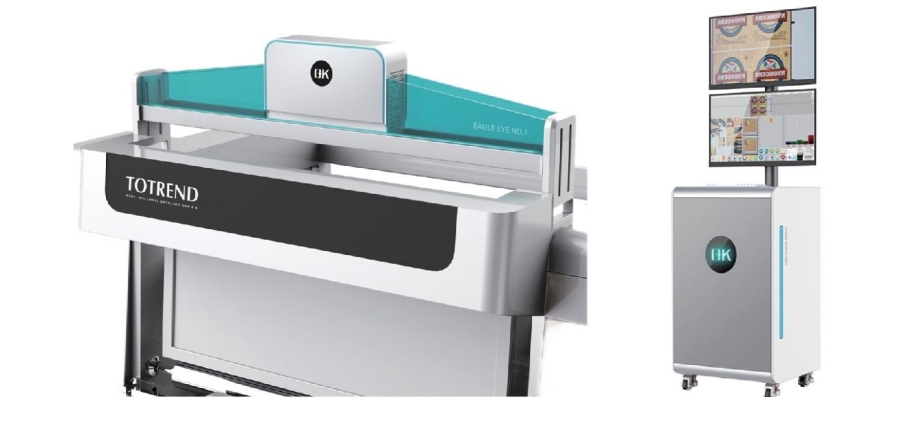
Web inspection systems are automated quality control technologies designed to monitor and inspect labels during the production process. By using high-speed cameras, intelligent software, and advanced imaging technologies, these systems can detect defects in real time and help manufacturers maintain consistent label quality across high-volume production lines.
The Growing Importance of Label Inspection
As production speeds continue to rise, manual inspection methods are becoming less practical and less reliable. Human inspectors may struggle to identify tiny defects or maintain accuracy during long production runs, especially when labels move at extremely high speeds. In industries such as pharmaceuticals, food and beverage, cosmetics, electronics, and logistics, even minor labeling mistakes can create significant risks.
For example, an unreadable barcode can disrupt supply chain operations, while incorrect dosage information on pharmaceutical labels can create serious safety concerns. Similarly, inconsistent label colors or poor print registration can negatively affect product appearance and customer perception. Web inspection systems provide manufacturers with a dependable solution for detecting these issues before defective products reach the market.
How Web Inspection Systems Work
Web inspection systems operate by continuously scanning labels as they move through printing presses, coating machines, laminators, slitters, or packaging equipment. High-resolution cameras capture detailed images of the moving web, while specialized lighting systems enhance image clarity and contrast. The captured images are then analyzed by sophisticated software that compares the labels against predefined quality standards or reference images.
When defects are detected, the lable inspection systems can immediately alert operators or automatically trigger corrective actions. Some advanced systems can even stop the production line to prevent further waste. Because inspection occurs in real time, manufacturers can address problems quickly and minimize the production of defective labels.
Modern systems are capable of inspecting labels at extremely high speeds without sacrificing accuracy. They can identify a wide range of defects, including missing print, color inconsistencies, misregistration, smudges, scratches, wrinkles, barcode errors, and variable data inaccuracies.
Key Technologies Behind Web Inspection Systems
The effectiveness of web inspection systems depends on several advanced technologies working together seamlessly. High-resolution industrial cameras are essential for capturing detailed images of labels, even when production lines operate at high speeds. Depending on the application, manufacturers may use line-scan cameras for continuous inspection or area-scan cameras for specific inspection zones.
Lighting technology also plays a crucial role in inspection accuracy. Proper illumination helps reveal subtle defects that may otherwise go unnoticed. LED lighting systems are widely used because they provide stable brightness, energy efficiency, and long operating life. Specialized lighting configurations can improve the visibility of reflective, transparent, or textured label materials.
Image processing software serves as the core intelligence of the inspection system. The software analyzes image data, compares it with approved standards, and identifies deviations in print quality, color, alignment, and code readability. Advanced algorithms enable the system to distinguish between critical defects and acceptable variations, reducing false alarms and improving operational efficiency.
Artificial intelligence and machine learning technologies are increasingly being integrated into web inspection systems. AI-powered systems can learn from previous inspection data and continuously improve their defect detection capabilities. This allows manufacturers to achieve higher inspection accuracy and adapt more effectively to changing production conditions.
Benefits of Web Inspection Systems for Label Quality
One of the greatest advantages of web inspection systems is their ability to provide continuous and consistent quality monitoring. Unlike manual inspection, automated systems do not suffer from fatigue or reduced attention over time. This leads to more reliable defect detection and improved overall product quality.
Real-time inspection significantly reduces material waste and production costs. Since defects are detected immediately, manufacturers can correct issues before large quantities of defective labels are produced. This minimizes rework, reduces scrap, and improves production efficiency.
Web inspection systems also support regulatory compliance by ensuring that labels contain accurate and readable information. Industries with strict labeling regulations, such as pharmaceuticals and food processing, benefit greatly from automated inspection technologies that help maintain compliance with industry standards.
In addition to improving quality control, these 100% inspection systems enhance customer satisfaction and brand reputation. Consistently high-quality labels contribute to a professional product appearance and improve consumer confidence in the brand.
Applications Across Multiple Industries
Web inspection systems are widely used across various industries where label quality is critical. In the pharmaceutical industry, these systems verify dosage instructions, expiration dates, batch numbers, and serialization codes to ensure patient safety and regulatory compliance. In food and beverage production, inspection systems help manufacturers confirm that nutritional information, allergen warnings, and barcodes are printed accurately.
Cosmetics manufacturers rely on label inspection systems to maintain premium packaging quality and consistent brand presentation. In logistics and warehousing operations, inspection systems verify shipping labels and tracking codes to improve supply chain accuracy. Electronics manufacturers use these technologies to inspect serial numbers, certification marks, and traceability labels on products and components.
Challenges in Label Inspection
Despite their many advantages, web inspection systems also face certain challenges. Inspecting transparent or reflective label materials can be difficult because lighting reflections may interfere with image clarity. Extremely high-speed production environments also require powerful processing capabilities to maintain inspection accuracy without slowing production.
Another challenge involves reducing false defect detections. Overly sensitive systems may identify harmless variations as defects, which can lead to unnecessary production interruptions. Manufacturers must carefully calibrate inspection parameters to balance sensitivity and operational efficiency.
Integration with existing production equipment can also be complex, particularly in older manufacturing facilities. However, advances in system compatibility and industrial automation are making integration increasingly easier and more cost-effective.
Final Words
Web inspection systems have become an essential technology for ensuring label quality in modern manufacturing and packaging operations. By combining advanced imaging technologies, intelligent software, and real-time defect detection, these systems help manufacturers achieve greater consistency, efficiency, and compliance.
Life jackets are essential personal flotation devices designed to keep people safe on the water. Among the most commonly used are foam and inflatable life jackets. While both types of marine life jackets provide buoyancy and safety, they do so in very different ways, which makes understanding their features crucial for anyone engaging in water activities.
How Foam Life Jackets Work
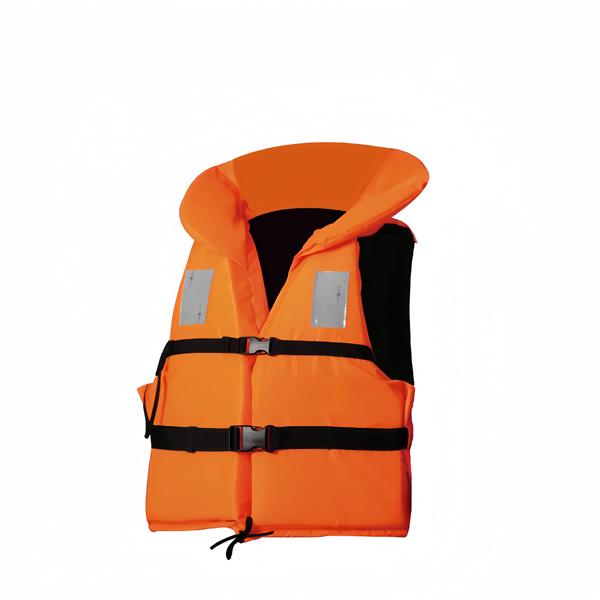
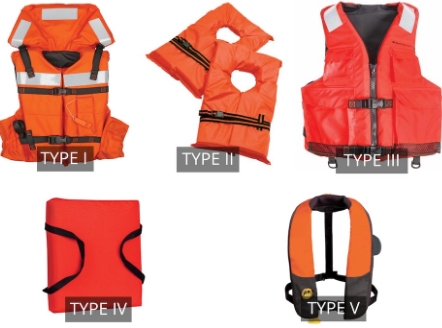
Foam life jackets, also known as inherently buoyant jackets, are made from materials like polyethylene or PVC foam. These materials provide continuous flotation, which means the wearer is supported as soon as the jacket is worn. Foam jackets are highly reliable because they do not require any activation, making them ideal for children, non-swimmers, and situations where immediate flotation is critical. Their designs can vary from full vests to horse-collar shapes, offering durability and thermal protection, though they tend to be bulkier than inflatable alternatives.
How Inflatable Life Jackets Work
Inflatable life jackets rely on air chambers to provide buoyancy. They are compact and lightweight, offering greater mobility and comfort for active users such as kayakers, sailors, and anglers. Inflatable jackets can be activated manually by pulling a cord or automatically through water-sensitive mechanisms. While their slim design makes them comfortable for prolonged wear, inflatable jackets depend on proper activation and regular maintenance. Failure to inflate properly can compromise safety in emergencies.
Comparing Safety and Reliability
Safety and reliability are key considerations when choosing a life jacket. Foam jackets offer immediate and consistent flotation under all conditions, making them extremely dependable even if the wearer is unconscious. Inflatable jackets, while offering superior comfort and buoyancy when activated, require attention to maintenance and proper use. Experienced water users often prefer inflatable jackets for activities requiring agility, while foam jackets remain the preferred choice for beginners and high-risk situations.
Comfort, Mobility, and Maintenance
Inflatable life jackets excel in comfort and mobility due to their lightweight and low-profile design. Foam jackets, though bulkier, provide better insulation in cold water and require little maintenance. Inflatable jackets need regular checks of their CO₂ cylinders, bladders, and activation systems to ensure they function properly. Saltwater, sunlight, and wear can reduce the effectiveness of inflatable jackets over time, whereas foam jackets maintain consistent buoyancy with minimal upkeep.
Choosing the Right Life Jacket
Selecting between foam and inflatable life jackets depends on the user’s activity, environment, and experience. Foam jackets are ideal for families, children, and non-swimmers due to their constant flotation. Inflatable jackets suit experienced users seeking mobility and comfort during active water sports. Regardless of choice, correct fit, proper use, and ongoing maintenance are essential to maximize safety.
Final Thoughts
Both foam and inflatable life jackets serve the same ultimate purpose: keeping people afloat and safe on the water. Understanding their differences allows users to make informed decisions that balance safety, comfort, and mobility. By choosing the right life jacket for the situation and maintaining it properly, water enthusiasts can enjoy their activities with confidence and peace of mind.
Hand paper towels are commonly used in homes, offices, restaurants, healthcare facilities, and public washrooms for drying hands and maintaining hygiene. However, with growing awareness of sustainability, cost efficiency, and environmental impact, many people are comparing reusable and disposable hand towels to determine which option best suits their needs. Both choices offer advantages and disadvantages depending on the setting, usage frequency, and hygiene requirements.
Understanding Reusable Hand Towels
Reusable hand towels are typically made from cotton, microfiber, bamboo fiber, or other washable fabrics. They are designed to be used multiple times and cleaned regularly through laundering.
These towels are often found in households, gyms, eco-conscious businesses, and hospitality settings where comfort and sustainability are priorities. Reusable towels can feel softer and more absorbent than many disposable alternatives, making them attractive for personal use.
Understanding Disposable Hand Paper Towels
Disposable hand paper towels are single-use towels made from virgin pulp, recycled paper, or blended fibers. They are widely used in commercial washrooms, kitchens, healthcare environments, and food service operations where convenience and hygiene are critical.
After one use, the towel is discarded, reducing the chance of cross-contamination between users. Their convenience and quick replacement make them a standard solution in many high-traffic facilities.
Hygiene Comparison
Hygiene is often one of the biggest deciding factors between reusable and disposable towels.
Disposable hand paper towels offer strong hygiene benefits because each towel is used once and then thrown away. This minimizes bacterial transfer between users, making them ideal for hospitals, clinics, public restrooms, and food preparation areas.
Reusable paper towels can also be hygienic when washed frequently at high temperatures and replaced regularly. However, if towels are shared or not cleaned properly, they may harbor bacteria or unpleasant odors.
Cost Comparison
Initial and long-term costs differ significantly between the two options of hand paper towels.
Disposable paper towels usually have a lower upfront cost but require continuous repurchasing. In high-usage environments, these recurring expenses can become substantial over time.
Reusable towels cost more initially because multiple towels are needed, along with washing and drying resources. However, over the long term, reusable towels may reduce operating costs in lower-traffic environments.
Environmental Impact
Environmental concerns play a major role in this comparison.
Disposable hand paper towels generate regular waste and require ongoing production of raw materials, packaging, and transportation. Even recycled paper towels still consume water and energy during manufacturing.
Reusable towels reduce daily waste because they can be used many times. However, laundering requires water, electricity, and detergent. Their overall environmental advantage depends on efficient washing practices and long service life.
Convenience and Maintenance
Disposable towels are highly convenient. They require no washing, folding, or storage after use, making them ideal for busy commercial facilities and public spaces.
Reusable towels require a maintenance system that includes collection, washing, drying, and redistribution. For homes or small offices, this may be manageable, but for large public facilities it can become labor-intensive.
Best Applications for Reusable Towels
Reusable towels are often best suited for:
Homes and apartments
Boutique hotels and spas
Fitness centers
Low-traffic offices
Environmentally focused businesses
Best Applications for Disposable Paper Towels
Disposable towels are usually ideal for:
Public restrooms
Hospitals and clinics
Restaurants and food processing areas
Schools and universities
High-traffic office buildings
Which Option Is Better?
There is no universal answer. Reusable towels are often better for sustainability, comfort, and long-term savings in controlled environments. Disposable hand paper towels are usually better for hygiene, convenience, and high-volume public use.
Many organizations adopt a hybrid approach by using reusable towels in private staff areas and disposable paper towels in public or sanitary-sensitive spaces.
Final Thoughts
The choice between reusable and disposable hand paper towels depends on priorities such as hygiene, cost, environmental responsibility, and convenience. Reusable towels offer reduced waste and softness, while disposable towels provide maximum convenience and lower contamination risk. By understanding the strengths of each option, individuals and businesses can choose the most practical and responsible solution for their needs.
In the world of marine navigation and safety, effective lighting is crucial. Marine spotlights, especially those designed for use in harsh maritime environments, must provide clear visibility over long distances and under challenging conditions. The 360-degree rotation design in marine spotlights has emerged as a game-changer in enhancing visibility and operational safety. This innovative design offers a range of benefits for both recreational boating and commercial maritime operations. In this article, we will explore the importance of 360-degree rotation in marine spotlights, its advantages, and its application in various maritime contexts.
What is 360-Degree Rotation in Marine Spotlights
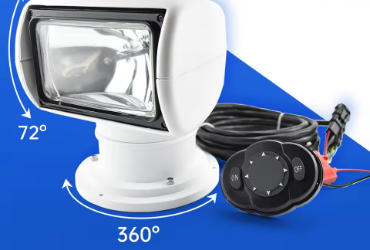
A marine spotlight with a 360-degree rotation feature is equipped with a swivel or gimbal mechanism, allowing the light to rotate freely in all directions. This means the marine spotlight can be adjusted to cast light in any angle without limitation. Unlike traditional fixed-position spotlights, which can only illuminate a set area, a 360-degree rotating spotlight offers dynamic visibility, adapting to the needs of the environment.
The rotation feature is typically powered by either an electric motor or a manual adjustment system, and it may also include tilt capabilities to provide versatile lighting solutions for both short-range and long-range visibility.
Key Advantages of 360-Degree Rotation Design
1. Improved Visibility and Coverage
One of the primary benefits of a 360-degree rotating spotlight is the expanded coverage it provides. With the ability to rotate fully, the spotlight ensures that the entire surroundings are illuminated, eliminating dark spots. This is particularly important when navigating through narrow or crowded waters, such as in harbors or when docking at night. The light can be directed wherever it is needed most, whether for spotting potential hazards, illuminating a dock, or signaling other vessels.
2. Enhanced Maneuverability
Marine vessels are constantly moving, whether in open water or when approaching ports. The 360-degree rotation design ensures that the spotlight can always be adjusted to the right direction, regardless of the vessel’s position or orientation. This feature is especially useful in situations where the vessel is in motion and requires immediate, precise illumination of an area of interest, such as spotting another ship, navigating through a narrow passage, or scanning the horizon for obstacles.
3. Increased Safety and Security
Safety is a top priority in marine operations, and having reliable lighting systems is essential. A 360-degree rotating spotlight enhances safety by ensuring that the operator can maintain full visibility of the surroundings at all times. Whether it’s identifying obstacles or searching for a distressed vessel, the ability to quickly reposition the spotlight is vital. This design also enhances security on board, making it easier to detect intruders or vessels approaching at night.
4.Versatility in Different Environments
Marine spotlights with 360-degree rotation are not only useful on large vessels but also on smaller recreational boats and yachts. For example, during nighttime fishing expeditions or while navigating through foggy conditions, the ability to adjust the light freely can make all the difference in spotting fish or navigating safely. Similarly, on commercial vessels, this feature allows for effective lighting in a variety of operational scenarios, from routine navigation to search-and-rescue operations.
5. Reduced Need for Multiple Lights
In traditional setups, vessels might require multiple spotlights to cover all areas effectively. A 360-degree rotating spotlight can eliminate the need for several fixed-position lights by covering a broad area with a single unit. This not only simplifies the lighting setup but also reduces maintenance costs, as there are fewer components to service.
Applications of 360-Degree Rotation Marine Spotlights
1. Search and Rescue Operations
Marine spotlights with 360-degree rotation play a crucial role in search and rescue (SAR) missions. In emergencies, such as searching for survivors after a shipwreck or locating vessels in distress, having the ability to cast light in every direction quickly is critical. The rotating spotlight allows rescue teams to scan large areas rapidly, ensuring that no area is left unlit and increasing the chances of spotting potential survivors or hazards.
2. Port and Harbor Operations
Port operations often take place during nighttime hours, where precise illumination is necessary for docking, unloading, or navigating narrow channels. A 360-degree rotating spotlight enhances the safety and efficiency of port operations by allowing workers to adjust lighting as needed. Whether directing the spotlight to a specific dock or inspecting cargo holds, the rotating design provides flexibility and enhances operational efficiency.
3. Recreational Boating
For recreational boaters, having a versatile and reliable spotlight can be the difference between a safe voyage and a potentially hazardous situation. During nighttime navigation, having the ability to rotate the spotlight allows boaters to scan the water, spot navigation markers, or check the hull for potential issues. Additionally, a rotating spotlight can be useful for social activities on the water, such as night fishing or simply providing light to enhance the boating experience.
4. Military and Law Enforcement Applications
Military and law enforcement vessels often operate in high-risk, high-stakes environments, requiring precision and flexibility in their lighting systems. A 360-degree rotating spotlight allows for quick adjustments in high-intensity situations, such as patrols, surveillance, or boarding operations. The design ensures that the crew can maintain situational awareness and respond to threats efficiently.
Future Trends in 360-Degree Marine Spotlights
As technology continues to evolve, we can expect future innovations in marine spotlight designs. Some of the anticipated advancements include:
Integration with Night Vision and Thermal Imaging: Combining 360-degree rotating spotlights with night vision and thermal cameras will further enhance the ability to detect objects or vessels in low-light or foggy conditions.
Smart Connectivity: Future models may feature smart technology, allowing operators to control the spotlight remotely through mobile apps or integrate it with onboard navigation systems.
Energy Efficiency: As environmental concerns grow, LED spotlights with longer operational lifespans will become more common in 360-degree rotating spotlights.
Final Words
The 360-degree rotation design in marine spotlights represents a significant leap forward in maritime safety and operational efficiency. Whether for search and rescue operations, port management, recreational boating, or military applications, this innovative design offers unparalleled flexibility and coverage. As technology continues to improve, we can expect even more advanced features, making marine spotlights an essential tool for safe and efficient maritime operations.
In the highly competitive world of sports, branding plays a crucial role in building fan loyalty, creating memorable experiences, and increasing revenue opportunities. One of the most effective tools in sports branding is the use of custom mascots. A well-designed mascot can become the face of a team, energize audiences, and strengthen the emotional connection between fans and the organization.
The Importance of Custom Mascots in Sports Branding
Custom mascots are more than costumed characters. They are brand ambassadors that represent the spirit, identity, and values of a sports team or organization. From professional leagues to school teams and community clubs, mascots help create a recognizable image that fans instantly associate with the team.
A mascot adds personality to a brand by bringing logos and colors to life. While logos are static symbols, mascots interact directly with fans through movement, humor, and entertainment. This makes the brand more approachable and memorable.
Building Team Identity Through Mascots
Every successful sports brand has a clear identity. Custom mascots help communicate this identity in a fun and engaging way. A fierce animal mascot may symbolize strength and determination, while a playful character may represent community spirit and inclusiveness.
The design of a mascot can reflect local culture, regional history, or the team’s nickname. This creates deeper meaning and stronger pride among supporters. Fans often see the mascot as an extension of the team itself.
Enhancing Fan Engagement
Mascots are powerful tools for fan interaction. During games and events, mascots entertain crowds, lead cheers, pose for photos, and engage with children and families. Their presence helps create an energetic atmosphere that enhances the overall fan experience.
Custom mascots also extend engagement beyond the stadium. They can appear at charity events, school visits, sponsor promotions, and social media campaigns. This keeps the brand visible year-round and builds positive community relationships.
Supporting Merchandise Sales
A popular mascot can generate significant merchandising opportunities. Mascot-themed toys, apparel, hats, stickers, and accessories are especially attractive to younger fans and families. The customized plush toys can create additional revenue while strengthening brand recognition.
When fans wear or display mascot merchandise, they help promote the team brand organically in everyday life.
Key Elements of Effective Custom Mascot Design
To succeed in sports branding, a mascot should be carefully designed with several important factors in mind:
Strong Visual Appeal
The mascot should be colorful, distinctive, and easy to recognize from a distance. Bold shapes and expressive features help capture attention in crowded arenas.
Personality and Storytelling
A mascot with a clear personality becomes more memorable. Whether brave, funny, mischievous, or friendly, character traits make the mascot relatable.
Comfort and Mobility
Since mascots perform during games and events, costumes must allow easy movement, durability, and comfort for performers.
Brand Consistency
The mascot should align with team colors, logos, slogans, and overall branding strategy for a unified identity.
Benefits for Sponsors and Marketing
Custom mascots are valuable assets in sponsorship and promotional campaigns. Sponsors often use mascots in advertisements, contests, and public appearances to increase visibility. Fans are naturally drawn to mascots, making them effective for delivering marketing messages in a positive and entertaining way.
Future Trends in Sports Mascot Branding
As technology evolves, mascots are becoming even more versatile. Teams are integrating mascots into digital platforms through animated content, augmented reality experiences, and interactive mobile apps. This allows fans to connect with mascots both in-person and online.
Sustainable mascot production is also growing, with more organizations choosing eco-friendly materials and energy-efficient costume manufacturing.
Final Words
Custom mascots for sports branding are powerful tools that go far beyond entertainment. They help build identity, increase fan engagement, create merchandising opportunities, and strengthen community ties. A memorable mascot can become one of the most recognizable symbols of a team, leaving a lasting impression on fans for generations. For sports organizations seeking stronger branding and deeper audience connections, investing in a custom mascot is a winning strategy.
Temperature control is one of the most important factors in laboratory operations. Many scientific procedures, storage applications, and testing methods require stable environmental conditions to ensure accurate and repeatable outcomes. Constant temperature equipment for your laboratories is designed to provide dependable heating, cooling, or combined thermal regulation so that samples and processes remain within the required temperature range.
From research facilities to pharmaceutical production sites, this type of equipment plays a critical role in maintaining quality, safety, and efficiency.
What Is Constant Temperature Equipment
Constant temperature equipment refers to laboratory instruments that maintain a preset temperature consistently over time. These systems are engineered to minimize fluctuations and create stable thermal environments for sensitive materials, reactions, and experiments.
Depending on laboratory needs, the equipment may be used for warming samples, incubating cultures, drying materials, preserving reagents, or simulating environmental conditions. Accurate temperature control helps reduce variability and improves confidence in laboratory results.
Common Types of Constant Temperature Equipment
Constant temperature equipment is available in many forms, each designed to meet specific laboratory heating, cooling, or environmental control needs.
1. Water Baths
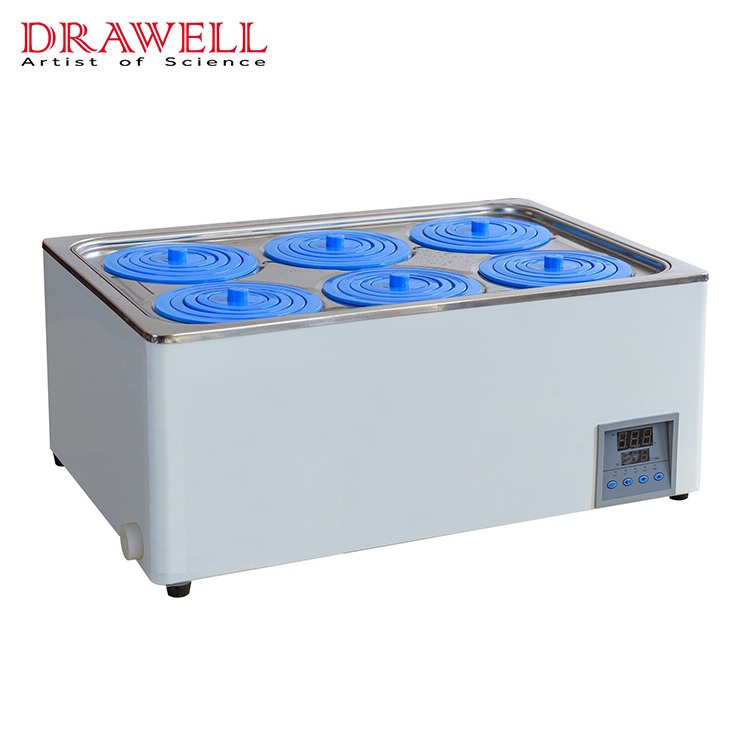
Water baths are widely used for gentle and uniform heating. They maintain samples at a stable temperature by immersing containers in heated water. This equipment is commonly used for warming reagents, incubating biological samples, melting substances, and supporting enzymatic reactions where consistent heat transfer is important.
2. Dry Baths
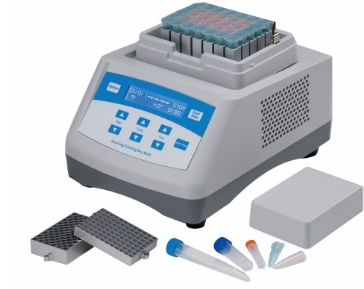
Dry baths provide temperature control through heated metal blocks instead of water. They are ideal for laboratories seeking a cleaner and more convenient heating solution. Test tubes, vials, and microcentrifuge tubes can be inserted directly into the block, making dry baths useful for sample preparation, DNA work, and routine heating procedures.
3. Incubators
Incubators are designed to maintain controlled temperatures for biological and microbiological applications. They are frequently used in cell culture, bacterial growth studies, and sample preservation. Advanced incubators may also regulate humidity and carbon dioxide levels to create optimal environments for sensitive biological materials.
4. Laboratory Refrigerators
Laboratory refrigerators keep materials at low but above-freezing temperatures. They are used to store reagents, chemicals, vaccines, media, and biological samples that require cool storage. Compared with domestic refrigerators, laboratory models offer better temperature stability and more precise monitoring systems.
5. Laboratory Freezers
Laboratory freezers are used for long-term storage of temperature-sensitive materials. They help preserve enzymes, biological specimens, pharmaceuticals, and research samples. Depending on the model, freezers may provide standard low-temperature storage or ultra-low temperature environments for highly sensitive materials.
6. Constant Temperature Ovens
Constant temperature ovens generate stable heated environments for drying, sterilization, curing, and material testing. They are commonly used in chemistry, materials science, and industrial laboratories where accurate heating over extended periods is required.
7. Climate Chambers
Climate chambers control both temperature and humidity, allowing laboratories to simulate real-world environmental conditions. These systems are widely used for stability testing, shelf-life studies, electronics testing, packaging evaluation, and research requiring controlled atmospheric conditions.
8. Circulating Baths and Chillers
Circulating baths and chillers provide precise temperature control by circulating heated or cooled liquid through external systems or instruments. They are often used with analytical instruments, reactors, condensers, and specialized testing equipment that require accurate thermal management.
Key Factors to Consider When Choosing Equipment
Selecting the right constant temperature equipment for your laboratories depends on several operational needs. The required temperature range should match the intended applications, whether cooling, heating, or both. Stability and uniformity are important because all samples should experience the same thermal conditions.
Capacity must be sufficient for the laboratory’s workload, while control systems should be easy to use and offer clear digital displays, alarms, and programmable settings. Energy efficiency is another valuable consideration, especially for equipment operating continuously. Safety functions such as over-temperature protection and automatic shutoff provide added protection for users and samples.
Modern Trends in Laboratory Temperature Control
Laboratory equipment manufacturers continue to improve temperature control technologies. Many modern systems now include touchscreen interfaces, data logging, remote monitoring, and smart alarm notifications. These features allow users to track equipment performance more efficiently and maintain better quality records.
Energy-saving insulation materials, quieter operation, and compact designs are also becoming more common, helping laboratories reduce operating costs while maximizing available workspace.
Final Words
Constant temperature equipment for your laboratories is essential for maintaining reliable experimental conditions, protecting sensitive materials, and supporting efficient daily operations. Whether using incubators, water baths, refrigerators, ovens, or climate chambers, laboratories depend on precise temperature control to achieve accurate and consistent results.
By choosing equipment that offers the right balance of performance, safety, and modern functionality, laboratories can strengthen productivity and ensure long-term success in research, testing, and quality assurance.
In mechanical assemblies, vibration, dynamic loads, and repeated movement can gradually loosen threaded fasteners. To prevent this problem, engineers and maintenance professionals often rely on locking components such as lock washers and lock nuts. Although both serve the same basic purpose, helping keep bolted joints secure, they function in different ways and are suited to different applications. Understanding the differences between lock washers and lock nuts is essential when selecting the best fastening solution.
Understanding Lock Washers
A lock washer is a washer designed to resist loosening by creating tension, friction, or mechanical interference between the fastener and the joint surface. It is typically installed under the head of a bolt or beneath a nut.
Common lock washer types include split lock washers, toothed lock washers, and wedge-lock washers. Split lock washers use spring tension to maintain pressure against the fastener. Toothed washers feature serrated edges that bite into the mating surfaces, increasing friction. Wedge-lock washers use paired cams to create a self-locking effect under vibration.
Lock washers are widely used because they are compact, inexpensive, and easy to install. They are often selected for light to medium-duty fastening applications where moderate vibration resistance is required.
Understanding Lock Nuts
A lock nut is a nut specially designed to resist loosening without the need for an additional locking washer. It incorporates built-in locking features that maintain grip on the bolt threads.
There are several types of lock nuts. Nylon insert lock nuts use a polymer ring that grips the threads when tightened. Prevailing torque lock nuts use deformed metal sections to create resistance during tightening. Castellated nuts use slots aligned with a drilled bolt hole and secured with a cotter pin for positive locking.
Lock nuts are preferred in applications where stronger locking performance, repeated vibration resistance, or simplified assembly is needed. They are commonly used in automotive systems, machinery, aerospace equipment, and structural assemblies.
Key Differences Between Lock Washers and Lock Nuts
1. Design Structure
A lock washer is a separate component placed under the head of a bolt or beneath a nut. It works alongside a standard nut or bolt to improve fastening security. Common designs include split lock washers, toothed lock washers, and wedge-lock washers.
A lock nut, by contrast, is a nut with an integrated locking mechanism. It does not require a separate washer for locking purposes. Examples include nylon insert lock nuts, prevailing torque lock nuts, and castellated nuts.
2. Locking Mechanism
Lock washers rely on spring force, friction, or mechanical wedging to resist loosening. They increase tension or create resistance between the fastener and the joint surface.
Lock nuts use thread interference or positive locking systems. Some grip the bolt threads tightly, while others use pins or inserts to physically prevent rotation.
3. Installation Process
Lock washers require an additional part during assembly, meaning the washer must be correctly positioned before tightening the bolt or nut. This adds one more component to handle during installation.
Lock nuts simplify assembly because the locking function is built into the nut itself. Installers only need to thread and tighten the nut onto the bolt.
4. Resistance to Vibration
Lock washers can provide effective protection in light to moderate vibration conditions, depending on the washer type. Advanced wedge-lock washers perform better in high-vibration environments than standard split washers.
Lock nuts generally provide stronger and more consistent resistance to vibration, making them a common choice in automotive, industrial, and heavy-duty equipment.
5. Reusability
Some lock washers can be reused if they remain undamaged, though certain types may lose effectiveness after repeated compression or wear.
Lock nuts vary in reusability. Metal prevailing torque lock nuts may be reused several times within specification limits, while nylon insert lock nuts may lose locking strength after multiple installations.
6. Cost Considerations
Lock washers are usually more economical than lock nuts. They are inexpensive and can be paired with standard nuts and bolts.
Lock nuts typically cost more because of their specialized design and built-in locking features. However, they may reduce assembly time and improve long-term reliability.
7. Surface Impact
Some lock washers, especially toothed styles, may mark or damage soft surfaces or protective coatings because their teeth bite into the material.
Lock nuts generally do not damage joint surfaces in the same way, making them preferable where appearance or surface protection matters.
8. Typical Applications
Lock washers are commonly used in appliances, electrical panels, light machinery, and general-purpose assemblies.
Lock nuts are widely used in vehicles, engines, pumps, structural equipment, and machinery exposed to vibration or dynamic loads.
Advantages of Lock Washers
Lock washers offer a cost-effective method of improving fastener security. They are simple to add to existing assemblies without redesigning the threaded hardware. Many styles are available for different surface materials and load conditions. Because they are separate components, they can be replaced individually during maintenance.
They are especially useful where space is limited and where standard nuts and bolts are already specified.
Advantages of Lock Nuts
Lock nuts provide integrated locking capability, reducing the need for extra parts. This can speed up assembly and lower the risk of missing components during installation. Many lock nuts deliver superior performance under continuous vibration and shock loads.
They are often chosen when reliability is critical or where maintenance intervals are long. In high-performance equipment, lock nuts can offer better long-term fastening security than conventional washer-based solutions.
How to Choose Between Lock Washer and Lock Nuts
The correct choice depends on the operating environment, load conditions, and maintenance requirements. If the application involves moderate loads, budget sensitivity, and standard fastening systems, a lock washer may be sufficient. If the assembly is exposed to heavy vibration, repeated movement, or safety-critical conditions, a lock nut may be the better option.
Material compatibility is also important. For soft surfaces, toothed washers may damage finishes, while nylon insert lock nuts may not be suitable for high-temperature environments. Engineers should also consider whether the fastener needs frequent removal and reinstallation.
Common Applications
Lock washers are frequently used in electrical panels, household appliances, light machinery, and general industrial equipment. Lock nuts are commonly found in automotive suspensions, pumps, motors, agricultural equipment, and transportation systems.
In some demanding applications, both may be used together with other retention methods such as thread-locking adhesives or cotter pins.
Final Thoughts
Both lock washers and lock nuts play valuable roles in preventing threaded fasteners from loosening. Lock washers are economical and versatile, making them suitable for many everyday fastening needs. Lock nuts offer stronger and more reliable locking performance, especially in vibration-prone or safety-sensitive environments. By understanding their design differences and application strengths, users can choose the fastening method that delivers the best balance of security, cost, and efficiency.

















 China manufacturers