做自己,因为别人都在做自己。
– Oscar Wilde
这是我新博客的第一篇文章。我刚开始写这个新博客,因此请继续关注。在下方订阅,以便在我更新新文章时您会收到通知。
做自己,因为别人都在做自己。
– Oscar Wilde
这是我新博客的第一篇文章。我刚开始写这个新博客,因此请继续关注。在下方订阅,以便在我更新新文章时您会收到通知。
Biosafety cabinet standards are essential guidelines for the design, manufacture, installation, testing, and maintenance of biosafety cabinets used in laboratories, pharmaceutical facilities, biotechnology companies, and medical research institutions. These standards help ensure that biosafety cabinets provide appropriate protection for laboratory personnel, samples, and the surrounding environment when handling potentially hazardous biological materials.
A biosafety cabinet (BSC) is an enclosed, ventilated workspace designed to control exposure to biological aerosols. Depending on its classification, a cabinet can provide personnel protection, product protection, and environmental protection through carefully controlled airflow and high-efficiency particulate air (HEPA) filtration. Understanding the relevant standards helps laboratory managers select suitable equipment, establish safe operating procedures, and maintain reliable containment performance.
Why Biosafety Cabinet Standards Matter
Compliance with recognized biosafety cabinet standards is important because cabinet performance directly affects laboratory safety. Improper airflow, damaged filters, inadequate containment, or incorrect installation can compromise protection even when a cabinet appears to be functioning normally.
Established standards provide consistent requirements for cabinet construction, airflow characteristics, filtration efficiency, containment testing, and operational performance. They also help manufacturers demonstrate that their equipment meets defined safety and quality expectations.
For laboratories handling infectious agents, cell cultures, biological samples, or other potentially hazardous materials, selecting a cabinet according to the appropriate standard is an important part of a broader biosafety program. However, a compliant cabinet does not eliminate the need for risk assessments, appropriate personal protective equipment, training, and proper laboratory procedures.
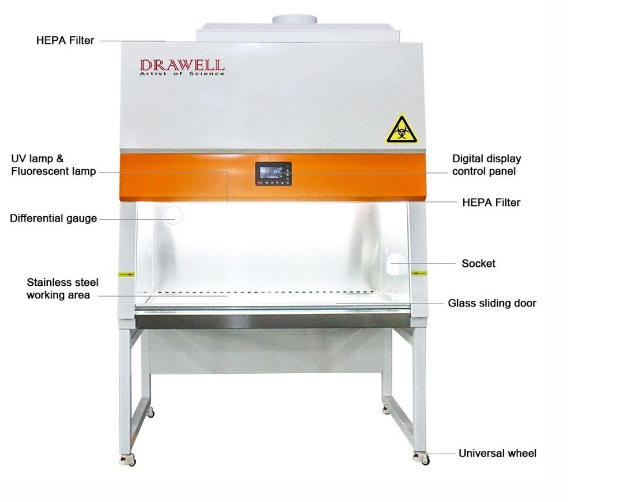
Major International Biosafety Cabinet Standards
NSF/ANSI 49
NSF/ANSI 49 is one of the most widely recognized standards for Class II biosafety cabinets, particularly in North America. It establishes performance and construction requirements for cabinets intended to protect laboratory personnel, the work product, and the surrounding environment.
The standard addresses important performance characteristics, including airflow patterns, HEPA filtration, cabinet integrity, containment capability, and testing procedures. It also provides a framework for evaluating cabinet performance under specified conditions.
Manufacturers and laboratories commonly use NSF/ANSI 49 as a reference when purchasing, certifying, and maintaining Class II biosafety cabinets. Buyers should confirm the applicable edition and whether a particular cabinet model is listed or certified under the relevant program, rather than assuming that every product described as compliant has undergone independent certification.
EN 12469
EN 12469 is a European standard addressing performance criteria for microbiological safety cabinets. It establishes requirements intended to support reliable containment and protection during microbiological laboratory work.
The standard covers aspects of cabinet performance such as personnel protection, product protection, environmental protection, and relevant testing methods. It is particularly relevant to laboratories and equipment suppliers operating in European markets.
When evaluating a cabinet for use in Europe, laboratories should check the applicable version of EN 12469 alongside relevant European Union requirements, national regulations, and workplace safety obligations. Product conformity, certification claims, and the scope of testing should be verified for the specific model.
AS 2252 Series
The AS 2252 series consists of Australian standards relating to biological safety cabinets and their performance. Different parts address different cabinet types and associated requirements.
These standards provide a framework for assessing cabinet construction, containment, filtration, and other safety-related characteristics, depending on the applicable part. Laboratories in Australia should identify the standard relevant to their cabinet classification and intended application.
Because standards can be revised and their scope can differ, users should consult the current applicable edition and relevant regulatory guidance before purchasing or certifying equipment.
ISO Standards and Related Requirements
ISO standards may also be relevant to biosafety cabinet manufacturing, laboratory quality management, cleanroom environments, and related testing activities. However, there is no single ISO standard that automatically replaces every biosafety cabinet-specific requirement.
For example, ISO 14644 addresses cleanrooms and associated controlled environments, while ISO 9001 addresses quality management systems. These standards can support quality assurance or environmental control, but they should not be treated as direct substitutes for a biosafety cabinet performance standard.
Laboratories should distinguish between standards that evaluate the cabinet itself and standards that apply to the surrounding facility, manufacturing processes, or quality management system.
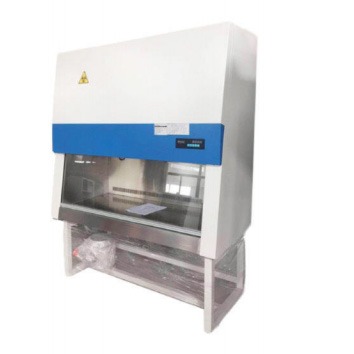
Understanding Biosafety Cabinet Classifications
Biosafety cabinet classifications determine the type of protection a cabinet is designed to provide. Choosing the correct classification is just as important as checking compliance with a particular standard.
Class I Biosafety Cabinets
Class I biosafety cabinets primarily protect laboratory personnel and the surrounding environment. Air enters through the cabinet’s front opening and passes through the work area before being exhausted through an appropriate filtration system.
Because the incoming air is not HEPA-filtered before reaching the work surface, Class I cabinets generally do not provide the same level of product protection as Class II cabinets. They may be suitable for specific procedures where personnel and environmental protection are required but sample sterility is not the primary concern.
Class II Biosafety Cabinets
Class II biosafety cabinets are widely used in clinical, microbiological, pharmaceutical, and biotechnology laboratories. They use controlled airflow and HEPA-filtered air to provide personnel, product, and environmental protection.
Common Class II designs include Type A1, Type A2, Type B1, and Type B2. These configurations differ in airflow characteristics, exhaust arrangements, and suitability for particular laboratory applications.
Type A2 Class II cabinets are commonly used for routine microbiological work. Type B cabinets have different exhaust requirements and may be appropriate for certain applications involving volatile toxic chemicals or radionuclides when the cabinet is specifically designed, installed, and operated for that purpose. Chemical use must always be evaluated against the cabinet’s design and applicable safety requirements.
Class III Biosafety Cabinets
Class III biosafety cabinets are gas-tight, enclosed systems designed to provide a high level of containment for work involving particularly hazardous biological materials. Laboratory personnel typically manipulate materials through attached gloves rather than reaching directly into the work chamber.
These cabinets are generally used in specialized facilities where stringent containment is necessary. Their installation and operation require careful consideration of exhaust treatment, pressure control, decontamination, maintenance, and facility-level biosafety measures.
Key Performance Requirements Under Biosafety Cabinet Standards
Airflow Control and Containment
Airflow is one of the most important factors in biosafety cabinet performance. The cabinet must maintain its specified airflow characteristics to reduce the risk of biological aerosols escaping into the laboratory or contaminating the work area.
Depending on the cabinet type, testing may assess inflow velocity, downflow velocity, airflow uniformity, and containment performance. These parameters must be evaluated according to the relevant standard and the manufacturer’s specified design.
Room ventilation, nearby doors, personnel movement, and equipment placement can disturb airflow around the cabinet. Therefore, correct installation and appropriate laboratory layout are essential for maintaining the intended level of protection.
HEPA Filtration Efficiency
High-efficiency particulate air filtration is a fundamental component of many biosafety cabinets. HEPA filters capture airborne particles and help prevent biological aerosols from passing through the filtration system.
Filter efficiency alone, however, does not establish that a cabinet is safe. Filter integrity, correct installation, seals, airflow performance, and the overall cabinet design also affect containment.
Standards-based testing may include filter leak testing and other assessments to identify defects or bypass leakage. Laboratories should ensure that testing is performed using suitable methods by qualified personnel.
Cabinet Construction and Physical Integrity
Biosafety cabinet standards also address construction characteristics that affect durability, cleanability, and safe operation. Work surfaces, cabinet enclosures, viewing windows, access openings, and other components must be appropriate for their intended use.
A well-designed cabinet should allow routine cleaning and decontamination while minimizing areas where contamination can accumulate. Materials must also be compatible with the disinfectants and cleaning procedures used in the laboratory.
Noise, Lighting, and Operational Conditions
Noise levels, illumination, alarms, and other operating characteristics can influence usability and laboratory working conditions. Depending on the applicable standard, these characteristics may be subject to specified requirements or evaluation procedures.
Adequate lighting supports accurate sample handling, while clear alarms can alert users to abnormal operating conditions. These features complement the cabinet’s primary containment functions but cannot compensate for inadequate airflow or filtration performance.
Biosafety Cabinet Certification and Field Testing
Manufacturing certification and on-site testing serve different purposes. A manufacturer may demonstrate that a cabinet design meets a recognized standard, while field testing confirms that an individual unit is functioning properly after installation or during its service life.
Before a new cabinet is placed into service, qualified technicians should perform the inspections and performance tests required by the applicable standard, manufacturer, and institutional procedures. These checks may include airflow measurements, filter integrity testing, containment tests, and assessments of alarms or other safety-related functions.
Routine recertification is also important because filters can deteriorate, components can shift, and airflow can change over time. For many Class II cabinets used in settings following NSF/ANSI 49, annual field certification is a common practice and may be required by the relevant program or institution. The exact frequency should be determined by the applicable standard, local requirements, risk assessment, and manufacturer guidance.
Testing should also be considered after relocation, repairs affecting airflow or filtration, filter replacement, or other events that could compromise performance. A cabinet should not be assumed safe simply because its fan is running or its display shows normal operating conditions.
How to Choose a Biosafety Cabinet That Meets the Standards
Selecting a compliant biosafety cabinet begins with an assessment of the biological materials, procedures, and level of containment required. Laboratories should determine whether personnel protection alone is sufficient or whether product and environmental protection are also necessary.
The next step is to identify the relevant cabinet classification and applicable standard. A laboratory operating in Europe may evaluate EN 12469 and relevant European requirements, while a laboratory in North America may look for NSF/ANSI 49 compliance or certification. Requirements in other regions may reference national standards or other recognized frameworks.
Buyers should then review technical documentation, including the cabinet’s intended applications, airflow specifications, filtration arrangements, exhaust requirements, installation instructions, and testing records. Certification claims should be checked against the scope of the applicable standard and, where relevant, the certifying body’s records.
Installation and service support are also important considerations. A cabinet that meets manufacturing requirements can still provide inadequate protection if installed incorrectly or maintained poorly. Choosing a supplier that can provide qualified commissioning, field testing, replacement filters, and technical support can help maintain compliance throughout the cabinet’s service life.
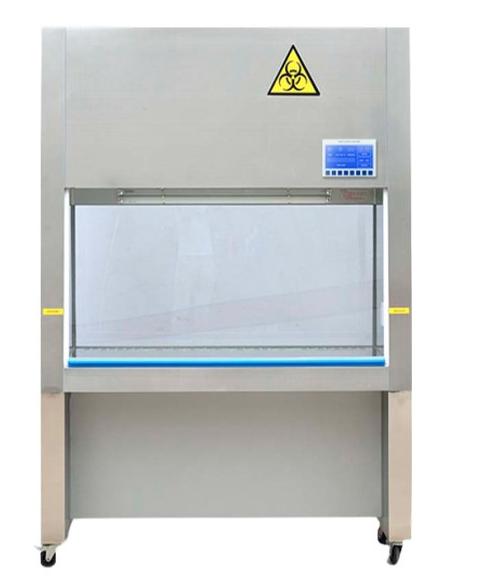
Common Challenges in Biosafety Cabinet Compliance
One common challenge is confusing biosafety cabinets with laminar airflow clean benches. Although both may use filtered air, a clean bench primarily protects the work product and is not designed to provide the same protection against hazardous biological materials for laboratory personnel. Using the wrong equipment can create serious exposure risks.
Another challenge is assuming that HEPA filtration alone guarantees biosafety. A damaged seal, incorrect airflow, unsuitable exhaust configuration, or poorly positioned cabinet can undermine protection even when the filter itself meets its efficiency specification.
Documentation gaps can also complicate compliance. Missing commissioning records, expired field certification, incomplete maintenance histories, or unclear certification claims make it difficult to establish whether equipment remains suitable for use. Laboratories can reduce these problems by maintaining an equipment register and scheduling testing and maintenance according to documented procedures.
Summary
Biosafety cabinet standards provide the foundation for evaluating the design, performance, and continued safe operation of laboratory containment equipment. NSF/ANSI 49, EN 12469, and relevant national standards address different regulatory and technical contexts, so laboratories must select the requirements appropriate to their location, cabinet classification, and intended use.
Reliable biosafety cabinet compliance involves more than purchasing equipment with a standards claim. It requires correct cabinet selection, verified performance, proper installation, regular field testing, qualified maintenance, and trained personnel. By treating compliance as an ongoing process, laboratories can strengthen biological containment, protect research materials, and support safer laboratory operations.
Metal zippers are widely used in apparel, handbags, luggage, footwear, and various industrial products because of their durability, distinctive appearance, and reliable fastening performance. Compared with nylon coil and plastic zippers, metal zippers offer a substantial feel and a classic metallic appearance that can enhance both the functionality and style of finished products.
However, different applications have different requirements for zipper size, tooth material, strength, flexibility, corrosion resistance, and surface finish. Choosing the right metal zipper helps manufacturers improve product quality, extend service life, and achieve the desired appearance.
For clothing brands, bag manufacturers, footwear producers, and other businesses, understanding how to select metal zippers for specific applications is essential for balancing performance, aesthetics, and cost.
Understand the Different Types of Metal Zippers
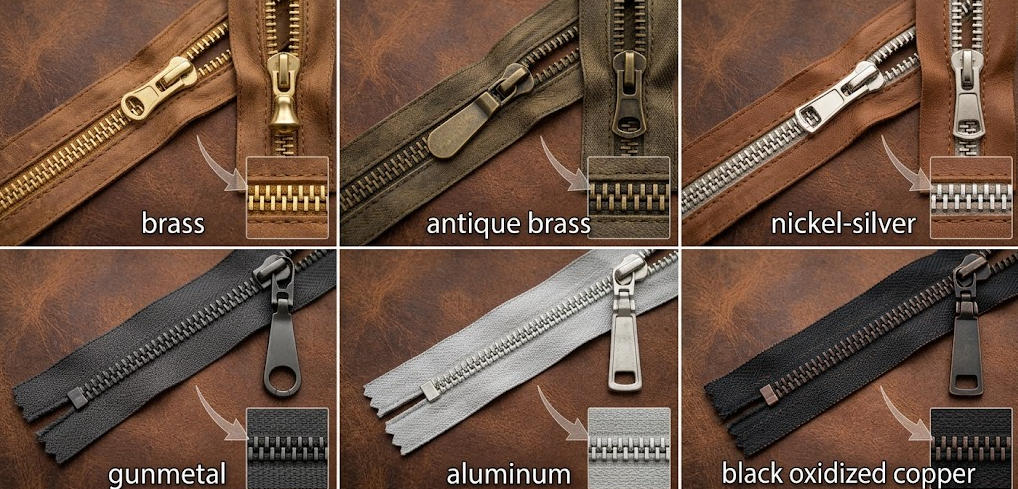
Before choosing a metal zipper, manufacturers should understand the characteristics of the different materials and finishes available. Brass and aluminum are common choices, while other metal alloys and surface treatments may be used for specialized requirements.
Brass Metal Zippers
Brass metal zippers are popular because of their durability, versatility, and attractive appearance. They are widely used in denim jeans, jackets, leather bags, workwear, and fashion accessories. Their teeth can provide reliable fastening performance under regular use.
Brass zippers are available in finishes such as polished brass, antique brass, and other decorative colors. These options allow manufacturers to coordinate zipper details with different fabrics, leather materials, and product styles.
Aluminum Metal Zippers
Aluminum metal zippers are relatively lightweight and offer a distinctive metallic appearance. They are suitable for products where reducing component weight is important while maintaining the visual appeal of metal teeth.
Common applications include fashion jackets, handbags, lightweight luggage, and selected outdoor accessories. However, aluminum may have different strength and wear characteristics from brass, so manufacturers should evaluate the expected load and usage conditions before making a decision.
Metal Zippers with Different Surface Finishes
Metal zippers can feature finishes such as nickel-tone, antique silver, gunmetal, black, and gold-tone. These finishes help manufacturers create different visual effects and coordinate zippers with other hardware.
It is important to distinguish the base metal from its surface finish. For example, a silver-colored zipper does not necessarily use silver as its base material. Buyers should confirm the material composition, plating or coating specifications, and relevant compliance requirements with their suppliers.
Choose the Appropriate Metal Zipper Size
Zipper size is one of the most important factors affecting performance and appearance. Common metal zipper sizes include #3, #5, #8, and #10, although specifications and availability may vary between manufacturers.
Smaller sizes, such as #3, are often used for lightweight garments, small pockets, wallets, and accessories. Medium sizes, such as #5, are widely used for denim jeans, jackets, and everyday handbags. Larger sizes, such as #8 and #10, may be suitable for heavy-duty bags, luggage, and products requiring a more substantial closure.
The appropriate size depends on the material thickness, expected mechanical load, opening length, and overall product design. A zipper that is too small may not provide sufficient strength, while an oversized zipper can add unnecessary weight and stiffness.
Manufacturers should also consider the relationship between zipper size and slider compatibility. Selecting compatible components helps ensure smooth operation and reduces the risk of jamming, tooth damage, or premature wear.
Selecting Metal Zippers for Different Applications
Metal Zippers for Jeans and Denim Apparel
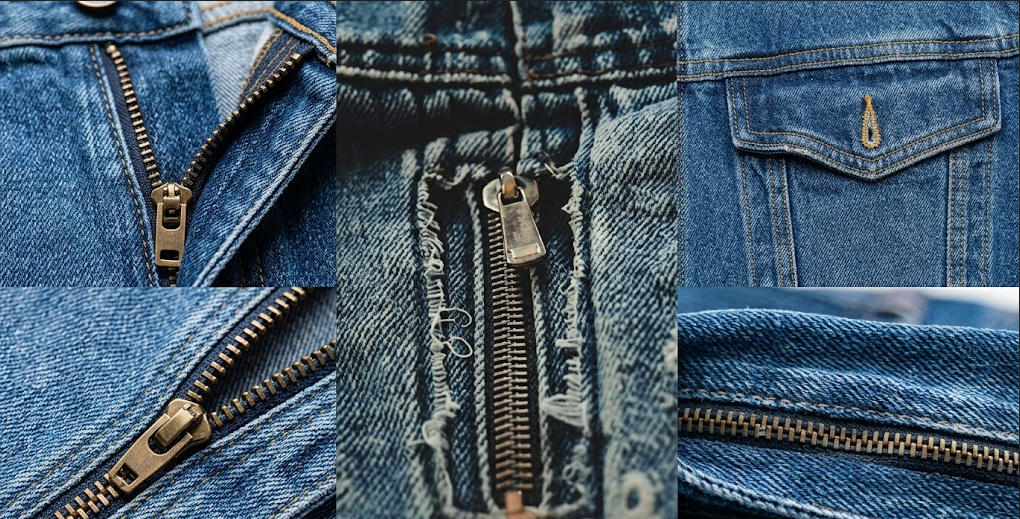
Metal zippers are commonly used in jeans because they combine dependable fastening performance with a classic appearance. Denim garments can place considerable stress on the zipper during sitting, bending, and other movements, making durability and tooth engagement important considerations.
Brass metal zippers are a popular option for denim jeans. Manufacturers should evaluate the strength of the zipper chain, slider movement, zipper length, and resistance to deformation. The zipper should open and close smoothly without separating during normal use.
The surface finish should also complement the denim design. Antique brass and traditional brass finishes work well with classic denim styles, while silver-tone and dark finishes may suit contemporary collections.
For washed or distressed denim, buyers should confirm that the zipper finish can withstand the garment’s washing and finishing processes. Testing samples before mass production helps prevent discoloration, corrosion, or other finish-related problems.
Metal Zippers for Jackets and Outerwear
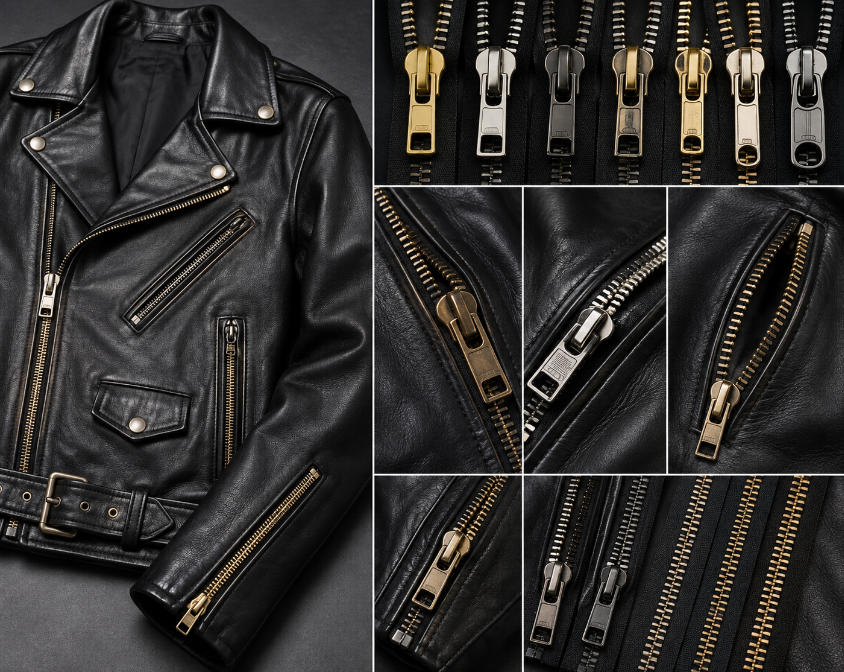
Jackets and outerwear require a balance of strength, smooth operation, and visual appeal. Metal zippers are frequently used in leather jackets, denim jackets, casual coats, and fashion outerwear.
For lightweight jackets, a medium-sized zipper may provide sufficient strength without making the garment too rigid. Heavy leather jackets and structured outerwear may benefit from larger teeth and a more robust construction.
The opening structure is another important consideration. Separating metal zippers are appropriate for jacket fronts that need to open completely, while closed-end zippers are commonly used for pockets and certain garment openings.
For outdoor jackets, manufacturers should consider exposure to moisture, humidity, perspiration, and temperature changes. Suitable materials and finishes can help improve corrosion resistance and maintain the zipper’s appearance. However, standard metal zippers are not inherently waterproof, so additional design features may be necessary for products requiring weather protection.
Metal Zippers for Handbags and Leather Goods
Handbags, wallets, purses, and other leather goods often use metal zippers as both functional fasteners and decorative elements. In these applications, appearance, smooth operation, and compatibility with other hardware are particularly important.
Brass metal zippers can create a premium, traditional appearance, while silver-tone and gunmetal finishes may suit modern, minimalist designs. Gold-tone finishes are also popular for coordinating with decorative buckles, chains, and other handbag accessories.
Manufacturers should consider the zipper size, slider design, tape color, and consistency of the surface finish. The zipper must also be compatible with the thickness and stiffness of the leather or synthetic material.
For handbags designed to carry heavy items, the strength of the zipper chain, slider, end stops, and surrounding stitching should be evaluated together. Even a high-quality metal zipper may fail if it is installed incorrectly or attached to unsuitable material.
Metal Zippers for Luggage and Travel Bags
Luggage and travel bags are exposed to frequent handling, abrasion, heavy contents, and changing environmental conditions. Their zippers must provide reliable operation while resisting damage during transportation.
Larger metal zippers, including #8 and #10 options, may be suitable for certain travel bags and heavy-duty designs. However, the appropriate size depends on the bag’s structure, loading conditions, and closure design.
Manufacturers should pay attention to chain strength, slider durability, tooth engagement, and the quality of the zipper’s attachment. A strong zipper assembly requires more than large teeth; the tape, stitching, stops, and surrounding fabric must also withstand the expected forces.
Corrosion resistance deserves attention when luggage is used in humid or coastal environments. Buyers should select suitable materials and finishes based on the expected exposure conditions.
For luggage that prioritizes lightweight construction or requires extensive curved zipper paths, nylon coil zippers may offer practical advantages. Manufacturers should compare the complete product requirements before deciding whether metal is the most suitable choice.
Metal Zippers for Footwear
Metal zippers are widely used in boots, fashion footwear, and selected leather shoes. They provide convenient opening and closing while contributing to the overall appearance of the footwear.
Footwear zippers must withstand repeated bending and movement as the wearer walks. Manufacturers should select a suitable zipper size and position it carefully to minimize unnecessary stress on the chain.
Smooth slider movement, secure tooth engagement, appropriate length, and reliable attachment are essential. The zipper tape should also be compatible with the leather or synthetic materials used in the shoe.
Because footwear can be exposed to rain, mud, perspiration, and cleaning products, corrosion resistance is particularly important. A suitable base material and surface treatment can help maintain performance and appearance throughout the product’s service life.
Metal Zippers for Workwear and Heavy-Duty Products
Workwear, tool bags, utility pouches, and rugged fabric products may require zippers that can withstand frequent operation, abrasion, and mechanical stress.
For these applications, manufacturers should prioritize functional reliability rather than appearance alone. Important considerations include tooth strength, slider durability, chain alignment, and resistance to deformation under expected loads.
Brass and other suitable metal zippers can be considered when their properties meet the application’s requirements. Larger sizes may be appropriate for heavy materials, but the final selection should also account for the product’s construction and the quality of the zipper components.
For specialized industrial applications involving chemicals, saltwater, or extreme temperatures, buyers should define the operating environment and carry out material compatibility testing before approving a zipper for production.
Consider Zipper Length and Opening Structure
In addition to size and material, zipper length and construction must match the finished product’s design.
Closed-end metal zippers are commonly used for jeans, wallets, pockets, and many bags. Their bottom ends remain joined, creating a fixed closure that does not separate completely.
Separating metal zippers are commonly used for jacket fronts and other garments that need to open fully. Their bottom components allow the two sides to disengage when the zipper is opened.
Two-way metal zippers use two sliders or another compatible construction to allow access from different directions. They can be useful for long outerwear, selected luggage, and equipment covers where flexible access is beneficial.
The zipper length should be determined according to the product pattern and installation requirements. A zipper that is too short may restrict access, while an excessively long zipper can interfere with seams, pocket placement, or garment proportions.
Manufacturers should also confirm slider compatibility, puller dimensions, top and bottom stops, and installation tolerances before approving a zipper for mass production.
Evaluate Corrosion Resistance and Surface Finish
The surface finish of a metal zipper affects its appearance and may influence its resistance to environmental exposure. However, an attractive finish does not automatically guarantee good corrosion resistance.
Products intended for humid climates, outdoor use, footwear, or frequent washing may require more careful material selection and testing. Buyers should ask suppliers about the base metal, plating or coating process, corrosion-test methods, and compatibility with cleaning or finishing chemicals.
Finish consistency is equally important for fashion products. Zipper teeth, sliders, pullers, and other metal accessories should have a coordinated appearance. Variations between production batches can be particularly noticeable on premium handbags, leather goods, and branded apparel.
When a specific color is required, manufacturers should approve samples and establish acceptable color tolerances before bulk production. They should also verify that the finish remains stable after relevant washing, rubbing, or environmental tests.
Test Metal Zipper Quality and Durability
Choosing a metal zipper requires more than comparing photographs or unit prices. The zipper must perform consistently under the conditions expected for the finished product.
Manufacturers should evaluate chain alignment, tooth engagement, slider movement, end-stop security, tape strength, and finish uniformity. These factors influence both the user’s experience and the overall reliability of the finished product.
Repeated opening-and-closing tests can help identify premature wear, jamming, or chain separation. Pull tests and other mechanical evaluations can help determine whether the zipper assembly can withstand the intended loads. Corrosion, washing, and colorfastness tests may also be necessary depending on the application.
Testing should reflect the actual operating environment. A zipper used in a leather handbag may require different evaluations from one installed in frequently washed workwear or outdoor footwear.
It is also advisable to inspect samples from production batches and maintain clear quality specifications. Consistent inspection procedures help manufacturers identify defects early, reduce waste, and minimize customer complaints.
Work with a Reliable Metal Zipper Manufacturer
A reliable metal zipper manufacturer can help buyers match zipper specifications to product requirements, particularly when a project involves custom colors, unusual lengths, special finishes, or large production volumes.
When evaluating a supplier, manufacturers and purchasing teams should consider production capabilities, material options, quality-control procedures, sample availability, customization services, and delivery schedules.
Clear communication is especially important when ordering metal zipper chains in rolls or developing zippers for multiple product lines. Buyers should specify the required size, tooth material, surface finish, tape color, roll length, slider compatibility, and packaging requirements.
For customized products, requesting pre-production samples is a practical way to verify appearance, dimensions, and operating performance before approving a bulk order. Buyers should also clarify minimum order quantities, production lead times, and the supplier’s process for managing quality issues.
An experienced zipper manufacturer can help identify potential compatibility problems before production begins, making it easier to balance performance, appearance, and cost.
Balance Performance, Appearance, and Cost
The best metal zipper is not necessarily the most expensive or the largest. It is the option that meets the finished product’s functional and aesthetic requirements at an appropriate cost.
For basic denim garments and everyday accessories, a standard metal zipper may provide a practical balance of performance and price. Premium leather goods may justify specialized finishes, custom pullers, or tighter appearance tolerances. Heavy-duty luggage and workwear may require additional testing and stronger components to meet their service requirements.
Manufacturers should also consider the total cost of ownership rather than focusing exclusively on the purchase price. Defective components, production delays, installation difficulties, product returns, and warranty claims can increase the overall cost of choosing an unsuitable zipper.
By assessing the expected service life and the consequences of zipper failure, manufacturers can make more informed purchasing decisions and select components that provide long-term value.
Summary
Choosing metal zippers for different applications requires careful consideration of size, base material, surface finish, zipper length, opening structure, durability, and environmental conditions. Jeans, jackets, handbags, luggage, footwear, and workwear each have distinct requirements that should guide the selection process.
Manufacturers should evaluate the zipper as part of the complete product, ensuring that its chain, slider, stops, tape, and installation method work together reliably. Sample testing, clear specifications, and cooperation with an experienced zipper supplier can further improve product consistency and reduce production risks.
Ultimately, the right metal zipper combines dependable fastening performance with an appearance and cost structure suited to the intended product. By selecting zipper components according to actual application requirements, manufacturers can improve product quality, strengthen brand value, and deliver finished goods that meet customer expectations.
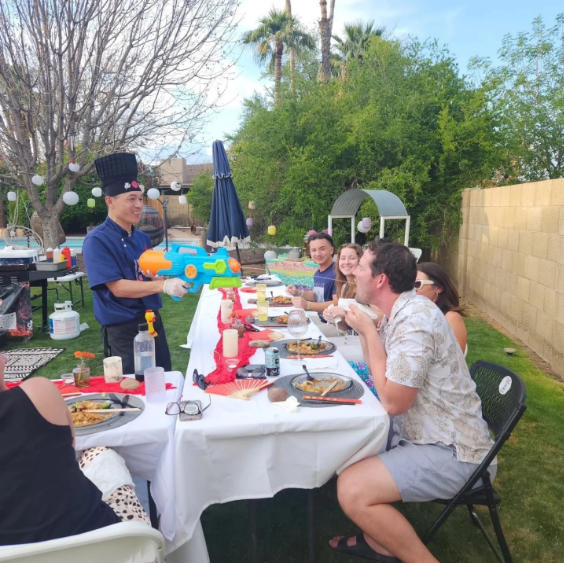
Interactive hibachi chefs are becoming an increasingly attractive option for people planning memorable dining experiences in Orlando. Instead of simply serving food, these chefs combine freshly prepared meals, live cooking demonstrations, entertaining performances, and personalized service to create an engaging experience for guests. From backyard birthday parties to family gatherings and corporate events, interactive hibachi catering offers a unique way to bring people together through food and entertainment.
As Orlando continues to attract tourists, families, and event planners looking for distinctive experiences, hibachi at home provides an appealing alternative to traditional restaurants and standard catering services. Guests can enjoy restaurant-style hibachi cooking in a familiar setting while watching skilled chefs prepare meals right in front of them.
Interactive Cooking Turns Dining into Entertainment
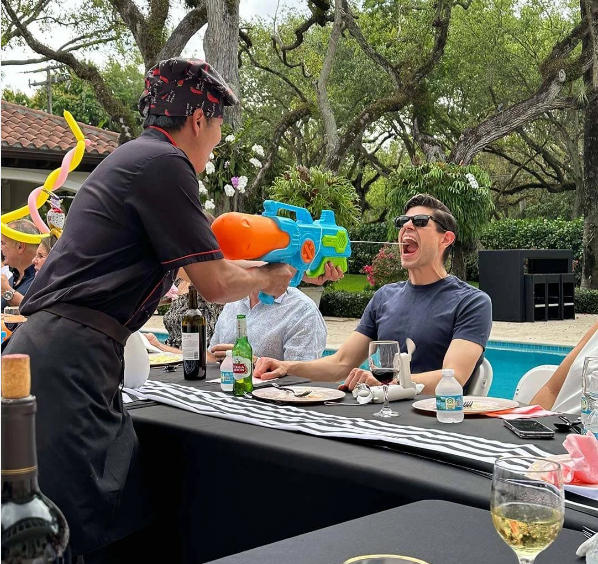
One of the main reasons interactive hibachi chefs are becoming more popular in Orlando is their ability to transform an ordinary meal into an entertaining event. Traditional catering typically focuses on preparing and serving food, while hibachi chefs make the cooking process part of the experience.
Guests can watch chefs chop ingredients, operate the grill, prepare fried rice, and perform familiar cooking tricks. Depending on the chef’s style, the performance may include impressive utensil skills, playful jokes, and audience participation.
This combination of food and entertainment helps create a lively atmosphere that appeals to guests of different ages. Children may enjoy the visual excitement, while adults appreciate the social interaction and freshly cooked meals.
For hosts, hiring an interactive hibachi chef means providing more than dinner. It creates a shared experience that guests can enjoy together and remember long after the event ends.
Hibachi at Home Offers Greater Convenience
Convenience is another important factor driving the popularity of interactive hibachi chefs in Orlando. Organizing a group dinner at a restaurant can involve reservations, transportation, parking, waiting times, and coordinating arrival schedules.
With an at-home hibachi service, the chef and catering team typically bring the necessary cooking equipment and ingredients to the customer’s location, subject to the provider’s service arrangements. This allows guests to enjoy a hibachi-style meal without traveling to a restaurant.
Backyard gatherings, patios, and suitable outdoor event spaces can be transformed into private dining areas. Hosts can spend more time interacting with their guests instead of managing restaurant logistics.
For people planning birthday parties, family reunions, graduation celebrations, or neighborhood gatherings, this convenient arrangement can make event planning easier and more enjoyable.
Personalized Experiences Suit Different Occasions
Interactive hibachi catering is popular because it can be adapted to a variety of events. Rather than following a standard restaurant dining format, hosts can coordinate the menu, guest count, event schedule, and atmosphere with the catering provider.
For birthday parties, the chef’s performance adds excitement to the celebration. For anniversaries and family gatherings, live cooking creates an engaging activity that encourages conversation. Corporate event organizers can also use hibachi catering to offer employees and clients a more relaxed and memorable dining experience.
The flexibility of the format makes it suitable for both casual and more organized private events. Depending on the provider, customers may be able to choose different protein options, side dishes, and menu combinations.
Before booking, hosts should confirm the available packages, minimum guest requirements, service area, setup needs, and any additional charges.
Freshly Prepared Food Appeals to Orlando Diners
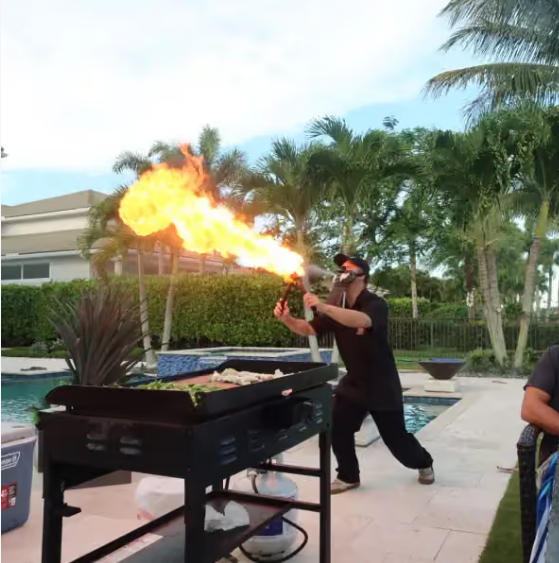
Although entertainment attracts attention, food quality remains essential to a successful hibachi experience. Interactive hibachi chefs generally prepare meals on-site, allowing guests to watch ingredients being cooked and served fresh.
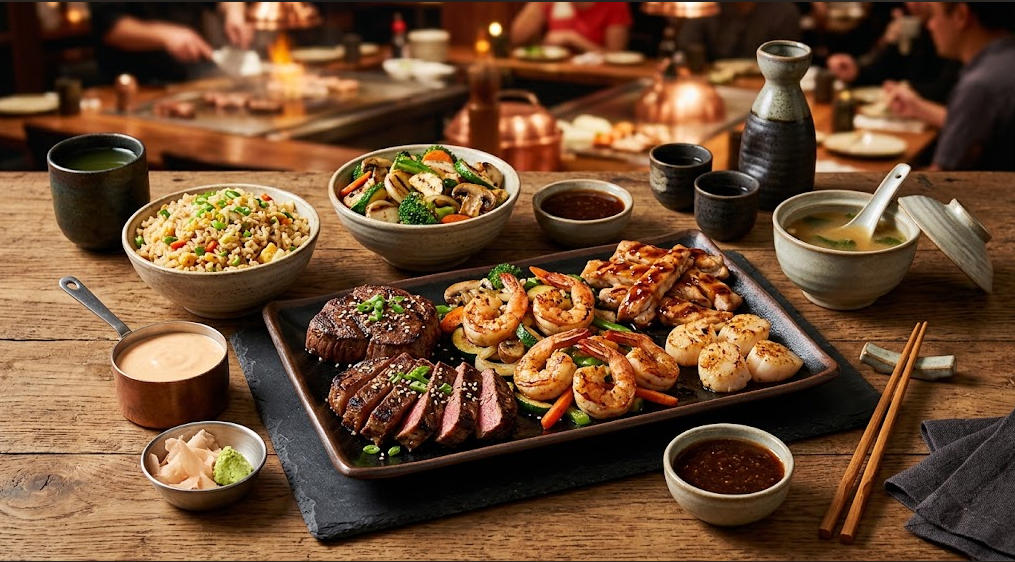
Common menu options include steak, chicken, shrimp, vegetables, fried rice, and noodles, although selections vary by provider. The live preparation process gives guests a closer look at how their meals are made and adds a sense of freshness to the dining experience.
Another advantage is the opportunity to discuss dietary preferences before the event. Hosts may be able to request vegetarian selections, ingredient adjustments, or alternatives for guests with specific food requirements.
However, customers should communicate allergies and dietary restrictions in advance. They should also confirm whether the chef can prevent cross-contact between ingredients, especially when severe food allergies are involved.
Outdoor Living Makes Hibachi Catering an Attractive Option
Orlando’s warm climate makes outdoor entertaining appealing for much of the year, although heat, humidity, rain, and seasonal storms can affect event plans.
Interactive hibachi catering works particularly well for suitable backyards, patios, and outdoor gathering spaces where the chef can establish a safe cooking area. Guests can gather around the cooking station, watch the performance, and enjoy their meals in a relaxed environment.
This arrangement is especially attractive for hosts who want to make better use of their outdoor spaces. A backyard can become a private dining venue without the expense or complexity of organizing a large formal event.
Nevertheless, outdoor hibachi requires appropriate ventilation, adequate clearance from structures and combustible materials, and a stable surface for the cooking equipment. Hosts should discuss site requirements with the catering provider and arrange a weather backup when necessary.
Interactive Hibachi Creates More Opportunities for Social Connection
Another reason for the growing appeal of interactive hibachi dining is its ability to bring people together. At many traditional dinners, guests spend much of their time talking with the people seated immediately beside them. Interactive cooking provides a shared focal point that can encourage conversations across the group.
The chef’s performance gives guests something to watch, react to, and discuss. Friendly jokes, cooking demonstrations, and opportunities to participate can help people feel more involved in the event.
This is particularly valuable when guests do not know one another well. At corporate gatherings, networking events, and celebrations involving different social groups, an interactive chef can help break the ice and make the atmosphere less formal.
For families, the experience also gives children and adults a common activity to enjoy while waiting for their meals.
A Unique Alternative to Traditional Catering
Traditional catering remains a practical choice for large events, formal dinners, and occasions requiring buffet-style service. However, it may not provide the same level of live entertainment as an interactive hibachi experience.
Interactive hibachi chefs combine meal preparation with performance, creating a distinctive alternative for hosts who want their dining arrangements to become part of the event itself.
The best choice depends on the event’s objectives. Interactive hibachi is especially suitable when hosts prioritize entertainment and personal engagement, while traditional catering may be more practical when efficient service for a large number of guests is the main concern.
Social Media Helps Increase Interest in Hibachi Experiences
Visual experiences are particularly easy to share online, and interactive hibachi offers plenty of memorable moments. Colorful ingredients, sizzling grills, chef performances, and guests reacting to cooking tricks can all make appealing photos and videos.
Guests may share these moments on social media, allowing friends and family to discover the experience. For Orlando catering businesses, customer-generated content can also help introduce their services to people searching for birthday party ideas, private chefs, or unique backyard entertainment.
This visibility can contribute to greater awareness of interactive hibachi catering. However, social media popularity alone does not guarantee service quality. Customers should still evaluate reviews, menu details, pricing transparency, and the provider’s experience before booking.
Interactive Hibachi Can Deliver Value Beyond the Meal
When comparing catering options, hosts often consider more than the price of the food. They also evaluate entertainment, convenience, service, and the overall experience provided to guests.
An interactive hibachi package may combine cooking equipment, ingredients, chef services, and live entertainment into one booking. This can simplify planning because hosts do not necessarily need to hire a separate entertainer for the meal period.
However, the total cost depends on several factors, including the number of guests, menu selections, travel distance, event duration, and additional service fees. Some providers may also charge minimum booking fees or require specific setup arrangements.
Hosts should compare the complete package price rather than looking only at the per-person food cost. The value is strongest when live cooking, entertainment, and convenience align with the event’s priorities and budget.
How to Choose an Interactive Hibachi Chef in Orlando
As interest in at-home hibachi grows, choosing a suitable provider becomes an important part of event planning. A well-organized service should deliver an enjoyable performance while maintaining food quality, safety, and reliable communication.
Start by checking whether the hibachi catering provider serves your specific Orlando neighborhood and whether the event location meets its setup requirements. Review the available menus, guest capacity, pricing structure, cancellation policy, and any additional charges.
It is also useful to ask how the chef interacts with guests and whether the performance is appropriate for the age group and atmosphere of your event. If children will attend, discuss safety boundaries around the cooking station.
Finally, confirm the practical details before making a reservation. These include arrival time, setup and cleanup responsibilities, seating arrangements, weather contingencies, and procedures for accommodating dietary requirements.
A provider that communicates clearly and explains these details in advance is more likely to deliver a smooth and enjoyable event.
Final Thoughts
Interactive hibachi chefs are becoming a popular option for Orlando gatherings because they offer more than a meal. By combining live cooking, entertainment, freshly prepared food, and personalized service, they create an engaging experience for birthdays, family celebrations, backyard parties, and corporate events.
Their convenience and flexibility also make them attractive to hosts who want to entertain guests without organizing a traditional restaurant outing. With appropriate planning, a suitable cooking area, and a reliable catering provider, hibachi at home can turn an ordinary gathering into a memorable occasion.
For Orlando hosts who value both good food and interactive entertainment, hiring an interactive hibachi chef is an excellent option to consider. The key is to choose a service that matches the event’s size, budget, menu preferences, and location requirements.
Hibachi at home in Tampa has become an appealing option for people who want to combine delicious food, live cooking entertainment, and a relaxed private dining experience. Whether you are planning a birthday party, a family reunion, a graduation celebration, or a corporate gathering, hiring a private hibachi chef allows you to enjoy Japanese-style cuisine without leaving your home. However, before arranging your event, one important question to consider is how many guests a hibachi at home service can accommodate.
The number of guests a private hibachi chef can serve depends on the catering provider, the number of chefs and cooking stations, the menu, the available space, and the time allocated for the event. Small gatherings may be easy to organize with a single cooking station, while larger celebrations may require additional equipment and staff. Understanding these factors can help Tampa hosts choose an appropriate catering arrangement and create a memorable dining experience.

Understanding the Typical Guest Capacity of Hibachi at Home in Tampa
Hibachi at home services can accommodate a variety of event sizes, ranging from intimate dinners to large private celebrations. However, there is no universal guest limit because each catering company establishes its own service requirements and equipment capacity.
For a small gathering of approximately two to ten guests, one chef and one cooking station may be sufficient, depending on the provider’s policies. This arrangement works well for family dinners, date nights, small birthday celebrations, and gatherings with close friends. With fewer guests, the chef can often provide a more personalized experience while preparing meals and interacting with everyone around the cooking station.
Medium-sized gatherings of approximately eleven to twenty guests are also suitable for many private hibachi events. This group size is popular for birthday parties, family reunions, and graduation celebrations. Depending on the menu and service model, a single station may be sufficient, or an additional cooking station may be recommended to maintain a comfortable serving schedule.
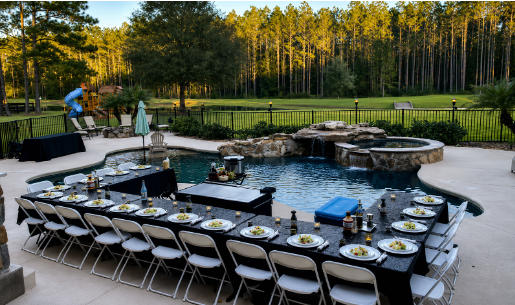
For larger parties involving twenty-one to forty guests, planning becomes more important. The catering provider may need multiple cooking stations, additional chefs, or a customized service arrangement. These events often require more preparation time, larger quantities of ingredients, and a well-organized seating layout.
Events with more than forty guests may also be possible, but capacity must be confirmed directly with the catering company. Large gatherings may require several chefs, multiple cooking stations, and a longer service period. These guest ranges are general planning estimates rather than guaranteed capacity limits, so hosts should always discuss their specific requirements before making a reservation.
Factors That Determine How Many Guests a Hibachi Chef Can Serve
Several factors influence how many guests a hibachi at home service can accommodate in Tampa. Considering these elements before booking can help prevent scheduling problems and ensure that everyone enjoys the experience.
The Number of Chefs and Cooking Stations
The number of available chefs and cooking stations directly affects the provider’s ability to serve a large group efficiently. A single station has a limited cooking surface and preparation capacity, while multiple stations can distribute the workload and make it easier to accommodate more guests.
However, adding another station does not automatically double the number of people who can be served. The number of chefs, the available equipment, the complexity of the menu, and the catering company’s operating procedures also influence overall capacity.
When contacting a hibachi catering provider in Tampa, ask how many guests each setup can accommodate and whether additional chefs or cooking stations are available for larger events. This information can help you select an arrangement that fits both your guest count and your preferred dining schedule.
The Type of Menu and Food Preparation Requirements
Menu selection is another important consideration when estimating guest capacity. A standard hibachi menu featuring chicken, steak, shrimp, vegetables, and fried rice may be easier to coordinate than a menu with numerous customized dishes and special requests.
For larger gatherings, the caterer needs to prepare sufficient ingredients and organize cooking activities to serve everyone within the planned timeframe. Dietary preferences and food allergies should also be discussed before the event so the provider can determine whether additional preparation is necessary.
Choosing a suitable menu in advance can help simplify food preparation, reduce unnecessary delays, and create a smoother dining experience for guests.
Event Duration and Serving Schedule
The length of the event can significantly influence how many guests a hibachi chef can serve. A private hibachi experience generally involves equipment setup, food preparation, live cooking, meal service, and cleanup. The total time required depends on the service package and the size of the group.
For a small gathering, the chef may be able to prepare meals within a relatively short period. Larger parties may need additional cooking time, especially when the provider uses a limited number of stations or serves guests in separate rounds.
Before booking, discuss your preferred event schedule with the caterer. If you are planning a birthday party or graduation celebration with other activities, understanding the expected meal service time can help you coordinate the entire event more effectively.
Available Space at Your Tampa Property
The size and layout of your property can also determine whether a hibachi at home service is suitable for your guest count. A small patio may comfortably accommodate a family dinner but may not provide enough room for a large party with multiple cooking stations.
The cooking area should have sufficient space for the equipment, chefs, and guests while allowing everyone to move around safely. Seating arrangements, access to the serving area, and appropriate clearance around cooking equipment should also be considered.
For outdoor events, Tampa’s warm climate can make backyard dining attractive, but weather conditions should not be overlooked. Rain, high temperatures, and storms may affect the setup, so having a suitable covered area or backup arrangement can help protect your event plans.
Choosing the Right Hibachi Setup for Different Tampa Events
The ideal hibachi setup depends on the type of celebration you are organizing and the number of people attending. A small private dinner usually prioritizes personal interaction and a relaxed atmosphere, while a large celebration requires greater attention to equipment, service timing, and guest movement.
For family dinners and small birthday parties, a single cooking station may provide everything needed for an enjoyable experience. Hosts can arrange seating around the cooking area and allow guests to watch the chef prepare their meals.
For gatherings with fifteen to twenty guests, it is important to confirm whether one station can serve everyone within the desired timeframe. The private hibachi provider may recommend a different setup depending on the menu and the amount of time available.
For corporate events, graduation parties, and family celebrations with thirty or more guests, multiple cooking stations or additional staff may be more appropriate. These arrangements can help distribute the cooking workload and improve service efficiency. However, the final configuration should be based on the caterer’s confirmed capacity rather than guest count alone.
When planning an especially large event, request a customized catering arrangement. The provider can assess the number of guests, venue layout, menu preferences, and event schedule before recommending a practical solution.
How to Plan a Successful Hibachi Party at Home in Tampa
Planning a successful hibachi party begins with establishing an accurate guest count. Before contacting a catering company, determine approximately how many people will attend and whether the number may change before the event. This information helps the provider estimate food requirements and recommend an appropriate setup.
Booking early is also helpful, especially for weekend celebrations, holidays, and graduation season. If your event requires multiple chefs or cooking stations, advance communication gives the catering company more time to coordinate staff and equipment.
The venue should be evaluated before the booking is finalized. Consider whether your backyard, patio, or other approved location has enough space for the cooking station, dining arrangements, and safe movement. If you prefer an indoor event, confirm that the proposed setup is permitted and meets the provider’s ventilation and fire-safety requirements.
Menu planning is equally important. Discuss available proteins, side dishes, vegetarian options, and dietary restrictions with the caterer. For a large group, confirming the menu and guest count in advance can make ingredient preparation and meal service more predictable.
Finally, establish a realistic event schedule. Ask when the chef will arrive, how long setup will take, how the meals will be served, and whether the planned guest count requires additional cooking time. A clear schedule helps you coordinate the meal with entertainment, speeches, decorations, and other activities.
Why Hibachi at Home Is Ideal for Private Gatherings in Tampa
Hibachi at home offers more than a convenient way to serve food. It combines freshly prepared meals with live cooking entertainment, creating an interactive experience that works well for a wide range of private occasions.
For Tampa residents, this type of catering is particularly attractive for backyard birthdays, family reunions, graduation parties, and gatherings with friends. Guests can enjoy the atmosphere of a shared meal without traveling to a restaurant or coordinating a reservation for a large group.
Another advantage is flexibility. Hosts can discuss their preferred menu, guest count, venue, and event schedule with the catering provider to determine which arrangement is most suitable. Small gatherings can focus on personalized service, while larger celebrations can explore additional cooking stations and customized packages.
The key is to match the service setup to the size and needs of the event. Rather than assuming every hibachi chef can serve the same number of guests, confirm the available options and any capacity restrictions before making a final decision.
Final Words
How many guests can a hibachi at home serve in Tampa? The answer depends on the catering company’s capabilities, the number of chefs and cooking stations, the menu, the event duration, and the available space. Small gatherings of two to ten guests may be straightforward to organize, while groups of eleven to twenty require careful consideration of service timing. Larger events involving twenty-one to forty guests or more may need multiple stations, additional staff, or customized catering arrangements.
The best way to determine the right setup is to contact a local hibachi catering provider with your expected guest count, preferred location, and event details. With proper planning and a suitable service arrangement, you can create an enjoyable hibachi at home experience for your guests in Tampa, whether you are hosting an intimate family dinner or a large private celebration.
Unconventional oil drilling operations have become increasingly important in meeting global energy demand. Unlike conventional drilling, unconventional oil extraction often involves complex geological formations, low-permeability reservoirs, horizontal drilling, and specialized well construction techniques. These operations require advanced drilling technologies, precise operational control, and highly skilled personnel to ensure efficiency and safety.
However, unconventional drilling presents significant challenges, including unpredictable formation pressures, wellbore instability, complex well trajectories, equipment failures, and well control risks. Traditional classroom instruction and on-the-job training may not provide sufficient opportunities for personnel to practice handling these situations before entering actual drilling environments.
Training simulators for unconventional oil drilling operations offer an effective solution by recreating realistic drilling conditions in a controlled virtual environment. Through interactive exercises, real-time operational feedback, and scenario-based training, personnel can develop technical skills, improve decision-making, and strengthen emergency response capabilities without exposing themselves or operational equipment to unnecessary risks.
What are Training Simulators for Unconventional Oil Drilling Operations?
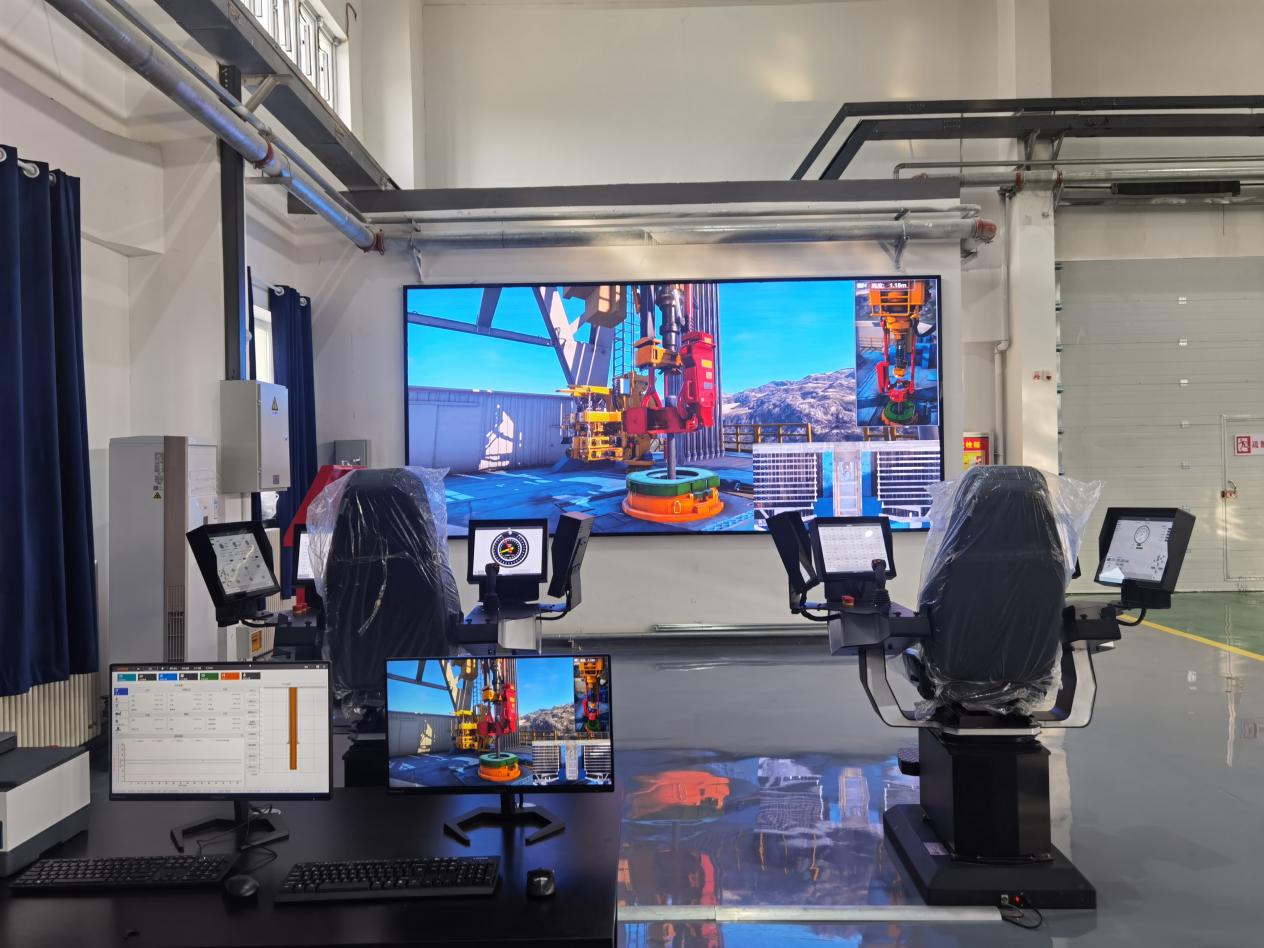
Training simulators for unconventional oil drilling operations are specialized systems designed to reproduce drilling equipment, operational procedures, and downhole conditions associated with unconventional reservoirs. These systems combine simulation software, physical control interfaces, mathematical models, and visualization technologies to create realistic training environments.
Depending on their design, drilling simulators can support horizontal drilling, directional drilling, managed pressure drilling, well control, and selected completion-related operations. Trainees can interact with simulated drilling equipment, adjust operating parameters, monitor well conditions, and observe how their decisions influence operational outcomes.
Unlike traditional theoretical instruction, simulator-based training provides opportunities for repeated practical exercises. Trainees can experience routine drilling activities as well as abnormal situations, such as unexpected pressure changes, circulation problems, or deviations from planned well trajectories.
This approach enables personnel to develop operational familiarity, recognize potential hazards, and improve their ability to respond appropriately before performing similar tasks in the field.
Key Unconventional Drilling Operations Supported by Training Simulators
Horizontal and Directional Drilling
Horizontal drilling is widely used in unconventional oil development, particularly in shale and other low-permeability formations. The process typically involves drilling a vertical or inclined section before steering the wellbore toward a horizontal trajectory within the target reservoir.
Training simulators allow operators to practice trajectory planning, directional control, drilling parameter adjustment, and wellbore placement. They can also reproduce unexpected trajectory deviations, helping trainees understand how to evaluate drilling data and apply corrective measures.
By practicing different scenarios, drilling personnel can improve their understanding of well geometry, formation characteristics, and the relationship between operational decisions and drilling performance.
Managed Pressure Drilling
Managed pressure drilling is used to control the pressure profile within the wellbore more precisely. It can be particularly valuable when drilling through formations with narrow pressure margins or challenging pressure conditions.
Simulators can reproduce changes in annular pressure, circulation rates, backpressure, and other relevant operating parameters. Trainees can practice interpreting pressure data, adjusting control settings, and responding to changing well conditions.
This training helps personnel understand the interaction between drilling fluids, formation pressure, and surface pressure-control equipment.
Well Control Operations
Well control is one of the most critical aspects of unconventional drilling. Unexpected formation-fluid influxes can lead to serious operational hazards if they are not detected and managed correctly.
Training simulators can recreate kick detection, shut-in procedures, pressure monitoring, and well-killing operations. With well control training simulators, trainees can practice recognizing early warning signs, communicating abnormal conditions, and following established well control procedures.
Repeated exercises also allow instructors to introduce different levels of difficulty, helping operators develop the judgment and procedural discipline needed for demanding situations.
Completion-Related Operations
Although hydraulic fracturing and many completion activities take place after drilling, they are closely connected to the overall development of unconventional oil wells.
Specialized simulation systems can support training in pressure management, pumping operations, equipment coordination, and completion procedures. Integrated training environments can also help personnel understand the relationship between well construction, completion activities, and long-term production performance.
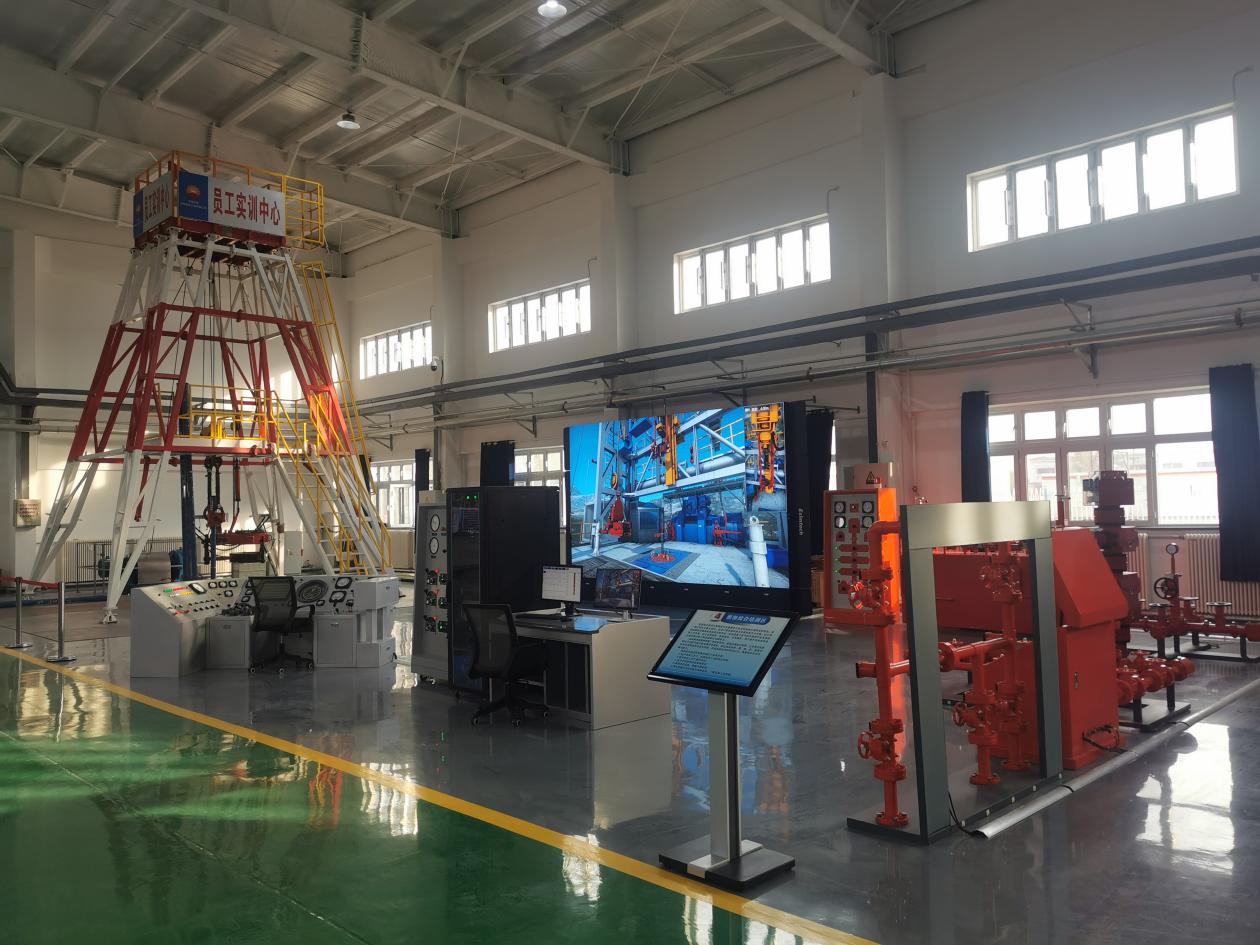
Main Components of Unconventional Drilling Training Simulators
A modern drilling training simulator typically integrates several hardware and software components to reproduce operational conditions and support practical learning.
Drilling Control Console
The drilling control console provides interfaces that resemble the controls used in actual drilling operations. Depending on the simulator, these may include drilling parameter controls, circulation system interfaces, pressure-control displays, and equipment monitoring instruments.
Familiarity with these interfaces helps trainees understand operating procedures and develop confidence when transitioning to real equipment.
Drilling Simulation Software
Simulation software forms the foundation of the training system. It models drilling processes and reproduces the responses of equipment and downhole systems to operator inputs.
For unconventional drilling, the software may include models of directional drilling, drilling fluid circulation, pressure behavior, and well control. The accuracy and validation of these models directly influence the relevance of the training experience.
Geological and Wellbore Models
Unconventional reservoirs often contain complex geological structures and formations with different mechanical and pressure characteristics.
Geological and wellbore models help reproduce formation conditions, well trajectories, and potential drilling difficulties. These models allow trainees to practice adapting operational decisions to different reservoir environments.
Visualization and Monitoring Systems
Visualization systems present drilling parameters, equipment status, wellbore information, and other operational data through graphical interfaces or three-dimensional displays.
These tools help trainees interpret complex information, identify abnormal conditions, and understand how different drilling parameters interact.
Instructor and Assessment Systems
Instructor stations allow trainers to configure scenarios, introduce equipment faults, modify simulated operating conditions, and monitor trainee actions.
Assessment functions can record operational parameters, decision sequences, procedural errors, and response times. Instructors can use this information to identify weaknesses and develop targeted training plans.
Benefits of Training Simulators for Unconventional Oil Drilling Operations
Improving Drilling Safety
Safety is a major priority in unconventional oil drilling because of the potential for unexpected pressure changes, wellbore instability, equipment malfunctions, and loss of well control.
Training simulators allow personnel to practice responding to these hazards in a controlled environment. They can learn to identify warning signs, follow emergency procedures, and coordinate with other team members without exposing themselves to actual operational dangers.
Repeated practice helps reinforce safety awareness and encourages consistent adherence to established procedures.
Enhancing Technical Competency
Unconventional drilling requires operators to understand complex relationships between drilling parameters, equipment performance, and downhole conditions.
Simulation-based training enables trainees to adjust relevant parameters, interpret operational data, and evaluate the consequences of different decisions. Directional drilling exercises, for example, can improve understanding of trajectory control, while well control scenarios strengthen pressure interpretation and emergency response skills.
This practical experience complements theoretical knowledge and supports the development of operational competency.
Reducing Training Costs
Training personnel on active drilling rigs can involve equipment use, instructor time, logistical expenses, and potential operational interruptions.
Simulators provide a reusable training environment in which exercises can be repeated without consuming drilling materials or disrupting field operations. They also allow multiple trainees to practice the same scenario under consistent conditions.
Although purchasing and maintaining simulation equipment requires an initial investment, long-term use can improve training efficiency and reduce reliance on certain live-equipment exercises.
Strengthening Team Coordination
Unconventional drilling involves collaboration among drillers, drilling supervisors, engineers, well control specialists, and other personnel.
Simulation exercises can reproduce team-based operational situations in which trainees must share information, coordinate actions, and make decisions under time pressure. These exercises help clarify responsibilities and improve communication during routine operations and emergencies.
Supporting Continuous Training and Evaluation
Drilling technologies, equipment, and operating procedures continue to evolve. Training simulators make it easier to update exercises and provide ongoing professional development.
Performance records can help instructors evaluate progress, identify recurring errors, and determine whether additional practice is needed. Training programs can therefore be adapted to individual experience levels and specific job responsibilities.
Challenges in Unconventional Drilling Simulation and Their Solutions
Reproducing Complex Geological Conditions
Unconventional reservoirs can exhibit significant variations in formation pressure, rock strength, and geological structure. Simplified models may fail to represent the conditions that influence drilling decisions.
To address this challenge, training providers should select simulators with configurable geological models and scenarios that reflect the formations and operational conditions relevant to their trainees.
Ensuring Simulation Accuracy
A simulator may look realistic while failing to reproduce important physical relationships accurately. Inaccurate pressure responses, equipment behavior, or drilling parameter interactions can lead to misleading training outcomes.
Simulation models should therefore be validated against appropriate engineering calculations, equipment specifications, operational data, and recognized training requirements. Regular updates are also important when equipment or procedures change.
Providing Sufficient Practical Experience
Some training programs focus heavily on theoretical knowledge or demonstrations, leaving trainees with limited opportunities to operate simulated equipment themselves.
A more effective approach is to incorporate structured hands-on exercises. Trainees should progress from basic equipment familiarization to complex drilling scenarios, with opportunities to repeat tasks and learn from mistakes.
Evaluating Trainee Performance Objectively
Without clear assessment criteria, instructors may find it difficult to determine whether trainees are ready for operational responsibilities.
Training programs should establish measurable objectives related to procedural compliance, parameter interpretation, decision-making, communication, and emergency response. Recorded simulation data and instructor feedback can then be used to evaluate performance consistently.
Keeping Training Content Current
Drilling technology and operating practices evolve over time. Outdated simulation scenarios may not reflect current equipment configurations, control systems, or organizational procedures.
Training providers should review scenarios regularly, incorporate relevant technological developments, and ensure that instructors understand the limitations of the simulation models being used.

How to Choose the Right Training Simulator for Unconventional Oil Drilling
Selecting a suitable drilling simulator begins with identifying the specific operations and competencies that the training program needs to address.
First, organizations should evaluate the required training scope. A simulator intended for horizontal drilling should support directional control and trajectory-related exercises, while a well control simulator should reproduce relevant pressure behavior, influx detection, and response procedures.
Second, the realism of the simulation models should be examined. The system should reproduce the operational relationships that matter for the intended training objectives rather than relying exclusively on visual realism.
Third, flexibility is important. A suitable simulator should accommodate different trainee experience levels, adjustable scenario difficulty, and changes in equipment or operating procedures.
Fourth, organizations should assess the quality of instructor tools and evaluation functions. The ability to introduce abnormal conditions, monitor trainee responses, record performance, and review mistakes can substantially improve training effectiveness.
Finally, technical support, software updates, maintenance requirements, and compatibility with existing training facilities should be considered. The overall cost of ownership is important, but it should be evaluated alongside the system’s ability to deliver relevant and measurable training outcomes.
The most appropriate simulator is not necessarily the most technologically advanced system. It is the one that best matches the organization’s operational requirements, workforce responsibilities, and safety objectives.
The Role of Advanced Technologies in Drilling Simulation
Virtual Reality Technology
Virtual reality can create immersive drilling environments that allow trainees to explore rig layouts, become familiar with equipment locations, and practice selected procedures.
When combined with realistic control interfaces and validated simulation models, VR training simulators can improve spatial awareness and provide additional opportunities for equipment familiarization and scenario-based learning.
Digital Twin Technology
Digital twin technology uses digital representations of physical equipment or processes to support analysis and simulation. In drilling training, digital twins may incorporate engineering information and selected operational data to improve the representation of drilling systems.
Their effectiveness depends on data quality, model validation, and how closely the digital representation matches the training objectives.
Artificial Intelligence
Artificial intelligence may support adaptive training by analyzing trainee performance and identifying recurring errors. Based on these findings, a training platform could recommend additional exercises or adjust scenario difficulty.
AI-assisted analysis may also help instructors identify patterns across multiple training sessions, although expert supervision remains important when interpreting results and assessing operational readiness.
Data Analytics
Training data can provide insight into decision-making, procedural compliance, response times, and recurring skill gaps.
By reviewing these records, instructors can improve lesson plans, compare performance across sessions, and develop more targeted competency development programs.
These technologies can enhance drilling simulation, but they should complement sound engineering models, qualified instruction, and established operational procedures.
Summary
Training simulators for unconventional oil drilling operations provide an effective way to prepare drilling personnel for the technical complexity and safety requirements of modern oilfield development. By recreating horizontal drilling, directional drilling, managed pressure drilling, well control, and other specialized scenarios, simulators allow trainees to gain practical experience in a controlled environment.
Their principal advantages include improved safety awareness, stronger technical competency, reduced reliance on live-equipment training, better team coordination, and more systematic performance evaluation. Achieving these benefits requires accurate simulation models, relevant training scenarios, qualified instructors, and structured assessment methods.
With continued advances in virtual reality, digital twins, artificial intelligence, and data analytics, drilling simulators are expected to become increasingly flexible and personalized. For oil and gas operators, drilling contractors, and technical training institutions, well-designed simulation programs can play an important role in workforce development and the safe, efficient execution of unconventional drilling operations.
Choosing the suitable zipper size is an essential part of garment design, bag manufacturing, luggage production, and accessory development. The right zipper size affects a product’s functionality, durability, appearance, and overall user experience. A zipper that is too small may not provide sufficient strength for demanding applications, while an oversized zipper can add unnecessary weight, increase production costs, and affect the finished product’s appearance.
For clothing brands, designers, and manufacturers, understanding how to select the appropriate zipper size helps ensure compatibility with different materials and product requirements. By considering the intended application, zipper type, fabric thickness, strength requirements, and design preferences, buyers can make informed decisions and improve the quality of their finished products.
Understand Zipper Size Specifications
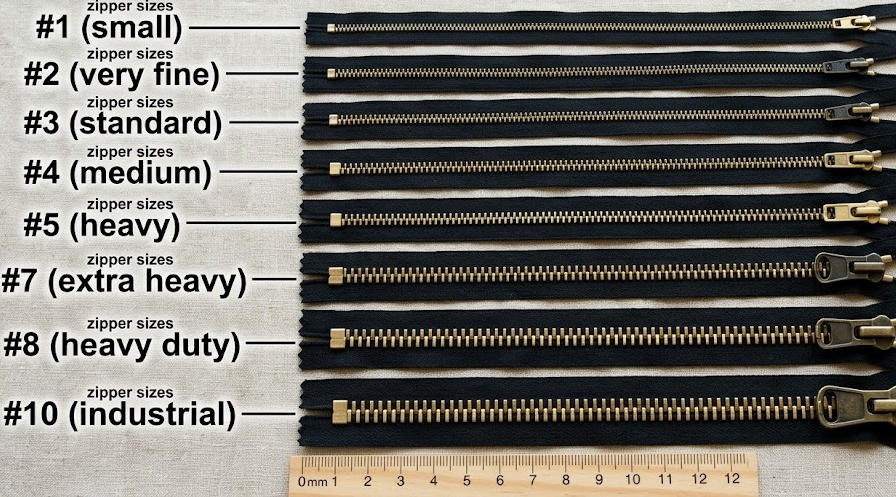
Before choosing a zipper, it is important to understand how zipper sizes are identified. Most conventional zipper sizes are indicated by numbers such as #3, #5, #8, and #10. These numbers generally correspond to the approximate width of the interlocking zipper elements when the zipper is closed, measured in millimeters.
For example, a #3 zipper typically has relatively small elements and is commonly used for lightweight clothing and accessories. A #5 zipper is a versatile option for jackets, jeans, backpacks, and handbags. Larger sizes, such as #8 and #10, are often considered for luggage, outdoor equipment, and heavy-duty bags.
However, these numbers are nominal size designations rather than universal guarantees of exact dimensions. Actual specifications may vary by manufacturer and zipper construction, so buyers should confirm the technical details before placing an order.
It is also important to distinguish between zipper size and zipper length. Zipper size refers to the dimensions of the elements, whereas zipper length refers to the length of the functional closure. Both measurements must match the product’s design requirements.
Choose the Zipper Size According to the Application
The intended application is one of the most important factors when selecting a suitable zipper size. Different products have different requirements for flexibility, durability, weight, and appearance.
For lightweight garments such as dresses, skirts, blouses, and children’s clothing, smaller zippers are generally preferred. A #3 nylon coil zipper or a small plastic zipper can provide a discreet appearance without adding excessive weight. These zippers are especially useful when the closure needs to blend into the garment’s design.
For everyday clothing, including jackets, hoodies, jeans, and casual trousers, #5 zippers are widely used because they offer a practical balance between strength, flexibility, and appearance. Depending on the garment’s style, manufacturers can choose metal, nylon coil, or plastic molded zippers.
For backpacks, handbags, sports bags, and outdoor accessories, the appropriate zipper size depends on the expected load and frequency of use. A #5 zipper may be suitable for many everyday bags, while #8 zippers may be considered for larger bags or products requiring more substantial elements.
Heavy-duty luggage, equipment bags, and selected industrial products may require #8 or #10 zippers. Nevertheless, the largest size is not always the best choice. The complete zipper assembly, including the elements, slider, tape, stitching, and end stops, must be suitable for the product’s intended conditions.
Consider the Different Types of Zippers
Zipper construction has a significant influence on flexibility, strength, weight, and appearance. Therefore, buyers should consider both the zipper size and the material used to manufacture the zipper elements.
Metal Zippers
Metal zippers are commonly made with brass, aluminum, or other metal alloys. They are popular in jeans, leather jackets, boots, handbags, and fashion accessories because of their distinctive appearance and substantial feel.
Smaller metal zippers can provide a refined decorative detail, while larger sizes may complement heavy denim, leather products, and rugged bags. However, metal zippers can be heavier and less flexible than some alternative constructions. Their suitability should be evaluated according to the material and design of the finished product.
Nylon Coil Zippers
Nylon coil zippers feature flexible coil-shaped elements and are widely used in clothing, sportswear, backpacks, luggage, and outdoor products. Their flexibility makes them suitable for curved openings and applications where smooth operation is important.
Smaller nylon coil zippers are often used for lightweight garments and pockets, while medium and larger sizes can accommodate jackets, bags, and other products with greater performance requirements. The correct selection depends on the zipper’s specifications and the expected level of use.
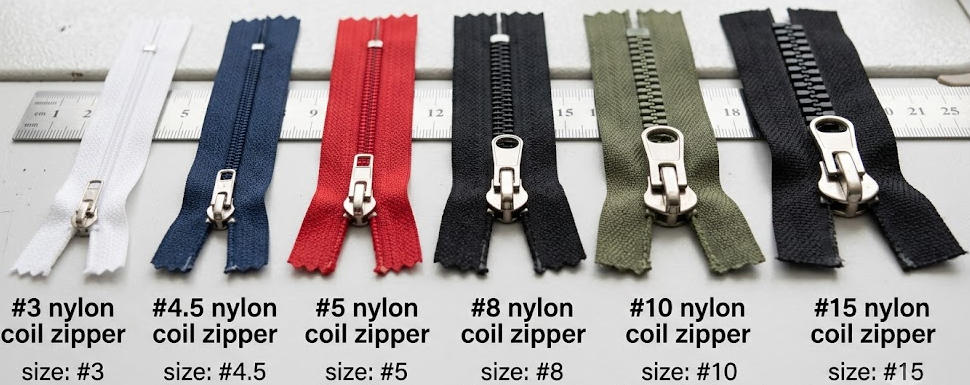
Plastic Molded Zippers
Plastic molded zippers feature individual molded elements and are frequently used in jackets, outdoor clothing, backpacks, and accessories. They are available in various sizes and colors, making them suitable for products that require a distinctive appearance.
Plastic molded zippers can be an effective option when designers want visible zipper elements or a coordinated color scheme. Buyers should evaluate the material quality, element design, slider compatibility, and environmental requirements before choosing a particular size.
Match Zipper Size with Fabric Thickness
Fabric thickness is another essential consideration when choosing the suitable zipper size. A zipper that is too large for a lightweight fabric may create an unbalanced appearance, increase stiffness, or cause puckering during sewing. On the other hand, a zipper that is too small for a heavy material may be difficult to operate or fail to meet the product’s durability requirements.
Lightweight fabrics generally work well with smaller, flexible zippers that integrate neatly into the garment. Medium-weight fabrics provide more flexibility in zipper selection, allowing manufacturers to choose according to the product’s appearance and functional needs.
For thick denim, leather, canvas, and multilayer materials, larger zipper elements may be appropriate. However, fabric thickness alone should not determine the final choice. Seam construction, opening length, product weight, and the forces placed on the zipper must also be considered.
Before mass production, manufacturers should test the zipper on the actual fabric or material assembly. This helps identify sewing difficulties, excessive stiffness, alignment problems, and potential compatibility issues.
Evaluate Strength and Durability Requirements
A zipper must withstand the forces generated during normal product use. Garments that are opened and closed frequently require reliable slider movement and secure element engagement. Backpacks and luggage may experience additional tension when heavily packed, making the strength of the complete closure especially important.
Although larger zipper elements may be suitable for more demanding applications, zipper size alone does not determine durability. The quality of the elements, tape, slider, stops, stitching, and installation all influence overall performance.
For products intended for frequent use or demanding environments, manufacturers should consider resistance to repeated opening and closing, element separation, slider wear, and tape damage. Outdoor and travel products may also require consideration of moisture, dirt, temperature changes, and other operating conditions.
Sample testing is an effective way to confirm whether a zipper meets the required performance level. Testing the zipper under realistic conditions before bulk production can help reduce product failures, customer complaints, and unnecessary replacement costs.
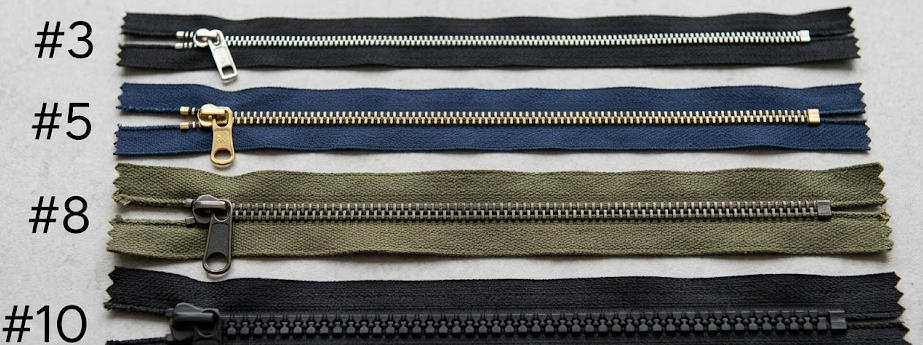
Select the Appropriate Zipper Length and Opening Style
Choosing the correct zipper size is only part of the selection process. Zipper length and opening configuration must also match the product’s design.
Closed-end zippers are commonly used in trousers, pockets, dresses, and small accessories. Open-end zippers, which separate completely at the bottom, are widely used in jackets and coats. Two-way zippers may be suitable for long jackets, travel products, and other applications that benefit from access or movement at both ends.
The zipper length should correspond to the intended opening in the finished product. A zipper that is too short may restrict access, while an excessively long zipper can interfere with seams, pockets, or other structural features.
Manufacturers should confirm the required finished length, opening style, slider configuration, and end-stop requirements before ordering. Providing accurate specifications to the zipper supplier helps avoid production delays and installation problems.
Balance Appearance and Manufacturing Costs
The suitable zipper size should satisfy functional requirements while supporting the product’s visual design and target budget.
Smaller zippers are often preferred for minimalist garments, lightweight accessories, and products where the closure should remain visually subtle. Larger zippers may create a bold, rugged, or technical appearance, making them suitable for certain jackets, backpacks, and travel bags.
Cost is another important consideration. Zipper material, size, color, slider design, customization, and order quantity can all affect the final price. Selecting a zipper that is larger or more specialized than necessary may increase costs without providing meaningful benefits.
Manufacturers should also consider production efficiency. Standardizing zipper specifications across compatible product lines can simplify purchasing, inventory management, and quality control. For customized designs, confirming samples and technical specifications before placing bulk orders can help prevent costly mistakes.
Avoid Common Mistakes When Choosing Zipper Sizes
One common mistake is choosing a zipper based only on its size number. Two zippers with the same nominal size may differ in material, element shape, flexibility, and performance. Buyers should therefore review the manufacturer’s specifications rather than assume that every zipper of the same size is interchangeable.
Another mistake is focusing entirely on appearance without considering the product’s practical requirements. A large metal zipper may complement a leather jacket, but it may be unsuitable for a delicate garment that requires a lightweight, flexible closure.
Confusing zipper size with zipper length can also lead to ordering errors. Both measurements should be clearly defined, especially for custom-made products. In addition, buyers should verify slider compatibility, tape quality, color consistency, and the required opening style.
Finally, choosing the largest available zipper does not automatically guarantee better performance. A properly designed and manufactured zipper that matches the product’s requirements is generally a better choice than an oversized zipper selected without technical evaluation.
Work with a Reliable Zipper Manufacturer
Working with an experienced zipper manufacturer can make the selection process more efficient, particularly for clothing brands, bag manufacturers, and businesses requiring customized zipper products.
A reliable supplier should provide clear specifications for zipper sizes, materials, lengths, sliders, and available finishes. The ability to offer metal zippers, plastic molded zippers, nylon coil zippers, and continuous zipper chains can also help buyers find suitable solutions for different product lines.
For customized orders, manufacturers should communicate their requirements clearly and request samples when necessary. Important details include zipper size, element material, tape color, slider type, finished length, opening style, and packaging specifications.
A supplier with consistent quality control and flexible customization options can help businesses maintain product consistency, manage procurement costs, and support efficient production schedules.
Final Thoughts
Choosing the suitable zipper size requires careful consideration of the product’s application, zipper construction, fabric thickness, durability requirements, length, appearance, and budget. Smaller zippers, such as #3, are commonly used for lightweight garments and accessories, while #5 offers a versatile solution for many everyday products. Larger sizes, including #8 and #10, may be appropriate for luggage, outdoor equipment, and selected heavy-duty applications.
However, no single zipper size is suitable for every product. The best choice is one that balances functionality, strength, flexibility, appearance, and manufacturing requirements.
By understanding zipper specifications, evaluating materials, testing samples, and working with a reliable zipper manufacturer, businesses can select the right zipper for their products and improve overall quality, durability, and customer satisfaction.
Mobile hibachi catering has become an increasingly popular choice for birthdays, family gatherings, graduations, corporate events, and backyard celebrations in Miami. Instead of traveling to a restaurant, guests can enjoy freshly prepared hibachi food while a private chef cooks directly at the event location. Because the service combines dinner with live entertainment, many hosts are interested in understanding how much they should budget for a mobile hibachi experience.
The cost of mobile hibachi in Miami generally depends on the number of guests, menu selections, protein upgrades, event location, and additional services. Current Miami-area providers advertise base prices of roughly $50 to $60 per adult, while children’s prices are commonly around $25 to $30. Minimum event charges also frequently apply, ranging from approximately $450 to $600, depending on the provider.
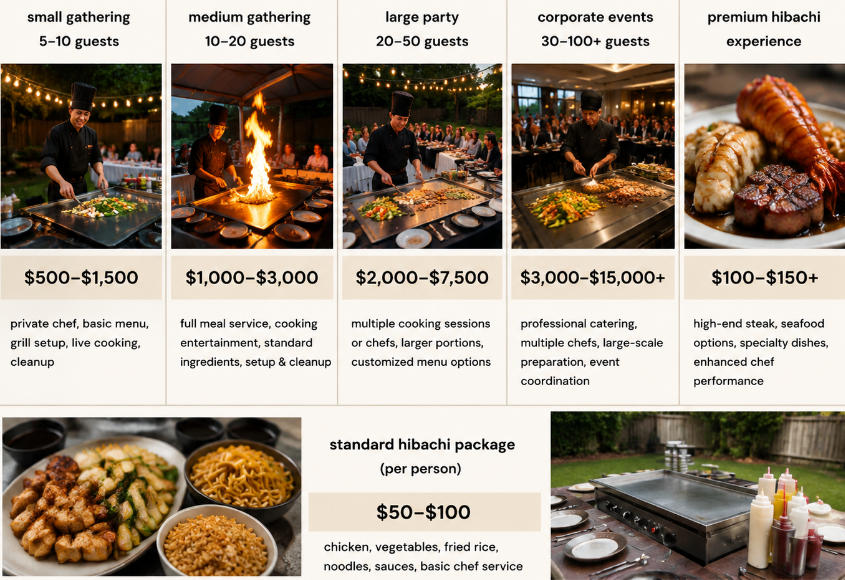
What Is the Average Cost of Mobile Hibachi in Miami?
For a standard mobile hibachi party, a reasonable starting budget is around $50 per adult. For example, one Miami-area service advertises $50 per adult with two protein choices and a $500 minimum, while another lists $55 per adult with a $550 minimum. A different Miami provider currently advertises $60 per adult and a $600 minimum.
These prices generally cover the chef, mobile hibachi grill, food preparation, and live cooking entertainment. Standard meals commonly include fried rice, hibachi vegetables, salad, and a selection of proteins. Therefore, mobile hibachi pricing should be viewed as the cost of both a meal and an interactive entertainment experience rather than simply the price of catered food.
How Does the Number of Guests Affect the Price?
Guest count is one of the most important factors when calculating the cost of a Miami mobile hibachi party. If the base price is $50 per adult, a party of 10 adults would cost approximately $500 before applicable taxes, gratuity, or upgrades. A group of 20 adults would be approximately $1,000, while 30 adults would be approximately $1500 at the same base rate.
However, minimum spending requirements are important for smaller gatherings. If a company has a $500 minimum, a small party may still need to meet that minimum even when the number of guests would normally produce a lower total. This makes it important to ask about the minimum charge when comparing different mobile hibachi services.

What Is Included in Mobile Hibachi Pricing?
Most standard mobile hibachi packages include considerably more than prepared food. The catering company generally brings a chef and portable hibachi grill to the customer’s home, backyard, patio, Airbnb, or approved event space. The chef then cooks the meal in front of the guests and provides the entertainment associated with a hibachi dinner.
For example, current Miami-area packages commonly include two protein choices per adult along with fried rice, vegetables, and salad. Some services also include beverages or sake, although inclusions vary between companies.
Because each company structures its package differently, hosts should check exactly what is included before comparing prices.
How Much Do Premium Protein Upgrades Cost?
The choice of protein can have a noticeable effect on the final cost of a mobile hibachi party. Standard choices may include chicken, steak, shrimp, salmon, scallops, or tofu, while premium choices such as filet mignon and lobster typically require an additional charge.
For instance, current Miami-area pricing shows filet mignon upgrades of around $5 and lobster upgrades of around $10 in some standard packages. Additional proteins can cost more, with some providers charging $10 to $20 or more depending on the selection.
For hosts working with a fixed budget, choosing standard proteins for most guests while offering premium upgrades selectively can help control the overall catering cost.
Are There Additional Mobile Hibachi Costs in Miami?
The advertised per-person price may not always represent the complete final bill. Depending on the provider and event location, additional costs can include travel fees, sales tax, gratuity, premium proteins, extra sides, noodles, appetizers, or equipment rentals.
Travel charges are particularly important when the event is outside a caterer’s normal service area. Some providers include a certain distance at no additional charge and then apply a travel fee beyond that area, while others calculate travel costs according to the event address.
Gratuity is another cost that should be clarified before booking. Several providers state that gratuity is not included in their advertised prices, with 20% sometimes suggested.
Do Mobile Hibachi Companies Provide Tables and Chairs?
Hosts should also check whether tables and chairs are included. Many mobile hibachi companies focus on bringing the chef, grill, ingredients, and cooking equipment, while the customer is responsible for tables, chairs, plates, and utensils.
For example, some Miami-area providers specifically state that customers need to arrange their own tables and chairs. This means a host planning a backyard party may need to budget separately for rental equipment if these items are not already available at the venue.
How Much Should You Budget for a Miami Backyard Hibachi Party?
Suppose 20 adults attend a Miami backyard hibachi party and the selected caterer charges $50 per adult. The base catering cost would be approximately $1,000. If several guests choose premium proteins, additional food is ordered, or travel and other fees apply, the final price could be higher.
For a smaller gathering of 10 adults, a $500 minimum would make the basic catering cost approximately $500. For larger parties, the per-person calculation becomes a more useful way to estimate the food and entertainment budget.
The best approach is to provide the caterer with the exact guest count, event address, preferred menu, and desired date so the company can provide a complete quotation.
Is Mobile Hibachi Worth the Cost in Miami?
For many hosts, the value of mobile hibachi comes from the combination of food, convenience, and entertainment. Guests do not simply receive a delivered meal; they can watch the chef prepare their food directly at the event. This makes mobile hibachi particularly suitable for celebrations where the host wants the meal itself to become part of the entertainment.
Miami also has a growing selection of mobile hibachi providers, including Let’s Hibachi Catering Miami and Awesome Hibachi At Home Catering | Miami, FTL, WPB, Fort Myers,FL, as well as other local services. Comparing package inclusions, minimum charges, travel policies, and menu upgrades can help hosts find an option that fits their event and budget.
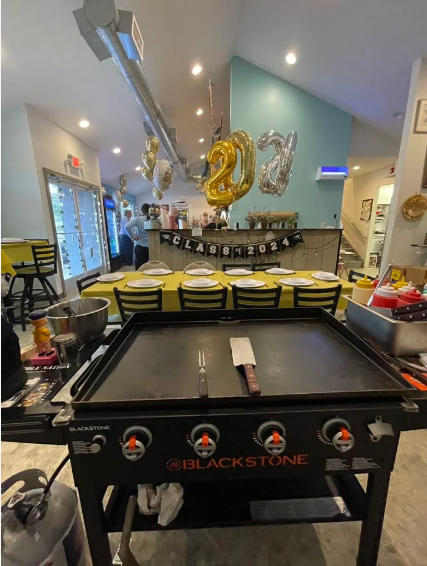
How Can You Save Money on Mobile Hibachi Catering?
The easiest way to manage the cost is to establish a guest count and budget before selecting the menu. Standard proteins can keep the basic price lower, while premium ingredients can be reserved for guests who specifically want them. Hosts can also avoid unexpected expenses by confirming travel fees, gratuity, taxes, rental requirements, and additional food charges before booking.
For smaller parties, it is particularly important to compare minimum spending requirements because a lower advertised per-person rate does not necessarily mean a lower total event cost.
Final Words
So, how much does mobile hibachi cost in Miami? Based on current advertised prices, hosts can generally expect to start at around $50–$60 per adult, with children commonly priced around $25–$30 and minimum event charges of approximately $450–$600. Premium proteins, additional food, travel fees, taxes, gratuity, and rentals may increase the final cost.
For a more accurate budget, Miami hosts should request a detailed quote based on the number of guests and event location. By comparing the complete package rather than only the advertised per-person price, it becomes much easier to choose a mobile hibachi service that provides good value while creating an enjoyable dining experience for everyone.
Family dining in Orlando is evolving as more people look for experiences that offer more than just a meal. While restaurants remain a popular choice for eating out, many families are now turning to hibachi at home for special occasions, weekend gatherings, and casual family dinners. This growing trend is driven by the desire for convenience, entertainment, privacy, and a more personalized dining atmosphere.
Instead of traveling to a busy restaurant, waiting for a table, and sharing a dining space with strangers, families can now enjoy a professional hibachi experience in their own backyard or home. With a private chef preparing fresh food and providing live cooking entertainment, hibachi at home creates a unique combination of restaurant-quality cuisine and personal comfort.
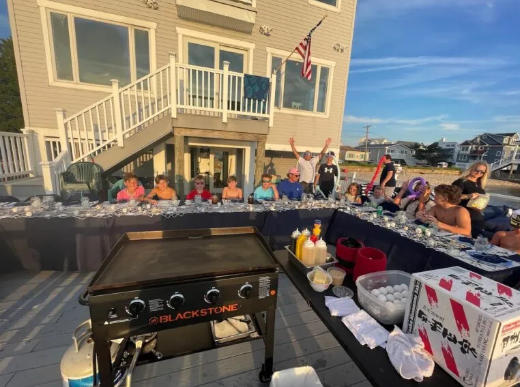
A Convenient Alternative to Traditional Restaurant Dining
One of the main reasons families in Orlando are choosing hibachi at home is the convenience it provides. Restaurant dining often requires extra preparation, including arranging transportation, finding parking, waiting for seating, and managing different schedules. These challenges can make family meals more stressful, especially when children or larger groups are involved.
Hibachi at home eliminates many of these difficulties by bringing the dining experience directly to the family’s preferred location. Guests can enjoy freshly prepared hibachi meals without leaving their homes. Whether it is a backyard gathering, birthday celebration, or family reunion, the entire experience can take place in a comfortable and familiar environment.
Turning Dinner Into an Interactive Entertainment Experience
Unlike a traditional restaurant meal, hibachi at home combines food with live entertainment. A skilled hibachi chef prepares meals in front of guests, creating an engaging performance through cooking techniques, presentation, and interaction.
For families, this makes dinner more memorable. Children can watch the chef prepare their food, while adults can enjoy the social atmosphere created during the cooking process. The experience becomes more than simply eating, it becomes an activity that brings family members and friends together.
A Better Choice for Family Celebrations in Orlando
Orlando is known for family-friendly events and celebrations, and hibachi at home has become an increasingly popular option for birthdays, anniversaries, graduations, and holiday gatherings. Hosting a private hibachi event allows families to create a customized celebration without the restrictions often found in restaurants.
At home, families have more control over the event details, including guest numbers, timing, decorations, and overall atmosphere. They can enjoy a relaxed celebration where everyone stays together instead of being separated by restaurant seating arrangements.
More Comfortable for Families With Children and Larger Groups
Dining at restaurants with children can sometimes be challenging. Busy environments, limited seating space, and fixed schedules may affect the overall experience. Hibachi at home allows families to enjoy a more relaxed setting where children can feel comfortable while still experiencing the excitement of a chef-prepared meal.
For larger groups, home hibachi for Orlando families also offers greater flexibility. Instead of trying to reserve multiple tables or accommodate restaurant capacity limits, families can gather in one private space and enjoy the meal together.
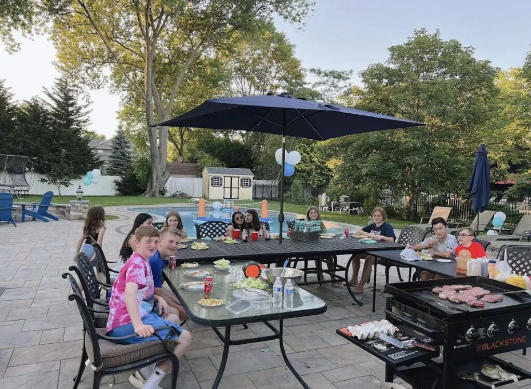
Personalized Menus and Freshly Prepared Meals
Another factor contributing to the popularity of hibachi at home is menu flexibility. Restaurant menus usually provide standard options, while private hibachi services often allow families to select meals according to their preferences.
Guests can choose different proteins, vegetables, sauces, and meal combinations to create a dining experience that fits their tastes. This customization makes hibachi at home suitable for families with different food preferences and dietary needs.
Avoiding Crowds While Enjoying Quality Time
Orlando restaurants can become especially busy during weekends, holidays, and peak travel seasons. Long waiting times and crowded dining areas may reduce the enjoyment of a family outing. Many families prefer hibachi at home because it provides a private experience without the inconvenience of crowded restaurants.
By staying at home, families can focus more on conversations, celebrations, and spending quality time together. The relaxed environment allows guests to enjoy their meal at their own pace.
Creating Meaningful Family Memories
Modern families are increasingly interested in experiences that create lasting memories. Hibachi at home offers something that a typical restaurant visit may not provide—a personalized event designed around family and connection.
The combination of skilled cooking, entertainment, and interaction creates moments that guests can remember long after the meal is finished. Whether it is a small family dinner or a large celebration, hibachi at home transforms an ordinary meal into a special occasion.
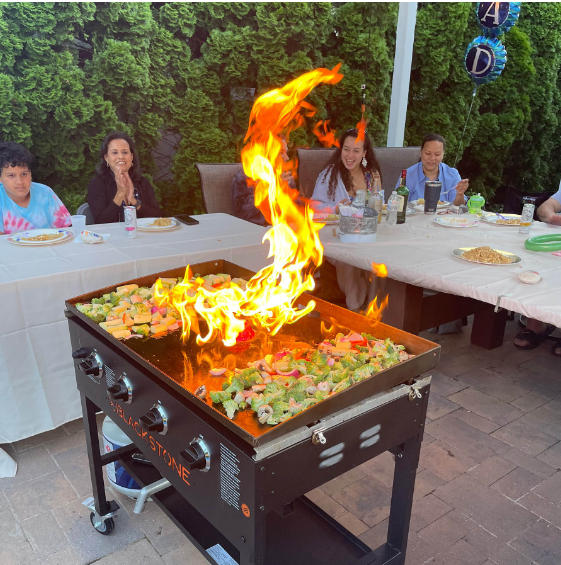
Hibachi at Home Represents the Future of Family Dining in Orlando
The growing popularity of hibachi at home reflects a shift in how families view dining experiences. People are no longer only looking for convenient places to eat; they are seeking memorable activities that bring people together.
By offering professional cooking, entertainment, customization, and comfort, hibachi at home provides an alternative to traditional restaurant dining. For many Orlando families, enjoying a private hibachi experience at home has become a preferred way to celebrate, relax, and create unforgettable moments with loved ones.
Booking a private hibachi chef in Miami can turn a regular gathering into an interactive dining experience. Instead of traveling to a restaurant, guests can enjoy freshly prepared hibachi dishes, chef performances, and a customized menu at a home, backyard, vacation rental, or private event venue. Whether you are planning a birthday party, family gathering, corporate event, or celebration, knowing how to book the right chef can make the experience smoother and more enjoyable.
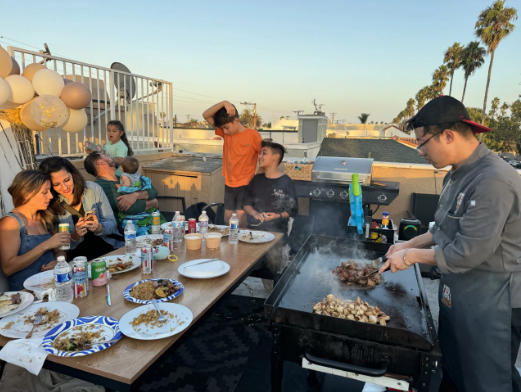
1. Decide on Your Event Details
Before contacting a private hibachi catering service, determine the basic details of your event. The number of guests, event date, preferred start time, location, and type of celebration will help the catering provider recommend the appropriate service.
For example, a small backyard birthday party may require a different setup from a large corporate gathering. Providing accurate information in advance can also help the chef prepare enough food and equipment for your group.
2. Choose the Right Miami Location
Private hibachi chefs in Miami can often serve different types of locations, including private homes, backyards, vacation rentals, community spaces, and event venues. Check whether your location has enough space for the cooking setup and guest seating.
Outdoor areas are particularly popular because they can provide additional ventilation and space for the hibachi cooking station. If you plan to host the event indoors, confirm with the catering provider whether indoor cooking is permitted and what ventilation requirements may apply.
3. Select a Menu
One of the advantages of hiring a private hibachi chef is the ability to customize the menu for your event. Common hibachi menu options may include steak, chicken, shrimp, vegetables, fried rice, noodles, and other Japanese-inspired dishes.
When booking, ask whether the chef can accommodate dietary requirements or food preferences. Vegetarian, seafood-free, gluten-conscious, and other menu requests may require advance preparation.
4. Ask About the Chef Experience
Private hibachi catering is more than simply having food prepared at your location. The chef may cook directly in front of guests while performing interactive techniques such as flipping food, creating cooking effects, and engaging with the group.
Ask what is included in the chef’s performance and whether the service is designed specifically for private parties. Understanding the experience beforehand can help you choose a service that matches the atmosphere you want for your Miami event.
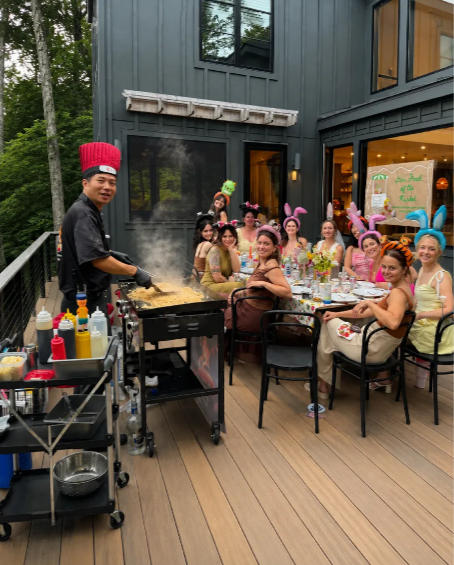
5. Confirm Equipment and Setup Requirements
A private chef typically needs an appropriate cooking area and sufficient space for the hibachi equipment. Before making a reservation, ask what the catering company provides and what you need to prepare.
Important details may include the cooking table or grill, serving equipment, tables, chairs, utensils, plates, cleanup, and access to electricity or other utilities. Clarifying these requirements ahead of time can prevent last-minute problems.
6. Check Pricing and Package Options
Private hibachi catering prices can vary depending on the number of guests, menu selections, event location, date, duration, and additional services.
Rather than looking only at the advertised starting price, ask for a complete quote. Find out whether the price includes food, chef service, equipment, setup, cleanup, travel fees, taxes, gratuity, and any other charges.
A detailed quote makes it easier to compare different catering packages and understand the total event cost.
7. Confirm Availability and Make a Reservation
Miami is a popular destination for private celebrations and events, so it is useful to contact a hibachi catering provider as early as possible, especially for weekends, holidays, and peak event periods.
When you find a suitable chef, confirm the date, arrival time, guest count, location, menu, package, and payment requirements. Ask about the deposit and cancellation policy before completing the booking.
8. Prepare the Event Space
After booking your private hibachi chef, prepare the cooking and dining area according to the provider’s requirements. Keep enough space around the cooking station so the chef can work safely and guests can comfortably watch the performance.
If children will attend the event, consider arranging seating at a safe distance from the cooking area. You should also let the chef know about pets, special access instructions, parking limitations, or other venue conditions before the event.
9. Confirm the Details Before the Event
A quick confirmation a few days before the event can help ensure everything is ready. Reconfirm the guest count, menu, address, arrival time, cooking location, and any special requests.
If your guest count changes significantly, notify the catering provider as soon as possible. This gives the chef enough time to adjust food quantities and preparation plans.

Why Book a Private Hibachi Chef in Miami?
A private hibachi chef combines dining and entertainment in one experience. Guests can watch their meals being prepared while interacting with the chef, making the experience suitable for birthdays, family parties, corporate events, anniversaries, graduations, and other celebrations.
Private catering can also provide greater flexibility than a traditional restaurant visit. You can choose your own venue, invite your preferred guests, customize parts of the menu, and enjoy the experience without leaving your event location.
Final Thoughts
Booking a private hibachi chef in Miami starts with choosing your event details, location, guest count, menu, and preferred experience. Once you understand the setup requirements and receive a detailed quote, you can confirm availability and reserve the service.
By planning the cooking area, menu, guest requirements, and event schedule in advance, you can create an organized hibachi dining experience that combines freshly prepared food with interactive entertainment.
Coil zippers and plastic molded zippers are two common zipper types used in garments, bags, luggage, outdoor equipment, and other textile products. Although both are designed to provide secure and convenient fastening, they differ in construction, flexibility, appearance, durability, and application. Understanding the differences between coil zippers and plastic molded zippers can help manufacturers choose the most suitable option for a specific product.
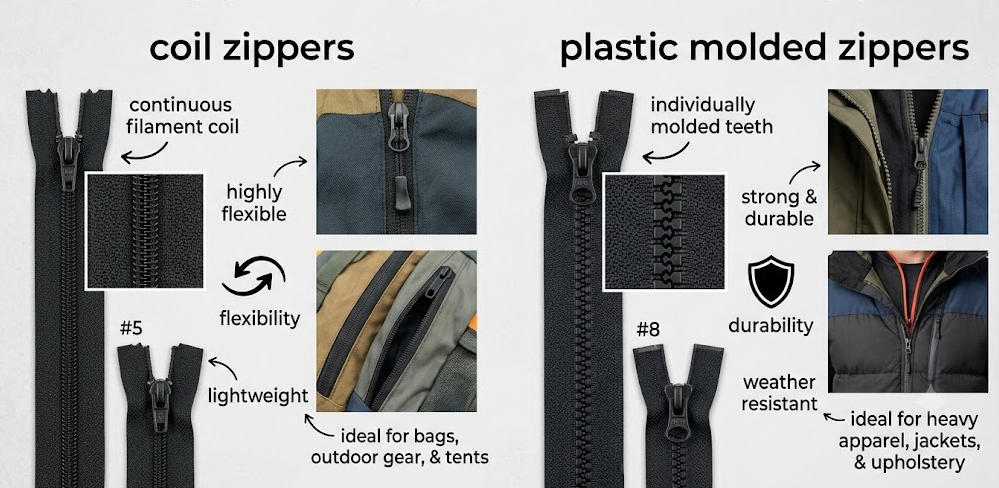
What Are Coil Zippers
Coil zippers are manufactured with a continuous spiral-shaped element, commonly made from nylon. The coil is attached to the zipper tape and interacts with the slider to open and close the zipper. Because the fastening element is formed as a continuous coil, the nylon coil zipper can bend and flex relatively easily.
This flexibility makes coil zippers particularly suitable for products that require smooth movement around curved surfaces. They are widely used in clothing, handbags, backpacks, luggage, tents, sleeping bags, and various textile accessories. Different coil sizes and constructions can also be produced to meet requirements for lightweight, standard, or heavy-duty applications.
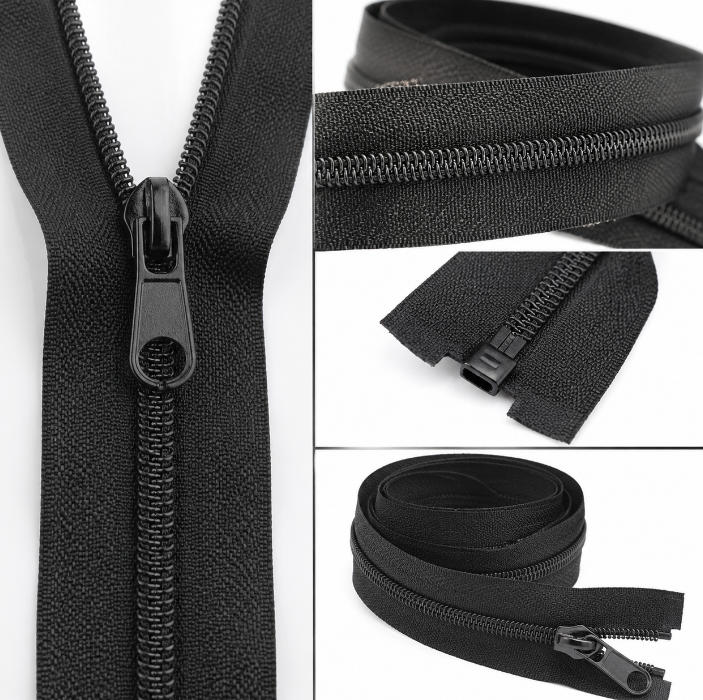
What Are Plastic Molded Zippers
Plastic molded zippers are made with individual teeth that are molded from synthetic plastic materials and attached to the zipper tape. The teeth interlock when the slider moves along the zipper, creating a stable fastening structure.
Compared with coil zippers, plastic molded zippers usually have a more prominent and structured appearance. They are commonly used in jackets, sportswear, backpacks, luggage, outdoor equipment, and workwear. Different tooth sizes, shapes, and colors can be selected to match the functional and visual requirements of a product.
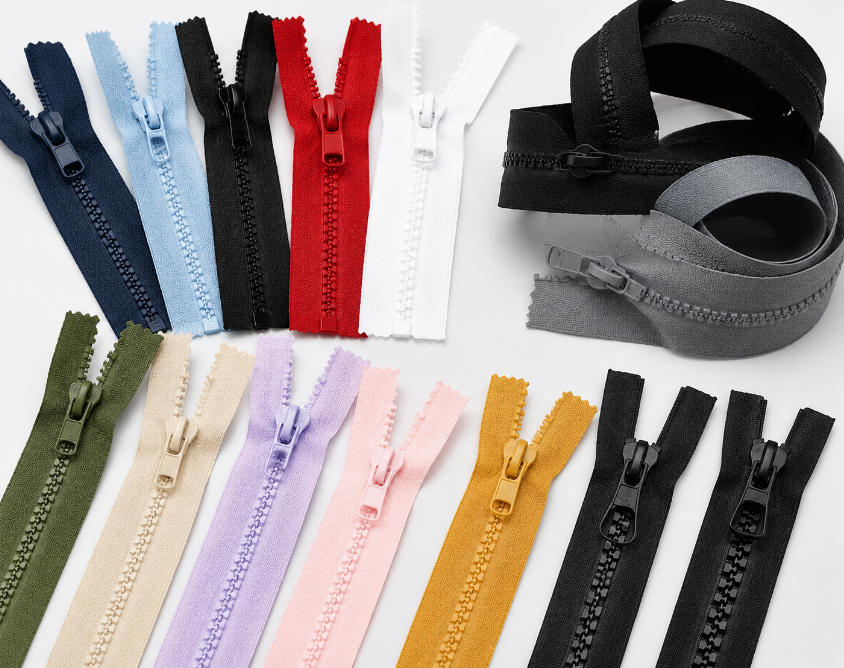
Construction Differences Between Coil and Plastic Molded Zippers
The most fundamental difference is the structure of their fastening elements. A coil zipper uses a continuous spiral element, while a plastic molded zipper uses separate molded teeth.
This structural difference affects how each zipper behaves during use. Coil zippers generally offer greater flexibility because the continuous coil can follow curves more easily. Plastic molded zippers have a more defined tooth structure, which can give the zipper a stronger and more substantial appearance.
The construction also influences the overall feel of the finished product. Coil zippers are often associated with smooth and lightweight designs, while molded zippers are frequently chosen when manufacturers want a more technical or rugged appearance.
Flexibility and Smooth Operation
Flexibility is one of the main advantages of coil zippers. The continuous coil construction allows the zipper to bend naturally, making it suitable for curved openings and flexible textile products. This characteristic is particularly useful in garments, bags, and products where the zipper must move with the material.
Plastic molded zippers are generally more structured because of their individual teeth. They can still be installed on curved products, but the resulting zipper line may feel firmer than a comparable coil zipper.
Both types can provide smooth operation when the zipper tape, teeth, slider, and manufacturing quality are properly matched. Slider design and installation quality can have a significant influence on the actual opening and closing performance.
Durability and Strength
Both coil and plastic molded zippers can be manufactured for different levels of durability. Their actual performance depends on factors such as zipper size, material quality, tooth construction, slider design, tape strength, and manufacturing process.
Plastic molded zippers are frequently used for products that require a robust and visually substantial fastening system. Larger molded teeth can provide strong mechanical engagement, which is useful for backpacks, outdoor equipment, luggage, and heavy-duty clothing.
Coil zippers can also provide excellent durability, particularly when heavy-duty coil constructions are selected. Their flexibility can be an advantage in applications where the zipper is repeatedly bent or exposed to continuous movement.
Appearance and Design Considerations
The visual difference between the two zipper types can be important for fashion and product design. Coil zippers generally have a fine, smooth appearance because the fastening element consists of a continuous coil. When installed, the zipper can appear relatively subtle and streamlined.
Plastic molded zippers have clearly visible individual teeth. Their tooth size and color can therefore become an important part of the product’s overall appearance. Designers can use contrasting or matching teeth to create different visual effects.
For sportswear and outdoor products, the larger and more prominent appearance of molded teeth can complement a technical or rugged product design.
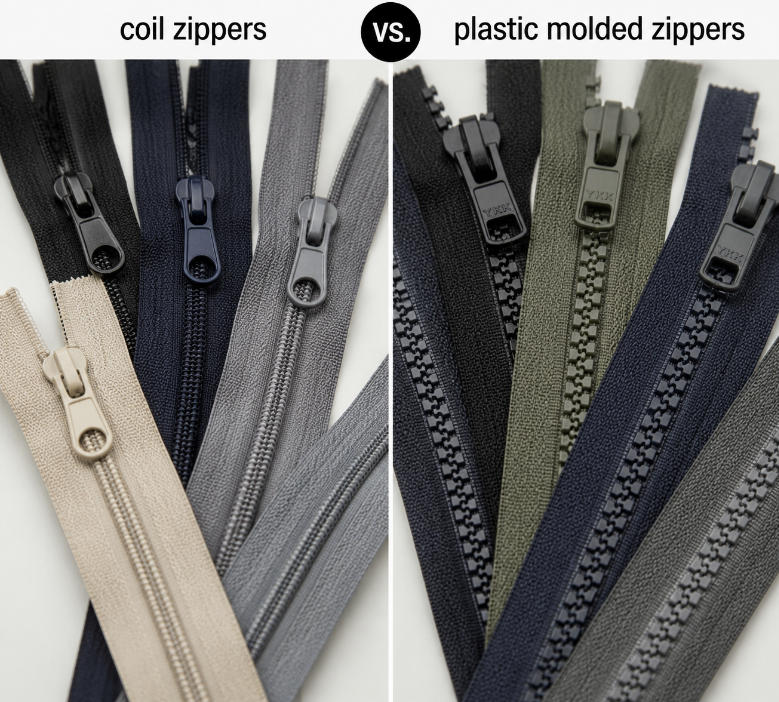
Applications of Coil Zippers
Coil zippers are commonly used when flexibility, lightweight construction, and smooth movement are important. They are frequently found in garments, pockets, handbags, backpacks, luggage compartments, tents, sleeping bags, and other textile products.
They are also available in specialized constructions for applications requiring greater resistance to moisture or demanding operating conditions. The wide range of coil sizes and colors gives manufacturers considerable flexibility when developing different products.
Applications of Plastic Molded Zippers
Plastic molded zippers are widely used in products that require a structured and durable fastening system. They are common in jackets, sportswear, backpacks, luggage, workwear, outdoor equipment, and technical textile products.
The availability of different tooth sizes allows manufacturers to select a construction appropriate for lightweight products as well as more demanding applications. Colored molded teeth can also be coordinated with garment fabrics or used as a contrasting design element.
How to Choose Between Coil and Plastic Molded Zippers
The right choice depends on the construction and performance requirements of the finished product. When flexibility and smooth bending are priorities, a coil zipper can be a suitable choice. Its flexible structure works particularly well with curved openings and soft textile materials.
When a more structured appearance and robust fastening construction are required, a plastic molded zipper may be preferable. It can be particularly suitable for backpacks, luggage, outdoor products, and garments where the zipper is intended to contribute to the product’s technical appearance.
Manufacturers should also consider size, tape material, slider type, color, tensile requirements, operating frequency, environmental conditions, and production cost before selecting a zipper.
Coil Zippers vs. Plastic Molded Zippers
There is no universal choice between coil zippers and plastic molded zippers. Each type is designed to meet different product requirements. Coil zippers provide excellent flexibility and are well suited to lightweight and curved applications, while plastic molded zippers provide a more structured fastening system and distinctive tooth appearance.
For garment manufacturers and product designers, the best approach is to evaluate the zipper together with the fabric, product structure, expected usage conditions, and desired appearance. Selecting the appropriate zipper construction can improve fastening performance while also contributing to the overall quality and design of the finished product.
Summary
Coil zippers and plastic molded zippers differ mainly in their fastening-element construction, flexibility, appearance, and typical applications. Coil zippers use a continuous spiral element and are known for their flexible performance, while plastic molded zippers use individual molded teeth and provide a more structured appearance.
Understanding these differences allows manufacturers to select a zipper that matches the functional and design requirements of each product. With the right zipper construction, size, slider, and materials, both coil and plastic molded zippers.

