Hex nuts are among the most widely used fasteners in industrial manufacturing, construction, automotive engineering, marine equipment, and machinery assembly. Their six-sided shape allows for easy tightening and loosening with standard tools such as wrenches and sockets. Although hex nuts may appear simple, there are many specialized types designed for different environments, load conditions, vibration levels, and installation requirements. Understanding the different types of hex nuts helps ensure proper fastening performance, safety, and durability in various applications.
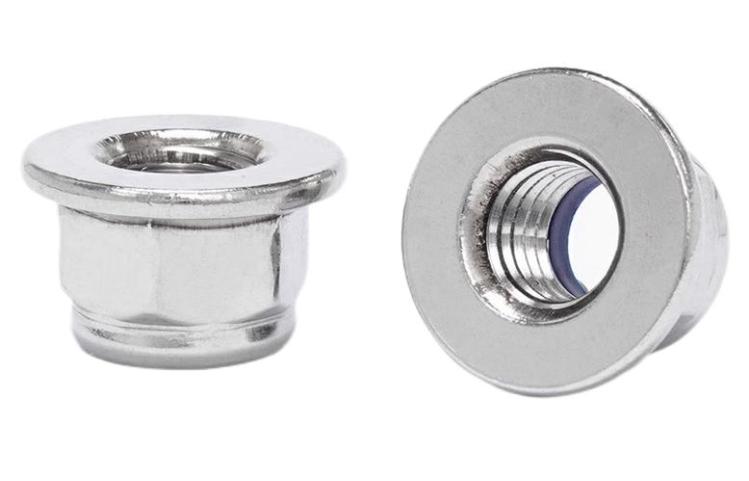
Standard Hex Nuts
Standard hex nuts are the most common type used in general fastening applications. They feature a six-sided exterior and internal threads that match corresponding bolts or threaded rods. These nuts are typically manufactured according to international standards such as ANSI, DIN, or ISO specifications.
Standard hex nuts are widely used in machinery, structural steel assemblies, automotive parts, and household equipment. They are available in multiple materials including carbon steel, stainless steel, brass, and alloy steel to suit different operating environments.
Heavy Hex Nuts
Heavy hex nuts are similar to standard hex nuts but have greater width and thickness. Their larger bearing surface provides improved load distribution and enhanced strength. Heavy hex nuts are commonly used in high-pressure piping systems, structural applications, bridges, and heavy machinery.
Because of their robust design, heavy hex nuts are often paired with large-diameter bolts in demanding environments where high tensile strength and durability are critical.
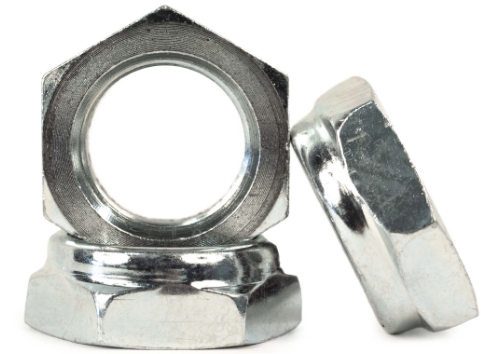
Jam Nuts
Jam nuts are thinner than standard hex nuts and are commonly used as locking nuts. They are usually tightened against a standard nut to prevent loosening caused by vibration or movement. The thinner profile makes them suitable for applications with limited installation space.
Jam nuts are frequently used in automotive assemblies, electrical equipment, and precision machinery where maintaining bolt tension is important.
Nylon Insert Lock Nuts
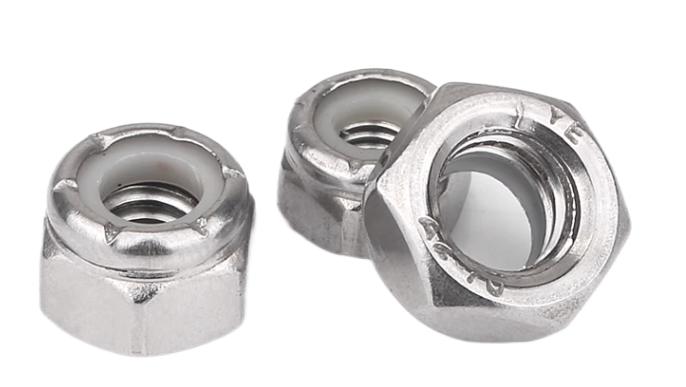
Nylon insert hex lock nuts, often called nyloc nuts, contain a nylon ring inside the nut. When the bolt is threaded into the nut, the nylon insert creates friction that helps resist loosening from vibration and shock.
These nuts are commonly used in automotive systems, aerospace components, household appliances, and industrial machinery. The nylon insert improves fastening security without requiring additional locking washers.
All-Metal Lock Nuts
All-metal hexagon ock nuts provide vibration resistance without using nylon inserts. Instead, they rely on distorted threads or special metal locking mechanisms to maintain clamping force. Because they do not contain plastic components, they are ideal for high-temperature environments.
Applications include exhaust systems, heavy equipment, engines, and industrial processing equipment exposed to heat or harsh operating conditions.
Flange Hex Nuts
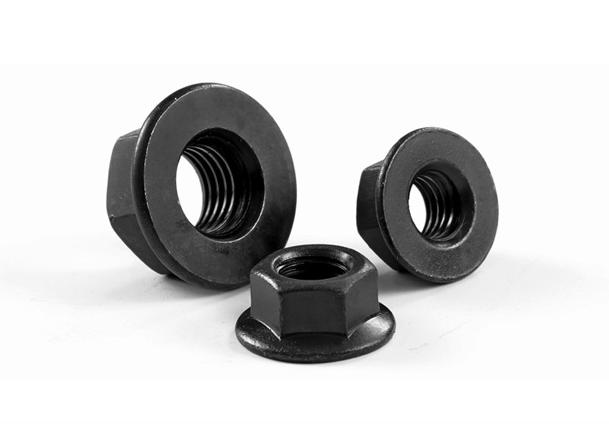
Flange hex nuts feature a built-in washer-like flange at the base of the nut. This flange distributes pressure over a larger surface area and helps reduce the risk of damage to the connected material.
Some flange nuts also include serrated surfaces that improve locking performance by increasing friction. Flange hex nuts are commonly used in automotive manufacturing, sheet metal assemblies, and machinery installations.
Castle Nuts
Castle nuts, also known as castellated nuts, have slots cut into one end of the nut. These slots allow a cotter pin or locking pin to pass through both the nut and the bolt, preventing accidental loosening.
Castle nuts are widely used in automotive steering systems, wheel bearings, aircraft assemblies, and mechanical linkages where safety is essential.
Coupling Nuts
Coupling nuts are elongated hex nuts designed to connect two threaded rods together. Their extended length provides increased thread engagement and stronger connections.
These nuts are commonly used in construction, suspension systems, piping assemblies, and threaded rod extensions.
Cap Nuts
Cap nuts, also called acorn nuts, feature a domed top that covers the exposed end of a bolt. This design improves appearance while also protecting the threads from corrosion, dirt, and accidental contact.
Cap nuts are often used in furniture assembly, decorative metalwork, bicycles, and consumer products where aesthetics and safety are important.
Wing Nuts with Hex Features
Some specialized wing nuts combine hand-tightening wings with a hexagonal base. This allows for both manual adjustment and wrench tightening when additional torque is required.
These nuts are commonly found in adjustable fixtures, temporary assemblies, and equipment requiring frequent disassembly.
Slotted Hex Nuts
Slotted hex nuts resemble castle nuts but may have different slot configurations. They are used with cotter pins to secure rotating components or critical assemblies subject to vibration.
Typical applications include industrial machinery, transportation equipment, and agricultural systems.
Materials Used for Hex Nuts
Hex nuts are manufactured from a wide variety of materials depending on application requirements. Carbon steel nuts are widely used because of their strength and affordability. Stainless steel nuts provide excellent corrosion resistance for marine and chemical environments. Brass nuts offer good electrical conductivity and decorative appearance, while alloy steel nuts are selected for high-strength industrial applications.
Protective coatings such as zinc plating, hot-dip galvanizing, black oxide, and nickel plating further improve corrosion resistance and durability.
Selecting the Right Hex Nut
Choosing the correct hex nut depends on several important factors including load requirements, environmental conditions, vibration exposure, temperature, and compatibility with bolts. High-vibration environments often require lock nuts, while corrosive environments benefit from stainless steel or coated nuts. Structural applications may demand heavy hex nuts with higher strength ratings.
Proper thread matching, material compatibility, and installation torque are also critical for achieving safe and reliable fastening performance.
Summary
Hexagon nuts are essential fastening components used across countless industries and applications. From standard hex nuts and heavy hex nuts to lock nuts, flange nuts, and castle nuts, each type is designed to address specific operational needs. Understanding the characteristics and applications of different hex nuts helps engineers, manufacturers, and maintenance professionals select the most effective fastening solution for performance, safety, and long-term reliability.

