Bamboo pulping has become an increasingly important topic in the paper and packaging industry as manufacturers seek renewable raw materials, lower environmental impact, and diversified fiber sources. With its rapid growth cycle, wide availability in many regions, and strong fiber characteristics, bamboo offers a practical alternative to traditional wood-based pulp. From bamboo tissue paper to bamboo packaging boards, bamboo pulping is gaining attention for its balance of sustainability and performance.
What Is Bamboo Pulping
Bamboo pulping is the industrial process of converting bamboo stalks into cellulose pulp that can be used to manufacture bamboo paper. The process separates cellulose fibers from lignin, hemicellulose, silica, and other natural components found in bamboo.
Because bamboo has a fibrous structure similar to hardwood and certain grasses, it can be processed using several pulping technologies adapted from wood pulp manufacturing.
Why Bamboo Is an Attractive Raw Material
Bamboo offers several advantages as a pulping resource. It grows much faster than most timber species, with some varieties reaching maturity within three to five years. This allows frequent harvesting and more continuous supply cycles.
Its cultivation can also support land restoration and rural economies in tropical and subtropical regions. In addition, bamboo fibers often provide good tensile strength, making them useful for durable paper products and packaging applications.
Another important benefit is resource diversification. Paper producers relying heavily on wood or recycled fibers may use bamboo to reduce raw material dependency and improve supply chain resilience.
Main Steps in Bamboo Pulping
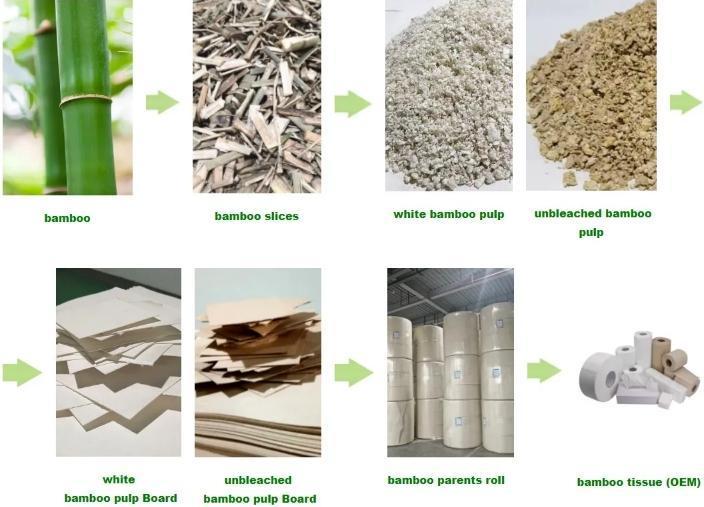
The pulping process begins with harvesting and preparing the bamboo. Stalks are cut, cleaned, and chipped into smaller pieces suitable for processing. Because bamboo contains silica and hard outer layers, preparation systems must be robust and wear-resistant.
Cooking is the next stage, where chips are treated with chemicals or mechanical energy to separate fibers. In chemical pulping, lignin is dissolved while preserving cellulose fibers. In mechanical methods, fibers are physically separated.
After cooking, the pulp is washed, screened, and cleaned to remove impurities. If high brightness is required, bleaching follows. Modern bleaching systems increasingly use elemental chlorine-free or totally chlorine-free methods to reduce environmental impact.
Finally, the refined pulp is sent to paper machines or converted into finished pulp sheets for transport and later use.
Common Bamboo Pulping Methods
1. Kraft Pulping
Kraft pulping is widely used because it produces strong fibers suitable for packaging papers, boards, and industrial grades. It uses alkaline chemicals to dissolve lignin efficiently. Many mills favor kraft systems due to their scalability and chemical recovery potential.
2. Soda Pulping
Soda pulping uses sodium hydroxide and is often suitable for non-wood fibers such as bamboo. It can be effective in processing agricultural and grass-type raw materials.
3. Mechanical and Chemi-Mechanical Pulping
These methods use mechanical force with or without mild chemicals. They typically achieve higher fiber yield but may produce pulp with lower brightness and durability than fully chemical pulps.
4. Organosolv and Emerging Methods
Newer technologies using organic solvents, enzymes, or low-impact chemistry are being explored to improve yield, reduce waste, and lower emissions in bamboo pulping.
Challenges in Bamboo Pulping
Despite its advantages, bamboo pulping presents technical challenges. Bamboo contains relatively high silica levels, which can cause scaling in recovery systems and increase equipment maintenance needs.
Its raw material variability between species, age, and growing conditions can also affect pulp quality. Mills must carefully manage feedstock selection and process control.
Logistics can be another issue. Bamboo is bulky and often sourced from decentralized plantations, requiring efficient collection and transportation systems.
Additionally, adapting conventional wood-pulp equipment to bamboo processing may require modifications in chip preparation, digestion, and chemical recovery systems.
Environmental Considerations
Bamboo pulping can support sustainability goals when managed responsibly. Fast regrowth rates reduce pressure on forests, and bamboo plantations can sequester carbon during growth.
However, true environmental performance depends on the entire production chain. Responsible land use, water management, energy efficiency, wastewater treatment, and clean bleaching technologies remain essential.
When combined with modern mill practices, bamboo pulping can contribute to lower-impact paper manufacturing and circular economy initiatives.
Applications of Bamboo Pulp
Bamboo pulp is used in a growing range of products. Tissue and hygiene papers benefit from softness and strength blends. Packaging producers use bamboo pulp for cartons, kraft paper, molded trays, and shopping bags.
It is also used in specialty papers, disposable food-service products, notebooks, and eco-focused consumer goods marketed as sustainable alternatives.
Blended pulps combining bamboo with recycled fiber or wood pulp are common, helping optimize cost and product performance.
Future Trends in Bamboo Pulping
The future of bamboo pulping is closely tied to global demand for sustainable materials. More investment is expected in bamboo plantations, advanced pulping chemistry, and energy-efficient mill systems.
Digital process control, enzyme-assisted pulping, closed-loop water systems, and bio-refinery integration may further improve productivity and environmental outcomes.
As packaging regulations tighten and consumers seek renewable products, bamboo pulp is likely to become an increasingly strategic fiber source.
Final Thoughts
Bamboo pulping represents a promising pathway for the pulp and paper industry to diversify raw materials while supporting sustainability goals. Its fast growth, strong fibers, and broad applicability make bamboo an attractive alternative to conventional wood sources. Although technical and logistical challenges remain, continued innovation in pulping technologies and responsible resource management will help unlock the full potential of bamboo as a modern industrial fiber.

