Understanding Uniform Load Distribution in Spring Washers

Spring washers are critical components widely used in mechanical and structural applications to prevent loosening due to vibrations, thermal expansion, and other dynamic forces. They are designed to absorb compressive loads, maintain tension, and provide a consistent force across bolted connections. One of the primary advantages of spring washers lies in their ability to distribute loads uniformly across the bearing surface. Understanding the concept of uniform load distribution in spring washers is crucial for optimizing their performance and ensuring the longevity of the assembly in which they are used.

Importance of Uniform Load Distribution

The main purpose of a spring washer is to provide resilience, helping to maintain a tight connection between components under varying conditions. However, if the load is not distributed evenly, several issues can arise, including:

Uneven wear: If one area of the washer bears more load than others, it can lead to uneven wear, which reduces the washer’s effectiveness and longevity.

Local deformation: An uneven load can cause localized deformation, leading to misalignment, reduced spring force, and eventually failure of the washer.

Reduced performance: For applications that require consistent clamping force, non-uniform load distribution can compromise performance by allowing movement or loosening over time.

spring washers supplier

Factors Affecting Load Distribution

Several factors influence how load is distributed across the surface of a spring washer:

Geometry and Design of the Washer: The design of the washer itself is critical in ensuring uniform load distribution. Features such as the thickness, outer diameter, and profile of the washer can impact the way force is spread. Conical or belleville washers, for example, are designed to handle axial loads and distribute them more evenly across their surface.

Material Selection: The material from which the spring washer is made determines its elasticity, stiffness, and strength. Materials such as stainless steel, carbon steel, or specific alloys offer different mechanical properties that can affect load distribution, particularly in high-stress environments.

Surface Finish and Contact Area: The smoother the contact surface between the washer and the components it is clamping, the more evenly the load will be spread. A rough or irregular surface may lead to points of high pressure, resulting in uneven load distribution.

Pre-load and Compression: The pre-load or initial compression applied to the washer during assembly can have a significant effect on the distribution of the load. Ensuring that the washer is properly compressed without overloading it is essential for uniform performance.

Benefits of Uniform Load Distribution

Achieving a uniform load distribution in spring washers provides several benefits:

Enhanced Clamping Force: Uniform load distribution ensures that the washer maintains consistent pressure across the entire connection, providing a stronger and more reliable clamping force.

Increased Durability: Even distribution of stress reduces the risk of localized failure, leading to a longer lifespan for both the spring washer and the assembly it is part of.

Improved Vibration Resistance: Spring washers are designed to absorb vibrations. Uniform load distribution allows them to better dampen these vibrations, preventing loosening and improving the overall stability of the assembly.

Cost-effectiveness: By ensuring that the washer performs at its optimal level throughout its lifespan, uniform load distribution reduces the need for frequent replacements and repairs, resulting in cost savings over time.

Achieving Uniform Load Distribution

Several methods can be employed to ensure that spring washers distribute loads uniformly:

Precise Manufacturing: Accurate manufacturing tolerances are crucial in producing spring washers that will distribute loads evenly. This includes controlling the shape, size, and surface finish of the washers to ensure proper fit and contact with the components.

Proper Installation: When installing spring washers, it is important to follow the recommendations regarding pre-load, torque, and alignment of the spring manufacturers. Using the correct torque ensures that the washer is compressed uniformly, distributing the load evenly across its surface.

Use of Multiple Washers: In certain applications, using multiple spring washers in parallel or series can help achieve more even load distribution. This can be especially beneficial when dealing with high load requirements or challenging environments.

Quality Control: Implementing strict quality control procedures, including testing the spring washers for uniformity of load distribution under operating conditions, can help identify and address any potential issues before they lead to failure.

Spring washers

Applications of Uniform Load Distribution in Spring Washers

Spring washers are used in a wide range of applications where load distribution and clamping force are critical. Some of the most common uses include:

Automotive: In the automotive industry, spring washers are used to secure components like engine parts, suspension systems, and transmission systems, where vibrations and movement are common.

Aerospace: In aerospace applications, uniform load distribution is crucial for ensuring the safety and reliability of critical components such as fasteners, seals, and mounting systems.

Industrial Equipment: In machinery and heavy industrial equipment, spring washers are used to prevent loosening and maintain the integrity of bolted connections under vibration and dynamic loads.

Electronics: In electronic assemblies, particularly in components that require high precision, spring washers help distribute load evenly across delicate connections.

Summary

Uniform load distribution in spring washers is essential for ensuring optimal performance, reliability, and durability in a wide range of applications. By understanding the factors that influence load distribution and employing strategies to achieve it, engineers can extend the lifespan of the washers and the components they are designed to secure. Whether in automotive, aerospace, or industrial applications, achieving uniform load distribution in spring washers is a key consideration for improving overall system performance and minimizing the risks of failure.

Key Innovative Technologies for Oil and Gas Equipment

The oil and gas industry has long operated at the intersection of engineering complexity and environmental extremes. As global energy demands evolve and accessible reserves become more challenging to exploit, drilling equipment has undergone significant transformation. Innovations in oil and gas drilling equipment are not only improving efficiency and safety but also enabling access to deeper, more complex reservoirs while reducing environmental impact.

Oil and Gas Drilling Equipment

Automation and Intelligent Drilling Systems

One of the most significant innovations in drilling equipment is the shift toward automation and intelligent control systems. Modern rigs are equipped with advanced control algorithms that continuously adjust drilling parameters such as weight on bit, torque, and rotational speed. These systems respond dynamically to changing downhole conditions, ensuring optimal performance while reducing the risk of equipment overload.

Automated drilling systems also enhance consistency and reduce reliance on manual intervention. This not only improves efficiency but also minimizes human error, which has historically been a contributing factor in equipment failure.

automated drilling system

Digital Twins and Real-Time Monitoring

Digital twin technology has emerged as a powerful tool in drilling operations. By creating a virtual replica of physical equipment, operators can monitor real-time performance and simulate different operating scenarios. Data from sensors embedded in drilling systems feed into the digital twin, enabling continuous comparison between expected and actual behavior.

This capability allows engineers to detect anomalies early, predict potential failures, and optimize operational strategies. As a result, digital twins significantly enhance equipment reliability and extend service life.

Advanced Materials and Surface Engineering

Material innovation remains a cornerstone of drilling equipment development. High-performance alloys and composite materials are engineered to withstand extreme temperatures, pressures, and corrosive environments. These materials offer superior resistance to fatigue, erosion, and chemical degradation.

Surface engineering technologies, including advanced coatings and treatments, further improve durability. By reducing wear and protecting against corrosion, these innovations decrease maintenance frequency and improve overall equipment efficiency.

Smart Sensors and IoT Integration

The integration of smart sensors and Internet of Things (IoT) technology has revolutionized equipment monitoring. Sensors continuously capture data on vibration, temperature, pressure, and flow conditions, providing a comprehensive view of equipment health.

This real-time data is transmitted to centralized systems where it is analyzed using advanced analytics and machine learning algorithms. The result is a predictive maintenance framework that allows operators to address issues before they escalate into failures, reducing downtime and operational risk.

Simulation Technologies

Simulation technologies have become essential tools for designing, testing, and optimizing drilling equipment. These technologies enable engineers to model complex physical processes and predict equipment behavior under a wide range of conditions without the need for costly field trials.

Finite element analysis (FEA) is widely used to evaluate structural integrity by simulating stress, strain, and deformation in components such as drill strings and wellheads. This helps identify weak points and optimize designs to withstand extreme loads. Computational fluid dynamics (CFD) is another critical tool, allowing engineers to simulate drilling fluid flow, pressure distribution, and heat transfer. By optimizing fluid dynamics, CFD reduces risks associated with erosion, overheating, and inefficient circulation.

Multiphysics simulation further enhances understanding by combining mechanical, thermal, and fluid interactions in a single model. This is particularly valuable for analyzing downhole tools, where multiple forces act simultaneously. Dynamic simulation is also used to study vibration and shock behavior in drilling systems, helping to mitigate issues such as stick-slip and resonance that can damage equipment.

Reservoir simulation plays a complementary role by modeling subsurface conditions, including pressure and temperature variations. This information helps engineers design equipment that can operate reliably under specific geological conditions.

Together, these drilling equipment simulations enable more accurate predictions, better design decisions, and improved operational strategies. They reduce uncertainty, lower development costs, and significantly enhance the reliability of drilling equipment.

3D graphic software-drilling floor of simulators

Robotics and Remote Operations

Robotic systems are increasingly being deployed in drilling operations to perform tasks such as pipe handling, inspection, and maintenance. These systems improve precision and consistency while reducing the need for human involvement in hazardous environments.

Remote operation capabilities allow engineers to monitor and control drilling activities from centralized locations. This not only enhances safety but also enables the use of specialized expertise across multiple sites, improving overall operational efficiency.

Environmentally Focused Innovations

Environmental considerations are driving the development of more sustainable drilling technologies. Closed-loop drilling systems minimize waste by recycling drilling fluids, while energy-efficient equipment reduces emissions and operational costs.

Improved well control systems and advanced blowout preventers enhance safety and reduce the risk of environmental incidents. These innovations help companies meet regulatory requirements while maintaining high levels of performance.

Future Trends in Drilling Equipment Innovation

Looking ahead, the integration of artificial intelligence, advanced analytics, and next-generation materials will continue to shape the future of drilling equipment. AI-driven systems will provide more accurate predictions and enable fully autonomous drilling operations. Advances in nanotechnology and material science will lead to equipment capable of withstanding even more extreme conditions.

Oil and gas simulation technologies will become even more sophisticated, incorporating real-time data to create adaptive models that evolve with operating conditions. This will further improve decision-making and reduce the likelihood of equipment failure.

Summary

Innovations in oil and gas drilling equipment are transforming the way resources are explored and extracted. From automation and digital twins to advanced materials and robotics, these advancements are enhancing performance, reducing risks, and enabling more sustainable operations. As technology continues to progress, the industry is well-positioned to meet future energy demands while addressing environmental and operational challenges.

A Comparative Analysis of Ultrasonic and Infrared Web Guide Sensors

Web guide systems are integral components in industries that require the precise alignment of web materials like paper, film, textiles, and more. The sensors within these systems play a critical role in detecting the position of the web and ensuring smooth operation. Among the various types of web guide sensors, Ultrasonic and Infrared (IR) sensors are two of the most commonly used options. While both serve the same primary function, they operate on different principles and are suited for different applications.

A100-W1 Web Guide Sensor for Edge Detection

In this article, we will compare ultrasonic and infrared web guide sensors based on their technology, advantages, disadvantages, and ideal use cases.

Technology Behind the Sensors

Ultrasonic Sensors

Ultrasonic sensors operate by emitting high-frequency sound waves (usually in the range of 20 kHz to 40 kHz) into the environment. These sound waves travel until they hit an object, at which point they bounce back to the sensor. The sensor measures the time it takes for the sound waves to return, allowing it to determine the distance to the object. This technology is often used for precise distance measurement and positioning in various industrial applications.

A200 Ultrasonic Edge Web Guide Sensor

Infrared Sensors

Infrared edge sensors use infrared light to detect the web’s position. These sensors emit infrared light, and when the light hits the web, it reflects back to the sensor. The amount of reflected light, or its intensity, helps determine the web’s position. Depending on the sensor type, the system can either detect the presence of the web or measure its distance from the sensor.

Advantages of Ultrasonic Web Guide Sensors

Non-contact Measurement: Ultrasonic web guiding sensors do not require physical contact with the web, reducing the risk of wear and tear on the sensor and the material.

Accuracy in Distance Measurement: Ultrasonic web guiding sensors are capable of providing highly accurate distance readings, making them ideal for applications where precise alignment is crucial.

Works Well with Irregular Surfaces: Ultrasonicweb guide sensors are particularly effective at detecting materials with irregular or uneven surfaces, as sound waves can travel over rough textures without significant interference.

No Sensitivity to Light Conditions: Ultrasonic edge guide sensors are unaffected by ambient light, making them ideal for use in environments with fluctuating light levels or darkness.

Disadvantages of Ultrasonic Sensors

Affected by Air Conditions: Ultrasonic sensors can be influenced by temperature, humidity, and air pressure, which may affect the accuracy of measurements. For instance, high humidity levels can cause the sound waves to behave differently.

Limited to Larger Objects: These sensors are best suited for detecting larger objects or surfaces that provide enough reflective surface area for sound waves to bounce back accurately.

Advantages of Infrared Web Guide Sensors

High Sensitivity: Infrared sensors can be extremely sensitive to small changes in the web’s position, offering very fine control over alignment.

Fast Response Time: Infrared sensors provide real-time feedback, making them suitable for high-speed web guiding operations.

Simple Installation and Calibration: These sensors are relatively easy to install and calibrate, offering an easy-to-use solution for precise web tracking.

Compact Design: Infrared sensors are usually smaller in size compared to ultrasonic sensors, making them ideal for applications with space limitations.

Disadvantages of Infrared Sensors

Sensitivity to Environmental Factors: Infrared sensors can be sensitive to changes in temperature and ambient light. For instance, extreme temperatures or direct exposure to bright light sources can interfere with the sensor’s ability to accurately detect the web.

Limited Detection Range: IR sensors generally have a shorter detection range compared to ultrasonic sensors, which may limit their applicability in larger web systems.

Reflective Materials Can Cause Issues: If the web has a highly reflective surface, it may cause the infrared light to scatter or reflect erratically, resulting in false readings.

Best Applications for Ultrasonic vs. Infrared Web Guide Sensors

Ultrasonic Sensors

Heavy and Textured Materials: Ultrasonic sensors are perfect for guiding heavier materials, such as textiles, nonwoven fabrics, or films with uneven surfaces.

Longer Distance Measurement: When a system requires detection at a larger distance (greater than 1 meter), ultrasonic sensors are often the better choice.

Harsh Environmental Conditions: In environments where dust, moisture, or temperature fluctuations are present, ultrasonic sensors tend to perform better than infrared sensors.

Infrared Sensors

Small, Lightweight Webs: IR sensors excel at guiding thinner, lighter web materials where precise alignment is critical, such as in printing, labeling, and packaging industries.

High-Speed Operations: For industries with fast-moving webs, such as paper production or plastic films, infrared sensors offer quick response times, ensuring precise alignment even at high speeds.

Clean, Controlled Environments: Infrared sensors are best used in environments with controlled light conditions, where their sensitivity to ambient light is less of an issue.

A100 Infrared Edge Sensor

Which Sensor Should You Choose

The choice between ultrasonic and infrared web guide sensors depends on the specific needs of your operation:

Choose Ultrasonic Sensors if:

You need to measure the distance to objects at longer ranges.

Your application involves heavier or textured materials.

Your production environment experiences fluctuating temperatures or high humidity levels.

Choose Infrared Sensors if:

You need quick, accurate feedback for high-speed processes.

You’re working with lightweight, smooth web materials.

Your production environment is clean and stable, with minimal ambient light interference.

Final Thoughts

Both ultrasonic and infrared web guide sensors offer unique advantages that cater to different operational requirements. Ultrasonic sensors are robust, versatile, and ideal for challenging environmental conditions, while infrared sensors provide highly sensitive, fast responses for applications that demand precision. By understanding the strengths and limitations of each type of sensor, manufacturers can make a more informed decision to enhance the efficiency and accuracy of their web guiding systems.

How to Select Between SOLAS and Non-SOLAS Life Rafts

Life rafts are critical safety equipment designed to preserve life during maritime emergencies. However, not all life rafts are built to the same standards. The distinction between SOLAS and non-SOLAS life rafts lies in regulatory compliance, construction quality, and intended usage. Understanding these differences is essential for shipowners, operators, and even recreational boaters when selecting the appropriate life-saving equipment.

Understanding SOLAS Life Rafts

SOLAS life rafts are designed and manufactured in compliance with the standards set by the International Maritime Organization under the International Convention for the Safety of Life at Sea. These regulations are mandatory for commercial vessels engaged in international voyages.

SOLAS life rafts are engineered for extreme reliability and performance. They are constructed with high-quality, durable materials that can withstand harsh marine environments, including heavy seas, strong winds, and prolonged exposure. These rafts are equipped with comprehensive survival kits, which typically include food rations, water, flares, first aid supplies, thermal protective aids, and emergency signaling devices.

In addition, SOLAS life rafts feature automatic inflation systems, often with hydrostatic release units that deploy the raft if the vessel sinks. The inflatable life rafts are also subject to strict testing, certification, and periodic servicing requirements to ensure operational readiness at all times.

SOLAS Life Raft

Understanding Non-SOLAS Life Rafts

Non-SOLAS life rafts are not bound by the stringent requirements of SOLAS regulations. These are typically used for recreational vessels, small commercial boats, or operations in sheltered or coastal waters where international regulations do not apply.

While non-SOLAS life rafts still provide essential flotation and emergency shelter, their design standards are generally less rigorous. They may use lighter materials and include fewer survival provisions compared to SOLAS-approved rafts. For instance, the onboard emergency kits may be minimal or customizable depending on user needs.

Non-SOLAS rafts are often more affordable and lighter, making them a practical choice for leisure boaters or operators who do not require full SOLAS compliance. However, this cost-effectiveness comes with reduced durability and fewer safety assurances in extreme offshore conditions.

self-inflating life raft

Key Differences Between SOLAS and Non-SOLAS Life Rafts

The differences between SOLAS and non-SOLAS life rafts extend beyond regulatory compliance and affect several critical aspects of performance and safety.

Self Inflating SOLAS Life Rafts

Regulatory Compliance

SOLAS life rafts meet international maritime safety standards and are mandatory for many commercial vessels, whereas non-SOLAS life rafts are not regulated under these international conventions.

Construction and Durability

SOLAS rafts are built with robust, weather-resistant materials designed for long-term survival in open seas. Non-SOLAS rafts are typically designed for shorter durations and milder conditions.

Equipment and Survival Supplies

SOLAS life rafts include extensive emergency kits to sustain occupants for extended periods. Non-SOLAS rafts may include only basic or optional equipment.

Deployment and Inflation Systems

SOLAS rafts feature advanced automatic deployment mechanisms, including hydrostatic release systems. Non-SOLAS rafts may rely on manual or simpler inflation systems.

Inspection and Certification

SOLAS life rafts require regular inspections and certification by authorized service stations. Non-SOLAS rafts have more flexible maintenance requirements, depending on manufacturer recommendations.

Choosing the Right Life Raft

Selecting between SOLAS and non-SOLAS life rafts depends largely on the vessel type, operating area, and regulatory obligations. Commercial ships operating internationally must comply with SOLAS requirements, making SOLAS-certified life rafts essential.

For recreational boaters or vessels operating in inland or coastal waters, non-SOLAS life rafts may provide sufficient safety at a lower cost. However, users should carefully assess the risks involved, including weather conditions, distance from shore, and rescue response times.

Final Thoughts

SOLAS and non-SOLAS life rafts serve the same fundamental purpose, saving lives at sea. but they differ significantly in terms of standards, features, and reliability. SOLAS life rafts offer the highest level of safety and are indispensable for commercial maritime operations, while non-SOLAS life rafts provide a more economical solution for less demanding environments. Understanding these differences ensures that vessel operators can make informed decisions to enhance safety and compliance on the water.

Key Considerations for Customizing Marine Searchlights

In the maritime industry, searchlights play a critical role in ensuring the safety, navigation, and operational efficiency of vessels. Whether used for night-time navigation, detecting obstacles, or assisting in docking maneuvers, searchlights are essential tools. However, not all vessels have the same lighting requirements, and a one-size-fits-all approach may not always provide optimal performance. Customizing marine searchlights for specific vessels can offer significant advantages, improving visibility, safety, and overall functionality.
Why Customize Marine Searchlights

Marine searchlights are used in a variety of vessels, from commercial ships and cargo carriers to military vessels, offshore platforms, and recreational boats. Each type of vessel has unique operational needs, which means their lighting systems must be tailored to suit their specific purposes. Customizing searchlights ensures that they meet the demands of the vessel’s size, shape, function, and operating environment.

The benefits of customizing marine searchlights include:

Enhanced Visibility: Custom searchlights provide tailored illumination based on the specific needs of the vessel’s operations, ensuring optimal visibility in various conditions.

Increased Safety: Properly customized searchlights help reduce the risk of accidents by providing the right amount of light for navigation, obstacle detection, and emergency situations.

Improved Operational Efficiency: Customization allows searchlights to be more efficient, focusing light where it is needed most and conserving energy during operations.

Integration with Vessel Systems: Custom searchlights can be integrated with other vessel systems, such as radar, GPS, and control systems, allowing for seamless operation.

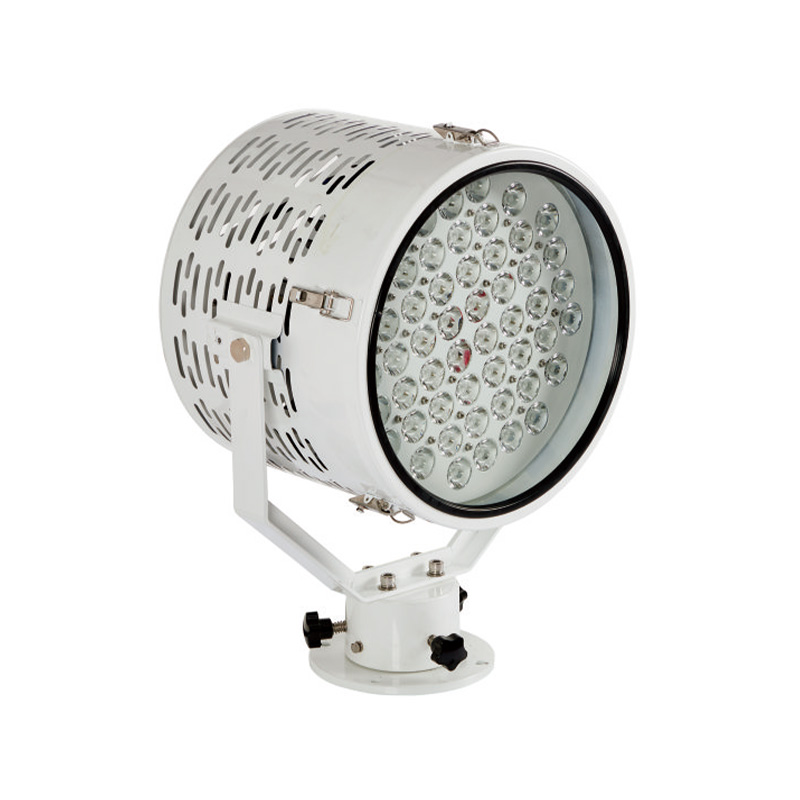
Automatic LED Marine Searchlight

Key Factors in Customizing Marine Searchlights

When customizing marine searchlights for specific vessels, several factors need to be taken into consideration. These factors ensure that the searchlights are not only effective but also compatible with the vessel’s existing systems.

1. Vessel Type and Size

Different vessels have different lighting requirements based on their size and purpose. For example:

Large Commercial Vessels: These ships, such as cargo carriers and tankers, require powerful searchlights to illuminate vast areas around the vessel, particularly for navigation in busy ports or open waters. Custom searchlights for such vessels may need to be larger and more powerful, with long-range capabilities.

Offshore Platforms: Offshore platforms operate in harsh conditions, requiring searchlights that can withstand extreme weather, saltwater corrosion, and high winds. Custom searchlights for offshore platforms are often designed to be rugged and corrosion-resistant, with features such as explosion-proof casings for safety in volatile environments.

Military Vessels: Military vessels need specialized searchlights for stealth, tactical operations, and precise navigation. These searchlights may be customized for low-light conditions, providing high-intensity beams without compromising the vessel’s stealth capabilities.

Recreational Boats: For smaller vessels like yachts or fishing boats, searchlights are typically compact and energy-efficient, offering the ability to illuminate specific areas for docking, navigation, and security.

2. Operating Environment

The environment in which a vessel operates plays a crucial role in the customization of searchlights. Factors such as weather conditions, sea state, and the potential for fog or other obstructions must be considered when designing a searchlight system.

Marine Weather Conditions: Searchlights for vessels operating in storm-prone areas need to be weather-resistant, capable of functioning in heavy rain, fog, snow, and high winds. Custom coatings and seals can be applied to protect the searchlight from saltwater corrosion and ensure its longevity in these environments.

Nighttime Navigation: Searchlights used for nighttime navigation must be capable of illuminating a wide area while minimizing glare. Custom searchlights with adjustable beam angles allow operators to control the direction and intensity of the light, reducing the risk of eye strain and improving overall visibility.

3. Beam Range and Intensity

One of the primary functions of a marine searchlight is to illuminate distant objects. The beam range and intensity required will vary depending on the vessel’s operational needs. For example:

Long-Range Searchlights: Vessels that require long-range visibility, such as ships navigating through busy ports or navigating at sea, may need searchlights with high-intensity beams that can reach several kilometers.

Short-Range Searchlights: Smaller vessels or those operating in harbors or shallow waters may only need searchlights that provide short-range illumination, but with wider coverage. These searchlights are typically designed for docking, inspection, and spotting nearby obstacles.

The beam can be customized to provide either a focused, narrow beam for long-distance visibility or a wider, diffused beam for broader illumination. Adjustable beam angles, zoom functions, and the ability to control the light’s intensity are essential features to consider.

4. Power and Energy Efficiency

Power consumption is an important consideration, especially for vessels that require continuous or long-duration operation. Customizing marine searchlights for energy efficiency ensures that vessels can operate their lighting systems without overburdening their power supply.

LED Technology: The use of high-efficiency LED searchlights is a popular option, as LEDs provide long-lasting illumination with lower energy consumption compared to traditional halogen or incandescent bulbs. Custom LED searchlights can also provide higher brightness with a smaller power footprint, ensuring cost-effective operation.

Solar-Powered Searchlights: For smaller vessels or those operating in environmentally-conscious sectors, solar-powered searchlights are an ideal solution. These lights are especially effective in reducing fuel consumption and minimizing the environmental impact of the vessel’s operations.

LED Marine Searchlight

5. Integration with Vessel Systems

A key advantage of customizing marine searchlights is the ability to integrate them with the vessel’s existing systems. Modern searchlights can be integrated with radar, GPS, and other onboard systems, allowing operators to control them through a unified interface.

Remote Control Systems: Remote-controlled searchlights enable operators to adjust the beam’s direction, intensity, and focus from the comfort of the vessel’s control room or bridge.

Remote Control LED Searchlight

Automated Systems: Integration with automation systems can allow the searchlight to adjust its beam based on specific parameters such as the vessel’s speed, heading, or environmental conditions. This automation enhances safety and operational efficiency, particularly in busy or complex navigation situations.

Final Thoughts

Customizing marine searchlights for specific vessels is an essential step in ensuring optimal performance, safety, and efficiency. Whether you’re outfitting a large commercial vessel, a military ship, or a recreational boat, tailoring the searchlight to meet the vessel’s size, function, and operating environment is crucial. From beam range and power efficiency to rugged durability and integration with onboard systems, customization allows marine searchlights to perform at their best in even the most challenging conditions. Investing in the right custom searchlight system is an investment in better visibility, improved safety, and enhanced operational efficiency.

The Role of Custom Plush Toys in Branding Strategy

In the world of marketing and brand promotion, companies are continuously searching for creative and unique ways to connect with their audience. One such innovative approach that has gained popularity in recent years is the use of custom plush toys as a branding tool. Plush toys, which were once primarily considered children’s playthings, are now becoming a powerful way for brands to engage with customers, create lasting impressions, and strengthen brand identity.

Custom Plush Toys as Branding Tools

Why Custom Plush Toys for Branding

Custom plush toys offer several benefits that traditional marketing methods can’t always match. Unlike digital ads or print campaigns, which can often be ignored or forgotten, plush toys are tangible, fun, and memorable. These cuddly mascots or branded figures act as an extension of a company’s personality, helping build a deeper emotional connection with customers.

Here are a few reasons why custom plush toys are proving to be effective branding tools:

1. Memorability and Emotional Connection

When a consumer receives or interacts with a branded plush toy, it triggers positive emotions associated with playfulness, nostalgia, and comfort. These emotional connections can translate into more favorable attitudes toward the brand. Plush toys act as a lasting reminder of a company’s product or service and are often displayed prominently in homes or offices, which increases brand visibility.

2. Increased Brand Visibility

Plush toys are eye-catching and make great conversation starters. People are likely to talk about their plush toys, whether they’re in their office, home, or car, allowing the brand’s logo, design, or message to reach a wider audience. Since plush toys are often given as gifts, they have the potential to increase brand exposure beyond the original recipient, extending the marketing impact.

3. Collectible and Unique

Custom plush toys can be designed to be limited-edition or exclusive, encouraging people to collect them. This sense of exclusivity creates buzz around the brand, particularly when paired with special releases or promotions. Collectible plush toys can also become part of a larger branding campaign, with different series or seasonal themes that entice customers to return and engage with the brand again and again.

4. Versatility Across Industries

Custom plush toys are not just for children’s brands or toy companies. They can be applied in various industries, including:

Retail: Companies can create plush toys in the shape of their product or customized mascot, using them as promotional items or giveaways for loyal customers.

Hospitality: Hotels and resorts can create plush toys representing their brand’s theme or mascot, enhancing guest experience and engagement.

Entertainment: Movie studios, video games, or theme parks often release plush toys based on characters from their shows or games to create excitement and boost fan loyalty.

Nonprofits & Causes: Charities can create plush toys that represent their cause, offering them as part of fundraising campaigns to build awareness and encourage donations.

5. Effective for All Ages

Unlike many other promotional products, custom plush toys appeal to people of all ages. Children adore the softness and playful nature of plush toys, while adults can enjoy them as cute, collectible items or functional décor. This universal appeal makes plush toys a versatile branding tool that can reach a broad demographic.

Custom Plush Toy as a Branding Tool

How to Use Custom Plush Toys in Your Branding Strategy

To maximize the effectiveness of custom plush toys as a branding tool, here are several strategies that can be employed:

1. Incorporate Brand Mascots

Many companies have iconic mascots or characters that represent their brand identity. Custom plush toys provide the perfect opportunity to bring these characters to life. Whether it’s a cuddly animal, a robot, or a human character, your mascot can be turned into a plush version that customers can take home.

2. Offer Them as Promotional Giveaways

Custom plush toys make excellent giveaways, especially during events such as trade shows, retail promotions, or product launches. They can be used to reward loyal customers or create incentives for purchasing products or services. For example, a retail store could offer a limited-edition plush toy to customers who spend a certain amount, encouraging higher sales while boosting brand awareness.

3. Create Special Editions for Holidays or Events

Seasonal or event-based plush toys can create excitement and anticipation around your brand. Limited-edition plush toys designed for special occasions like Christmas, Halloween, or an anniversary can draw attention and boost sales. You can even use plush toys as part of a special promotion or charity event, with a portion of the proceeds going to a good cause.

4. Leverage Social Media and Content Marketing

Promote custom plush toys on your brand’s social media platforms by encouraging users to share pictures of themselves with their plush toys. This user-generated content can boost brand engagement and create a sense of community around your brand. Offering exclusive plush toys to social media followers or using plush toys in online contests can further enhance your brand’s digital presence.

5. Incorporate Plush Toys into Packaging

Custom plush toys can also be a part of a product’s packaging. For example, a toy company could include a branded plush toy with every purchase as a bonus. This adds value to the product and encourages customers to buy again, while also acting as an additional marketing tool each time the plush toy is displayed.

Designing Your Custom Plush Toy

When creating a custom plush toy, it’s important to consider the following design elements:

Brand Colors and Logo: Ensure that the plush toy reflects your brand’s visual identity by using the right colors and including your logo in the design.

Size and Functionality: Plush toys come in various sizes. Consider your target audience and whether a small, portable toy or a larger, more displayable plush would be most effective.

Quality and Durability: Opt for high-quality materials that will stand the test of time. A well-made plush toy will not only be visually appealing but also have a lasting impact on your customers.

Character Design: Whether you’re bringing a mascot to life or creating a character based on your product, make sure the design is engaging and easy to identify.

Custom Branded Plush Toy

Summary

Custom plush toys are an innovative and highly effective tool for brand marketing. They offer the opportunity to build emotional connections with customers, increase brand visibility, and create lasting impressions. Whether used as collectibles, promotional giveaways, or limited-edition items, plush toys can bring a fun, engaging, and tangible element to a company’s branding strategy. By leveraging the versatility and universal appeal of plush toys, brands can create a powerful, long-lasting presence in the minds of their customers.

How to Choose Between Microwave Digestion and Traditional Digestion Methods

When it comes to analyzing materials in laboratories, especially in fields such as chemistry, environmental science, and materials analysis, digestion methods are crucial for preparing samples. The two prominent techniques for digestion are microwave digestion and traditional digestion methods. Each approach has its strengths and weaknesses, depending on the material being analyzed, the speed required, and the desired precision of the results. In this article, we will explore both methods in detail, compare their features, and highlight which method is preferable for different applications.

Introduction to Digestion Methods

Digestion is a process used to break down complex samples into their constituent components for subsequent analysis, typically using techniques like ICP-OES, ICP-MS, or Atomic Absorption Spectroscopy (AAS). The goal is to extract all the elements in the sample into a solution, often by breaking down the sample matrix, which may be organic or inorganic.

There are two primary digestion methods:

Traditional Digestion Methods: These include wet ashing and open-vessel digestion techniques, often carried out using acid reflux or the use of conventional heating methods such as hot plates.

Microwave Digestion: A modern technique that employs microwave radiation to heat the sample in a sealed vessel, which can lead to faster and more efficient digestion.

Microwave Digestion Systems

Microwave Digestion

Microwave digestion uses microwave radiation to generate heat within the sample. The sample, along with acids or solvents, is placed in a closed microwave vessel, and microwave energy heats the sample rapidly and uniformly. The process is highly controlled, with sensors and software ensuring precise temperature and pressure conditions. This method allows the digestion process to occur much faster than traditional methods, offering significant advantages in terms of both time and efficiency.

Key Features:

Closed system that controls pressure and temperature.

Faster sample preparation times (typically minutes).

Higher efficiency due to uniform heating.

Suitable for a wide range of sample types, including solid and semi-solid materials.

Master Ultra High Throughput Closed Microwave Digestion-Extration Workstation

Traditional Digestion Methods

Traditional digestion methods generally involve wet ashing or open-vessel digestion, where the sample is combined with concentrated acids (like nitric acid or sulfuric acid) and heated either on a hot plate or using an acid reflux apparatus. The method can take several hours, as it relies on heat transfer through the material’s surface, which can be less efficient compared to microwave digestion.

Key Features:

Open system that relies on direct heat.

Longer sample preparation times (often several hours).

Heating is less uniform, leading to potential sample losses or incomplete digestion. Requires careful monitoring to prevent accidents from excessive heating or pressure buildup.

Comparative Analysis

1. Speed and Efficiency

Microwave Digestion: Significantly faster, typically completing the process in 15-30 minutes, depending on the sample and the reagents used.

Traditional Digestion: Slower, often taking several hours due to the reliance on heat transfer from an external source, leading to longer digestion times.

2. Control and Safety

Microwave Digestion: Provides precise control over temperature and pressure in a sealed system, reducing the chances of sample contamination or loss. However, it requires specific equipment, and there is a need to ensure the vessels are not over-pressurized.

Traditional Digestion: Less controlled, especially in open systems, making it more prone to variability in temperature and pressure. Safety precautions need to be carefully followed to avoid spills or the release of toxic gases.

3. Sample Size and Throughput

Microwave Digestion: Can handle smaller sample sizes but is highly efficient, making it ideal for high-throughput applications.

Traditional Digestion: Generally better suited for larger sample sizes, though the slower digestion time may limit throughput.

4. Application Range

Microwave Digestion: Works well for a broad range of sample types, including difficult-to-digest materials, such as plastics, ceramics, and biological samples. It is ideal for advanced analytical techniques requiring high precision.

Traditional Digestion: Suitable for general applications, particularly when large sample sizes or less complex samples are involved. However, it may struggle with tougher or more complex materials.

5. Cost and Maintenance

Microwave Digestion: The initial investment in microwave digestion systems can be higher, and the systems require regular maintenance and occasional replacement of specialized components, like digestion vessels. However, the increased speed and efficiency of sample digestion can offset these costs, especially in high-volume labs.

Traditional Digestion: Traditional methods are less costly in terms of initial investment but are more labor-intensive and time-consuming, which can result in higher operational costs over time. There are also greater risks of sample contamination or loss due to the less controlled environment.

Which Method is Better for You?

The choice between microwave and traditional digestion depends largely on the specific requirements of the laboratory, such as:

For high-throughput labs that need to process multiple samples in a short time, microwave digestion is the better choice.

For large sample sizes or more basic applications, traditional digestion methods may still be effective and more affordable.

Microwave digestion is the modern approach, especially for those looking for precision, speed, and efficiency in sample digestion. It is widely used in analytical chemistry, environmental testing, food safety, and materials science.

Traditional digestion methods, on the other hand, may still be useful in some contexts, particularly when dealing with large sample volumes or when budget constraints are a concern.

Traditional Digestion Methods

Final Thoughts

In summary, microwave digestion offers significant advantages in terms of speed, efficiency, and precision compared to traditional digestion methods. While the initial investment may be higher, the benefits in terms of time savings and improved sample preparation make it a valuable tool for many laboratories. Traditional methods, while still relevant, may eventually be phased out in favor of more advanced, faster techniques that enhance analytical capabilities and throughput. As the demand for more accurate and rapid analysis continues to rise, microwave digestion is set to become the go-to method in many industries.

How to Install Self-Tapping Screws Using Washers

Self-tapping screws are widely used in construction, manufacturing, and equipment assembly because they can create their own threads in materials such as metal, plastic, and wood. When combined with washers, these screws provide enhanced load distribution, improved sealing, and better surface protection. Installing self-tapping screws with washers correctly ensures strong fastening performance, long service life, and reduced risk of material damage.

Self-tapping screws with washers

Understanding Self-Tapping Screws and Washers

Self-tapping screws are designed with sharp threads and cutting edges that allow them to form threads in a pre-drilled hole or, in some cases, directly into the material. This eliminates the need for separate tapping operations, saving both time and labor.

pan Head Philip self-tapping screws

Washers are flat or specially shaped components placed under the screw head. Their primary function is to distribute the load over a larger surface area and protect the material from damage during tightening. In certain applications, washers also provide sealing, vibration resistance, or electrical insulation.

The combination of a self-tapping screw and a washer is commonly used in sheet metal fastening, roofing systems, appliance manufacturing, and mechanical assemblies where secure and reliable fastening is required.

Benefits of Using Washers with Self-Tapping Screws

Using washers with self-tapping screws offers several practical advantages. One key benefit is improved load distribution. By spreading the clamping force across a wider area, washers help prevent deformation or cracking of thin or fragile materials.

Another advantage is enhanced surface protection. When screws are tightened directly against a surface, they may cause scratching or indentation. A washer acts as a buffer between the screw head and the material.

Washers can also improve sealing performance in outdoor or moisture-sensitive environments. Specialized washers made with rubber or neoprene can prevent water penetration around the fastener, making them particularly useful in roofing and exterior structures.

Additionally, washers help maintain joint stability by reducing loosening caused by vibration or repeated mechanical stress.

Preparation Before Installation

Proper preparation is essential for effective installation. The first step is selecting the appropriate screw type and washer size according to the material thickness and application requirements. Using the correct combination ensures optimal fastening strength.

Next, determine whether a pilot hole is necessary. For harder materials such as thick steel, drilling a pilot hole slightly smaller than the screw diameter makes installation easier and reduces the risk of screw breakage.

It is also important to ensure that the surfaces being joined are properly aligned. Misalignment can lead to uneven loading, poor thread formation, and reduced fastening performance.

Installation Process

The installation process typically begins by placing the washer onto the screw shaft so it rests directly beneath the screw head. Some screws are pre-assembled with washers to simplify this step.

Once the washer is positioned, the screw is aligned with the fastening location. If a pilot hole has been prepared, the screw tip is inserted into the hole.

Using a screwdriver or power drill with the correct driver bit, the screw is driven into the material. During this process, the screw threads cut into the material and form matching internal threads.

It is important to apply steady pressure while driving the screw to ensure proper thread formation. The screw should be tightened until the washer sits firmly against the surface, but excessive tightening should be avoided because it may strip the newly formed threads or deform the washer.

Common Installation Tips

Several practical tips can improve installation quality and efficiency.

Use the correct driver bit to prevent slipping and damage to the screw head.

Maintain moderate drilling speed when using power tools to prevent overheating or thread damage.

Ensure the washer remains flat during tightening to maintain even load distribution.

Avoid over-tightening, which can damage both the screw threads and the material surface.

For outdoor applications, consider corrosion-resistant screws and washers to improve durability.

Self-tapping screws and washers

Typical Applications

Self-tapping screws with washers are commonly used across many industries. In construction, they are frequently used for fastening metal roofing panels, wall cladding, and HVAC ducting. In manufacturing, they are used for assembling appliances, electrical enclosures, and sheet metal components.

Automotive and machinery industries also rely on these fasteners for attaching lightweight panels, brackets, and covers. Their ease of installation and reliable holding power make them ideal for high-volume production environments.

Summary

Installing self-tapping screws with washers is a practical fastening solution that combines efficiency with improved joint reliability. By distributing load, protecting surfaces, and enhancing sealing performance, washers significantly improve the effectiveness of self-tapping screw installations. Proper preparation, careful alignment, and controlled tightening are essential to achieving secure and long-lasting connections in a wide range of industrial and construction applications.

How to Do Effective Safety Training in Oil and Gas Operations

P>The oil and gas industry is one of the most complex and high-risk sectors in the world. From drilling and exploration to refining and transportation, operations often involve hazardous materials, high pressures, extreme temperatures, and heavy equipment. In such an environment, effective safety training in the oil and gas industry is essential to protect workers, prevent accidents, and ensure regulatory compliance. Comprehensive safety training programs help employees understand potential hazards, adopt safe work practices, and respond effectively to emergencies.

The Importance of Safety Training in Oil and Gas Operations

Safety training plays a critical role in minimizing workplace incidents and improving operational efficiency. Oil and gas facilities operate under strict safety standards because even small mistakes can lead to serious consequences such as fires, explosions, equipment damage, environmental pollution, or loss of life.

Through structured training programs, employees learn how to identify hazards, use equipment correctly, and follow safety protocols. Training also strengthens a company’s safety culture, encouraging workers to take responsibility for their own safety as well as that of their colleagues. As a result, organizations that invest in safety training often experience fewer accidents, lower operational disruptions, and improved productivity.

Basic Offshore Safety Training

Key Components of Oil and Gas Safety Training

Safety training in the oil and gas industry typically includes several key areas designed to address the diverse risks associated with field operations and processing facilities.

Hazard Identification and Risk Assessment

Workers must be able to recognize potential hazards before they become incidents. Training programs teach employees how to evaluate risks related to drilling operations, high-pressure systems, chemical exposure, and confined spaces. By understanding risk assessment techniques, workers can take preventive actions and follow established control measures.

Equipment Handling and Operational Safety

Many accidents occur due to improper equipment use. Training ensures that employees understand how to safely operate drilling rigs, pumps, compressors, lifting systems, and other machinery. Proper instruction reduces the likelihood of mechanical failures, equipment damage, and worker injuries.

Emergency Response and Evacuation Procedures

Oil and gas facilities must be prepared for emergencies such as fires, blowouts, gas leaks, or oil spills. Safety training includes emergency response drills, evacuation plans, and communication protocols. Workers learn how to react quickly and effectively in high-pressure situations, which can significantly reduce the impact of an incident.

Personal Protective Equipment (PPE)

Personal protective equipment is essential for protecting workers from hazards such as toxic gases, falling objects, and extreme temperatures. Safety training teaches employees how to select, wear, maintain, and inspect PPE including helmets, flame-resistant clothing, gloves, safety goggles, and respiratory protection.

Environmental Protection Awareness

Environmental protection is another critical aspect of oil and gas safety. Training programs emphasize proper handling of chemicals, spill prevention techniques, and waste management procedures. These practices help companies comply with environmental regulations and reduce ecological damage.

Safety Training in Oil and Gas Industry

Types of Safety Training Programs

Oil and gas companies implement different types of safety training depending on job roles, operational environments, and regulatory requirements.

Induction Training is provided to new employees to familiarize them with workplace hazards, company safety policies, and emergency procedures.

Job-Specific Training focuses on specialized tasks such as drilling operations, pipeline maintenance, or offshore platform work. This training ensures workers are competent in the equipment and processes they handle daily.

Refresher Training is conducted periodically to reinforce safety knowledge, update workers on new technologies or regulations, and maintain high safety awareness.

Drilling simulation training is increasingly used to replicate real operational scenarios in a controlled environment. Workers can practice responding to critical events such as well control situations or equipment failures without actual risk.

The Role of Technology in Modern Safety Training

Technological advancements are transforming how safety training is delivered in the oil and gas industry. Digital learning platforms, virtual reality simulations, and advanced training simulators provide immersive learning experiences that improve knowledge retention and practical skills.

Oil and gas simulation systems allow workers to experience realistic operational conditions, including equipment malfunctions and emergency scenarios. These tools help trainees develop decision-making abilities and operational confidence before working in real environments.

drilling and well control simulation training system

In addition, online training modules enable companies to standardize safety education across multiple locations and ensure that employees remain updated on industry best practices.

Building a Strong Safety Culture

While training programs are essential, creating a strong safety culture is equally important. Management must actively support safety initiatives, encourage open communication about hazards, and promote continuous improvement in safety practices.

Employees should feel empowered to report unsafe conditions, suggest improvements, and participate in safety meetings and drills. When safety becomes a shared responsibility across the organization, the effectiveness of training programs significantly increases.

Final Words

Safety training is a fundamental component of responsible operations in the oil and gas industry. By equipping workers with the knowledge, skills, and awareness needed to manage risks, companies can significantly reduce accidents and protect both personnel and the environment. As technologies and operational complexities continue to evolve, continuous investment in advanced safety training will remain essential for maintaining safe, efficient, and sustainable oil and gas operations.

How AI Revolutionizes Printing Inspection

In modern printing industries such as packaging, labels, flexible materials, and commercial printing, maintaining consistent product quality is essential. Traditional inspection methods often rely on manual checks or rule-based machine vision systems, which can struggle to detect subtle or complex defects at high production speeds. With the rapid development of artificial intelligence, AI-based defect detection systems are transforming print inspection are transforming print inspection by improving detection accuracy, efficiency, and adaptability. These intelligent technologies enable manufacturers to identify printing defects in real time, reduce waste, and maintain high standards of product quality.

The Role of AI in Print Inspection

Artificial intelligence introduces advanced data analysis and learning capabilities into print inspection systems. Unlike conventional vision systems that rely on fixed rules and predefined thresholds, AI models can learn patterns from large datasets of printed images. By training deep learning algorithms with examples of both acceptable prints and defective prints, the system becomes capable of recognizing subtle variations that might otherwise go unnoticed.

AI-driven inspection systems analyze high-resolution images captured by line-scan or area cameras installed along the printing line. The algorithms continuously evaluate these images and compare them with reference patterns to identify anomalies. Because the system learns from historical data, it can adapt to different print designs, materials, and production conditions without requiring constant manual adjustment.

This capability is particularly valuable in industries where frequent design changes occur, such as packaging and label printing.

AI Defect Detection

Types of Printing Defects Detected by AI

AI-based inspection technologies are capable of identifying a wide range of printing defects with high precision. These include both obvious defects and subtle imperfections that are difficult for traditional systems to detect.

Common printing defects detected by AI inspection systems include missing prints, color deviations, streaks, smudges, and ink contamination. AI models can also detect registration errors where different color layers do not align correctly, which is a critical issue in multi-color printing processes.

Another significant advantage of AI is its ability to identify complex pattern distortions, micro-scratches, and inconsistent textures in printed materials. These defects often occur due to issues with printing plates, rollers, or ink supply systems. By detecting them early, manufacturers can correct production problems before large quantities of defective products are produced.

printing defects

Advantages of AI-Driven Print Inspection

AI-powered inspection systems offer several advantages compared to conventional print inspection technologies. One of the most significant benefits is improved detection accuracy. Deep learning algorithms can analyze thousands of image features simultaneously, allowing them to recognize defects with much greater precision than traditional rule-based systems.

Another important advantage is adaptability. Traditional inspection systems require engineers to manually set parameters and thresholds for each new print job. In contrast, AI systems can learn new patterns quickly, significantly reducing setup time when switching between different designs or products.

Real-time processing is another key benefit. AI inspection systems can analyze images instantly during production, allowing defective materials to be removed immediately from the production line. This prevents defective products from reaching downstream processes such as packaging or shipping.

AI systems also contribute to data-driven manufacturing. Inspection results can be recorded and analyzed over time, helping manufacturers identify recurring production issues, optimize machine settings, and improve overall process control.

Integration with High-Speed Printing Systems

Modern printing machines often operate at extremely high speeds, producing thousands of meters of printed material per minute. AI-based inspection systems are designed to operate in these demanding environments. High-speed industrial cameras capture continuous image streams, while powerful computing units process the data in real time.

Many AI inspection platforms integrate seamlessly with automated quality control systems. When a defect is detected, the system can trigger alarms, mark defective areas, or automatically stop the printing process if the defect rate exceeds acceptable limits. This integration helps prevent costly production errors and ensures consistent quality throughout the manufacturing process.

Challenges in Implementing AI Inspection Systems

Despite their advantages, AI-based inspection systems also present certain challenges. One of the main challenges is the need for high-quality training data. Accurate defect detection depends on large datasets containing examples of various defect types. Collecting and labeling these images can be time-consuming, especially during the initial deployment phase.

Another challenge involves computational requirements. Deep learning algorithms require powerful processors or GPUs to perform real-time analysis of high-resolution images. However, ongoing advancements in edge computing and industrial AI hardware are rapidly reducing these limitations.

In addition, integrating AI systems with existing production equipment may require adjustments in hardware, software, and workflow processes.

printing quality inspection system

Future Trends in AI-Based Print Inspection

As artificial intelligence technology continues to evolve, AI-based print inspection systems are expected to become even more advanced. One emerging trend is the use of self-learning systems that continuously improve their detection capabilities during operation. These systems can automatically update their models based on newly detected defects and changing production conditions.

Another important development is the integration of AI inspection with smart manufacturing platforms. By connecting inspection data with other production systems, manufacturers can implement predictive maintenance, automated quality control, and real-time production optimization.

In addition, improvements in high-resolution imaging, industrial edge computing, and machine learning algorithms will further enhance the speed and accuracy of defect detection.

Summary

AI defect detection is revolutionizing print inspection by providing highly accurate, adaptable, and real-time quality monitoring solutions. Compared with traditional inspection methods, AI-powered systems can detect complex defects, reduce production waste, and improve manufacturing efficiency. Although challenges such as data requirements and system integration remain, ongoing technological advancements are making AI inspection increasingly practical for modern printing operations. As the printing industry continues to embrace digital transformation, AI-driven inspection systems will play a critical role in ensuring consistent product quality and efficient production processes.

通过 WordPress.com 设计一个这样的站点
从这里开始