A Comprehensive Introduction Of Tension Controller

In the industries of paper, printing, textile, packaging, metal and wire & cable, in order to maintain high production efficiency, a basic tension controller is essential. It has wide applications, especially in the most related coiling and unwinding industries which need a perfect web tension controller to improve production efficiency and product quality.

What Is The Tension Controller?

Tension control refers to the ability to control the tension when the raw materials are transported on the device. In the coiling industry, the tension always needed to be controlled for production requirements, and the tension controller is a type of device for tension control. It has the advantages of small error, fast responding speed, high accuracy and simple adjustment. There’re three types of tension controllers including automatic tension controllers, semi-automatic tension controllers and manual tension controllers.

The basic composition of the tension control system

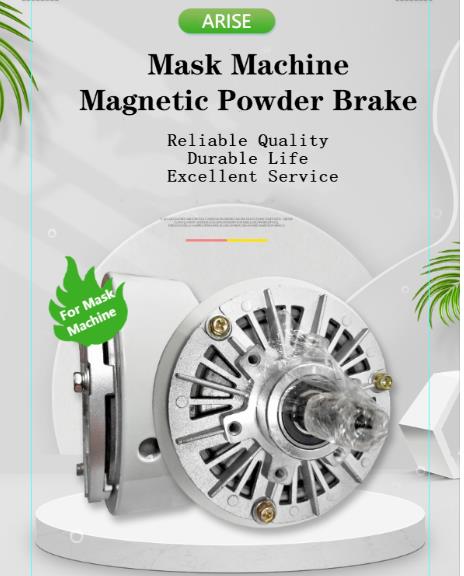
A typical tension control system is mainly composed of a tension controller, a tension reader, a tension detector, a magnetic powder brake, and a clutch. According to the loop, it can be divided into open loop, closed-loop, or free ring tension control system and it can be divided into types of ultrasonic, floating roll, track arm, according to the monitoring method of different coils.

tension controller

Working principle of the tension controller

The tension controller can directly set the value of the tension control, and then input the signal of the tension sensor as a feedback value. Input the error to the PID or other manipulations for dealing with, and output to the actuator to control.

The tension controller system is controlled between the units of the magnetic powder clutch and must maintain a consistent ratio at the speed, a constant tension among the materials, or controlling tension according to the specified regularity, to ensure high-efficiency productivity and superior product quality.

Why The Tension Controller Is Important In The Coiling and Unwinding Industries

In the production process of paper, textile, plastic film, wire, printing products, tape, metal strip, etc, the roll of the material or wire is crucial to the quality of the product, and constant tension control is required for this purpose, which can make the products withstand the best tension in the process of winding and remain unchanged from the beginning.

The tension controller can be widely used in various applications where tension is precisely measured, with flexible and extensive applicability. The controller compares the deviation of the tension setting value and tension measurement. The output is adjusted through the proportional integration algorithm calculation, so that the web tends to be the setting value, thereby achieving the purpose of constant tension control. Therefore, it is very important to set the appropriate value of proportional integral and stationary zone parameters for the stability of the tension system.

The stability of constant tension control is directly related to the quality of the products. If the tension is too large, the stretch deformation of the processing material will be caused. If the tension is too small, it will deform the stress between the layers of the material and the layers, resulting in the uniform unwinding, affecting the quality of processing.

The Debugging Method Of The Tension Controller

The rewinding & unwinding, or transfer of the tension controller is based on the balance of tension variation in different industries, for high-efficiency production, the debugging method of the tension controller is critical.

The debugging method of the tension controller can be done in the following steps.

1. Programming the related parameters of tension measurement.

2. Make sure the tension controller is installed and the wiring is turned on the power.

3. By manual adjustment, check the system to confirm that the tension is normal and the actuator is operating normally.

4. Ensure the installation of the tension sensor and the wiring is correct. Check whether the signal of the tension sensor is normal.

5. Adjust the PID parameters according to the operation situation for guaranteeing the balance operation of the tension control system.

6. Calibrate the 0 points and the full scale of the tension signal, and ensure the normal display of the tension.

When the tension controller is automatic and the tension is greater than the setting value, the output current value is reduced. When the tension is smaller than the setting value, the output current value increases and the current value is increased with the increased tension in the system, which is greater than the setting value, the output current decreases, and the value of the tension will be reduced, thereby recirculating, achieving automatic control.

For more professional knowledge, please visit the article page of important tension controller for the coiling industry.

What Is The Tungsten Carbide Nozzle

carbide nozzle

The tungsten carbide nozzle is processed with super hard carbide materials by high-precision machinery and has high anti-curvature and high hardness, widely used in the field of surface treatment, sandblasting, painting, electronics, chemical processes, etc.

Advantages Of Tungsten Carbide Nozzle

Among the many nozzles, the carbide nozzle is the most rugged and the most cost-effective. Its anti-curvature can reach 2300N/mm and hardness can reach HRA90, be suitable for many industries and fields which have high requirements for hardness performance.

The cemented carbide nozzle is sintered by the heat pressure of the heat holes and huckles. It is conducive to the implementation of small work, such as cleaning parts, welding, cleaning handrail, stairs, gauge, or stone carving. It forms a sufficient airflow mode, which increases the abrasive rate by 100% for a given pressure and it is the best choice for high airflow to improve productivity.

The tungsten carbide nozzle has the advantages of corrosion resistance, long service life, excellent performance, wear-resistance, low density, etc, suitable in many applications. For example, the carbide nozzle is widely used in sandblasting to ensure that the products are used for a long time for the best air and abrasives.

The Common Types Of Tungsten Carbide Nozzle

The shape of the hole in the cemented carbide nozzle determines its airflow mode. According to the application industries, there are three types of carbide nozzles that are commonly used, which include tungsten carbide water coal slurry nozzles, carbide atomization nozzles, and carbide oil nozzles.

Tungsten carbide water coal slurry nozzles

The carbide nozzle has a wide range of applications in the hydrocryrid burner, which makes the water coal paste fuel burn much more fully and efficiently by good fuel atomization. Depending on the nature of the fuel, the carbide nozzle can also be divided into pneumatic, mechanical, rotary cup and ultrasonic wave. The rationality of its structure determines the atomization effect of the water coal slurry. The wear resistance and hot-impact resistance of the material determine the service life of the nozzle and directly affect the economics and safety of water coal slurry applications.

The wear of carbide water coal slurry nozzles mainly includes crystal grains, brittle fracture and grinding damage. The higher the CO content in the cemented carbide, the greater the erosion wear is, so it should be selected, which has less CO content. The water coal slurry nozzle made by tungsten carbide, compared to other metal materials, has better wear resistance and longer service life. However, the tungsten carbide itself has a large brittleness and high hardness and the toughness and the thermal impact properties are lower than other metal materials. It is not easy to process. The carbide tungsten can greatly improve the wear resistance of a nozzle.

Tungsten carbide atomization nozzle

The aerosolic form of the carbide atomization nozzle can be divided into types of pressure, rotary, electrostatic, ultrasonic and bubble. Because of its good atomization performance and wide coverage, the carbide nozzle is suitable for spraying, dust removal, and humidification, etc in industrial manufacturing and agricultural production spray.

Compared to other types of nozzles, the tungsten carbide nozzle can achieve a spray effect without an air compressor and the shape of the atomization is generally circular or fanned. In addition, the carbide atomization nozzle is also a very important role in the air conditioner. It is configured on the line of air-conditioning, which effectively reduces the heat generation during the air condition work by atomized water mist.

Tungsten carbide oil nozzle

With the development of the petroleum industry and the increasing energy demand, the carbide oil nozzles can be used with carbide tips to achieve improved drilling efficiency, and extend the service life of the drill bits.

Wide Applications Of Tungsten Carbide Nozzle

The applications of carbide nozzle are very wide, commonly used in automotive, electroplating, surface treatment, high-pressure cleaning, dust removal, cooling, desulfurization, humidification, stirring, etc.

Tungsten carbide nozzles are suitable for sandblasting, painting, electronics, chemical processes, etc. At the same time, it is also the active element for the coal chemical industry slurry output.

Cemented carbide nozzles are also used in different applications, such as wire drawing, line guides and many more other aspects.

For more professional information, please visit the article page of knowledge shared for tungsten carbide nozzle.

High Precision Carbide Wear Parts From XYMJ

carbide roller

Tungsten carbide products used as wear-resistant parts include nozzle, guide rail, plunger, tire anti-slip nail, shovel snowboard, sweeping shovel, rotary seal ring, grinding mandrel, various pump parts, valve parts, seals, etc.

Carbide wear parts can be widely used as the carbide roller, precision molding & optical molds, stamping molds, drawings, seal ring, piston, bearing journal, and surface hardening welding, spray materials, etc.

How To Improve The Wear Resistance Of Carbide Wear Parts

The wear performance of the tungsten carbide is affected by the use of the environment and alloy performance. The wear resistance is mainly determined by the microstructure and chemical composition. The main structural parameters of the cemented carbide are that grain size and bonding phase content. The wear resistance is also affected by the added elements such as barium.

In industrial production, much important mechanical equipment and their mechanical parts are in harsh conditions, such as high speed, high temperature, high pressure, over-serving, etc., therefore, the damages of mechanical components occur frequently due to wear, corrosion, oxidation, which mostly are caused from the surface. The surface protective measures are used to delay and control the damage, which has become an effective method for solving the wear of mechanical parts. Therefore, various surface abrasion techniques for mechanical parts are adopted, such as plating, thermos, carburizing, nitriding, permeable metals, thermal spraying, surfacing, coating, pasting the hardening layer, high energy beam, etc. The rare earth has been successfully applied in the carbide wear part. When the strength and the impact toughness increase by more than 10%, the wear resistance of the carbide wear parts also has been improved.

Manufacturer Of High Precision Carbide Wear Parts – XYMJ

XYMJ has been committed to providing high-performance carbide products for mechanical industrial production. XYMJ relies on high production technology, professional production equipment, more than 20 years of experience, providing customer high-precision custom carbide wear parts on the basis of the drawings selecting superior materials to maximize the use requirements of customers for carbide wear parts.

XYMJ offers custom parts based on customer’s drawings, producing precision cemented carbide wear parts, using integral carbide materials, half-machined blank, internal threads, direct molding during the blank semi-processing. Surface fine milling can effectively control the dimensional precision machining into finished products.

The high hardness and excellent wear resistance are the basic requirements. According to the special production process of carbide parts, XYMJ adopts the professional vacuum low-pressure sintering process. When the blank is sintered into shape, the internal thread is semi-precision molding, which is convenient for subsequent finishing threaded dimensional accuracy. This is very powerful for tungsten carbide blank sintering and precisely controls the dimensional accuracy of the carbide wear parts.

The requirements for the production and processing of high-precision wear parts are strict and high, which need strong technical support and rich practical experiences with advanced equipment. XYMJ focuses on every detail of production and process, providing customized carbide wear parts, manufacturing according to high-precision applications of customers.

The superior performance of wear-resistant and corrosion make the carbide wear parts are popular in a wide range of industries. XYMJ, specializes in high precision processing and production for carbide wear parts, customized service available.

Why Should Choose Carbide Wear Parts

carbide wear parts

Wear-resistant components made by tungsten carbide as raw materials can be referred to as carbide wear parts, which have high hardness, strong wear resistance, wide industrial applications. Excellent wear resistance and high hardness make tungsten carbide wear parts suitable for manufacturing mechanical parts and drawing die featuring high-temperature resistance, friction resistance, corrosion-resistant.

What Is The Relationship Between The Hardness And Wear Resistance For Tungsten Carbide

Wear resistance refers to the ability to resist friction, and the tungsten carbide, which is a very widely used material, has high wear resistance. What is the relationship between the hardness and wear resistance for tungsten carbide?

In general, the higher the hardness is, the better the wear resistance. The smaller the particles of the tungsten steel has, the higher the hardness, the better wear resistance. The wear resistance of the cemented carbide is related to the contained proportion of titanium carbide, cobalt carbide. It will be higher hardness and better wear resistance, with more titanium carbide and less cobalt.

The tungsten carbide can reach 86 ~ 93hra at normal temperature, which is equivalent to 69 to 81HRC. High hardness can be maintained at 900 to 1000 ° C with excellent wear resistance. The cemented carbide has been made by a series of refractory metal carbides such as WC, TiC, NBC, and Vc with a powder metallurgical method as a binder. Compared with the superhard material, it has high toughness. Compared to high-speed steel, it has high hardness and wears resistance.

Hardness is an important performance indicator for measuring metal materials, which is the ability of a material to resist elastic deformation, plastic deformation and damage. If other factors have not been considered, the relationship between hardness and wear resistance is that the higher the hardness, the better the wear resistance. Relatively, the same material has different surface treatments, and the hardness is proportional to wear resistance.

However, the material with the best wear resistance doesn’t surely have a high hardness. For example, the hardness of cast iron which is the common wear-resistant material is not high.

Production Process Of Carbide Wear Parts

When the carbide wear parts are made, the particle size of the selected raw material powder is between 1 and 2 microns with high purity. The raw material is an ingredient according to the specified composition, and the alcohol or other medium is added to the wet ball mill for wet grinding, so that they are mixed, pulverized, dried, and sieved to add a type of molding agents such as wax or glue. Then they are dried for the mixture. The mixture granulates, the mold is heated to approaching the bonding metal melting point (1300 to 1500 ° C), and the hardened phase forms a eutectic alloy with the bonded metal.

After cooling, the hardening phase is distributed in the grid composed of bonded metal, close to each other, forming a strong whole. The hardness of the carbide wear parts depends on the content of the hardening phase and the particle size of the grain, that is, the higher the hardening phase content, the finer the grains, the higher the hardness. The toughness of the wear parts is determined by the bond metal, the higher the bond metal content, the greater the bending strength.

Applications Of Carbide Wear Parts

The tungsten carbide wear parts have a series of excellent performance, good wear resistance, high strength and toughness, heat resistance, corrosion resistance, etc., especially their high hardness and excellent wear resistance, providing powerful product support and excellent performance for industrial production, helping improve production efficiency and extend the service life of the equipment.

Applications

1.Suitable for making cast iron rolls and high-nickel-chromium rolls to repair molded knives.

2. Used for making unloading plates, stamping die, convex mold, electronic level molding, and other stamping dies.

3. In the pump, compressor and mixer, the tungsten carbide seal is applied as a mechanical sealing surface.

tungsten carbide seal ring

4. Carbide wear parts can be used on the metal ring in the spinning and weaving industry, which is to prevent rumors and displacement of phenantomers from rotating at high speeds and allows the machine to operate smoothly.

For more useful information, please visit the article page of what is carbide wear parts.

How To Improve The Accuracy Of Web Guide System

For a high-accuracy web guide system, not only you should consider the ability of web guiding, but also consider the characteristics of the coil and its movement on the machine.

The Web Offsets Which Affect The Accuracy Of Web Guide System.

work principle of web guiding system

Driver limits

The driver has a limit in the web guide system. All web guide systems can correct the position offset within a certain range, and this range should less than the drive limit. Most drivers have a limit of +/-75 mm. If the enter position of the web is shifted by more than 75 mm, the system will be stopped because of the movement to the limit position, and the positional offset for the portion of more than 75 mm cannot be corrected.

Instant position offset

When the lateral position offset occurs in a short period of time, this offset is known as an instant position offset which is usually occurred because the shorter length of the web is r or the high-speed web. It may also be caused by materials, machines, or process changes, for example, due to the unmembacted web switching bonding. Because this positional offset is immediate, the lateral speed of this positional offset is infinite, which is called the most challenging positional offset and the web guide system is impossible to have an infinite tracking speed. In order to improve the efficiency of the web guiding, the instant offset.

The offset of the steady-state

The offset of the steady-state is usually caused by the deviation between the web and the reel, the reel and the flat gas shaft, the discharge rack and the subsequent process centerline. Further, during the transmission process, the offset of the steady-state is also occurred due to the non-parallel guide roller, the uneven diameter guide roller, or the external force, such as the airflow. There’s not a horizontal moving speed in the offset of the steady-state. Therefore, as long as the driving limit of the actuator driver is larger than the distance of the coil offset of the steady-state, this type of offset does not affect the accuracy of the web guide system.

Web

In addition to the offset of instant position and steady-state, the web also produces progressive lateral position offset, which may be caused by various reasons, such as the non-neat or inclined side of the coil, the movement of the loose roller, the sliding or sticky milling of the web in the roller, the work conditions of the machine or process for example that the tension, speed, lubrication, or temperature change will interfere with the mechanism of the coil transmission.

Web guide system itself

The web guide system may also cause the web offset. If the control loop is not adjusted well and the blind zone of the probe is too large, or the driver is loose, then the web guide system will cause the offset of the web. There are several important indicators for web guide system installation, which include calibration width, winding angle, the position of the swing center and the direction of swing.

web guide system installation

Conditions & Features The Web Guide System Should Satisfy For The Highest Accuracy

Usually, the precision of 0.3 mm can meet most of the applications, which is also the accuracy that most of the web guide system can achieve with general settings. But to achieve 0.1 mm or higher accuracy, coil, web guide machine, and equipment must meet some requirements.

Conditions of the web guide system and coils should satisfy

1. The input of the web offset is a type offset of the steady-state.

2. The input of the web offset ranges within the driver limit.

3. Prouch, rebound, or probe of the connector is small enough.

4. The initial push power of the driver is large enough.

high precise web guide system

Features of the web guide system should satisfy

1. Inverse second of 40 seconds

2. The maximum lateral positional offset is less than 4 mm / second, at the speed of 25 meters/minute and the lateral offset angle is less than 6 degrees.

3. The frequency of any coil rack or the horizontal cycle is less than 6.4 Hz.

Large system gain, the quick response speed of the driver, the smallest loose connection & drivers rebounded, will do a great favor for the high-precise web guide system.

What Is The Accuracy Of Web Guide System

The accuracy of web guide system

High accurate web guiding system will help greatly improve productivity and reduce production waste. As a web guide system manufacturer, the question you will be asked commonly is that what is the accuracy of your web guiding? The answer always will be doubted, because the definition of the accuracy of the web guide systemvaries for different people. Before learning the accuracy of the web guiding system, there’s a simple question that why the web guide system is required?

Why web guide system Is required?

The edges or center lines of the process of coating, printing, compounding, dividing, and winding, otherwise, the transverse dislocation of the coil will cause the waste or even downtime. This is why the web guide system is required. It is the technique which will always coil side is neat and consistent. Usually, the tracking method of the web guide includes three types of edge, center and line.

What determines the accuracy of web guide system

The accuracy of the web guide is determined by three factors: the deviation of the invasive web, the accuracy of the web guide system, the installation accuracy of the system. Further, the unique features of the coiling are that the deviation of the invasive web, the lateral movement or swing size of the coil, which are important factors in determining the accuracy of the web guide.

The definition of the accuracy of web guide system

The web guide machine is typically upstream of a critical process, and the closer the process is, thus the maximum reduction in position deviation errors when entering the critical process. As a manufacturer of web guiding, need to follow the edge, center, or line position of the coil just from the probe. So it is recommended that installing the machine in the location closest to the key process.

For more professional knowledge, please visit the article page of The accuracy of web guide system.

Useful Knowledge Shared For Tungsten Carbide

carbide wear parts

With high hardness, excellent wear resistance & corrosion resistance, tungsten carbide has a high performance in the high-tech manufacturing field which has a strict requirement of quality, stability and reliability.

Characteristics of tungsten carbide

1. High hardness and wear resistance. Generally, between HRA86 ~ 93, decreases with an increase in cobalt.

2. Thermohardening. Under the temperature of 500°C is basically unchanged and there is still a high hardness at 1000°C.

3. High anti-bending strength. The bending strength at normal temperature is between 90 and 150 MPa and the higher the cobalt, the higher the anti-bending strength.

4. More stable chemical properties. Carbide material has acid-resistance, alkali-resistant, and even significantly oxidation even at high temperatures.

5. High thermal conductivity. Cemented carbide has higher thermal conductivity than that of high-speed steel, which increases with the increase of cobalt.

6. The coefficient of thermal expansion is relatively small. It is lower than high-speed steel, carbon steel and copper, and increases with the increase in cobalt.

The manufacturing method of tungsten carbide

The production of the cemented carbide is to mix tungsten carbide and cobalt in a certain proportion, pressurize into various shapes, and then semi-sintered. The sintering temperature is 1300-1500°C.

When manufacturing cemented carbide, the selected raw material powder has a particle size between 1 and 2 microns, and the purity is very high. The raw materials are mixed according to the specified composition ratio, and the medium is added into the wet ball mill to wet-grind them for making them fully mixed and crushed. After drying and sieving, the forming agent is added, and then the mixture is dried and sieved. Then, when the mixture is granulated and pressed, and heated to close to the melting point of the binder metal (1300-1500°C), the hardened phase and the binder metal will form a eutectic alloy. After cooling, a solid whole is formed. The hardness of cemented carbide depends on the hardened phase content and grain size, that is, the higher the hardened phase content and the finer the grains, the greater the hardness. The toughness of cemented carbide is determined by the bond metal. The higher the content of the bond metal, the greater the bending strength.

Hardness test of tungsten carbide

The cemented carbide is a metal, which can reflect the difference in mechanical properties in chemical components, tissue structures, and heat-treatment process. Therefore, the hardness test is widely used in the inspection of carbide properties, which can supervise the correctness of the heat treatment process and the research of new materials. The hardness detection of tungsten carbide mainly uses a Rockwalk hardness tester to test HRA hardness values. The test has a strong shape and dimensional adaptability of the test piece with high efficiency.

For more professional knwoledge, please visit the introduction page of tungsten carbide knowledge.

Benefits of Use of Lube Oil Purifier

Lube Oil Purifier Application:

• Marine fuel oil treatment ( diesel, Lube, HFO purification )

• Fuel Oil Process industry

• Lube Oil Processing

• Waste oil industries

• Bio-Diesel / VCO industries

Advantages of Lube Oil Purifier

Powerful, productive and cost-effective

Removes both water and solids in one operation

Effective cleaning of even small particle sizes

Minimal maintenance, enabling more process uptime

Prolongs equipment lifetime

Low total cost of ownership (TCO)

The water is released while the contaminating solids are stored separately. If your processes result in low amounts of solid waste, you can generally remove it manually. Higher waste amounts are automatically cleaned. Yuneng Lube oil purifier can also handle large cleaning volumes and a temporary high influx of water.

A Guide To Lube Oil Purifier

A ship has hundreds of machinery and systems which helps in its day to day operations.

Lubrication plays a vital role in the smooth running of this machinery by overcoming and reducing heat, neutralizing acid combustion by-products, preventing scuffing, lessening friction and thereby combating wear and tear between two running surfaces.

The main engine lube oil system on ships ensure lubrication of the main bearings through pumping of lube oil by duplex oil filters, to the crossheads, and guides, piston cooling and bottom end bearings through the swivel jointed pipes in the engine casings.

The engine cylinders have their own lube oil system, which lubricates the surfaces between the cylinder wall and the piston rings through a set of concentric nozzles or quills fitted around the cylinder liner.

There are various properties of lubricating oils to be maintained, such as viscosity, volatility, alkalinity, oiliness, detergents.

It is imperative to maintain the lubricating oil’s properties and to ensure it is in good condition.

Therefore, we need a Lube oil purifier on ships for proper purification of lube oil with minimum throughput or batch purification in case of heavy contamination.

The Transformer Oil Purifier/Filtration System

Removes impurities and restores / improves the electrical, chemical and physical properties of transformer insulating oils. This oil is an integral part of most large power transformers.  It serves two major roles, as a cooling agent and as an electrical insulator between internal components. Contamination of this oil compromises the insulating properties and leads to premature failure of the transformer. This contamination can be in the form of water, dissolved gases, or foreign particles. By processing this oil with a vacuum dehydration unit like the Yuneng Transformer Oil Purifier, this contamination can be removed returning the insulating oil to its original specifications.

The system incorporates high vacuum and mechanical filtration to dehydration, degasification and filter contaminated oil. Engineered with functionality and versatility to meet a wide range of applications with features such as: an inlet pump capable of drawing oil from long distances and low elevations, a unique multi-level vacuum chamber design for rapid degasification, a sophisticated heating control scheme to ensure safe and efficient processing of the contaminated oil, and a variable speed outlet pump to return the processed oil to the transformer being serviced. Control, monitoring, and user interaction are accomplished through an industrial grade touchscreen operator interface. All parameters are easily viewed and adjusted through this interface along with viewing of current and historical data.

通过 WordPress.com 设计一个这样的站点
从这里开始