The Vital Role of Mooring Bollards in Offshore Floating Terminals

Offshore floating terminals are critical infrastructures in the energy and maritime industries, serving as hubs for oil, gas, and LNG transfer in deepwater or remote areas where conventional ports are impractical. Ensuring secure mooring in these environments is essential for both safety and operational efficiency. Mooring bollards, as one of the fundamental components of mooring systems, play a central role in providing reliable anchoring points for vessels under challenging offshore conditions.

Marine Mooring Bollards for Offshore Floating Terminals

Importance of Mooring Bollards in Offshore Floating Terminals

Safe Vessel Positioning

Bollards provide a secure tie-off point for mooring lines, allowing large tankers, LNG carriers, and support vessels to remain safely positioned alongside floating terminals during cargo transfer.

Withstanding Harsh Loads

Offshore environments expose vessels and terminals to dynamic forces from waves, wind, and currents. Mooring bollards are designed to withstand extremely high line loads, ensuring that vessels remain stable and accidents are avoided.

Operational Reliability

Loading and unloading operations require uninterrupted stability. Strong bollards minimize the risk of line slippage or structural failure, which could otherwise lead to costly downtime or dangerous incidents.

Types of Mooring Bollards Used Offshore

T-head Bollards – Provide high line angles and are suitable for heavy-duty offshore applications.

Horn Bollards – Allow multiple mooring lines to be secured at once and are often used where versatility is needed.

Kidney-shaped Bollards – Designed for compact spaces while still offering high holding capacity.

Double Bitt Bollards – Commonly used for handling two mooring lines simultaneously with excellent stability.

Key Features of Offshore Mooring Bollards

Mooring Bollards for Offshore Floating Terminals

High Load Capacity

Offshore bollards are engineered for extreme tensile loads, often exceeding several hundred tonnes, to handle large tankers and FPSOs (Floating Production Storage and Offloading units).

Corrosion Resistance

Given the exposure to saltwater and harsh marine conditions, bollards are manufactured from high-strength cast steel or ductile iron with specialized coatings to prevent corrosion and extend service life.

Fatigue Resistance

Designed to withstand cyclic loading from constantly shifting vessels, offshore bollards must resist fatigue to ensure long-term durability.

Adaptability to Floating Structures

Unlike fixed port bollards, offshore bollards are often integrated into floating platforms, buoys, or single-point mooring systems. This requires robust design for flexible movement while maintaining holding capacity.

Installation Considerations for Offshore Bollards

Structural Integration – Bollards must be securely mounted to reinforced deck structures or mooring platforms capable of transferring loads.

Accessibility – Positioned for safe and efficient mooring line handling by crew.

Load Testing – Offshore bollards undergo rigorous proof load and destructive testing to ensure compliance with international standards.

Maintenance – Regular inspection for wear, corrosion, and fatigue cracks is essential for safe operation.

Benefits of Mooring Bollards for Offshore Floating Terminals

Enhanced Safety – Secure mooring reduces the risk of vessel drift and collision during cargo operations.

Operational Efficiency – Fast, reliable line handling improves turnaround time for offshore terminals.

Longevity in Harsh Environments – Engineered materials and coatings ensure durability in corrosive offshore conditions.

Support for Large Vessels – High-capacity bollards enable offshore terminals to accommodate ultra-large crude carriers (ULCCs) and LNG megaships.

Future Trends in Offshore Mooring Bollards

Smart Load Monitoring – Integration of sensors in bollards to provide real-time tension monitoring for improved safety.

Composite Materials – Research into lighter yet stronger materials to reduce installation weight while maintaining capacity.

Automation Compatibility – Adaptation of bollards to automated and remote-controlled mooring systems.

Sustainability Focus – Use of eco-friendly coatings and materials that reduce environmental impact while extending service life.

Application of Kidney Dock-Bollard

Summary

Mooring bollards are indispensable components for offshore floating terminals, ensuring secure and stable vessel positioning in some of the world’s harshest marine environments. Their ability to handle massive loads, resist corrosion, and integrate with floating infrastructure makes them vital for safe and efficient operations. With ongoing innovations such as smart monitoring and advanced materials, mooring bollards are evolving to meet the growing demands of offshore energy and shipping industries.

Exploring the Use of Explosion-proof Lighting for LNG Carriers

Liquefied Natural Gas (LNG) carriers play a vital role in global energy transportation, moving highly flammable cryogenic fuel across long maritime routes. Safety and reliability are paramount in these vessels, where explosive atmospheres can form due to vaporized natural gas. One of the most critical safety elements is the use of explosion-proof lighting, which ensures visibility without introducing ignition risks.

Explosion-proof Lighting for LNG Carriers and Tankers

Why Explosion-proof Lighting is Essential on LNG Carriers

Hazardous Atmospheres

LNG carriers operate in environments where methane vapors can accumulate, particularly around cargo tanks, manifolds, and pump rooms. In such settings, even a minor spark from a conventional light could lead to catastrophic explosions. Explosion-proof lighting is designed to contain any ignition within the fixture, preventing external combustion.

Regulatory Compliance

International Maritime Organization (IMO) regulations, classification society rules (such as ABS, DNV, or LR), and IECEx/ATEX standards mandate explosion-proof electrical equipment in hazardous areas of LNG carriers. Lighting must meet these certifications to be approved for use.

Operational Safety

Clear visibility is crucial for LNG loading and unloading, navigation, and emergency situations. Explosion-proof lighting ensures that crew members can work safely, even during nighttime operations or in confined hazardous spaces.

Key Features of Explosion-proof Lighting for LNG Carriers

Rugged Construction

These lights are built with flameproof enclosures, corrosion-resistant housings (often stainless steel or marine-grade aluminum), and impact-resistant glass to withstand harsh marine conditions.

Advanced Sealing

Explosion-proof fixtures feature tight gaskets and seals to prevent the ingress of flammable vapors, saltwater, and dust, maintaining their integrity over time.

LED Technology Integration

Modern LNG carriers increasingly adopt explosion-proof LED lights for energy efficiency, long lifespan, and reduced maintenance compared to traditional fluorescent or halogen options. LEDs also provide instant illumination, essential during emergency situations.

Temperature Control

Since LNG carriers operate in cryogenic and humid environments, explosion-proof lights are engineered to manage heat dissipation effectively and avoid surface temperatures that could ignite vapors.

Types of Explosion-proof Lighting Used on LNG Carriers

Deck and Flood Lights – Provide wide-area illumination for cargo handling, manifold operations, and deck safety.

Navigation and Signal Lights – Ensure compliance with international maritime navigation requirements while being explosion-proof for hazardous zones.

Emergency and Exit Lighting – Provide safe evacuation routes during emergencies.

Portable Explosion-proof lights – Handheld or rechargeable units for inspections and maintenance in hazardous areas.

portable explosion proof lighting

Benefits of Explosion-proof Lighting on LNG Carriers

Enhanced Crew Safety – Eliminates risks of accidental ignition while ensuring well-lit working environments.

Long-term Reliability – With robust design and corrosion-resistant materials, explosion-proof lights withstand the challenging marine atmosphere.

Operational Efficiency – Bright, stable lighting improves accuracy during cargo transfer and maintenance tasks.

Lower Lifecycle Costs – LED explosion-proof lights reduce maintenance frequency and energy consumption.

Future Trends in Explosion-proof Lighting for LNG Carriers

Smart Monitoring Systems – Integration of IoT sensors to monitor lighting performance, energy consumption, and fault detection.

Hybrid Power Options – Use of solar-assisted explosion-proof lighting to enhance energy efficiency.

Lightweight Composite Materials – Development of lighter enclosures without compromising explosion safety, reducing vessel weight.

Emergency Response Integration – Lights equipped with smart controls to automatically activate during gas detection or power failures.

Marine Explosion-proof lights for LNG Carriers and Tankers

Summary

Explosion-proof lighting is a vital safeguard for LNG carriers. By preventing ignition in hazardous environments and providing reliable illumination, these systems protect both crew and cargo while supporting smooth operations. With advancements in LED technology and smart safety systems, explosion-proof lighting is evolving to deliver even greater efficiency, durability, and safety assurance in the LNG shipping industry.

Printed and Woven Custom Socks: Key Differences and How to Choose the Right Type

Custom socks have become a popular way for brands, sports teams, and individuals to showcase identity, style, and creativity. Two of the most common production methods are printed socks and woven socks, each offering unique benefits and limitations. Understanding the differences between these methods is crucial for making the right choice based on design complexity, comfort, durability, and cost.

Custom Printed  Socks

What are Printed Custom Socks

Printed socks are made using sublimation or digital printing techniques. In this process, the design is directly transferred onto the surface of pre-knit socks. This allows for high-resolution graphics, vibrant colors, and intricate details, similar to how images are printed onto fabric. Custom printed socks are ideal for complex artwork, photographs, or colorful patterns.

What Are Woven Custom Socks

Woven socks are created by knitting the design directly into the fabric during production. Instead of applying a surface print, the yarn colors are interlaced to form the pattern. This method results in a more textured and durable design, though it is limited in terms of color blending and fine details. Woven socks work well for bold logos, simple graphics, and traditional patterns.

custom woven socks

Key Differences Between Printed and Woven Socks

Design Complexity

Printed socks can capture detailed artwork, gradients, and full-color images.

Woven socks are better for clean, bold designs with limited colors.

Durability

Woven socks tend to last longer because the design is integrated into the fabric.

Printed socks may fade or crack over time, especially with frequent washing.

Comfort and Feel

Woven socks generally have a smoother, more breathable texture.

Printed socks may feel slightly stiffer since the design sits on top of the fabric.

Cost and Production

Printed socks are usually faster and more cost-effective for small batches.

Woven socks may require higher minimum orders due to the complexity of knitting setups.

Overall Aesthetic

Printed socks excel in vibrant, eye-catching visuals.

Woven socks offer a more classic, subtle, and long-lasting look.

Manufacturing Details of PCustom Printed Sock

Choosing the Right Option

The decision between printed and woven socks depends largely on the purpose:

For brand promotions, events, or fashion-forward designs, printed socks are often the best choice because of their creative flexibility.

Summary

Printed and woven custom socks both serve different needs in the world of personalized apparel. Printed socks deliver maximum creativity and bold visuals, while woven socks emphasize durability and a premium feel. By considering factors such as design complexity, intended use, and budget, brands and individuals can select the best option to match their goals.

100% Printing Inspection Systems: 5 Key Points You Need to Know

In high-speed printing industry, ensuring flawless quality is not just an option—it is a necessity. Even the smallest defect can result in costly reprints, customer complaints, and reputational damage. This is where 100% printing inspection systems come into play. Unlike traditional sampling-based methods, these systems continuously inspect every single print across the entire production process, guaranteeing consistent quality and reducing the risk of undetected errors.

What Are 100% Printing Inspection Systems

100% printing inspection systems are advanced vision-based solutions designed to monitor the entire print run in real time. Using high-resolution cameras, intelligent software, and automated defect detection algorithms, they scan every printed sheet, label, or package to identify imperfections. The print inspection system compares the live print with a digital master, instantly detecting deviations such as color shifts, registration errors, text defects, or missing elements.

100% Printing Inspection Systems

Key Features

Full-Surface Monitoring – Full-surface print inspection system Inspects the entire printed area instead of relying on random sampling.

High-Speed Cameras – Capable of capturing thousands of images per minute, keeping pace with modern presses.

Automated Defect Detection – Identifies a wide range of defects including smudges, streaks, color variations, and barcode readability issues.

Data Logging and Reporting – Provides detailed reports for traceability and compliance.

Integration with Printing Lines – Can be embedded into offset, flexo, gravure, or digital printing machines.

100% full-surface print inspection system

Benefits of 100% Printing Inspection Systems

Improved Quality Assurance – Ensures that every print delivered meets exact standards.

Reduced Waste and Costs – Detects errors early in the process, minimizing material waste.

Regulatory Compliance – Especially critical in industries like pharmaceuticals and food packaging where labeling accuracy is mandatory.

Customer Satisfaction – Builds trust by delivering error-free products.

Process Optimization – Continuous feedback helps operators fine-tune machine performance.

Applications

Packaging Industry – Ensures accurate labeling and branding for food, beverages, and consumer goods.

Pharmaceutical Printing – Verifies critical details like dosage instructions, barcodes, and serial numbers.

Commercial Printing – Maintains consistent quality in brochures, catalogs, and promotional materials.

Security Printing – Protects against errors in sensitive documents such as banknotes, tax stamps, and ID cards.

Print Inspection System for Packaging Bags

Future Outlook

With the integration of artificial intelligence and machine learning, future 100% printing inspection systems will become even smarter, capable of predicting defects before they occur. Cloud-based data analytics will further enhance traceability, while Industry 4.0 connectivity will allow seamless integration with other production and quality control systems.

Final Thoughts

100% printing inspection systems represent a significant leap forward in quality assurance for the printing industry. By combining speed, precision, and automation, they ensure flawless results, reduce waste, and safeguard brand integrity. As printing technologies continue to evolve, these systems will remain essential in meeting the rising demands for accuracy, compliance, and efficiency.

The Role of Digital Twins in Optimizing Well Control

In the oil and gas industry, well control is one of the most critical aspects of ensuring operational safety, efficiency, and productivity. Traditional approaches to well monitoring rely on real-time data and established models, but these methods often face limitations in predicting complex reservoir and drilling behaviors. The emergence of digital twin technology—a virtual representation of physical assets and processes—has introduced new opportunities to revolutionize well control practices.

Digital Twins

Understanding Digital Twins in Well Control

A digital twin is a dynamic, data-driven model that mirrors the real-time behavior of a well, its equipment, and surrounding reservoir conditions. By integrating real-time sensor data, historical records, and predictive algorithms, digital twins create a virtual environment where engineers can simulate and analyze scenarios before they occur in the field.

For well control, this means having a continuously updated replica of the wellbore and associated systems, allowing operators to identify anomalies, optimize responses, and prevent incidents such as kicks or blowouts.

Enhancing Predictive Capabilities

One of the most valuable contributions of digital twins is predictive analytics. Instead of reacting to pressure spikes or fluid influxes, operators can use the twin to forecast potential well control events. By running simulations, the twin can predict how changes in drilling parameters, mud weight, or formation properties will affect well stability. This proactive approach reduces downtime and enhances safety.

Real-Time Decision Support

igital twins provide a decision-making platform where multiple scenarios can be tested in real time. For example, if pressure build-up is detected, the twin can simulate alternative well control procedures—such as adjusting choke settings or mud circulation—before applying them to the actual well. This reduces uncertainty and allows for faster, more informed responses.

Integration with Automation and AI

When paired with automation and artificial intelligence, digital twins become even more powerful. Machine learning algorithms can continuously refine the digital twin model using new data, improving accuracy over time. In automated drilling environments, the digital twin can guide control systems to make small, precise adjustments without human intervention, minimizing risks.

Training and Simulation Benefits

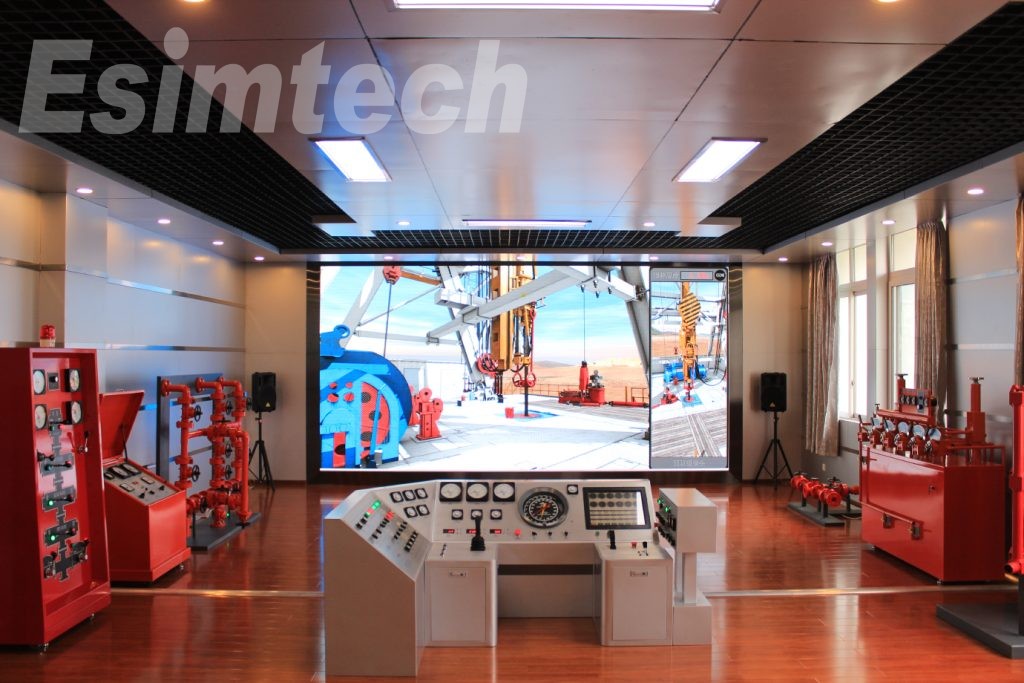
Beyond operational optimization, digital twins are invaluable in training well control teams. Trainees can interact with the virtual well environment through well control simulation, practicing responses to different scenarios without risk. This immersive approach enhances competence and preparedness, aligning with industry standards for well control certification.

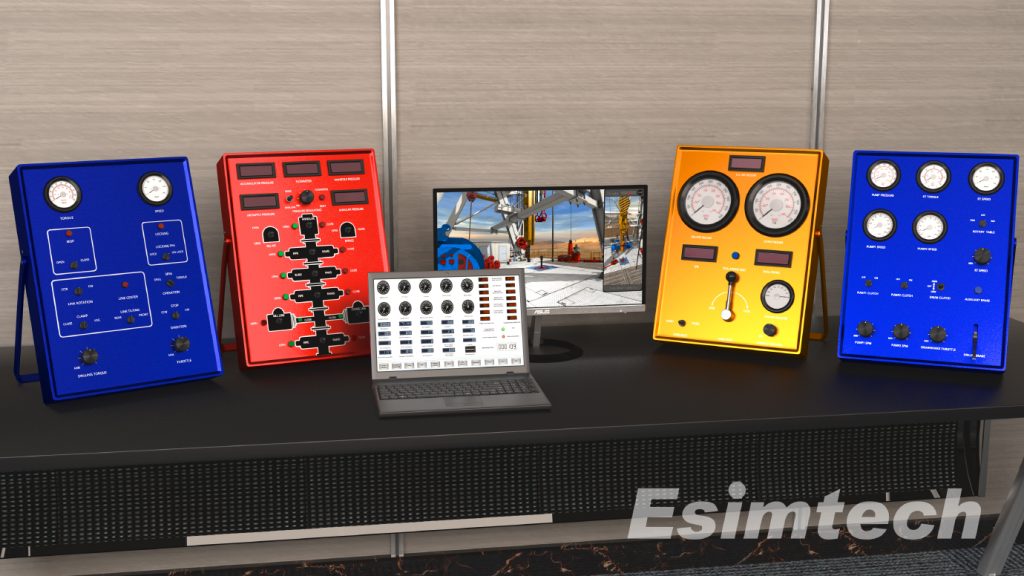
Portable Drilling  and Well Control Simulation System

Improving Operational Efficiency and Safety

By enabling real-time monitoring, predictive modeling, and faster responses, digital twins significantly enhance both efficiency and safety of oil drilling. Operators benefit from reduced non-productive time, optimized drilling strategies, and minimized chances of catastrophic incidents. Additionally, digital twins facilitate better collaboration across teams, as engineers, geologists, and operators can all interact with the same data-rich virtual model.

Digital Twins in Oil  and Gas industry

Future Outlook

As digital twin technology continues to evolve, its integration into well control systems will expand. Advances in cloud computing, edge analytics, and IoT connectivity will make digital twins more accessible and scalable across offshore and onshore operations. Ultimately, digital twins represent a step toward autonomous well control systems, where human oversight is combined with AI-driven precision to ensure safer, smarter, and more sustainable drilling operations.

VOGE DS900X: Ideal Partner for Your Adventure Journey

For those who see the road not just as a route but as an open invitation to explore, the DS900X crafted by Chinese motorcycle brand VOGE, stands ready as the ultimate adventure companion. Positioned in the mid-to-large displacement ADV segment, the DS900X combines power, technology, and comfort to give riders the freedom to pursue journeys without boundaries. Whether crossing continents, carving mountain trails, or cruising long highways, this machine is engineered to inspire confidence and excitement at every turn.

VOGE DS900X Motorcycle

Power That Drives Exploration

At the heart of the VOGE DS900X is a robust parallel-twin engine, delivering smooth torque and consistent power across all rev ranges. Designed to handle both on-road and off-road conditions, this engine provides riders with the versatility needed to climb steep inclines, accelerate across open highways, or tackle unpredictable terrains. With a responsive throttle and refined power delivery, every ride feels purposeful and controlled.

Built for Versatile Terrain

Adventure rarely sticks to one surface, and the DS900X is equipped to handle them all. Its reinforced frame, long-travel suspension, and spoked wheels ensure stability on rocky paths, sandy trails, or uneven gravel. High ground clearance, protective skid plates, and dual-purpose tires add resilience, giving riders the confidence to embrace the unknown without hesitation.

Technology That Enhances Confidence

Freedom in riding also means peace of mind. The DS900X integrates advanced rider-assist technologies such as dual-channel ABS, traction control, and selectable riding modes. A full-color TFT display provides essential ride data at a glance, while Bluetooth connectivity allows seamless integration with navigation and communication devices. These features combine to make every journey safer and more convenient.

VOGE DS900X ADV Motorcycle

Comfort for the Long Haul

Adventure is not just about where you go and it’s about how far you can go. The DS900X is ergonomically designed for comfort during long hours on the road. A well-padded seat, upright riding position, and adjustable windscreen minimize fatigue, while multiple luggage mounting points allow riders to equip panniers and gear for extended trips. Whether it’s a weekend getaway or a month-long expedition, the DS900X ensures comfort never takes a backseat.

Design That Reflects Adventure

Visually, the DS900X communicates its adventurous spirit with sharp lines, aggressive LED lighting, and purposeful styling. Functional elements like handguards, crash protection, and a high-mounted exhaust are seamlessly integrated, reinforcing both durability and aesthetics. Every angle of its design reflects a motorcycle built to handle the extremes while looking the part.

VOGE DS900X Adventure Motorcycle

Summary

The VOGE DS900X is an ideal ADV motorcycle for your freedom journey. By blending powerful performance, versatile engineering, advanced technology, and rider-focused comfort, it transforms every road into an opportunity for exploration. For those ready to embrace adventure without compromise, the DS900X is a machine that turns the dream of freedom into reality.

How to Realize Sustainability in Kitchen Paper Towels

Kitchen paper towels have become a staple in households worldwide due to their convenience and versatility. However, their environmental impact has raised increasing concern. From deforestation to waste generation, conventional paper towels contribute significantly to sustainability challenges. As awareness grows, both consumers and manufacturers are seeking eco-friendly alternatives and practices to reduce the footprint of this everyday product.

Bamboo Kitchen Paper Towel

Environmental Impact of Traditional Kitchen Paper Towels

Deforestation and Resource Use – Paper towels are often made from virgin pulp, requiring large amounts of trees, water, and energy during production.

Carbon Footprint – Manufacturing and transporting paper towels contribute to greenhouse gas emissions.

Single-Use Waste – Unlike cloth alternatives, paper towels are disposable and often non-recyclable once contaminated with food waste.

Landfill Burden – Millions of tons of paper towels end up in landfills each year, where decomposition can produce methane, a potent greenhouse gas.

Key Approaches to Sustainability

Recycled Materials – Towels made from post-consumer recycled paper reduce the need for virgin pulp and help close the recycling loop.

Sustainable Sourcing – Certification from bodies like FSC (Forest Stewardship Council), such as bamboo kitchen paper towels, ensures that raw materials come from responsibly managed forests.

Bamboo Kitchen Paper Towels

Reduced Chemical Use – Chlorine-free bleaching and natural fiber processing minimize harmful by-products during production.

Compostable and Biodegradable Options – Some paper towels are designed to break down safely in composting systems, diverting waste from landfills.

Energy-Efficient Manufacturing – Advances in production processes, including renewable energy integration, lower overall carbon emissions.

Consumer Practices for Greener Use

Opt for Reusable Alternatives – Cloth towels, microfiber cloths, or bamboo kitchen towels offer sustainable, washable options.

Use Paper Towels Wisely – Limiting use to tasks requiring disposability, such as absorbing grease, reduces waste.

Composting Used Towels – If unbleached and free from chemicals, some paper towels can be composted in home or municipal systems.

Buying in Bulk – Larger packs with minimal packaging reduce both transportation emissions and plastic waste.

Innovations in Sustainable Kitchen Towels

Bamboo Fiber Towels – Fast-growing and renewable, bamboo offers a durable and biodegradable alternative to wood-based products.

Reusable Paper Towels – Designed to withstand multiple washes, these mimic the look of traditional towels while drastically reducing waste.

Smart Packaging Solutions – Some brands are adopting recycled cardboard cores and plastic-free packaging to improve sustainability.

Life-Cycle Assessments (LCA) – Manufacturers are increasingly using LCA tools to evaluate the full environmental impact of their products and improve designs.

Bamboo Kitchen Paper Rolls

The Role of Consumers and Industry

Achieving sustainability in kitchen paper towels requires a dual effort: industry innovation and consumer responsibility. Manufacturers must adopt greener raw materials, energy-efficient production, and circular economy models. Consumers, in turn, can shift demand toward eco-friendly options and adopt reusable solutions where possible.

Summary

Sustainability in kitchen paper towels is not just about reducing waste; it involves rethinking materials, manufacturing processes, and consumer habits. By embracing recycled fibers, compostable options, and innovative reusable designs, the industry can reduce its ecological footprint. Consumers, through conscious choices, can accelerate this shift toward greener kitchens. Ultimately, sustainable kitchen paper towels are a small yet significant step in building a more environmentally responsible lifestyle.

Effective Methods for Testing Fatigue Life of Compression Springs

Compression springs are widely used in automotive, aerospace, industrial machinery, and consumer products, where they undergo repeated loading and unloading cycles. To ensure reliability and safety, it is essential to evaluate their fatigue life—the number of cycles a spring can endure before failure. Testing fatigue life of compression springs provides critical insights into material performance, design adequacy, and service life prediction.

different types of compression springs

Importance of Fatigue Life Testing

Safety Assurance – In safety-critical applications such as braking systems or medical devices, fatigue failure can have serious consequences.

Design Validation – Fatigue tests verify whether a spring design meets expected operational demands.

Material Evaluation – Different spring materials (stainless steel, music wire, alloys) exhibit varied fatigue resistance; testing reveals their real-world performance.

Cost Efficiency – Understanding fatigue life of compression springs helps prevent premature failures, reducing maintenance costs and downtime.

Key Factors Influencing Fatigue Life

Stress Range – Higher stress amplitudes during compression cycles significantly reduce fatigue life.

Surface Finish – Scratches, notches, or corrosion pits act as crack initiation points, accelerating failure.

Material Properties – High-tensile steels, shot-peened surfaces, and corrosion-resistant alloys typically perform better under fatigue conditions.

Operating Environment – Temperature fluctuations, humidity, and corrosive atmospheres can weaken fatigue resistance.

Spring Geometry – Coil diameter, wire thickness, and pitch influence stress distribution, affecting durability.

compression spring

Methods of Fatigue Life Testing

Constant Amplitude Fatigue Testing

Springs are compressed repeatedly at a fixed load or deflection until failure occurs. This method provides baseline fatigue life data.

Variable Amplitude Fatigue Testing

Simulates real-world conditions by applying fluctuating loads. Useful for automotive and aerospace applications where loading is irregular.

Resonant Fatigue Testing

Springs are vibrated near their natural frequency to accelerate testing. This method helps evaluate performance under high-frequency cyclic loading.

Endurance Limit Determination

Identifies the maximum stress a spring can withstand indefinitely without failure, which is essential for long-term reliability prediction.

Standards and Guidelines

Several industry standards guide fatigue testing of springs, including:

ASTM A125 – For steel springs.

ISO 1143 – General fatigue testing of metallic materials.

SAE J157 – Commonly used in automotive spring testing.

Data Interpretation and Application

Fatigue testing generates S-N curves (stress vs. number of cycles), which allow engineers to estimate service life under specific conditions. The results are used to refine spring design, select appropriate materials, and determine maintenance intervals.

Advancements in Fatigue Testing

Digital Monitoring Systems – Modern fatigue testers use sensors and real-time data logging for precise failure detection.

Finite Element Analysis (FEA) – Combined with experimental results, FEA helps predict fatigue hotspots and optimize spring geometry.

Surface Treatments – Shot peening, nitriding, and coatings are tested for their ability to enhance fatigue resistance.

compression spring manufacturer

Summary

Testing the fatigue life of compression springs is a crucial step in ensuring product reliability, safety, and performance. By simulating real-world conditions and applying standardized methods, engineers can better understand the durability of springs and make informed decisions in design and material selection. With advances in testing technology and computational modeling, fatigue life prediction continues to improve, supporting the development of more durable and efficient mechanical systems.

Sample Preparation in Gas Chromatography: What You Need to Know

Gas Chromatography (GC) is a widely used analytical technique for separating and analyzing volatile and semi-volatile compounds in complex mixtures. While the chromatographic system itself provides excellent resolution and sensitivity, the accuracy and reliability of results depend heavily on sample preparation. Proper preparation ensures that analytes of interest are introduced in a form compatible with the GC system, free from interfering substances, and at concentrations within the instrument’s dynamic range.

GC1290 Gas Chromatography (LCD Touch Screen)

Importance of Sample Preparation

Sample preparation is a crucial step because real-world samples often contain impurities, non-volatile residues, or matrix components that can interfere with analysis. Effective preparation offers several benefits:

Improves accuracy and reproducibility by eliminating interfering compounds.

Extends instrument life by preventing contamination of the injection port or column.

Enhances sensitivity by concentrating analytes and removing unwanted background.

Ensures sample compatibility with the requirements of gas chromatography, since only volatile or derivatized compounds can be analyzed directly.

Common Sample Preparation Techniques in GC

1. Dilution and Filtration

For relatively clean samples, simple dilution with a suitable solvent followed by filtration may suffice. This step reduces matrix effects and prevents particulate matter from entering the column.

2. Solvent Extraction

Liquid–liquid extraction (LLE) or solid–liquid extraction is often used to isolate analytes from complex matrices such as food, environmental, or biological samples. The choice of solvent depends on analyte polarity and volatility.

3. Solid-Phase Extraction (SPE)

SPE is a widely used method for concentrating analytes and removing interfering substances. Samples are passed through a cartridge packed with an adsorbent material, which selectively retains target compounds for later elution.

4. Headspace Sampling

In headspace GC, only the volatile compounds present in the vapor phase above a sample are analyzed. This is particularly useful for solvents, flavors, and fragrances, or when dealing with complex liquid or solid matrices.

5. Solid-Phase Microextraction (SPME)

SPME combines extraction, concentration, and sample introduction in one step. A coated fiber adsorbs analytes from the sample or its headspace, which are then thermally desorbed in the GC injector. It is solvent-free, efficient, and ideal for trace analysis.

6. Derivatization

Some compounds, such as polar or thermally unstable analytes, are not directly suitable for GC. Derivatization chemically modifies them to more volatile, thermally stable, and detectable forms. Common derivatization techniques include silylation, acylation, and alkylation.

gas chromatography

Factors Influencing Sample Preparation

Nature of the sample matrix – biological, environmental, petrochemical, or food samples require tailored approaches.

Properties of the analytes – volatility, polarity, thermal stability, and detection requirements guide the choice of preparation method.

Detection sensitivity required – trace-level analysis often demands pre-concentration techniques like SPE or SPME.

Time and cost considerations – simpler methods are preferred when throughput is important.

Emerging Trends in GC Sample Preparation

Recent advancements focus on miniaturization, automation, and green chemistry principles. Microextraction techniques such as stir-bar sorptive extraction (SBSE) and automated SPME improve efficiency while reducing solvent use. Additionally, robotic autosamplers are increasingly integrated with GC systems, ensuring reproducibility and reducing human error.

Gas Chromatography-Mass Spectrometry(GS-MS)

Summary

Sample preparation is the foundation of reliable gas chromatography. By selecting appropriate methods—ranging from simple dilution to advanced microextraction—analysts can ensure clean, reproducible, and accurate results. With ongoing advancements in automation and environmentally friendly techniques, sample preparation for GC is becoming faster, greener, and more precise, ultimately enhancing the power of gas chromatography as an analytical tool.

How Marine Navigation Lights Enhance Fog Navigation

Fog is one of the most challenging conditions faced at sea. It reduces visibility, obscures landmarks, and increases the risk of collisions. Mariners rely heavily on navigational aids in such conditions, and among them, marine navigation lights play a vital role. These lights not only ensure compliance with international maritime regulations but also serve as critical safety tools that enhance visibility, communication, and decision-making when natural sightlines fail.

Marine Navigation Lights in Fog Environment

The Role of Navigation Lights in Low Visibility

Navigation lights are designed to make vessels visible and to indicate their type, size, direction of travel, and operational status. In clear weather, visual contact with another vessel can be established at long distances. However, in fog, visibility can shrink to just a few meters. Under such conditions, navigation lights become the first line of defense by cutting through the mist and providing visual cues that help prevent collisions.

Enhancing Recognition and Orientation

Different types of vessels display distinct light configurations as mandated by the International Regulations for Preventing Collisions at Sea (COLREGs). For example, red and green sidelights signal port and starboard, while masthead and stern lights indicate direction of movement. In fog, these lights help other mariners quickly recognize vessel type and heading, enabling them to take appropriate actions.

Complementing Sound and Electronic Aids

While fog horns and radar systems are important for navigation in low visibility, they cannot replace the role of lights. Lights provide immediate, visual confirmation of another vessel’s presence and orientation. When radar detects an object, the visibility of navigation lights allows mariners to validate radar readings, ensuring that their situational awareness is accurate and complete.

CXH-12PL LED Navigation Light

Technology Enhancements for Fog Conditions

Modern marine navigation lights incorporate advanced technologies to improve performance in foggy conditions. High-intensity LED navigation lights, for instance, emit brighter, more focused beams that penetrate mist more effectively than traditional incandescent bulbs. Some systems also integrate automatic brightness adjustment to ensure visibility without causing glare. These innovations significantly increase the reliability of lights as a navigation aid during dense fog.

Building Confidence in Decision-Making

One of the most crucial aspects of fog navigation is the confidence it provides to mariners. Knowing that their vessel is visible to others and that they can identify nearby vessels through their navigation lights allows crews to make informed decisions with reduced stress. This assurance not only enhances safety but also helps maintain efficient operations in poor weather.

LED marine navigation lights

Summary

Marine navigation lights are more than just regulatory requirements—they are indispensable tools for safe navigation, particularly in fog. By improving visibility, enhancing vessel recognition, complementing electronic aids, and leveraging modern lighting technologies, these lights significantly reduce the risks associated with fog navigation. As maritime industries continue to adopt more advanced lighting solutions, the ability to navigate safely through fog will only strengthen, ensuring protection for vessels, crews, and cargo alike.

通过 WordPress.com 设计一个这样的站点
从这里开始