Diesel generators play an essential role in providing reliable electricity for industrial facilities, commercial buildings, construction sites, agricultural operations, hospitals, and remote locations. Whether used as an emergency backup power source or a primary electricity supply, diesel generators offer dependable performance, high power output, and long-term durability.
However, selecting the right diesel generator is not always straightforward. Different applications have different electricity demands, operating conditions, load characteristics, and reliability requirements. Choosing an unsuitable generator can result in excessive fuel consumption, unstable power output, increased maintenance costs, and unnecessary equipment expenses.
So, how do you choose the right diesel generator set for your application? Understanding several important technical and operational considerations can help you select a generator that meets your power requirements while delivering reliable and efficient performance.
Important Considerations for Choosing the Right Diesel Generators
1. Understand Your Power Requirements
The first step in selecting a suitable diesel generator is determining your actual electricity requirements. Generator capacity must be sufficient to support all connected electrical equipment without exceeding its rated output.
Start by calculating the total power consumption of the equipment that will operate simultaneously. Industrial machinery, pumps, compressors, lighting systems, air conditioners, and other electrical devices may have different power requirements. It is important to consider both their normal operating loads and startup demands.
Some electrical equipment, particularly motors and compressors, requires significantly more power during startup than during normal operation. If these starting currents are not considered, the generator may experience voltage drops or become overloaded when multiple devices start simultaneously.
You should also consider the power factor of your electrical equipment. Generator capacity is commonly expressed in kilovolt-amperes (kVA), while the actual electrical power consumed by equipment is measured in kilowatts (kW). The relationship between these values affects the generator size required for your application.
Additionally, consider whether your electricity demand may increase in the future. If you plan to expand your production facilities or install additional machinery, selecting a generator with appropriate capacity for future requirements can help avoid another equipment investment.
2. Select the Appropriate Generator Capacity
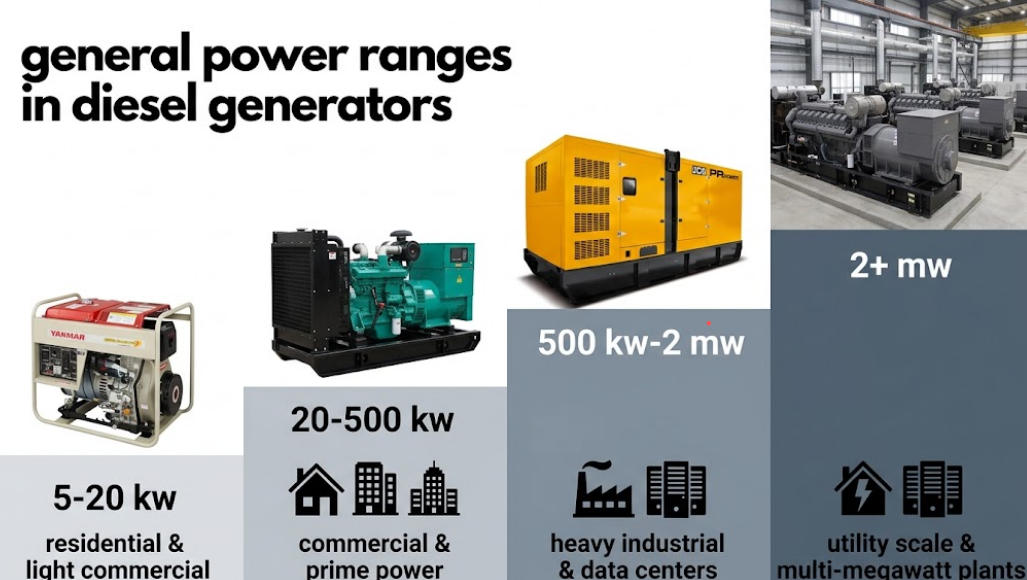
After calculating your electricity requirements, the next step is selecting a diesel generator with the appropriate power rating. Diesel generators are available in various capacities, ranging from small portable units to large industrial generator sets capable of supplying power to extensive facilities.
Small generators are generally suitable for residential backup systems, small businesses, and light commercial applications. Medium-capacity generators are commonly used in workshops, agricultural facilities, retail buildings, and construction projects. Large industrial generators are designed for manufacturing plants, hospitals, data centers, mining operations, and other facilities with substantial electricity demands.
When selecting generator capacity, avoid choosing a model based only on the total running wattage of connected equipment. Starting currents, load fluctuations, power factor, and environmental conditions can all influence the required generator output.
It is also important to avoid excessive oversizing. A generator operating continuously at a very low load may experience poor combustion efficiency, increased maintenance concerns, and wet stacking in certain diesel engines. Therefore, the generator should be appropriately sized for its expected operating load and manufacturer recommendations.
For applications involving complicated electrical loads, consulting a generator engineer or experienced supplier can help determine the appropriate capacity more accurately.
3. Determine the Required Generator Operating Type
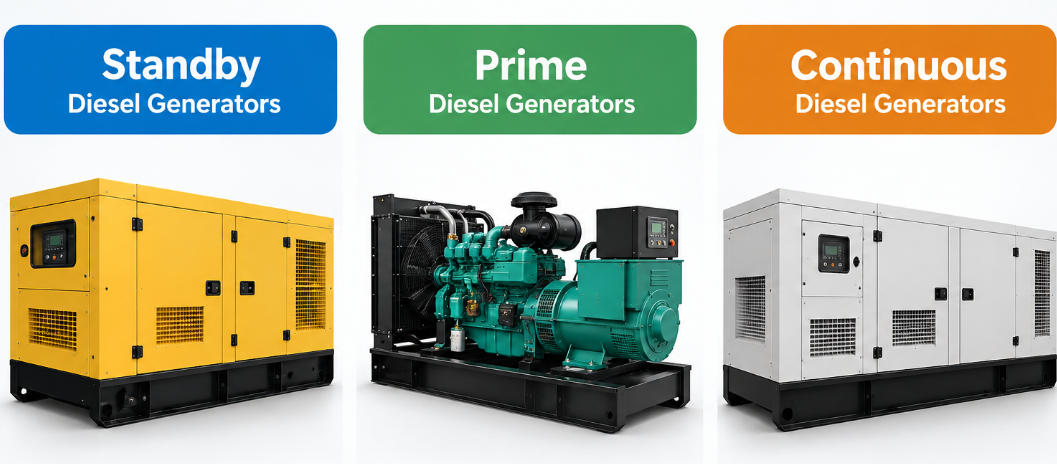
Diesel generators are generally classified into standby, prime, and continuous power categories according to their intended operating conditions. Understanding these differences is essential when choosing a generator for a particular application.
Standby diesel generators are designed to provide emergency electricity when the primary power supply fails. They are commonly installed in hospitals, office buildings, commercial facilities, and data centers where unexpected power interruptions can cause significant problems. These generators typically operate during utility outages and are not intended to replace a regular power supply indefinitely.
Prime power generators are designed to provide electricity as the main power source in locations where utility power is unavailable or unreliable. They are widely used on construction sites, mining projects, agricultural facilities, and remote industrial operations. Their operating loads can vary depending on actual electricity demand.
Continuous power generators are designed to supply a constant electrical load under their specified operating conditions. They are suitable for certain industrial facilities and independent power generation systems that require a stable electricity supply over extended periods.
The correct operating rating depends on the expected operating hours, load profile, and manufacturer’s specifications. Choosing the wrong rating may result in excessive equipment wear or operation outside the generator’s intended conditions.
4. Evaluate Fuel Consumption and Efficiency
Fuel consumption is one of the most important factors affecting the long-term operating cost of a diesel generator set. Although diesel generators are generally recognized for their fuel efficiency and ability to support heavy electrical loads, actual consumption varies according to engine design, generator capacity, operating load, and maintenance conditions.
When comparing different generator models, examine their fuel consumption specifications at different load levels. A generator operating at 25%, 50%, 75%, or 100% load will generally consume different amounts of fuel. Understanding these differences helps estimate daily, monthly, and annual operating expenses.
Fuel tank capacity is another important consideration, particularly for generators installed in remote locations. A larger fuel tank may allow longer operation without frequent refueling, which can be valuable for construction projects, mining facilities, and emergency backup systems.
You should also consider fuel availability and storage conditions. Reliable access to suitable diesel fuel is essential for maintaining consistent generator performance.
In addition, regular maintenance plays an important role in fuel efficiency. Dirty air filters, clogged fuel filters, worn engine components, and poor maintenance practices can increase fuel consumption and reduce overall performance.
5. Consider the Installation Environment
The operating environment has a significant influence on diesel generator performance, reliability, and service life. A generator installed in a clean indoor facility may require different protection and cooling arrangements from one operating outdoors at a construction site or in a coastal industrial environment.
Ambient temperature is one of the most important environmental factors. High temperatures can affect engine cooling efficiency and reduce available power output, while extremely low temperatures may make starting more difficult. Appropriate cooling systems, heating equipment, and cold-weather accessories may be necessary depending on the installation location.
Altitude should also be considered. At higher elevations, lower air density can reduce engine performance and available power output. Manufacturers generally provide derating information to help determine the appropriate generator capacity for high-altitude applications.
Dust, sand, humidity, and moisture can also affect generator operation. Construction sites and mining environments often expose equipment to large amounts of dust, making effective air filtration particularly important. Outdoor installations may require weatherproof enclosures to protect electrical components from rain and environmental contamination.
For coastal applications, saltwater exposure can accelerate corrosion. In these environments, corrosion-resistant materials, suitable coatings, and appropriate enclosure protection can help extend equipment service life.
Proper ventilation is equally important. Diesel generators produce substantial heat during operation, so the installation area must provide sufficient airflow to prevent overheating and maintain reliable performance.
6. Check Voltage, Frequency, and Electrical Compatibility
Electrical compatibility is another essential consideration when purchasing a diesel generator. The generator must match the voltage, frequency, and phase requirements of the equipment and electrical systems it will supply.
Voltage requirements vary depending on the country, industry, and application. For example, many European industrial facilities use 400V three-phase electrical systems, while other regions may use different voltage configurations.
Frequency is equally important. Diesel generators are commonly designed for either 50Hz or 60Hz operation. The required frequency depends on the electrical equipment being powered and the local electricity standard.
You should also determine whether your application requires a single-phase or three-phase generator. Single-phase generators are generally suitable for smaller electrical loads, while three-phase models are widely used in industrial facilities, commercial buildings, and applications involving large motors.
In addition to voltage and frequency, pay attention to the automatic voltage regulator (AVR), engine governor, and alternator specifications. These components help maintain stable electrical output when the connected load changes.
Selecting a generator with the correct electrical configuration helps protect connected equipment and ensures dependable power delivery.
7. Examine Engine and Alternator Quality
The diesel engine and alternator are the core components of a generator set. Their quality directly affects power generation efficiency, operational stability, durability, and maintenance requirements.
The diesel engine converts the chemical energy of fuel into mechanical energy, which drives the alternator to produce electricity. When evaluating different models, consider engine displacement, rated speed, cooling arrangements, fuel injection technology, and maintenance accessibility.
A reliable engine should provide stable power output, efficient fuel consumption, and dependable starting performance. Choosing an engine from an established manufacturer can also make it easier to obtain replacement parts and technical support.
The alternator is equally important because it converts mechanical energy into electrical energy. Its design influences voltage stability, efficiency, and the generator’s ability to handle changing electrical loads.
Pay attention to alternator insulation class, winding materials, voltage regulation, and overload capabilities. A high-quality alternator combined with a reliable AVR can help maintain stable electricity for sensitive equipment and industrial machinery.
The control panel, cooling system, fuel system, and battery system should also be evaluated as part of the complete generator set rather than treating the engine and alternator as the only important components.
8. Evaluate Noise Levels and Emission Requirements
Noise and exhaust emissions are important considerations when installing diesel generators in urban areas, commercial buildings, hospitals, residential neighborhoods, and environmentally sensitive locations.
Diesel engines produce noise from combustion, mechanical movement, cooling fans, and exhaust systems. Excessive noise may create discomfort for nearby occupants and could violate local noise regulations.
Sound-attenuated enclosures are commonly used to reduce generator noise. Exhaust silencers and vibration isolation systems can further minimize noise transmission. When selecting an enclosed generator, consider its sound pressure level, ventilation design, and maintenance accessibility.
Environmental regulations should also influence your purchasing decision. Diesel engines produce nitrogen oxides, particulate matter, carbon monoxide, and other exhaust emissions. Depending on the application and location, the generator may need to comply with specific emission standards.
For example, Stage V requirements apply to certain non-road mobile machinery engines in the European Union, while stationary generator installations may be subject to different regulations. Buyers should confirm the applicable requirements for their specific equipment category and installation.
Modern emission-control technologies, including diesel particulate filters and selective catalytic reduction systems, can help reduce certain pollutants when required. Proper maintenance and suitable fuel quality are also essential for maintaining emission performance.
9. Consider Maintenance Requirements and After-Sales Support
Regular maintenance is essential for ensuring reliable diesel generator operation and extending equipment service life. Even a high-quality generator may experience performance problems if routine inspections and servicing are neglected.
Before purchasing a generator, understand its recommended maintenance schedule and the availability of replacement parts. Engine oil, coolant, fuel filters, air filters, and starting batteries all require periodic inspection or replacement according to manufacturer recommendations.
Maintenance accessibility is another important factor. Generators with conveniently positioned service points and clearly designed components can make routine maintenance easier and reduce servicing time.
After-sales support should also be considered when comparing suppliers. A dependable manufacturer or distributor should provide technical documentation, installation guidance, warranty coverage, troubleshooting assistance, and access to genuine replacement parts.
For businesses that depend heavily on uninterrupted electricity, professional maintenance support can significantly reduce unexpected downtime and operating risks.
10. Match the Generator to Your Specific Application
Different industries have different power generation requirements, so the best diesel generator set depends largely on how and where it will be used.
For construction sites, generators must withstand demanding working conditions, frequent load changes, and exposure to dust and vibration. Heavy-duty designs, suitable mobility options, and durable enclosures are particularly valuable.
Manufacturing facilities typically require diesel generator sets capable of supporting industrial machinery, production lines, pumps, and other heavy electrical equipment. Stable three-phase output, appropriate capacity, and reliable operation are essential considerations.
Hospitals and healthcare facilities generally use standby generators to maintain electricity for critical medical equipment, emergency lighting, ventilation, and other essential systems. Automatic transfer switches and properly designed backup power arrangements are important for these applications.
Data centers require highly reliable backup power systems because even brief interruptions can affect servers, network infrastructure, and data availability. Generator capacity, redundancy, load response, and integration with uninterruptible power supply (UPS) systems should be carefully evaluated.
Agricultural operations often use diesel generator sets to power irrigation pumps, ventilation systems, livestock equipment, and farm machinery. Fuel efficiency, outdoor durability, and convenient maintenance are important purchasing considerations.
Remote industrial facilities, mining operations, and off-grid locations may depend on prime or continuous power generators because grid electricity is unavailable or unreliable. These applications require equipment designed for extended operation, dependable fuel supply, and accessible maintenance support.
Matching the generator’s technical specifications to the actual operating environment helps ensure that it can deliver the required performance throughout its service life.

11. Calculate the Total Cost of Ownership
The purchase price should not be the only consideration when selecting a diesel generator. A more comprehensive evaluation involves calculating the total cost of ownership over the generator’s expected service life.
The initial investment includes the generator set, transportation, installation, electrical connections, foundations, ventilation, and exhaust arrangements. Depending on the application, additional expenses may be required for fuel storage systems, automatic transfer switches, soundproof enclosures, and monitoring equipment.
Operating costs can represent a substantial portion of the total investment. Fuel consumption, routine maintenance, replacement parts, labor, and periodic inspections should all be included in your calculations.
Long-term reliability is another important financial consideration. A generator with a lower purchase price may become more expensive if it consumes more fuel, requires frequent repairs, or causes production interruptions.
Therefore, compare generators based on their overall performance, operating efficiency, maintenance requirements, warranty conditions, and expected service life rather than focusing exclusively on the initial price.
Avoid Common Generator Selection Mistakes
Choosing a diesel generator without understanding its actual operating requirements can lead to unnecessary expenses and performance problems. One common mistake is selecting a generator that is too small to handle equipment startup currents or sudden load increases. This can result in overloading, voltage instability, and frequent shutdowns.
Purchasing an oversized generator is another issue. Although additional capacity may appear beneficial, operating a generator continuously at an excessively low load can reduce efficiency and contribute to engine maintenance problems.
Some buyers also overlook environmental conditions, electrical compatibility, and generator duty ratings. A generator that performs well in a mild indoor environment may not be suitable for a dusty construction site or a high-temperature industrial location.
Ignoring maintenance accessibility and after-sales support can create additional difficulties after installation. Delays in obtaining replacement parts or technical assistance may lead to costly downtime.
To avoid these problems, carefully evaluate your electricity demand, operating schedule, installation environment, and long-term maintenance requirements before making a purchasing decision.
Summary
Choosing the right diesel generator for your application requires a comprehensive understanding of power requirements, generator capacity, operating ratings, fuel consumption, environmental conditions, electrical compatibility, and maintenance needs.
Whether you need a standby generator for a hospital, a prime power generator for a construction site, or a continuous power solution for an industrial facility, selecting equipment that matches your actual operating requirements is essential for achieving reliable and efficient performance.
By comparing engine and alternator quality, evaluating fuel efficiency, considering environmental regulations, and calculating the total cost of ownership, you can make a more informed purchasing decision.
Ultimately, working with an experienced diesel generator manufacturer or supplier can help you identify the most suitable generator configuration, reduce operational risks, and ensure a dependable power supply for your business.

