Marine anchors play a critical role in keeping vessels securely positioned under different weather, current, and seabed conditions. Selecting the right anchor is essential for vessel safety, operational efficiency, and compliance with marine equipment standards. Among the anchor designs used in commercial shipping, AC-14 and Pool anchors are notable options for applications requiring reliable holding performance.
Although both are stockless anchor designs, they differ in structural geometry, holding characteristics, stowage requirements, and available design variants. Understanding these differences helps shipowners, marine engineers, and procurement professionals choose an anchor that meets their vessel’s operational requirements.
1. Structural Design and Geometry
AC-14 Anchors
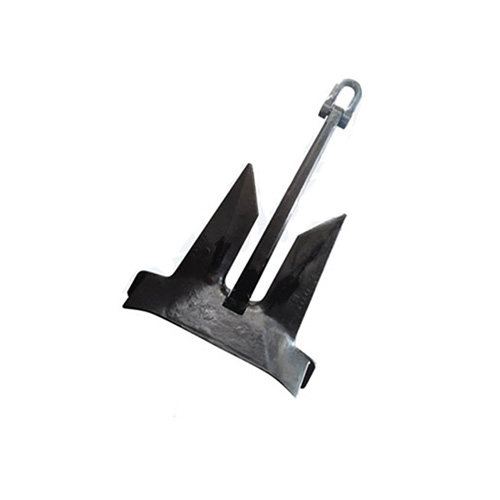
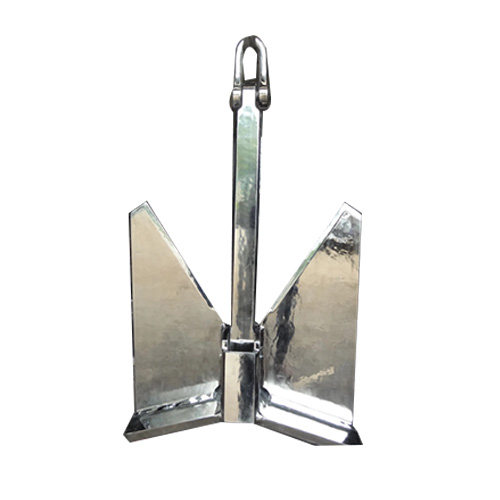
AC-14 anchors are high-holding-power anchors designed to provide effective seabed penetration and resistance to dragging. Their structural configuration includes a central shank, a crown, and flukes shaped to penetrate suitable seabed materials when the anchor is deployed under tension.
The design aims to achieve substantial holding power relative to the anchor’s weight. This characteristic makes the AC-14 a common consideration for commercial vessels that require dependable anchoring equipment without unnecessarily increasing the weight carried at the bow.
The anchor’s dimensions, fluke geometry, and overall construction must correspond to the vessel’s approved equipment specification. These factors influence how the anchor penetrates the seabed, develops resistance, and fits into the vessel’s anchor-handling arrangement.
Pool Anchors
Pool anchors have a distinctive stockless configuration, but their precise geometry depends on the specific model. Pool N and Pool TW, for example, are different variants with their own design characteristics and performance classifications.
Pool anchors generally use broad flukes and a crown arrangement intended to support seabed penetration and holding performance. Some models also incorporate features that help control penetration depth and facilitate retrieval.
Because the term Pool anchor covers multiple designs, it is important to identify the exact model before comparing dimensions or performance with an AC-14 anchor. Similar product names do not necessarily indicate identical structural characteristics or interchangeable equipment.
2. Holding Power and Performance
Holding power is one of the most important considerations when evaluating marine anchors. It refers to the resistance an anchor provides against forces that attempt to move a vessel away from its anchored position.
AC-14 anchors are designed to deliver high holding power relative to their weight under appropriate seabed and operating conditions. Their fluke geometry supports penetration into compatible bottom materials, allowing the anchor to develop resistance as the vessel’s load is transferred through the anchor chain.
Pool anchors are also designed to provide substantial holding power. However, their performance varies by model. Pool N anchors and Pool TW anchors may fall into different holding-power categories, so buyers should consult the relevant manufacturer’s specifications and approval documents rather than treating all Pool anchors as equivalent.
A direct comparison requires consistent test conditions, including the same seabed material, comparable anchor weights, and equivalent loading procedures. Without this information, it is not reliable to claim that one design always provides greater holding power than the other.
3. Seabed Compatibility
The type of seabed significantly affects anchor performance. Sand, mud, clay, gravel, and rocky bottoms differ in their resistance to penetration and their ability to support an embedded anchor.
AC-14 anchors are commonly considered for sandy and muddy seabeds where their flukes can penetrate the bottom and develop resistance. Their performance depends on the density and composition of the seabed, as well as the angle of pull and the amount of anchor chain deployed.
Pool anchors can also perform effectively in compatible seabed conditions. Their holding characteristics depend on the geometry of the particular model and how its flukes interact with the bottom material. Certain seabeds may allow effective penetration, while hard, rocky, or heavily obstructed areas can limit the performance of either design.
Environmental conditions also influence anchoring reliability. Strong currents, changing wind directions, waves, and vessel movement can alter the forces acting on the anchor. Therefore, the most suitable design should be selected according to the vessel’s operating environment rather than relying on anchor type alone.
4. Stowage and Installation Requirements
Stowage is an important factor for commercial vessels because anchors must be deployed and retrieved safely while fitting within the available bow structure.
AC-14 anchors are stockless and are intended for use with compatible anchor pockets or hawse arrangements. Their overall dimensions, shank configuration, and fluke clearance must match the vessel’s installation requirements. Even when an anchor has the correct nominal weight, dimensional differences may prevent it from seating properly in the anchor recess.
Pool anchors are also available in stockless configurations, with certain variants designed to fit closely against the hull when stowed. This can be advantageous on vessels where a compact stowed position is required. Nevertheless, the exact stowage characteristics depend on the model and the vessel’s bow design.
Before replacing an existing anchor, marine engineers should verify the overall dimensions, weight, shank clearance, crown geometry, chain connection, and compatibility with the windlass system. These checks help prevent installation difficulties and ensure that the anchor can be handled safely.
5. Typical Marine Applications
AC-14 anchors are used in commercial marine applications where high holding power and reliable anchoring performance are required. They may be specified for bulk carriers, container ships, tankers, and other merchant vessels, depending on the vessel’s design and approved anchoring arrangement.
Pool anchors are also used in commercial shipping and other marine applications. The suitability of a particular Pool model depends on its holding-power classification, dimensions, certification, and the requirements of the vessel on which it will be installed.
The choice between AC-14 and Pool anchors should not be based solely on vessel category. Two vessels of similar size may have different anchoring requirements because of differences in displacement, windage, operating environment, bow geometry, and applicable classification rules.
For newbuild projects, the anchor should be selected as part of the vessel’s overall mooring and anchoring system design. For replacement projects, compatibility with the existing equipment and the vessel’s approved documentation should be confirmed before procurement.
6. Materials, Manufacturing, and Certification
The performance and service life of an anchor depend not only on its design but also on the materials and manufacturing processes used to produce it. AC-14 and Pool anchors may be manufactured using suitable steel grades and different fabrication or casting processes, depending on the design and manufacturer.
Material quality, structural integrity, dimensional accuracy, and manufacturing consistency all contribute to dependable service. Welding quality, where applicable, is particularly important because the anchor must withstand repeated loading, impact during handling, and exposure to harsh marine environments.
Corrosion protection is another important consideration. Marine anchors are exposed to seawater, abrasive seabeds, and repeated contact with the vessel’s anchoring equipment. Appropriate surface protection and routine inspection can help reduce deterioration and extend service life.
Certification requirements must also be considered. Commercial vessels may require anchors approved by a recognized classification society under the applicable rules. Buyers should confirm the approved anchor type, required holding-power category, material specifications, and supporting test documentation. An anchor’s name or advertised performance alone does not establish that it meets a vessel’s regulatory requirements.
7. Cost and Maintenance Considerations
The cost of an AC-14 or Pool anchor depends on several factors, including its weight, dimensions, material grade, manufacturing method, certification, and order quantity. As a result, neither design can automatically be considered the less expensive option.
The initial purchase price should be evaluated alongside installation requirements and long-term maintenance needs. An anchor that requires modifications to the bow structure or existing handling equipment may involve additional costs, even if its purchase price is lower.
Routine maintenance is essential for both designs. Inspections should focus on corrosion, cracks, deformation, worn connecting components, and damage to the shank, crown, and flukes. Any suspected structural damage should be assessed by qualified personnel before the anchor returns to service.
The anchor chain, shackles, and windlass should also be maintained according to the vessel’s maintenance procedures. Proper handling and inspection help preserve the reliability of the complete anchoring system rather than just the anchor itself.
How to Choose Between AC-14 and Pool Anchors
Selecting between AC-14 and Pool anchors begins with the vessel’s approved design and equipment requirements. If the vessel specification explicitly requires an AC-14 anchor, a Pool anchor should not be substituted without confirming that the alternative is permitted and meets the relevant performance and certification requirements.
When both designs are acceptable, the comparison should focus on verified holding-power performance, anchor weight, seabed conditions, installation dimensions, and operating requirements. The expected frequency of anchoring and the environmental conditions in which the vessel operates should also be considered.
For vessels with limited bow space, the stowed dimensions and compatibility with the hawsepipe or anchor pocket may be decisive. For vessels operating in demanding environments, approved holding-power performance and the reliability of the complete anchoring system deserve particular attention.
Procurement teams should request technical drawings, product specifications, applicable classification certificates, and holding-power test documentation from the manufacturer or supplier. Comparing these documents provides a more dependable basis for selection than relying on general descriptions or assumptions about the superiority of one anchor design.
Summary
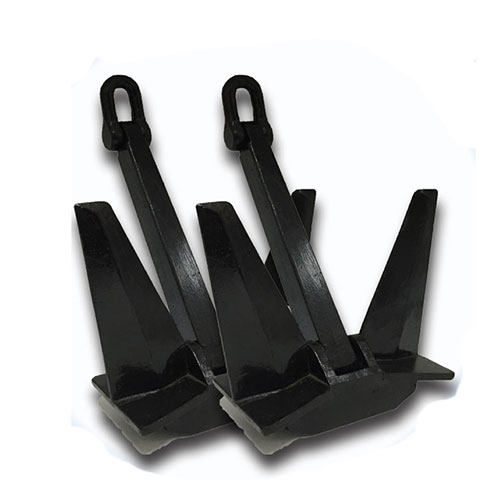
AC-14 and Pool anchors are both stockless anchor designs used in commercial marine applications, but they are not automatically interchangeable. Their principal differences relate to structural geometry, model-specific holding performance, stowage characteristics, and the specifications under which they are approved.
The AC-14 is a recognized high-holding-power anchor design, while Pool anchors are available in different variants with their own performance characteristics. Neither design is universally superior in every operating environment, and actual performance depends on the anchor model, seabed conditions, vessel requirements, and installation.
For shipowners, marine engineers, and marine equipment buyers, the best approach is to compare verified technical specifications, holding-power test results, dimensional requirements, and certification documents. This ensures that the selected anchor provides appropriate holding performance, fits the vessel correctly, and supports safe and reliable marine operations.

