Outdoor equipment is designed to withstand challenging environments, including heavy rain, strong winds, dust, mud, sunlight, and frequent use. Whether used in camping tents, hiking backpacks, sleeping bags, outdoor clothing, or waterproof gear, zippers play an important role in ensuring product functionality, durability, and user convenience. Choosing the right zipper is essential for maintaining equipment performance and extending its service life.
Unlike ordinary garment zippers, zippers for outdoor equipment must often provide greater strength, weather resistance, abrasion resistance, and reliable operation under demanding conditions. Different outdoor applications also require different zipper structures and materials. Understanding the available zipper types can help outdoor equipment manufacturers select suitable solutions for their products.
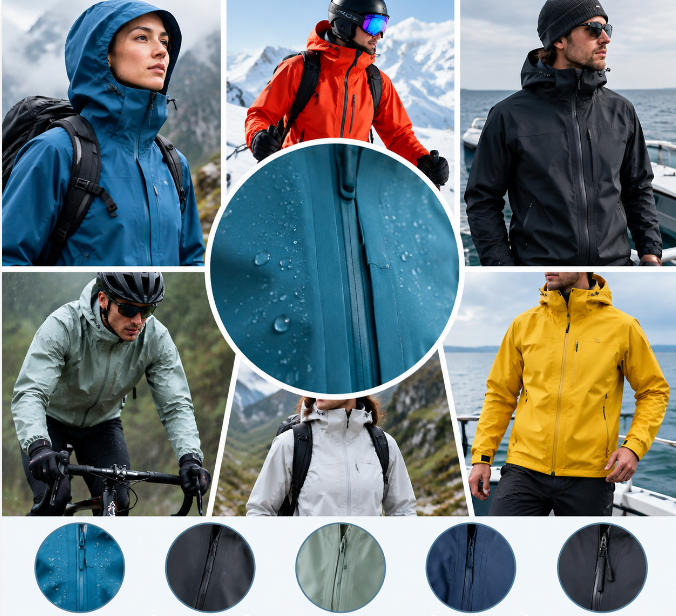
1. Nylon Coil Zippers
Nylon coil zippers are among the most commonly used zipper types in outdoor equipment. They feature interlocking spiral-shaped teeth made from polyester or nylon monofilament, offering flexibility, lightweight construction, and relatively smooth operation.
These zippers are particularly suitable for hiking backpacks, camping tents, sleeping bags, outdoor jackets, and lightweight travel equipment. Their flexible structure allows them to follow curved product designs without creating excessive pressure on the surrounding fabric.
Nylon coil zippers also provide good resistance to repeated bending and everyday abrasion. Compared with many metal zippers, they are lighter and less likely to cause damage to surrounding materials during movement.
For outdoor equipment manufacturers, nylon coil zippers are a practical option when flexibility, weight reduction, and cost efficiency are important considerations.
2. Waterproof Zippers
Waterproof zippers are essential for outdoor equipment that needs protection against rain, moisture, splashing water, and other wet conditions. They generally feature a special waterproof coating or laminated film applied to the zipper tape, helping prevent water from penetrating through the zipper structure.
PU-coated zippers and TPU-coated waterproof zippers are two common options. PU coatings provide a flexible and relatively economical waterproof solution, while TPU coatings offer good flexibility, abrasion resistance, and environmental durability.
These zippers are widely used in waterproof backpacks, dry bags, outdoor jackets, marine equipment, cycling bags, and protective covers.
However, it is important to understand that a waterproof zipper does not automatically make the entire product waterproof. The zipper’s construction, end treatments, installation, stitching, and sealing methods must work together to achieve the required water resistance.
For equipment exposed to heavy rain or demanding outdoor conditions, manufacturers should select waterproof zipper specifications according to the expected water exposure and performance requirements.

3. Resin Zippers
Resin zippers, also known as plastic molded zippers, feature individually molded teeth made from materials such as POM or other engineering plastics. Their teeth are generally larger and more prominent than those of nylon coil zippers.
One of their main advantages is their relatively strong tooth structure. Resin zippers can provide good durability and resistance to corrosion, making them suitable for outdoor products exposed to moisture and changing weather conditions.
They are commonly used in camping tents, outdoor backpacks, protective equipment, luggage, and heavy-duty outdoor clothing.
Resin zippers are also available in different tooth sizes, colors, and configurations, allowing manufacturers to match zipper performance with specific product designs. Larger sizes can be selected for applications requiring stronger closure performance, while smaller sizes are suitable for lighter equipment.
For outdoor applications where durability and corrosion resistance are important, resin zippers are a reliable choice.
4. Metal Zippers
Metal zippers feature teeth made from materials such as brass, aluminum, or other metal alloys. They are valued for their strong construction, distinctive appearance, and resistance to mechanical wear.
Metal zippers are suitable for certain types of outdoor clothing, heavy-duty bags, tool bags, and rugged equipment accessories. Their sturdy teeth can withstand considerable everyday mechanical stress when properly designed and manufactured.
However, metal zippers are generally heavier than nylon coil and resin zippers. They may also be more susceptible to corrosion depending on the metal material, surface treatment, and environmental exposure.
For this reason, metal zippers are not always the best choice for equipment frequently exposed to saltwater, heavy rain, or extreme humidity. Manufacturers should consider corrosion-resistant materials and suitable surface finishes when using them in outdoor applications.
5. Two-Way Zippers
Two-way zippers feature two sliders that can move independently along the same zipper chain. This structure allows users to open the zipper from either end or create an opening in the middle.
This design is particularly useful for outdoor equipment that requires flexible access and adjustable ventilation. For example, two-way zippers are commonly used in camping tents, sleeping bags, outdoor jackets, and large equipment bags.
In sleeping bags, users can adjust the lower opening to improve ventilation without completely opening the zipper. In camping tents, two-way zippers can provide more convenient access and greater flexibility when entering or leaving the tent.
Two-way zippers are available in nylon coil, resin, and other zipper constructions. Manufacturers can choose the appropriate combination according to product weight, strength, and functional requirements.
6. Reverse Coil Zippers
Reverse coil zippers are designed with the zipper coil positioned on the reverse side, creating a cleaner exterior appearance. This structure can also help reduce direct exposure of the zipper elements to external dirt and abrasion, depending on the product design.
They are frequently used in outdoor jackets, sportswear, hiking clothing, backpacks, and lightweight protective equipment.
Reverse coil zippers can be combined with waterproof coatings to create water-resistant or waterproof zipper solutions. This makes them particularly useful for outdoor products that require both an attractive appearance and protection against environmental conditions.
Their lightweight construction and relatively smooth operation make them a popular option for modern outdoor equipment.
7. Fire-Resistant Zippers
Fire-resistant zippers are specially designed for products that require improved resistance to heat or flame exposure. Their performance depends on the materials used for the zipper tape, teeth, thread, and other components.
These zippers may be used in specialized protective clothing, industrial outdoor equipment, emergency response gear, and certain technical applications.
It is important to distinguish between heat resistance and flame resistance. A zipper that can tolerate elevated temperatures is not necessarily capable of meeting flame-retardant or flame-resistant requirements.
Manufacturers should select fire-resistant zipper materials based on the relevant application standards and testing requirements.
8. Reflective Zippers
Reflective zippers incorporate reflective elements into the zipper tape or surrounding construction to improve visibility in low-light conditions.
They are particularly suitable for outdoor clothing, cycling apparel, running gear, hiking backpacks, and other equipment used at night or in poor visibility.
Reflective zippers combine practical fastening functions with enhanced visibility. They can help make outdoor users more noticeable when exposed to vehicle headlights or other light sources.
For manufacturers producing outdoor safety clothing and sports equipment, reflective zipper designs offer an additional functional feature without requiring major changes to the overall product structure.
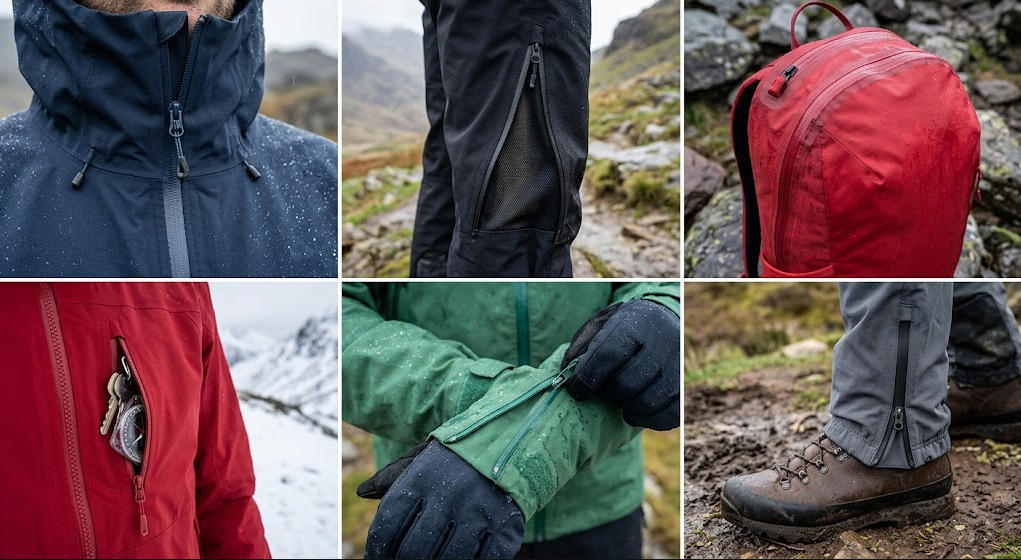
How to Choose the Right Zipper for Outdoor Equipment
Selecting the right zipper requires more than considering its appearance or price. Manufacturers need to evaluate the operating environment, equipment structure, expected service life, and performance requirements.
Environmental Conditions
The first consideration is the environment in which the equipment will be used. Products exposed to heavy rainfall require waterproof or water-resistant zipper solutions. Equipment used in coastal environments may need corrosion-resistant materials, while products designed for cold-weather activities should use zippers that maintain reliable operation at low temperatures.
Material and Durability
Zipper materials directly influence product performance. Nylon coil zippers are suitable for lightweight and flexible applications, resin zippers provide durable plastic teeth, and metal zippers offer a sturdy construction for selected heavy-duty products. The zipper tape and slider should also be evaluated for resistance to abrasion, UV exposure, and repeated use.
Zipper Size and Strength
Zipper size should match the weight and structural requirements of the outdoor product. Smaller zippers are generally appropriate for lightweight clothing and accessories, while larger zipper sizes may be more suitable for backpacks, tents, and heavy-duty equipment. The appropriate zipper strength should be confirmed through testing rather than determined by size alone.
Waterproof and Weather Resistance
For equipment requiring protection against moisture, manufacturers should consider coated zipper tape, waterproof zipper construction, and suitable sealing processes. The complete assembly should be tested to ensure that it meets the intended water-resistance requirements.
Ease of Operation
Outdoor users may need to operate zippers while wearing gloves or working in difficult weather conditions. Larger sliders, ergonomic pullers, and smooth-running zipper chains can improve convenience and usability.
Customization Requirements
Different outdoor products may require specific zipper lengths, colors, materials, sliders, pullers, and special coatings. Working with an experienced zipper manufacturer can help businesses develop customized solutions that meet their product specifications.
Applications of Different Zipper Types in Outdoor Equipment
Outdoor equipment covers a wide range of products, and each application has different functional requirements. Camping tents generally require durable, flexible, and weather-resistant zippers. Hiking backpacks benefit from abrasion-resistant nylon coil or resin zippers, while waterproof bags require specialized waterproof zipper structures.
Sleeping bags often use lightweight nylon coil and two-way zippers to provide smooth operation and adjustable ventilation. Outdoor jackets may combine reverse coil, waterproof, and two-way zipper designs depending on their intended use. Meanwhile, cycling apparel and running equipment can benefit from reflective zippers that improve visibility in low-light environments.
Choosing the right zipper type helps manufacturers improve product reliability, user experience, and overall equipment quality.
Final Thoughts
Different types of zippers serve different purposes in outdoor equipment manufacturing. Nylon coil zippers are suitable for lightweight and flexible products, waterproof zippers provide protection against moisture, resin zippers offer durable plastic teeth, and metal zippers provide sturdy fastening for selected heavy-duty applications. Two-way, reverse coil, fire-resistant, and reflective zippers provide additional functional benefits for specialized outdoor products.
The best zipper solution depends on the equipment’s intended application, environmental exposure, durability requirements, and design specifications. By selecting appropriate zipper materials and structures, outdoor equipment manufacturers can develop products that deliver better performance, functionality, and long-term reliability.
An experienced zipper manufacturer can also provide customized zipper solutions, helping outdoor brands meet specific requirements for size, material, color, coating, and slider design.

