Hydraulic fluid may become contaminated as a result of several factors. First, we need to understand the basic difference between primary and secondary pollution. Primary pollution occurs in the system before commissioning. Accordingly, secondary pollution is the pollution that occurs directly during equipment operation. Primary system contamination occurs due to the presence of residues of machining and assembly, as well as the impurities contained in fresh oil. Secondary contamination is most often caused by machining residues, products of abrasion and corrosion, and dirt, which gets into the system from sealing materials of cylinders or through breather channels in tanks.
Previously, less attention was paid to the dependence between hydraulic equipment service life and the purity of hydraulic oil. But recent studies have shown that there is a strong relationship between these parameters. Therefore, hydraulic oil purifier should be a mandatory procedure, an important part of measures aimed at the extension of the service life of machinery and equipment and reducing failure rate.
For example, the all-knowing statistics say that the main causes of premature failure of roller bearings include inadequate lubrication, the presence of particulate matter in oil and overload.
Transformer Oil Regeneration Plant
Tongrui transformer oil regeneration plant regenerates aged transformer oils into like new condition fulfilling the requirement of IEC 60422 standard as well as removes corrosive sulfur from transformer oils. REOIL transformer oil regeneration plants are built with variable capacity and sorbent reactivation capability. Plants are of stationary or mobile design and can work on offline or online transformers.
Unique reactivation technology
Automated operation on online and offline transformers
Automatic removal of corrosive sulfur from transformer oils
Works on all types of mineral transformer oils
OIL PURIFICATION
Purification involves the removal of solids and other impurities including water, gases and sludge from oils and fuels. Oil purification forms an important part of regular preventative transformer maintenance. Tongrui has been supplying oil purification plants to the electrical generation market for twenty years. Our strength is particularly strong in the area of transformer oil purification. All our purifiers, both mobile and fixed, provide extremely favorable returns on investment for our clients. The necessity for regular purification of electrical fluids in electrical apparatus has been recognised for a very long time. The function of electrical insulating fluids as a coolant and insulator can be seriously affected by moisture and gaseous contaminants. This transformer oil purification plant range is designed for processing transformer oil in workshop or in the field, in storage tanks, drums or directly in transformers. Purification of oil in transformers can be carried out off-load or on-load depending upon customers\’ preference. Ourtransformer oil purification plant is available in a range of capacities with a variable range of optional equipment and accessories.
Turbine Oil Purification System
At the moment Turbine Oils are cleaned by centrifuge, which remove contamination and free water. A centrifuge cannot remove emulsified water from turbine oils, which acts as a catalyst to increase oxidation, causes foaming in oils and reduces component life. One of the major problems of continuous water presence in the oil is the formation of varnish, which is a thin insoluble film deposit that is usually found on bearings and servo-valves. A centrifuge cannot remove varnish from turbine oils.
The Tongrui turbine oil purification system is designed to remove contamination in stages and the continuous cycling of oil through it ensures that even the smallest size contaminants, varnish and sludge are removed to provide super – clean oil in the parent machine.
Tongrui Vacuum Turbine Oil Purifier (Oil Purification System) utilizes vacuum dehydration combining with coalescing & micro-glass filters media technology into one system for efficient and cost-effective oil purification and maintaining absolute cleanliness of turbine lube oil. Coalescing filters remove mass free water, vacuum dehydration removes moisture dissolved and micro-glass filters remove mechanical particles. Tongrui Turbine Oil Purification Plant is ideal oil purifier for extending turbine oil life and has the features of low maintenance and operation cost.
Features of Turbine Oil Filter Machine
1. Advance technology and design, with steam turbines online and offline processing, a high degree of automation, compact size, mobile and flexible structure.
2. Coalescence filters with oil-water separation technology to optimize the combination of dehydration.
3. Bring 5000 ppm of free, emulsified and dissolved water down to 50 PPM. Achieving filtering rate 1 micron or high
4. Temperature range of 20-100
5. Automatic pressure alarm shutdown system, automatic overload protection system, automatic constant temperature system, automatic protection against failure, etc. to protect the equipment safe running.
5. Self-contained, skid-mounted, stationary system or as a portable system
6. Ideal turbine oil purification system for lube oil in a combustion turbine, steam turbine, hydro turbine, etc.
Hydraulic Oil Problems
Hydraulic oil contaminants can be either solid particles or liquids (Moisture)
Solid particles contaminate by chemically reacting with the fluid, or fouling the system through accumulation.
REQUIREMENT OF HYDRAULIC OIL FILTRATION
Hydraulic oil Contamination causes aging/degradation of fluids and hydraulic systems failure for numerous reasons.
Contamination decreases the ability of valves to control flow and pressure, thus wasting horsepower and generating excess heat.
HYDRAULIC OIL FILTRATION SYSTEM FEATURES
The hydraulic oil filtration machine is capable of removing solid contamination as well as moisture.
The system can achieve NAS 4 from NAS 9.
Based on the filter cartridge and vacuum dehydration
Hydraulic Oil Cleaning Machines is portable oil cleaning and filtration system.
Continuous Filtration
Available in Different flow capacities like 500 – 12000 LPH
This machine is suitable for Hydraulic as well as compressor oil.
Free water removal centrifuge (optional)
Why Use Engine Oil Recycling Machine?
Used engine oil refers to engine oil has become black and the viscosity has increased, because of mixing with water, dust, other oils as well as metal powder; it also refers to engine oil has deteriorated and produced organic acid, colloids and asphaltic substances. Recycling of waste engine oil is to removal impurities using settlement, distillation, acid, alkaline as well as filtering.
Distillation is to pump motor oil or pyrolysis oil from waste pyrolysis plant into reactor, then to heat reactor at normal pressures. Gasoline will be produced when temperature is rising at 180 degrees Celsius, diesel oil will be produced when temperature is rising between 180-360 degrees Celsius.
Tongrui is a professional manufacturer in waste engine oil regeneration machine. Our plant can refine various of waste motor oil into high-quality base oil and high-purity gasoline and diesel oil. Cost of this Engine Oil Recycling Machine is low, but base oil produced has high quality. Our company owns the most advanced process technology, and our plant is very suitable for large-scale and industrialized production. More importantly, it is a green and free of pollution due to any pollution, odorless, emission and smoke will not be produced in the whole process. There are two types including batching and continuous used engine oil recycling plants, in accordance with different requirements of customers.
Used Oil Recycling Plants Can Reduce Your Cost
Tongrui used oil recycling plants substantially add to your bottom line by producing high quality base oils from used lube oils through a non-cracking evaporation type front-end treatment coupled.
When you consider that you need 160 litres of crude oil to produce 2½ litres of high quality lubricating oil but only 4 litres of used oil to produce the same 2½ litres of the same quality oil then it does not make sense to incinerate or otherwise dispose of used oil. The Tongrui used oil re-refining system has a comparatively small footprint, generates much of its own fuel from the feedstock being processed and with conversion costs as low as US 10 cents per litre can add up to 3 times the sales value of the oil, once processed. These features combined with the comparatively low investment costs of this type of waste oil re-refining system and the high quality of the output base oils make the WORP from Tongrui an excellent solution for your re-refining needs.
Process Description of Tongrui Technology for Used Oil Re-Refining Plant
Used Motor Oil or Waste Lube Oil can really be useless and toxic. A drop of Used lube oil can contaminate thousands and thousands of gallons of water.
It sticks to metals,
It is slow to degrade,
It is the major ingredient of oil contamination of waterways and
It ends up polluting sources of drinking water.
Used oil to SN150 grade Light Base Oil & SN500 grade Heavy Base Oil in distillation + wiped film Used Oil Refinery Plant Refining Process consists of two sections:
Pre-treatment (De-metallization /Ash Removal)
Separation of light ends by Distillation
Separation of oil fractions by thin film evaporation.
Finishing stage with option of Solvent / Hydrofining treatment process
Useful Tips To Find A Good Roller Fairlead Manufacturer
Roller fairlead plays an important role in mooring devices. Here we’ll introduce some useful tips of the roller fairlead inlcuding installation, maintenance and how to find the best manufacturer & supplier.

Installation Precautions For Roller Fairlead
For the installation of the roller fairlead, what should be paid attention to?
1.Safety
It is necessary to pay attention to safety, although the device is not flammable, the safety environmental requirements should meet.
2. Environment
It is necessary to pay attention to avoiding environmental moisture and ensure that the environment has been in a dry state, avoiding rust in the process of installation.
3. Packaging
In the packaging requirements, it is to ensure excellent functions, extending the service life.
Maintenance Of Roller Fairlead
The roller fairlead is always exposed. If it is not well maintained in use, it will increase the chance of damage in use. The maintenance work is needed. So, how does the maintenance work do? Here are some instructions.
Anti-rust Work
For roller fairlead, made with stainless steel materials, people should apply a certain anti-rust oil on its surface before use, and reduce the rust chance in use through anti-rust oil, to ensure a good appearance.
Checking Work
Each component of roller fairlead is needed to be checked for daily use. For any small problem in the check, it is necessary to be paid attention and solve it, which will reduce the chances of damaging for ensuring the long-term service life.
Preventing Deformation
The deformation will affect the use. If the deformation is serious, it will directly lead to the occurrence of fracture. So in the applications,can prevent it from deforming through the control of the pressure.
Daily maintenance can ensure the normal use of roller fairlead, guaranteeing the good effect.
How To Select The Best Roller Fairlead Manufacturer
To ensure good performance, how to choose the high-quality products from the best roller fairlead manufacturer and what factors should be considered are important?
1. Appearance
The material quality, structure, processing level of a roller fairlead, can be reflected from the appearance.
In terms of the reliability of the roller fairlead, it is very important that there are no defects in the appearance, which will affect the intensity. Because of the roller fairlead in use, it is necessary to withstand the huge external force of the ship and it is necessary to ensure that the structure of the roller fairlead is stable, not damaged by the external force, with high requirements in strength.
A good roller fairlead manufacturer should use high-intensity materials and does a good job in processing and surface treatment, ensuring that there is no strength defect in the surface. Otherwise, even if there is no problem with the material intensity, it will also cause problems in the strength due to the surface defect, which will affect the normal functionality use.
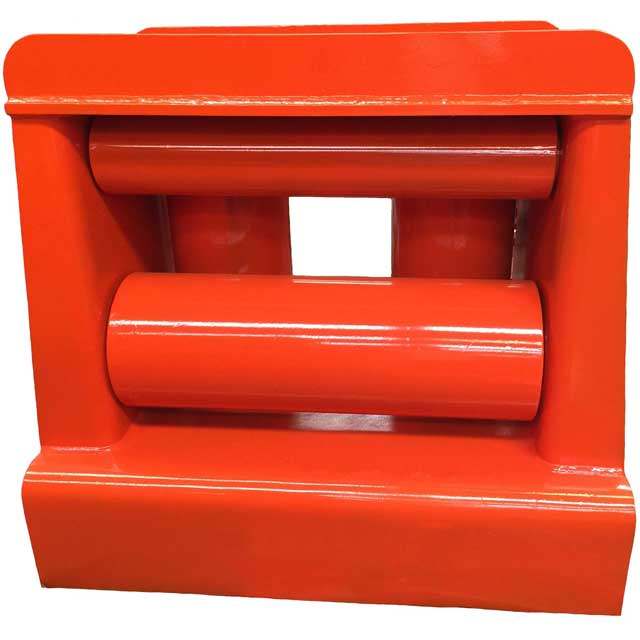
The best manufacturer should adopt excellent quality material with the advanced process, then the color of the appearance will be uniform and bright.
2.Specifications
To select a quality roller fairlead, it is necessary to pay attention to the requirements on the specifications, the requirements on the specifications, which is required to transmit the cable on the specifications, because the cable has differences in size, length. The device that can be stored and used is also different from the specifications.
The best roller fairlead supplier should have different specifications to meet the requirements of the installation.
3. Environmental Restriction
Because of the different environments, there is a certain limit on the material of roller fairlead, especially for the marine equipment and the wear of metal device is very large. The requirements of corrosion resistance for the roller fairlead should be considered.
The supplier should adopt excellent corrosion resistance materials for superb roller fairlead.
4.Price
The price always is an important factor for choosing the best-value manufacturer. The most competitive prices with quality products can be a great advantage.
5.Craftsmanship
An excellent manufacturer & supplier should have advanced craftsmanship and strict quality requirements, which should meet the needs of effect and performance.
 China manufacturers