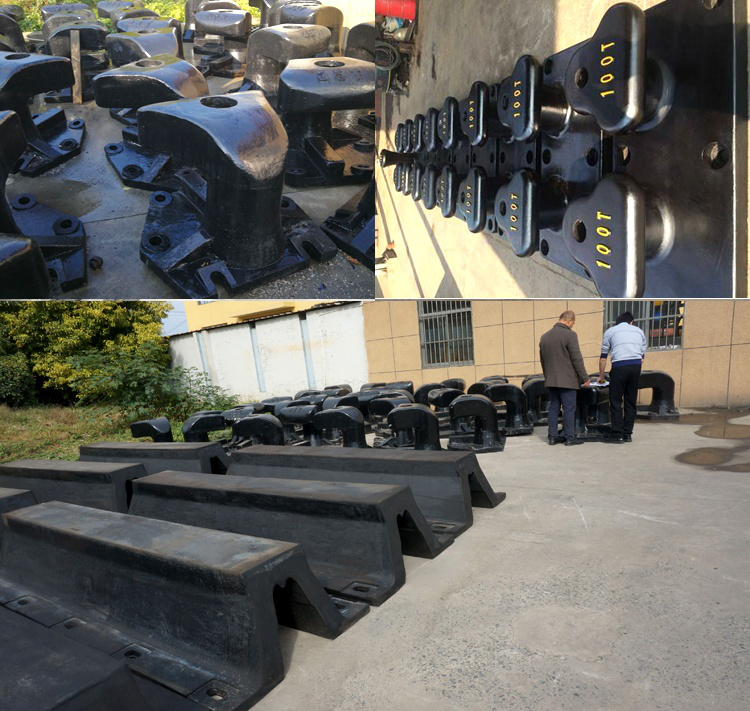
Mooring bollards are a vital component of any mooring system. It is the anchor point for mooring lines mounted on the deck to secure the ship or vessel. There are various types of marine bollards, including t-head, t-horn, kidney-shaped bollards, cleat, single-bitt bollards, double-bitt bollards, pillar bollards, tricorn bollards, T-head Japanese and Pillar bollards.
T Bollard
It is also named as“Tee Bollard”, “T-bollard”, or T- head bollard has a top shaped like a “T”. It is very prominent in many regions of the world due to its simplicity and it gets the job done well up to 300 tonnes. T-head bollards along with Horn Bollard or “Staghorn Bollard” can handle higher line load angles than single bitt and kidney shaped bollards.
Kidney-shaped Bollard
Kidney bollard has a simple design that is suitable when low to medium tidal range is expected. Kidney shaped bollards offer an economical solution for installations where securing of mooring lines at high angles is not a concern. This style is not recommended when multiple mooring lines will share one bollard as there may be a possibility of an unintentional release due to the shallow lip at the top of the bollard.
Double bitt Bollard
Double bitt bollard, also known as the “Twin Horn” or “Twin”. Small base area is space-saving for small areas. They are useful when high densities of mooring lines are present, this is a better choice for ship mooring and shifting.
Single Bitt Bollard
It is particularly suitable for applications where tidal range variations are large and can handle steep mooring line angles. They are capable of accepting multiple mooring lines and have been designed to fit onto existing bolt patterns for older pillar bollards.
Pillar Bollards
It is normally applicable where tidal ranges are small and use for warping operations along berths where vessels need to be re-positioned for loading purposes. Due to their 360 degree line of load range, they can also be placed on jetties where vessels berth on both sides of the jetty structure. Pillar Bollards can withstand use in harsh environments.
How to choose the mooring bollards
Criterion for selecting mooring bollards are based on mooring pattern, changes in draft due to loading and discharge, wind and current forces, swell, wave and tidal forces, mooring line types, size and angles ice forces (where relevant). Ductile iron, cast steel, and stainless steel are some of the main materials used to make marine bollards. Besides size & design, bollards are also categorized by their grade and mooring capacities.
Furthermore, durability is a factor when choosing a suitable bollard design as maintenance is something that end users should be considered. To spot possible deterioration and to ensure that bollards are working well a continual durability testing and inspection should be done to ensure mechanical performance are maintained.
When looking for a marine mooring bollard supplier, the client must provide vital information about your project to a trusted supplier who understands the required International Standards and regulations, the level of support needed by your port, and all the other details associated with bollard production.
YSmarines mooring bollards are engineered accurately and manufactured in ductile cast iron or steel supplied with high-quality galvanized anchor bolts to offer our clients maximum resistance to berthing impact.
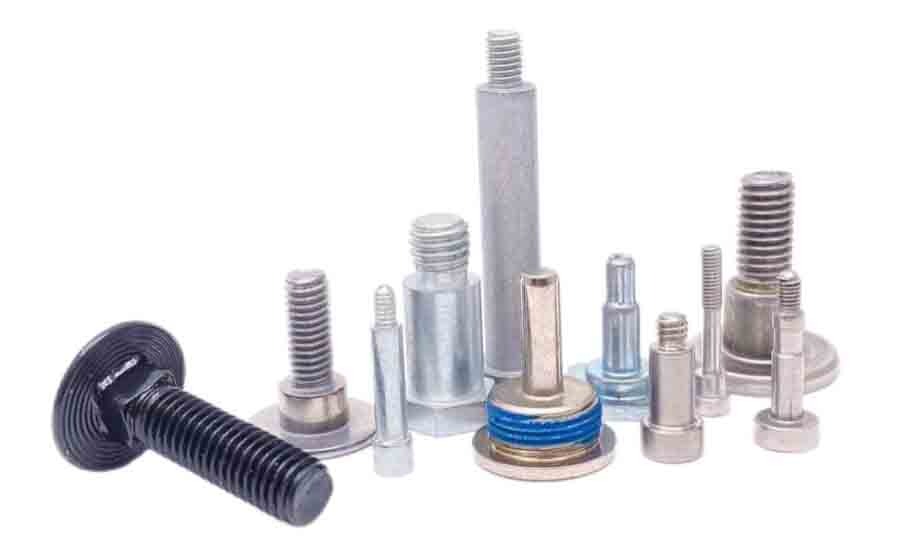
Screws are essential for keeping objects together so machines or devices can function properly. The various types of fastener you choose will depend on what type of project you’re working on. There are many types of captive fasteners that are useful for tightening different objects and they play a crucial role in the production of products and goods. A captive fastener is a special screw that locks into a pre-drilled hole in order to create a permanently secure hold. They feature a head and external threading similarly seen on small screws. They’re different because they can be fastened and unfastened without having to remove it from the pilot hole. There are several methods in which these micro screws are manufactured. These include press-fitting, broaching, and thread locking.
Benefits
There are a few benefits with using custom fasteners. Because of the permanent hold, they create with the pilot hole, these screws are less likely to suffer from age-related degradation. They also offer a high level of protection against stress and vibration that can loosen traditional screws. Captive fasteners are ideal for manufacturing companies due to their inexpensive cost.
Features
Captive fasteners include either self-clinching or broaching features. Self-clinching features are typically used for ductile materials for use in printed circuit board fastening and sheet metal integration. Broaching features are used for non-ductile materials. The captive fastener accomplishes joining through an interference fit at the time of installation. Each type becomes a permanent part of the item or panel which it’s installed.
A captive fastener can be valuable because of their speed in use in the manufacturing process. They can also keep costs low during field servicing. The type of custom fastener you use will depend on the sheet material or panels being used. When choosing custom fasteners, make sure they’re compatible and their hardness is greater than the material.
Types
1. Captive nuts
Captive nuts are fasteners that are internally-threaded. It’s a nut that is wrapped up in a spring steel cage. They’re designed to quickly connect with studs. These fasteners are effective for blind locations and are usually able to be attached without doing damage to panel finishes. In contrast with threaded holes, captive nuts can be replaced if they’re over tightened, and are easier to use on materials that are too soft to be threaded. This specific fastener is typically utilized in industrial and electronic applications. They mount equipment in square-holed racks.
2. Weld nuts
A weld nut is a fastener that is designed for welding to another object. It’s usually made of stainless steel or low carbon steel. There are several kinds of these fasteners that can be used for various applications. Single tab weld nuts are used for heavier gage materials. Retainer weld nuts have a floating nut that is held within a retainer. This design allows for misaligned or off-center screws to be installed. The nut floating freely helps to compensate for any building inconsistencies. Other types of weld nuts that are used include four projection weld nuts, twin pilot weld nuts, and slab base nuts.
3. Captive screws
Captive screws are fasteners that are used in equipment panel assemblies and PC boards. These include signs, network cabinets, medical devices, and electronic enclosures. You can usually identify them by their threaded end and unthreaded shank. The design allows it to be locked into pre-drilled holes in order for the screw to be unfastened and fastened without any detachment. Captive screws can be combined with springs, retainers, and washers to put together a self-captivating assembly. These captive fasteners can be effective in fastening applications where vibration shock, thermal expansion, and thermal conductivity are involved. In addition, captive screws are useful in situations where quick assembly and disassembly is required, and they can prevent screws from falling into electrical circuits or getting lost.
Custom captive fastener
Whether you are working on a small house chore or a major industrial project, the screws used in executing the work will matter. Your project may require a custom captive screw, or it may require custom screws. Your options range from micro screws to tiny screws and more. Fortunately, the nut, bolt & screw industry has a wide range of options for you to choose from. Here is a look at some screws and their functions.
Screw Point Types
There are many different kinds of screw points. Each one is designed for a particular type of use, ranging from sheet metal to wood. Here are the five most common types groups of screw points. Machine and tapping screws, self-drilling screws, thread forming screws, thread cutting screws, and tapping screws. It is important to note that within each category there are several different types of points, each designed for a specific function.
Plastic Thread Forming Screws
Thread forming screws for plastic are in great demand today. For instance, the captive screw is a fastener that has been created to fit into holes that have already been drilled. This is a low-stress method that lessens the impact and reduces the likelihood of losing screws or cracking off pieces of plastic. These thread forming screws (such as the captive thread fastener) are especially effective for use in cell phones, laptops, and other devices. They are durable for assembly and disassembly and they resist loosening caused by vibrations. Among the variety of plastic thread forming screws includes delta PT, Hi-lo, plastite, trilobular, and more. As with all screws, it is important to emphasize the Critical nature of torque screws to the proper value. If they are too tight, they risk breaking. And if they are not tight enough, the may become loose or disengage.
Marine rubber fenders are a type of boating equipment that protects a vessel’s side from contact with another body. They are installed both on a ship itself and on berthing structures to prevent and minimize damage in case of collisions or overshooting.
Common used rubber fenders
Assuming that impact is the main deteriorating factors for rubber fenders, it is important to understand the behavior of each kind and classify them according to how they absorb energy from berthing vessels.
V-type rubber fender- also known as arch fender.
The fender body is the resisting mechanism itself and absorbs the berthing energy of the vessel by buckling and deformation of its body. Therefore, it is straight forward to pay attention to signs of deterioration at the rubber body due to external
Rubber fender with panels
Similar types are cell fender and cone fender. A steel panel with resin pads such as UHMW PE, mounted at the rubber fender body, initiates the contact from berthing vessels and transfer the impact to the rubber fender which absorbs the energy by buckling deformation. Since the vessel does not come in direct contact with the rubber, the damage and breakage of the rubber body is minimal, care must be taken for the corrosion and deformation of the steel fender panel.
Pneumatic fender
It absorbs the energy of the berthing vessel by its highly elastic features due to the compressed air pumped into the body – fabric-reinforced rubber bag. Floating air fender is generally protected by a net, so damage and breakage of the rubber main body is slight, deterioration of the net is more susceptible. Fixed air fender with a fender panel behaves similarly to a rubber fender with panel, and attention must be paid to the corrosion and deformation of the steel.
Cylindrical rubber fender
It is also similar to D-type and square type. Vessels come in direct contact with the rubber body and absorbs berthing energy by deformation of the rubber, it is necessary to pay particular attention to deterioration by external force.
How to choose the right rubber fender supplier
Finding the right marine rubber fenders is crucial for protecting your vessel and from potential damage. When choosing marine fenders, there are three things you need to take into account. They are the vessel’s weight, the vessel’s length, and the mooring conditions. Once you know, look for companies that specialize in making the particular kind of fenders that you need. Consult sizing guides to figure out exactly what size and how many fenders you need for your vessel. If you’re torn between two models, opt for the heavier-duty one to reduce potential damage. At YSmarines, we are proud to serve various global industries and be a top-quality marine fenders supplier. Our 10 years of service allow us to provide only the best products to our customers. We specialize in industrial marine fenders and offer a wide variety of options. These include pneumatic fenders, cylindrical fenders, GD Type fenders, and W type fenders.
Small fasteners play a big role in product manufacturing. Without these micro screws, engineers would have a hard time designing smaller gadgets and products like glasses, watches, headphones, and cameras. Today, we have more custom small fastener options and they are heavily utilized in many manufacturing industries. Custom fasteners hold different parts of a product together and also allow for easy disassembling in order to facilitate repair and replacement. Here are the benefits of using small custom nuts, bolts, & screws in product manufacturing.
1. Micro Fasteners Give Designers and Engineers More Options
If manufacturers only had the traditional fastening methods — welding and adhesives — as their only fastening options, few of their products would be desirable. For instance, laptops, smartphones, and tablets would be far more costly if one can’t repair or replace dysfunctional parts because they’re permanently fixed to the devices. Additionally, welding and adhesives would limit the productivity of a product at peak performance. Excess heating could make some adhesives let up, causing some parts of the product to become loose.
Everyday products like eyeglasses could never be the same without using small fasteners and miniature screws. You will find product manufacturers across all industries relying on micro fasteners to make top quality products. Especially in today’s modern world where consumers want smaller and pocket-fitting gadgets, small screws come in handy.
2. Strongly Bonds Micro-Parts in Electronics
Custom-manufactured micro screws allow manufacturers of electronic devices to assemble many small parts. With the rapid advance in technology, especially computer technology, customers are preferring smaller gadgets. Be it computers, tablets, or smartphones, people desire lighter and ultra-slimmer devices. This means that manufacturers and designers have to use customized micro screws, micro fasteners, and miniature screws to assemble the devices. Without these micro fastener options, manufacturers would have to use other options such as welding, which would ultimately affect the architecture of their electronic devices.
3. Quality Small Fasteners Reduce Manufacturing Waste
Commodity fasteners allow engineers to use less material and time in product manufacturing. Electronics manufacturers will attest to this. For instance, a laptop has many different parts that are pieced together on the motherboard. Small fasteners are the go-to for gadget designers when they need to assemble multiple parts. Other fastening methods like welding would require more materials and take a big chunk of the manufacturing time. Even a small gadget may have many different parts that need assembling. Manufacturers only need to pre-drill properly sized holes on the parts and then install the small fasteners during the final assembly. Overall, fewer materials, resources, and time will be used in the manufacturing process, and this will increase productivity.
3. Small Fasteners Allow Manufacturers to Produce Lighter Products
From the automotive industry to the electronics industry, lightweighting is the newest and most desired trend. It makes a lot of sense in terms of cost-savings and aesthetics. A lighter car utilizes less fuel, while a lighter gadget boosts the mobility and ease of handling. For instance, no consumer would love to walk around with a heavy and huge phone, as it would beat the purpose of having a mobile phone. Thanks to small fasteners and miniature screws, engineers can now design and produce miniature gadgets that are lighter and easier to operate. In our modern world, consumers are looking for products that give them more cost-savings, freedom, and utility. For car users, this means a lighter car with a good fuel economy, while gadget users are after light and small products that boost their mobility.
4. Makes Repair and Replacement of Parts Possible
When you think about it, none of your devices or equipment would be easy to repair had you not used custom set screws and captive fasteners in the assembling process. It’s easy to undo a custom fastener using the right torque force and the appropriate tools and techniques. For instance, if you manufacture computers, you can imagine how difficult it would be for your customers to replace a faulty part if all the computer parts are welded together. Without the use of custom screws and machine screws, it would be almost impossible for you or your customers to repair, replace, or install new equipment parts. Additionally, it’s easier to inspect and diagnose a machine that has been assembled using custom screws. When your customers have a problematic machine, it will be easy for you to send a technician to quickly correct the flaws.
5. Reduces Waste During Manufacturing
Imagine if you had welding as your only fastening option. Welding all parts of your machine would not only produce more waste, but also it would increase the time and cost of your production. Because you can order customized screws from a custom small screw specialist, you can design and produce machine parts to precision. This will help you to perfectly assemble different uniquely-designed parts with little to zero wastage. Utilizing custom fasteners will reduce your overall production cost, and give you a competitive edge in the market.
6. Small Fasteners Boost Installer Productivity
For manufacturers who produce products in bulk, the ease of installation and assembly using small fasteners is unmatched. Think about it — as a manufacturing enterprise, you probably pay your workers on an hourly basis. If your installation crew can do more quality work in less time, then you will be able to deliver more units. The many custom fastener options available allow you to have tiny screws tailor-made for your specific uses. Therefore, it is easier for your workers to assemble more units per hour. This enhances your overall productivity without compromising the quality of your products. As such, you can stay ahead of your competition by producing more quality units.
Small nuts, bolts, & screws are indispensable when it comes to product manufacturing. Today, more than ever, consumers want smaller and lighter products that increase their efficiency. The many fastener options available help manufacturers produce quality products that will meet the consumers’ needs.
7. Increases Productivity
It is much easier to install and assemble different parts when using a custom fastener or a machine screw. When you have a long-line of production, you want to utilize the quickest fastening method that will give you fast and quality results. You only need to invest in quality torque wrenches and have well-trained workers. Designers and engineers will tell you that customized screws give them more liberty to be creative in their design process. Additionally, the performance of your product will be boosted as all its parts are securely held together using quality screws.
8. Long Service Life Even when you replace a machine part, you can still use the same screws you used on the old part to fix a new part. Stainless steel screws can keep your products intact for years. For the most part, custom screws will outlast a machine or product. As a fastener manufacturer, using quality stainless fastener on your products will boost your credibility in the market. When customers are buying different machines and equipment, they go for the products that will serve them longer.
More than 200 billion fasteners are used in the U.S. each year. from technological to construction-based industries, that’s a lot of demand. Screws are responsible for holding your product or project together.
The electronics industry has always been driven by innovation. Whether a company is involved in creating consumer electronics, medical devices, small toys, miniaturized robots, circuits board assemblies, or electrical components, they all invest heavily in the research and development of new products. With constant pressure on company engineering teams to create new, and improve existing products, more quickly and more cheaply, many electronics companies are using analytics to gain insights into improving their manufacturing processes. In addition, a growing number of companies in the electronics industry are outsourcing the manufacturing of their parts or even their products, so they can concentrate instead on developing strategies to remain competitive in the global marketplace.
Another factor of cost-control, often overlooked in manufacturing cost-analysis, is the importance of specifying the correct fasteners in the conceptual and research phases of product design. Not using the best type or size of fastener can have a major impact on production costs and the ultimate success of the product in the marketplace.
The cost of making small electronic screw changes during the production cycle can be significant. However, making the right fastener decisions, such as specifying custom-designed small screws for electronics, early in the product’s design phase, can lower production and assembly costs by reducing the component’s per-piece price or eliminating manual operations. To assure that you can offer new products of maximum quality at the lowest cost, take advantage of the input of top design engineers, like the experts at Screw, to customize fasteners to your specific needs during design and development. The right fasteners can prevent costly failures and delays in production, and increase your ability to offer high-quality products at the lowest cost.
When considering a redesign, such as switching to a more durable material for a frequently impacted small component, you’ll want to consult a micro screw specialist to customize fastener compatible with the new material. If this element of the redesign is overlooked, the consequences could be very costly – with products being returned for repairs, lower customer satisfaction, higher warranty costs, or even a recall of the product.
We have the knowledge and expertise to offer materials and finish options for your specific product needs. The team at Screw works diligently to provide unparalleled solutions to meet the electronics industry need for micro fasteners by creating custom machine screws with the highest level of integrity for their product or assembly.
Finding a screw manufacturer that can produce high quality items is absolutely key — don’t take a risk on a cheap price and a cheap product. If you rely on custom fasteners, you’ve got a lot of options in terms of handpicking your own manufacturer. Selecting the right one can mean the difference between a product that withstands the test of time, or one that crumples at the first sign of stress; here are the most important characteristics you should look for in a custom screw manufacturer.
Screw operates a global network of world-class technical professionals to provide cost-effective solutions for any small diameter application. As a leading supplier of custom manufactured small screws for electronics, our goal continues to be saving our customers substantial costs with design and manufacturing efficiency. We accomplish this by working closely with company teams at the initial product design phase, or whenever a product change is deemed necessary. We also supply custom micro screws for small projects, encouraging innovation world-wide.
Did you know that it wasn’t until 1928 that the National Screw Thread Commission established a standard for screw threads? Before that, all screws needed to be handmade, so no two were ever alike. While those methods are obviously long gone, sometimes — especially in the case of extremely low-cost fasteners — inconsistencies exist. As a business owner, you can’t afford to have some products that stay together and some that fall apart. Look into your screw manufacturer’s previous clients’ experiences to see if they’ve had any similar issues.
Mooring bollards are integral in any mooring system for offshore structures. These are used to secure mooring lines, and to prevent the vessels from drifting from their anchored location. Bollards may be formed into different types, depending on the use of the bollards, and what type of vessel would be anchored to it.
Some common types of mooring bollards are T-head bollards, kidney bollards, Japanese T-head bollards, and pillar bollards. These types may also be cast using different steel grades and shall depend on the design loads that the bollards would resist during its useful life.
YSmarines has a wide range of options to ensure we provide solutions to every application, each type suitable for different uses and loads. Mooring bollards are a vital component of any mooring system. It is the anchor point for mooring lines mounted on the deck to secure the ship or vessel.
Testing For Mooring Facilities
Mooring facilities testing procedures are carried out to ensure the correct design load capacities of the components.
1. To establish adequacy of mooring facilities.
2. Enable facility users to develop efficient berthing plans
3. Establish baseline data on existing mooring hardware and berthing capacity
4. Provide facility users with information sufficient to determine the level of effort necessary to maintain or upgrade existing capacity
To ensure the safety and efficient performance of the mooring bollards, you need to guarantee that they are in good working condition to use in daily mooring operations.
Due to their exposure to seawater, they are at high risk of corrosion which can significantly affect their service life. It is crucial to perform routine maintenance to extend the service life and reduce the possible damages to the installed mooring bollards.
How To Maintain a Mooring Bollard
Bollards are constantly exposed to the elements and the corrosive effect of sea splashes.
Although they are low-maintenance equipment, it’s essential to conduct periodic inspections. These should include examining the following:
Surface inspection for scratches/damage to paint and corrosion of the materials.
Compare barrel thickness with manufacturer specifications.
Check with a torque wrench that all the anchor bolts are sufficiently tight.
Ensure anchor bolts are adequately coated and corrosion free
Inspect grout under bollard and replace if necessary.
A quarterly assessment should be performed in cases with recognizable irregular behaviors. A relevant corrective action should be taken to maintain its required performance.
Any chips or cracks in the paint should be repaired immediately to prevent corrosion from forming. Cast steel is particularly susceptible to corrosion.
The purpose of a screw’s design is to allow it to be removed and replaced without damaging the screw or the material it is connecting. Most are made of steel with a corrosion resistant coating, or stainless steel. Screws are available in an array of head shapes, threading, and custom features. Screw heads are classified under two broad categories — countersunk screw heads and non-counter sunk screw heads. The selection of a screw head should be determined by your scope of work and your preferred finish. Check out our KENENG screw heads to learn more.
Firstly, we introduce what are countersunk screw head and non-counter sunk screw heads
Countersunk Screw Heads
Countersunk screws mainly have oval, flat, or bugle heads. They sit flush on the surface of the material they are installed on and don’t protrude. This enables other objects to rest stably on the surface without being disturbed by the screw heads. Countersunk screws are often used in hard and soft woodwork businesss using a method referred to as countersinking. What this means is that you have to first drill a pilot hole with the correct head angle before installing the screw.
Depending on the type of screw head shape, countersinking will be necessary to ensure that your screws fit well on a surface. Some of the head shapes that will require countersinking include flat screw heads, raised screw heads, and bugle screw heads. For a flat screw head, you can also use a flat head screw cover to conceal the head. Luckily, a custom screw manufacturer has custom screw options that can be tailor-made to fit your business.
Non-counter Sunk Screw Heads
The bulk of custom screws today have non-counter sunk screw heads. This type of screw head protrudes and is fully exposed when installed on a surface. The head shape of these screws doesn’t have an angle. Consequently, you don’t need to countersink them. Most of the custom screws have this type of screw heads, and they include binding screws, domed, button, cheese, hex, flange, square and truss heads, and many more.
Pan Head
Among the many types of screws, the most common is the pan head screw. These may also be referred to as round head screws. A Philips drive is the most common driver in a pan head, but they may have a slotted drive, or 6-lobe/Torx drive, Pozi Drive, or others. The head is shaped like an upside-down frying pan, which gives it it’s name.
Flat Head
Also called countersunk, a flat head screw is tapered on the underside of the head in order to lie flush with the material it is driven into. The term “countersunk” means the flat head of the screw is flush with (or lower than) the material’s surface.
Button Head
Sometimes called a button socket screw, this rounded head most commonly has a hexagonal drive hole to accommodate an Allen wrench or hex key. However, they can also be supplied with 6-Lobe/Torx drives.The most common metals in button head screws are alloy and stainless steel, but they can also be made of titanium or aluminum.
Socket Cap Head.
This type of screw has a cylindrical shaped head with a hex recess that can be tightened with a socket wrench driver. It is available in a variety of sizes and finishes, and some are designed for outdoor applications. The socket cap head screw is most commonly used in industrial applications.
Wafer Head / Ultra-Thin Head.
Wafer head or ultra-thin head screws, used in electronic devices, are also called micro-profile, slim-head, or ultra-low head screws. Its purpose is to allow a nearly flat external surface without a countersink, making low-profile designs possible.
Pancake Head / Thin Head
This low-profile, rounded-head screw head is about two-thirds the height of a standard rounded head screw.
Undersized Pan Head
This driven head has a flat or slightly domed profile to provide a large mating surface area for a firm hold, even with enlarged holes. It allows a trim finish for decorative applications and minimizes the risk of something catching on the screw head when the item is used.
Pan Washer Head
This head type is a combination of a screw and a washer. The head can be circular or hexed, and has a washer built onto the head to increase its diameter, prevent overdriving into softwoods, while providing a maximum bearing surface. It also helps the screw remain firmly in place.
Fillister Head
Fillister-head screws are raised above the surface on a flat base to keep the screwdriver from damaging the surface as the screw is tightened. Brass Fillister head screws are corrosion resistant, nonmagnetic, and electrically conductive. Nylon Fillister head screws are chemical and oil resistant, nonconductive, and lightweight.
Oval Fillister Head
Oval fillister screws are essentially the same as fillister screws, but the shape on the top of the head is rounded. These are typically paired with a slotted drive.
Oval Flat Head
Screws with an oval flat head are desirable for fastening hinges to cabinets. They are usually available in finishes that coordinated with cabinetry hardware finishes, such as white wood or white stainless steel. Depending on the application, they may require a countersunk hole.
Cheese Head
A cheese head has cylindrical sides with a flat disc top (similar to a wheel of cheese) and a flat bearing surface. The head height is about half its diameter and typically has a slot drive. Its deeper slot capacity makes it ideal for applications requiring extra head strength, or a deeper drive socket.
Before selecting screws, you should be clear what type of screw heads you will need to utilize. Some of the factors that you should weigh before selecting a screw head
1. Type of Material
When you’re working with wood, you are better off using countersunk screws. This is because these screws don’t split the wood when drilling, as opposed to the non-counter sunk ones. Other materials, such as metal, may utilize combination heads.
2. Aesthetics
If you do not want the screw heads to be visible on the surface, countersunk screws fit the bill. It is easy to conceal countersunk screw heads using head screw covers, commonly known as beauty caps. If you choose the wrong type of screws for your business, it may negatively impact on the overall look of your business.
3. Safety
For instance, if you manufacture furniture, you want to avoid protruding screw heads on the surface. It’s easy for an unsuspecting person to get deep scratches from a protruding screw head. Countersunk screw heads are best suited when making both office and domestic furniture. These include baby cribs, conference tables, and office chairs.
4. Pick the Right Screw Drivers
Even after selecting the right custom screws for your business, you’ll need to get the right tools to install the screw. There are many types of screwdrivers that you can use, but some of the most common ones include Phillips, slotted, spanner, hex socket, and square screwdrivers. If you don’t utilize a screwdriver that fits the screw head, it may cause head damage. The screw head may strip or crack, which makes the screw useless, and may water down the overall quality of your business.
The success of your business will be influenced by the type of the selected screw head shape. It is important to weigh all the factors that come into play before picking a custom screw. An experienced custom screw manufacturer will give you best screw head options to meet your requirements.
The abrasive blasting process is to use compressed gas to spray blasting materials onto the surface of the workpiece by means of high-speed air pressure which are commonly used blasting materials include copper ore sand, quartz sand, emery, iron sand, Hainan sand, etc. Under the impact and cutting of the spray material on the surface of the workpiece, the surface can obtain a certain degree of cleanliness. At the same time, the fatigue resistance of the workpiece is also improved.
Abrasive blasting will form a certain roughness on the surface, increase the adhesion between it and the coating, prolong the durability of the coating film, and also help the smoothing and decoration of the coating. In other words, the abrasive blasting process is mainly to treat the surface of the material, so that other coatings can be better absorbed on the surface of the material. The same abrasive blasting process can produce a special metallic flash effect on the surface of the workpiece. So, what are the main applications of abrasive blasting?
Abrasive blasting process to remove the oxide skin
The oxide scale and residual salt after heat treatment can be cleaned by abrasive blasting. At the same time, it can improve the surface finish of the parts, especially for the molds with complex shapes and precision parts, the abrasive blasting effect is more prominent.
Clean the rough surface of precision castings
Abrasive blasting is the most economical and effective method to clean the oxide scale and residues on the surface of precision castings, especially the cleaning and polishing of precision castings with complex shapes and no allowance. At the same time, it can play a polishing role and improve the surface finish of the casting.
The use of abrasive blasting to clean the stamping parts can make the parts reveal the metal color of the same color, make the appearance of the parts more beautiful, and also improve the surface hardness and corrosion resistance of the parts. Such as CNC precision parts, various instrument shells, frames, jewelry, etc.
Remove microburrs from machining workpieces
Although the burr is small, it is very harmful. With the advancement of science and technology, mechanical parts are becoming more and more complex, the precision requirements are getting higher and higher, the application conditions are very strict, and no burrs are allowed. Such as the 3C communication industry, textile machinery parts, hydraulic components, precision and complex parts of the aerospace industry, medical equipment, CNC aluminum alloy precision parts, etc.
The use of abrasive blasting to remove burrs has high efficiency and high quality and can make small rounded corners appear at the junction of the two surfaces which is required by many mechanical parts. If the process parameters can be reasonably selected, the original surface brightness can be also improved.
Prepare for other surface treatment processes
Abrasive blasting pretreatment is used before electroplating parts, and the electroplating layer has strong adhesion, especially for hard chrome plating. Such as screw electrophoresis, bolt nickel plating, etc.
The use of abrasive blasting before spraying can enhance the coating adhesion of painted parts and sprayed parts. The bonding parts are of good quality and firmer bonding by abrasive blasting.
Surface decoration by the abrasive blasting process
Abrasive blasting is an effective process for parts that require a smooth surface and do not allow reflection, such as surgical instruments.
Abrasive blasting is also widely used in frosted glassware and patterns, instrument panels, the processing of the sand surface of plastic drawing paper, the mirror surface of the single crystal silicon surface, and the plush processing of special fabrics.
Use abrasive blasting process for finishing
Abrasive blasting works very well as a finishing method, especially for parts with complex shapes. For example, the polishing of impeller engine blades and various mold surfaces (commemorative coin molds) is unmatched by any other method. Abrasive blasting ceramic, diamond, gold, and silver jewelry is the most economical method.
With the development of the aerospace industry, the demand for aerospace fasteners has increased rapidly. As aerospace fasteners are applied under an environment of high temperature, high pressure, and high intensity, their quality requirements are also particularly high. Here, we introduce some useful knowledge about aerospace fasteners.
What are aerospace fasteners?
The fastener is one kind of mechanical part that connect two or more parts that connect two or more parts together. The application is extremely wide. Aerospace fastener refers to the fastener which is specially used for the aerospace industry. It adopts specific materials with special properties or applications.
Aerospace fasteners are generally used in airplanes, satellites, and rockets. It is a typical high-end fastener. It is also a kind of important necessary basic part of aerospace aircraft. The performance requirements are much higher than the fasteners in other fields. There’re various kinds of aerospace fasteners and each category contains different specifications and types to meet the diverse needs of different materials and structures.
What are the categories of aerospace fasteners?
1. According to whether the fastener can be removable, it can be classified into removable fasteners and permanent fasteners. The removable fasteners include bolts, screws, and nuts. Permanent fasteners include high-locking nuts, rivets, etc.
2. According to product types, can be classified into bolts, screws, nuts, single-sided fasteners, special fasteners, etc.
3. According to the materials used in fasteners, it can be divided into carbon structure steel fasteners, alloy steel fasteners, stainless steel fasteners, high-temperature alloy fasteners, aluminum alloy fasteners, titanium alloy fasteners, non-metal fasteners, etc.
4. According to the differences in the requirements of the assembly operation, it can be divided into single-sided fasteners and double-sided fasteners.
Commonly used important aerospace fastener
Rivet fasteners
The rivet fastener which is applied in aerospace, quality guarantee and lightness are the most important choice factors. It is one of the most widely used fasteners on aircraft. The materials are aluminum alloy, stainless steel, heat-resistant alloy, titanium alloy, etc. Most rivets adopt composite materials, such as aluminum alloy, and titanium alloy. With the continuous improvement of the rivet material intensity, the support rivets used in corresponding important parts have also been developed, such as dual metal rivets and high shear rivets and their strength can reach the intensity of titanium alloy high lock bolts.
Bolt fasteners
The mostly applied fastener used to bear the larger parts of the aircraft is the bolt fastener which mainly includes ordinary bolts, high lock bolts, and tapered bolts. A high lock bolt is a single-sided thread fastener which is a type of bolt that is widely used in the aerospace industry. For airplane design, weight loss is an important indicator. The use of high-ratio intensity materials can achieve the replacement of large-sized fasteners with lower intensity. In addition, the anti-fatigue, corrosion resistance, rigidity, brittleness, compatibility, heat resistance, and other properties, also are needed to be considered.
Nut fasteners
Nut fasteners are used together with bolts. They have a variety of structural forms to meet the applications of different occasions, including hex nuts, bihexagon nuts, bracket nuts, barrel nuts, and high lock nuts, most of which adopt a self-lock structure. The hexagonal nut has been applied to the airplane in a large amount. The bihexagon nuts are widely used on the engine and high-strength bolts.
Single-sided fastener
There are two main forms of fastening parts used in the open parts of the airplane. One is the bracket nut/bolt and fast unloading fastener used in the removable parts such as the aircraft hatch. The other one is a single-sided nail used in the permanent connection part. The screw thread nail is specially designed for the composite material structure, which can improve the performance of sealing and anti-fatigue.
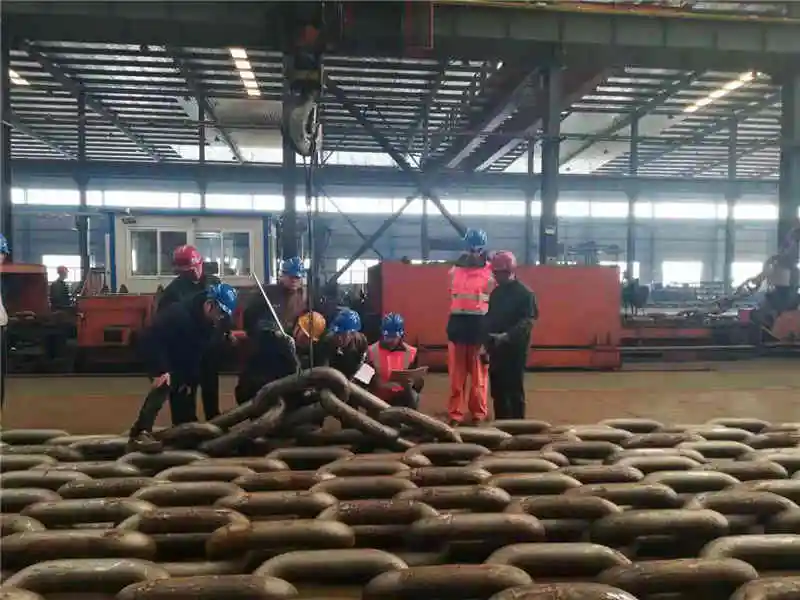
The marine anchor chains play an important role in the safe berthing of the ship. This article describes how to do well maintenance of anchor chains.
First of all, Before using the anchor chain, ensure that the chain wheel is installed on the shaft without deflection and swing. Timely check the tightness of the anchor chain and adjust it correctly. If the anchor chain is too long or stretched after use, which is difficult to adjust, the chain link can be removed as appropriate, but it must be an even number. The chain link shall pass through the back of the chain, and the locking plate shall be inserted outside. The opening of the locking plate shall face the opposite direction of rotation.
Secondly, the abrasion degree of anchor chain shall be checked frequently. More than 1/3 of the chain link of the same anchor chain has obvious elongation, and it cannot be used when the deformation and wear amount reaches 10% of the original diameter. After the chain of anchor chain is seriously worn, it shall be replaced with a new chain wheel and a new chain to ensure good engagement. At the same time, the end of the anchor chain and the commonly used end should be replaced in a planned way after one or two years of use, and the front and back positions of each chain link should be marked again.
Finally, pay attention to the anchor chain maintenance in the process of use. The anchor shall not be stopped before it reaches the bottom each time when it is anchored, and the anchor chain shall be washed clean when it is hoisted to remove sediment and other debris; Keep the anchor chain dry at ordinary times, and do not flush the water into the chain locker when washing the deck; Check every half a year, arrange all anchor chains on the deck for rust removal, painting, and inspection, and keep the marks clear and visible; The anchor chain shall be filled with lubricating oil in time during use, and the lubricating oil must enter the fitting clearance between the roller and the inner sleeve, to improve the working conditions and reduce wear.




 China manufacturers