Hand paper towels are essential hygiene products in commercial restrooms, offices, restaurants, hospitals, schools, and other public facilities. They provide a convenient way to dry hands after washing while helping maintain cleanliness and reduce the spread of germs. Among the most common options in hand paper towels, folded and roll types stand out for their different dispensing methods, storage requirements, user experiences, and cost considerations.
Understanding the key differences between folded and roll hand paper towels helps businesses select the most suitable product for their facilities. Although both options serve the same basic purpose, their performance and practicality can vary depending on traffic levels, dispenser types, maintenance requirements, and purchasing budgets.
Overview of Folded Hand Paper Towels
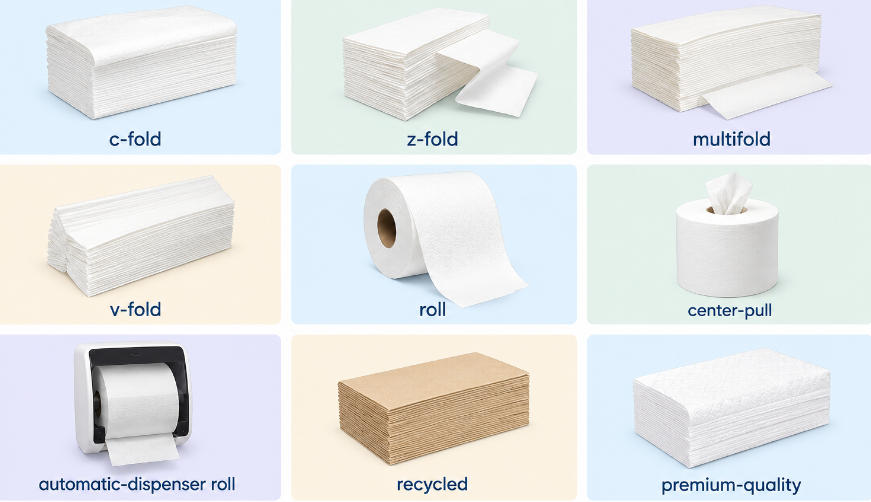
Folded hand paper towels are paper towels manufactured and arranged in specific folding styles, such as C-fold, Z-fold, and multi-fold. They are typically supplied in stacks or bundles and placed inside compatible dispensers. Users pull out individual sheets when drying their hands.
One of the main advantages of folded hand paper towels is their controlled dispensing. Depending on the folding style and dispenser design, the next towel may be partially presented after a sheet is removed. This makes it easier for users to take one towel at a time and can help reduce unnecessary consumption.
Folded towels are particularly suitable for facilities where hygiene, organized dispensing, and convenient refilling are important. They are commonly used in office restrooms, healthcare environments, schools, restaurants, and small commercial washrooms.
However, folded towels require sufficient storage space for multiple packs, and dispensers may need frequent refilling in high-traffic locations. The quality of the folding and the compatibility between towels and dispensers can also influence dispensing efficiency.
Overview of Roll Hand Paper Towels
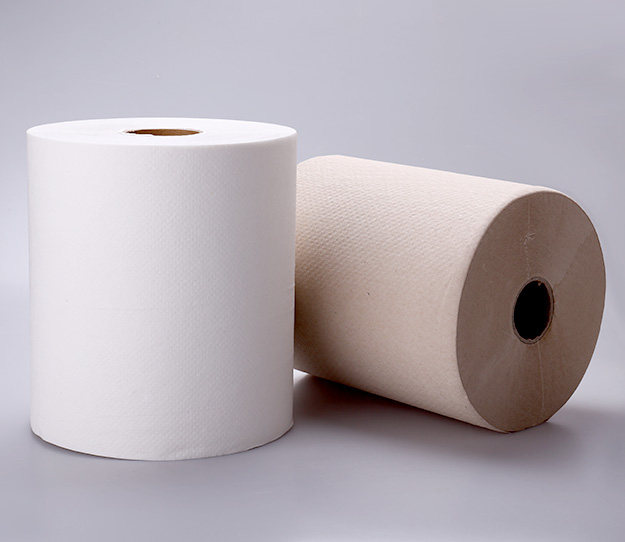
Roll hand paper towels are continuous sheets of paper wound around a core or formed into a coreless roll. They are installed in compatible dispensers that allow users to pull, tear, or automatically receive a section of paper for hand drying.
Roll hand paper towels are popular in busy commercial environments because a single roll can contain a substantial length of paper. This allows facilities to store more usable towel material in one dispenser refill and may reduce the frequency of maintenance.
Depending on the dispenser, roll towels can be manually operated, lever-fed, touch-free, or automatically cut into predetermined sheet lengths. Automatic dispensers are especially useful in environments where controlling paper usage and minimizing contact with dispenser surfaces are priorities.
These towels are commonly found in shopping centers, airports, industrial facilities, restaurants, hotels, and large public restrooms. Nevertheless, the amount of paper dispensed per use depends on the dispenser mechanism, sheet length, and user behavior. Poorly adjusted dispensers or excessive pulling can increase consumption.
Main Differences Between Folded and Roll Hand Paper Towels
1. Dispensing Methods
The dispensing method is one of the most noticeable differences between folded and roll hand paper towels.
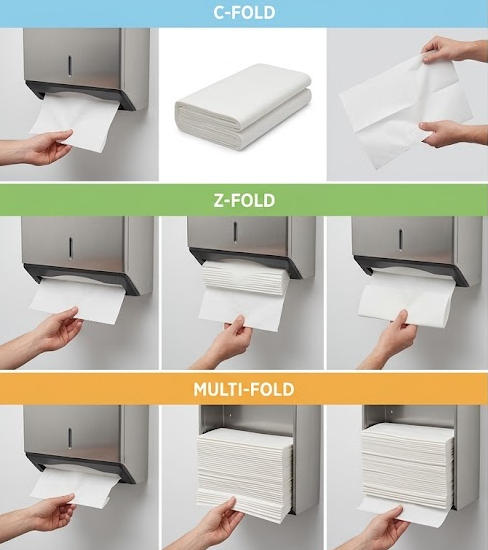
Folded hand paper towels are usually dispensed as individual sheets from a stack. Their folding structure helps separate sheets and makes it possible to take one towel at a time. Interfolded and multifold towels are often designed to present the next sheet as the previous one is removed, although actual performance depends on the dispenser and towel quality.
Roll hand paper towels are dispensed from a continuous roll. Users pull the required amount of paper, tear it off, or receive a predetermined length through an automatic dispenser. Some systems provide touch-free operation, reducing the need to touch dispenser controls.
The choice depends on the facility’s priorities. Folded towels offer a familiar, straightforward dispensing experience, while roll towels can support faster servicing and automated dispensing in busy environments.
2. Hygiene and Sanitation
Both folded and roll hand paper towels can support good hand hygiene when they are manufactured to appropriate quality standards, stored properly, and dispensed through well-maintained equipment.
Folded towels can help maintain hygiene because unused sheets remain inside the dispenser until needed. Interfolded designs may also reduce the need for users to reach into the towel supply. However, poorly designed dispensers, overfilled stacks, and improper refilling can cause dispensing problems or contamination.
Roll hand paper towels can also provide hygienic dispensing, especially when used with touch-free systems. Automatic dispensing can reduce contact with the dispenser, while enclosed housings help protect the unused paper from splashes and environmental contaminants.
The most important consideration is not simply whether the towels are folded or rolled. Dispenser design, cleaning routines, refill procedures, towel storage, and user behavior all contribute to restroom hygiene.
3. Paper Consumption
Paper consumption affects both operating costs and environmental performance. Folded and roll hand paper towels can have different consumption patterns depending on the product design and how people use them.
Folded towels are supplied in individual sheets, making the amount taken during each use relatively easy to observe. Properly designed dispensers can encourage one-at-a-time dispensing, potentially reducing waste. However, users may take several sheets if each towel is too small, too thin, or insufficiently absorbent.
Roll towels provide a continuous supply, so consumption is influenced by the length dispensed each time. Manual systems may allow users to pull more paper than necessary, while controlled-feed or automatic dispensers can limit the amount released per use.
Facilities should evaluate actual paper consumption rather than assuming one format always uses less paper. Absorbency, sheet size, ply, dispenser settings, and user habits can all affect how much paper is needed to dry hands effectively.
4. Cost and Budget
The total cost of hand paper towels includes more than the purchase price of the paper itself. Businesses should consider dispenser expenses, refill frequency, labor, storage, waste, and the amount of paper used per hand-drying session.
Folded hand paper towels may be economical for small and medium-sized facilities, particularly where straightforward dispensers are already installed. Their costs can be managed by selecting suitable sheet sizes, pack quantities, and paper grades. However, frequent refilling in busy restrooms may increase maintenance labor.
Roll hand paper towels may offer operational advantages in high-traffic facilities because larger rolls can reduce refill frequency. Automatic dispensing systems may also help control usage. On the other hand, specialized dispensers can require a higher initial investment, and proprietary refill systems may limit purchasing flexibility.
For an accurate comparison, businesses should calculate the cost per hand-drying session or per 1000 uses rather than comparing the price of a single pack with that of a single roll.
5. Storage and Space Requirements
Storage efficiency is another important factor when choosing between folded and roll hand paper towels.
Folded towels are typically packaged in rectangular bundles. These packs can be stacked neatly on shelves and organized in storage rooms. However, a facility with high paper consumption may need to keep many bundles available and regularly transport them to restroom locations.
Roll hand paper towels are cylindrical and may require more specific storage arrangements to prevent rolls from becoming damaged or unclean. Their main advantage is that a large roll can provide a substantial amount of paper in a compact dispenser. This may reduce the number of refills and the volume of packaging handled during routine maintenance.
The most suitable option depends on the shape and capacity of the dispensers, available storage space, delivery frequency, and the number of restrooms being serviced.
6. Maintenance and Refilling
Maintenance requirements can affect the daily workload of cleaning and facility management teams.
Folded hand paper towel dispensers are generally refilled by opening the housing and inserting a new stack or bundle. The process is usually simple, although staff must ensure the towels are loaded in the correct orientation and are compatible with the dispenser. In high-traffic restrooms, staff may need to inspect supplies frequently to prevent empty dispensers.
Roll hand paper towel dispensers require staff to install a new roll correctly and, for some systems, thread the paper through a feed mechanism. Larger-capacity models can reduce refill frequency, but automatic dispensers may require occasional battery replacement, sensor checks, or mechanical maintenance.
The overall maintenance burden depends on the dispenser’s capacity, durability, ease of cleaning, and refill design. Businesses should evaluate the complete dispensing system instead of considering the paper product alone.
7. Applications
Folded and roll hand paper towels are both suitable for commercial and institutional settings, but their characteristics may make them more appropriate for different environments.
Folded hand paper towels are often a practical choice for small offices, clinics, schools, boutique hotels, and restrooms where compact dispensers and individual-sheet dispensing are preferred. They can also work well in locations where existing folded-towel dispensers are already installed.
Roll hand paper towels are frequently used in busy public restrooms, shopping centers, airports, factories, large restaurants, and other facilities with substantial daily traffic. Their capacity and compatibility with automatic dispensers can make them convenient for locations that need to reduce refill interruptions.
Neither option is universally better. The best solution depends on visitor numbers, hygiene requirements, available equipment, operating budgets, and maintenance routines.
8. Environmental Impact
The environmental impact of hand paper towels depends on the paper materials, manufacturing processes, packaging, transportation, and disposal methods. Both folded and roll towels can be made from virgin pulp, recycled fibers, or a combination of materials.
Folded towels may be available in recycled-paper options and can support controlled dispensing when paired with an appropriate dispenser. However, excessive sheet use and unnecessary packaging can increase material consumption.
Roll towels may reduce packaging per unit of usable paper in some product systems and can be efficient to transport and store. Dispensers that control sheet length may also help limit waste. Nevertheless, environmental performance depends on roll size, paper thickness, dispensing behavior, and the sustainability of the manufacturing process.
Businesses seeking to reduce their environmental footprint should compare recycled content, relevant environmental certifications, packaging, product durability, and actual consumption. Choosing a suitable dispenser and encouraging responsible use are also important steps.
How to Choose Between Folded and Roll Hand Paper Towels
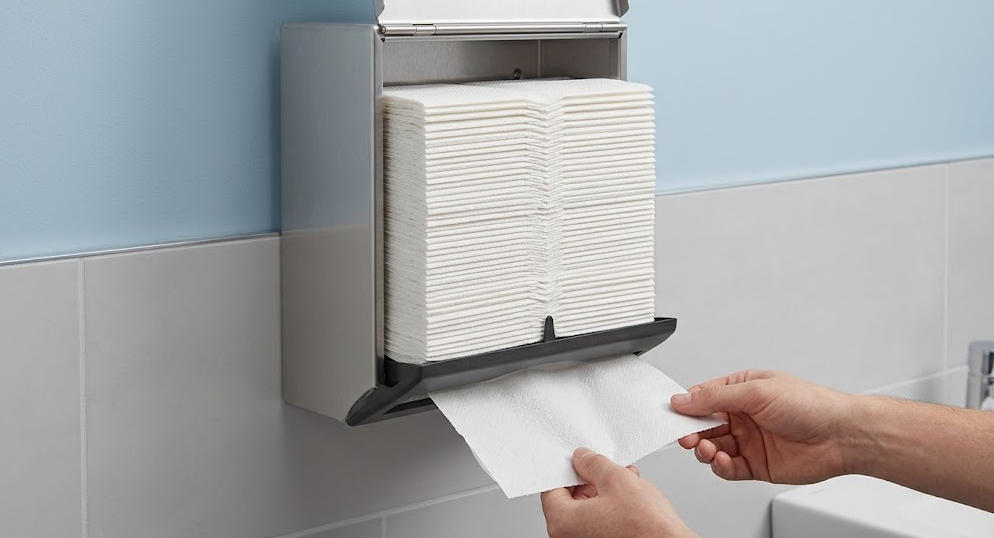
Selecting between folded and roll hand paper towels, starts with understanding the needs of the facility. Small businesses with moderate restroom traffic may prefer folded towels because they are straightforward to use and can fit compact dispensers. Facilities that serve large numbers of visitors may benefit from roll towels because high-capacity systems can reduce refill frequency.
Hygiene requirements should also influence the decision. Healthcare and food-service environments may need dispensers that protect unused towels and support frequent cleaning. Touch-free roll systems can be beneficial in certain settings, while well-designed folded-towel dispensers can also provide hygienic access.
Budget planning should include both upfront and ongoing expenses. A lower purchase price does not necessarily mean lower operating costs if a product requires more sheets per use or more frequent refilling. Testing different products under actual operating conditions can help businesses identify the best balance between absorbency, durability, user satisfaction, and cost.
Finally, dispenser compatibility must be confirmed before purchasing in bulk. Using the correct towel dimensions, fold style, roll size, and paper specifications can prevent jams, poor dispensing, and unnecessary waste.
Final Words
Folded and roll hand paper towels serve the same essential purpose, but they differ in dispensing methods, storage, maintenance, consumption patterns, and suitability for different facilities. Folded towels offer convenient individual-sheet dispensing and are often appropriate for smaller or moderately busy washrooms. Roll towels provide a continuous supply and can be particularly useful in high-traffic environments where refill efficiency is important.
The best choice depends on the facility’s actual needs rather than the product format alone. By evaluating paper quality, dispenser compatibility, hygiene, consumption, maintenance, and total operating costs, businesses can choose a hand paper towel solution that delivers reliable performance and supports long-term efficiency.

