Unconventional oil drilling operations have become increasingly important in meeting global energy demand. Unlike conventional drilling, unconventional oil extraction often involves complex geological formations, low-permeability reservoirs, horizontal drilling, and specialized well construction techniques. These operations require advanced drilling technologies, precise operational control, and highly skilled personnel to ensure efficiency and safety.
However, unconventional drilling presents significant challenges, including unpredictable formation pressures, wellbore instability, complex well trajectories, equipment failures, and well control risks. Traditional classroom instruction and on-the-job training may not provide sufficient opportunities for personnel to practice handling these situations before entering actual drilling environments.
Training simulators for unconventional oil drilling operations offer an effective solution by recreating realistic drilling conditions in a controlled virtual environment. Through interactive exercises, real-time operational feedback, and scenario-based training, personnel can develop technical skills, improve decision-making, and strengthen emergency response capabilities without exposing themselves or operational equipment to unnecessary risks.
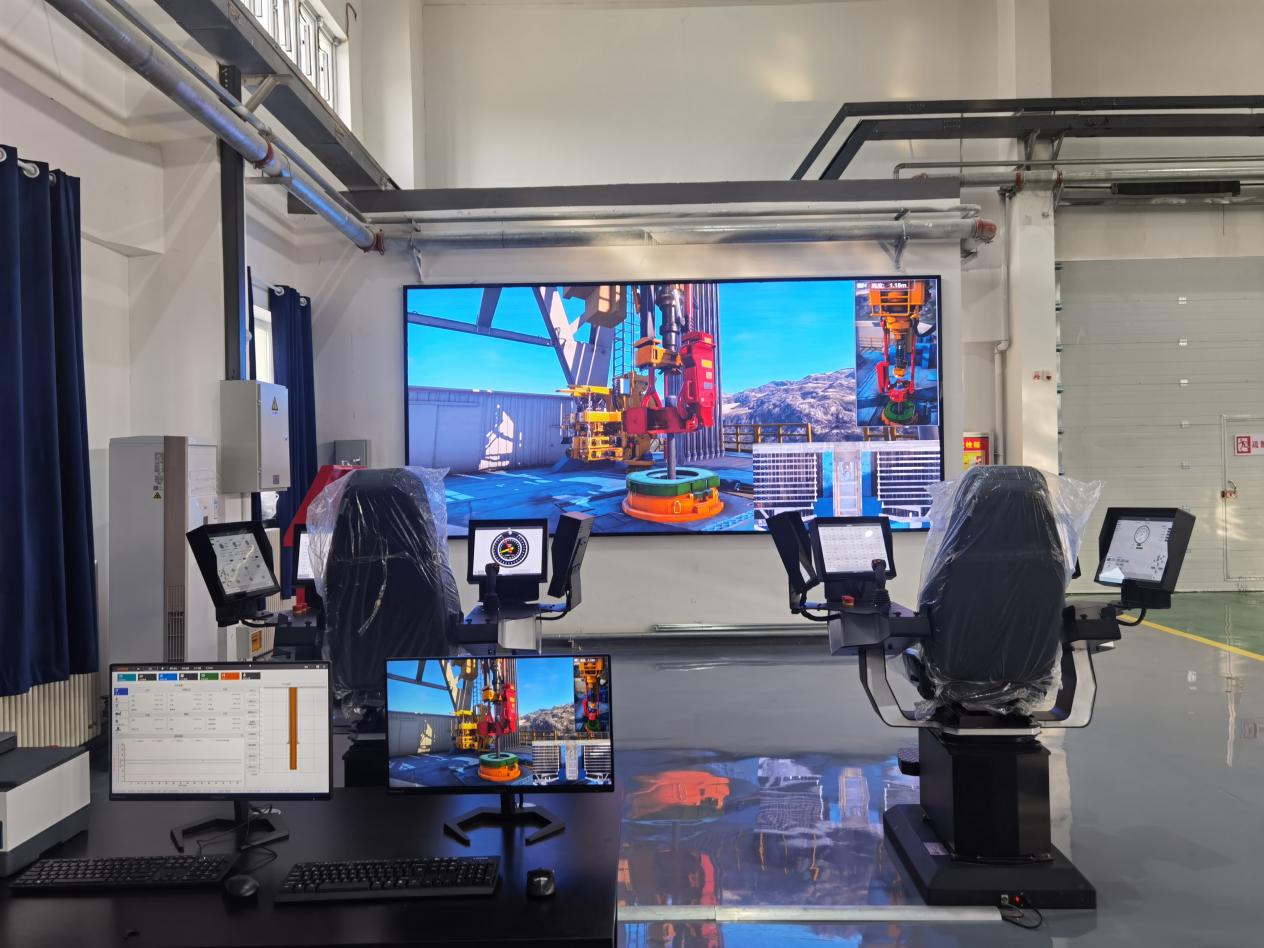
What are Training Simulators for Unconventional Oil Drilling Operations?
Training simulators for unconventional oil drilling operations are specialized systems designed to reproduce drilling equipment, operational procedures, and downhole conditions associated with unconventional reservoirs. These systems combine simulation software, physical control interfaces, mathematical models, and visualization technologies to create realistic training environments.
Depending on their design, drilling simulators can support horizontal drilling, directional drilling, managed pressure drilling, well control, and selected completion-related operations. Trainees can interact with simulated drilling equipment, adjust operating parameters, monitor well conditions, and observe how their decisions influence operational outcomes.
Unlike traditional theoretical instruction, simulator-based training provides opportunities for repeated practical exercises. Trainees can experience routine drilling activities as well as abnormal situations, such as unexpected pressure changes, circulation problems, or deviations from planned well trajectories.
This approach enables personnel to develop operational familiarity, recognize potential hazards, and improve their ability to respond appropriately before performing similar tasks in the field.
Key Unconventional Drilling Operations Supported by Training Simulators
Horizontal and Directional Drilling
Horizontal drilling is widely used in unconventional oil development, particularly in shale and other low-permeability formations. The process typically involves drilling a vertical or inclined section before steering the wellbore toward a horizontal trajectory within the target reservoir.
Training simulators allow operators to practice trajectory planning, directional control, drilling parameter adjustment, and wellbore placement. They can also reproduce unexpected trajectory deviations, helping trainees understand how to evaluate drilling data and apply corrective measures.
By practicing different scenarios, drilling personnel can improve their understanding of well geometry, formation characteristics, and the relationship between operational decisions and drilling performance.
Managed Pressure Drilling
Managed pressure drilling is used to control the pressure profile within the wellbore more precisely. It can be particularly valuable when drilling through formations with narrow pressure margins or challenging pressure conditions.
Simulators can reproduce changes in annular pressure, circulation rates, backpressure, and other relevant operating parameters. Trainees can practice interpreting pressure data, adjusting control settings, and responding to changing well conditions.
This training helps personnel understand the interaction between drilling fluids, formation pressure, and surface pressure-control equipment.
Well Control Operations
Well control is one of the most critical aspects of unconventional drilling. Unexpected formation-fluid influxes can lead to serious operational hazards if they are not detected and managed correctly.
Training simulators can recreate kick detection, shut-in procedures, pressure monitoring, and well-killing operations. With well control training simulators, trainees can practice recognizing early warning signs, communicating abnormal conditions, and following established well control procedures.
Repeated exercises also allow instructors to introduce different levels of difficulty, helping operators develop the judgment and procedural discipline needed for demanding situations.
Completion-Related Operations
Although hydraulic fracturing and many completion activities take place after drilling, they are closely connected to the overall development of unconventional oil wells.
Specialized simulation systems can support training in pressure management, pumping operations, equipment coordination, and completion procedures. Integrated training environments can also help personnel understand the relationship between well construction, completion activities, and long-term production performance.
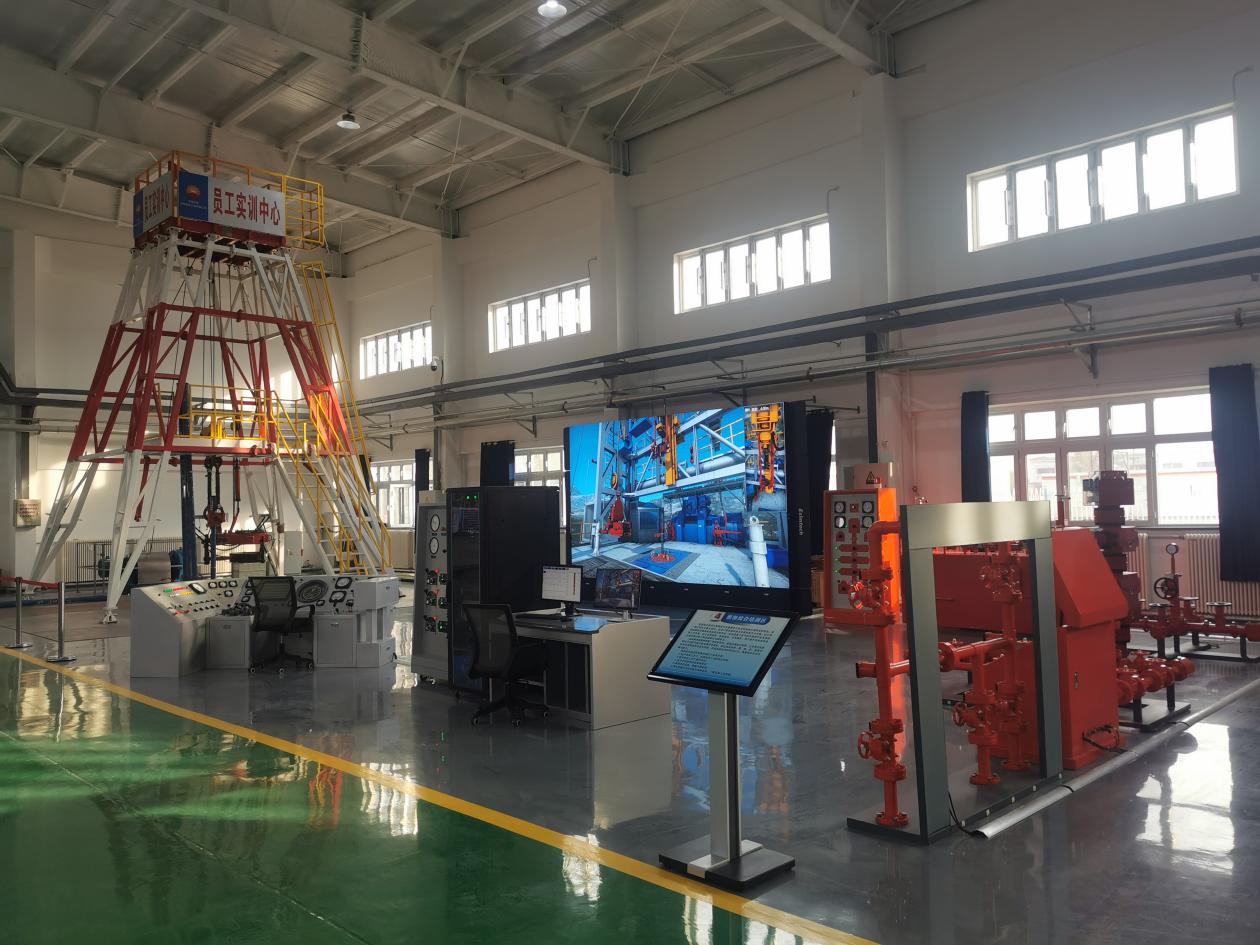
Main Components of Unconventional Drilling Training Simulators
A modern drilling training simulator typically integrates several hardware and software components to reproduce operational conditions and support practical learning.
Drilling Control Console
The drilling control console provides interfaces that resemble the controls used in actual drilling operations. Depending on the simulator, these may include drilling parameter controls, circulation system interfaces, pressure-control displays, and equipment monitoring instruments.
Familiarity with these interfaces helps trainees understand operating procedures and develop confidence when transitioning to real equipment.
Drilling Simulation Software
Simulation software forms the foundation of the training system. It models drilling processes and reproduces the responses of equipment and downhole systems to operator inputs.
For unconventional drilling, the software may include models of directional drilling, drilling fluid circulation, pressure behavior, and well control. The accuracy and validation of these models directly influence the relevance of the training experience.
Geological and Wellbore Models
Unconventional reservoirs often contain complex geological structures and formations with different mechanical and pressure characteristics.
Geological and wellbore models help reproduce formation conditions, well trajectories, and potential drilling difficulties. These models allow trainees to practice adapting operational decisions to different reservoir environments.
Visualization and Monitoring Systems
Visualization systems present drilling parameters, equipment status, wellbore information, and other operational data through graphical interfaces or three-dimensional displays.
These tools help trainees interpret complex information, identify abnormal conditions, and understand how different drilling parameters interact.
Instructor and Assessment Systems
Instructor stations allow trainers to configure scenarios, introduce equipment faults, modify simulated operating conditions, and monitor trainee actions.
Assessment functions can record operational parameters, decision sequences, procedural errors, and response times. Instructors can use this information to identify weaknesses and develop targeted training plans.
Benefits of Training Simulators for Unconventional Oil Drilling Operations
Improving Drilling Safety
Safety is a major priority in unconventional oil drilling because of the potential for unexpected pressure changes, wellbore instability, equipment malfunctions, and loss of well control.
Training simulators allow personnel to practice responding to these hazards in a controlled environment. They can learn to identify warning signs, follow emergency procedures, and coordinate with other team members without exposing themselves to actual operational dangers.
Repeated practice helps reinforce safety awareness and encourages consistent adherence to established procedures.
Enhancing Technical Competency
Unconventional drilling requires operators to understand complex relationships between drilling parameters, equipment performance, and downhole conditions.
Simulation-based training enables trainees to adjust relevant parameters, interpret operational data, and evaluate the consequences of different decisions. Directional drilling exercises, for example, can improve understanding of trajectory control, while well control scenarios strengthen pressure interpretation and emergency response skills.
This practical experience complements theoretical knowledge and supports the development of operational competency.
Reducing Training Costs
Training personnel on active drilling rigs can involve equipment use, instructor time, logistical expenses, and potential operational interruptions.
Simulators provide a reusable training environment in which exercises can be repeated without consuming drilling materials or disrupting field operations. They also allow multiple trainees to practice the same scenario under consistent conditions.
Although purchasing and maintaining simulation equipment requires an initial investment, long-term use can improve training efficiency and reduce reliance on certain live-equipment exercises.
Strengthening Team Coordination
Unconventional drilling involves collaboration among drillers, drilling supervisors, engineers, well control specialists, and other personnel.
Simulation exercises can reproduce team-based operational situations in which trainees must share information, coordinate actions, and make decisions under time pressure. These exercises help clarify responsibilities and improve communication during routine operations and emergencies.
Supporting Continuous Training and Evaluation
Drilling technologies, equipment, and operating procedures continue to evolve. Training simulators make it easier to update exercises and provide ongoing professional development.
Performance records can help instructors evaluate progress, identify recurring errors, and determine whether additional practice is needed. Training programs can therefore be adapted to individual experience levels and specific job responsibilities.
Challenges in Unconventional Drilling Simulation and Their Solutions
Reproducing Complex Geological Conditions
Unconventional reservoirs can exhibit significant variations in formation pressure, rock strength, and geological structure. Simplified models may fail to represent the conditions that influence drilling decisions.
To address this challenge, training providers should select simulators with configurable geological models and scenarios that reflect the formations and operational conditions relevant to their trainees.
Ensuring Simulation Accuracy
A simulator may look realistic while failing to reproduce important physical relationships accurately. Inaccurate pressure responses, equipment behavior, or drilling parameter interactions can lead to misleading training outcomes.
Simulation models should therefore be validated against appropriate engineering calculations, equipment specifications, operational data, and recognized training requirements. Regular updates are also important when equipment or procedures change.
Providing Sufficient Practical Experience
Some training programs focus heavily on theoretical knowledge or demonstrations, leaving trainees with limited opportunities to operate simulated equipment themselves.
A more effective approach is to incorporate structured hands-on exercises. Trainees should progress from basic equipment familiarization to complex drilling scenarios, with opportunities to repeat tasks and learn from mistakes.
Evaluating Trainee Performance Objectively
Without clear assessment criteria, instructors may find it difficult to determine whether trainees are ready for operational responsibilities.
Training programs should establish measurable objectives related to procedural compliance, parameter interpretation, decision-making, communication, and emergency response. Recorded simulation data and instructor feedback can then be used to evaluate performance consistently.
Keeping Training Content Current
Drilling technology and operating practices evolve over time. Outdated simulation scenarios may not reflect current equipment configurations, control systems, or organizational procedures.
Training providers should review scenarios regularly, incorporate relevant technological developments, and ensure that instructors understand the limitations of the simulation models being used.
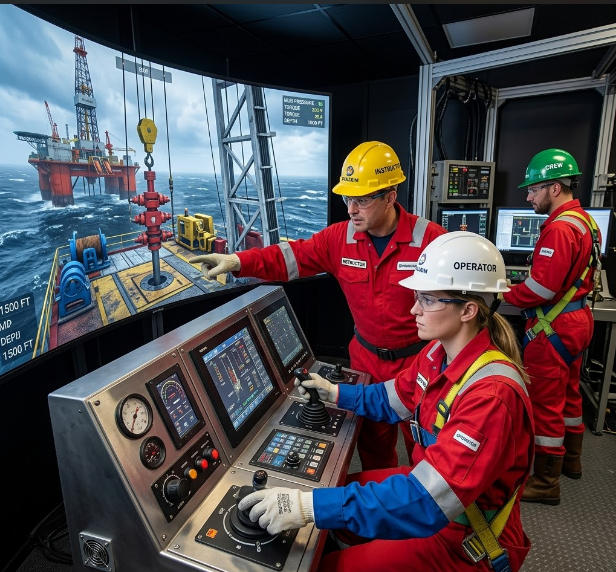
How to Choose the Right Training Simulator for Unconventional Oil Drilling
Selecting a suitable drilling simulator begins with identifying the specific operations and competencies that the training program needs to address.
First, organizations should evaluate the required training scope. A simulator intended for horizontal drilling should support directional control and trajectory-related exercises, while a well control simulator should reproduce relevant pressure behavior, influx detection, and response procedures.
Second, the realism of the simulation models should be examined. The system should reproduce the operational relationships that matter for the intended training objectives rather than relying exclusively on visual realism.
Third, flexibility is important. A suitable simulator should accommodate different trainee experience levels, adjustable scenario difficulty, and changes in equipment or operating procedures.
Fourth, organizations should assess the quality of instructor tools and evaluation functions. The ability to introduce abnormal conditions, monitor trainee responses, record performance, and review mistakes can substantially improve training effectiveness.
Finally, technical support, software updates, maintenance requirements, and compatibility with existing training facilities should be considered. The overall cost of ownership is important, but it should be evaluated alongside the system’s ability to deliver relevant and measurable training outcomes.
The most appropriate simulator is not necessarily the most technologically advanced system. It is the one that best matches the organization’s operational requirements, workforce responsibilities, and safety objectives.
The Role of Advanced Technologies in Drilling Simulation
Virtual Reality Technology
Virtual reality can create immersive drilling environments that allow trainees to explore rig layouts, become familiar with equipment locations, and practice selected procedures.
When combined with realistic control interfaces and validated simulation models, VR training simulators can improve spatial awareness and provide additional opportunities for equipment familiarization and scenario-based learning.
Digital Twin Technology
Digital twin technology uses digital representations of physical equipment or processes to support analysis and simulation. In drilling training, digital twins may incorporate engineering information and selected operational data to improve the representation of drilling systems.
Their effectiveness depends on data quality, model validation, and how closely the digital representation matches the training objectives.
Artificial Intelligence
Artificial intelligence may support adaptive training by analyzing trainee performance and identifying recurring errors. Based on these findings, a training platform could recommend additional exercises or adjust scenario difficulty.
AI-assisted analysis may also help instructors identify patterns across multiple training sessions, although expert supervision remains important when interpreting results and assessing operational readiness.
Data Analytics
Training data can provide insight into decision-making, procedural compliance, response times, and recurring skill gaps.
By reviewing these records, instructors can improve lesson plans, compare performance across sessions, and develop more targeted competency development programs.
These technologies can enhance drilling simulation, but they should complement sound engineering models, qualified instruction, and established operational procedures.
Summary
Training simulators for unconventional oil drilling operations provide an effective way to prepare drilling personnel for the technical complexity and safety requirements of modern oilfield development. By recreating horizontal drilling, directional drilling, managed pressure drilling, well control, and other specialized scenarios, simulators allow trainees to gain practical experience in a controlled environment.
Their principal advantages include improved safety awareness, stronger technical competency, reduced reliance on live-equipment training, better team coordination, and more systematic performance evaluation. Achieving these benefits requires accurate simulation models, relevant training scenarios, qualified instructors, and structured assessment methods.
With continued advances in virtual reality, digital twins, artificial intelligence, and data analytics, drilling simulators are expected to become increasingly flexible and personalized. For oil and gas operators, drilling contractors, and technical training institutions, well-designed simulation programs can play an important role in workforce development and the safe, efficient execution of unconventional drilling operations.

