Choosing the suitable zipper size is an essential part of garment design, bag manufacturing, luggage production, and accessory development. The right zipper size affects a product’s functionality, durability, appearance, and overall user experience. A zipper that is too small may not provide sufficient strength for demanding applications, while an oversized zipper can add unnecessary weight, increase production costs, and affect the finished product’s appearance.
For clothing brands, designers, and manufacturers, understanding how to select the appropriate zipper size helps ensure compatibility with different materials and product requirements. By considering the intended application, zipper type, fabric thickness, strength requirements, and design preferences, buyers can make informed decisions and improve the quality of their finished products.
Understand Zipper Size Specifications
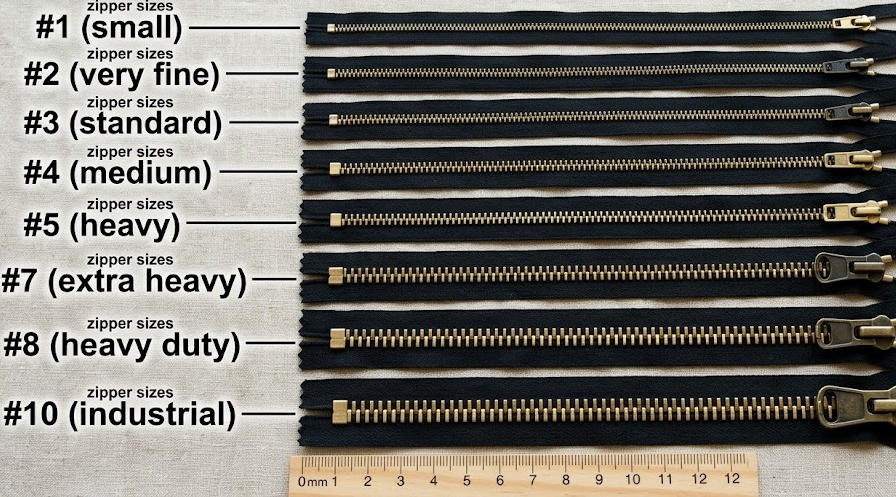
Before choosing a zipper, it is important to understand how zipper sizes are identified. Most conventional zipper sizes are indicated by numbers such as #3, #5, #8, and #10. These numbers generally correspond to the approximate width of the interlocking zipper elements when the zipper is closed, measured in millimeters.
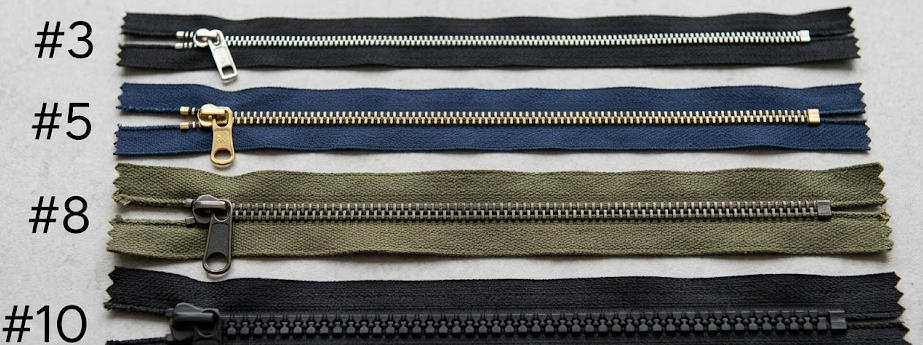
For example, a #3 zipper typically has relatively small elements and is commonly used for lightweight clothing and accessories. A #5 zipper is a versatile option for jackets, jeans, backpacks, and handbags. Larger sizes, such as #8 and #10, are often considered for luggage, outdoor equipment, and heavy-duty bags.
However, these numbers are nominal size designations rather than universal guarantees of exact dimensions. Actual specifications may vary by manufacturer and zipper construction, so buyers should confirm the technical details before placing an order.
It is also important to distinguish between zipper size and zipper length. Zipper size refers to the dimensions of the elements, whereas zipper length refers to the length of the functional closure. Both measurements must match the product’s design requirements.
Choose the Zipper Size According to the Application
The intended application is one of the most important factors when selecting a suitable zipper size. Different products have different requirements for flexibility, durability, weight, and appearance.
For lightweight garments such as dresses, skirts, blouses, and children’s clothing, smaller zippers are generally preferred. A #3 nylon coil zipper or a small plastic zipper can provide a discreet appearance without adding excessive weight. These zippers are especially useful when the closure needs to blend into the garment’s design.
For everyday clothing, including jackets, hoodies, jeans, and casual trousers, #5 zippers are widely used because they offer a practical balance between strength, flexibility, and appearance. Depending on the garment’s style, manufacturers can choose metal, nylon coil, or plastic molded zippers.
For backpacks, handbags, sports bags, and outdoor accessories, the appropriate zipper size depends on the expected load and frequency of use. A #5 zipper may be suitable for many everyday bags, while #8 zippers may be considered for larger bags or products requiring more substantial elements.
Heavy-duty luggage, equipment bags, and selected industrial products may require #8 or #10 zippers. Nevertheless, the largest size is not always the best choice. The complete zipper assembly, including the elements, slider, tape, stitching, and end stops, must be suitable for the product’s intended conditions.
Consider the Different Types of Zippers
Zipper construction has a significant influence on flexibility, strength, weight, and appearance. Therefore, buyers should consider both the zipper size and the material used to manufacture the zipper elements.
Metal Zippers
Metal zippers are commonly made with brass, aluminum, or other metal alloys. They are popular in jeans, leather jackets, boots, handbags, and fashion accessories because of their distinctive appearance and substantial feel.
Smaller metal zippers can provide a refined decorative detail, while larger sizes may complement heavy denim, leather products, and rugged bags. However, metal zippers can be heavier and less flexible than some alternative constructions. Their suitability should be evaluated according to the material and design of the finished product.
Nylon Coil Zippers
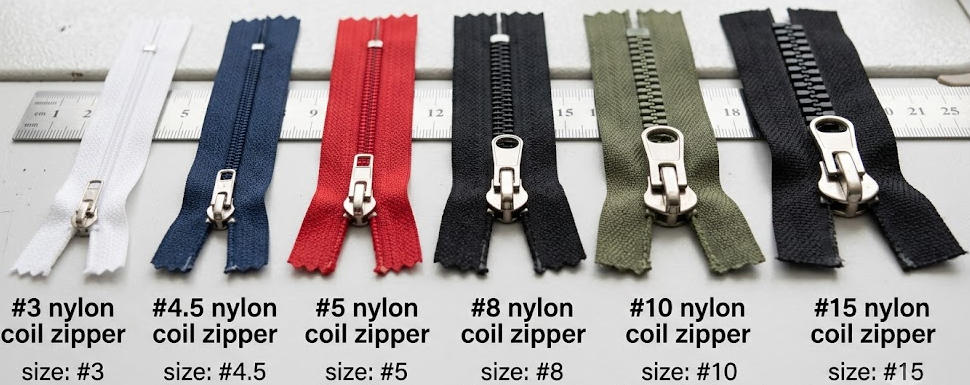
Nylon coil zippers feature flexible coil-shaped elements and are widely used in clothing, sportswear, backpacks, luggage, and outdoor products. Their flexibility makes them suitable for curved openings and applications where smooth operation is important.
Smaller nylon coil zippers are often used for lightweight garments and pockets, while medium and larger sizes can accommodate jackets, bags, and other products with greater performance requirements. The correct selection depends on the zipper’s specifications and the expected level of use.
Plastic Molded Zippers
Plastic molded zippers feature individual molded elements and are frequently used in jackets, outdoor clothing, backpacks, and accessories. They are available in various sizes and colors, making them suitable for products that require a distinctive appearance.
Plastic molded zippers can be an effective option when designers want visible zipper elements or a coordinated color scheme. Buyers should evaluate the material quality, element design, slider compatibility, and environmental requirements before choosing a particular size.
Match Zipper Size with Fabric Thickness
Fabric thickness is another essential consideration when choosing the suitable zipper size. A zipper that is too large for a lightweight fabric may create an unbalanced appearance, increase stiffness, or cause puckering during sewing. On the other hand, a zipper that is too small for a heavy material may be difficult to operate or fail to meet the product’s durability requirements.
Lightweight fabrics generally work well with smaller, flexible zippers that integrate neatly into the garment. Medium-weight fabrics provide more flexibility in zipper selection, allowing manufacturers to choose according to the product’s appearance and functional needs.
For thick denim, leather, canvas, and multilayer materials, larger zipper elements may be appropriate. However, fabric thickness alone should not determine the final choice. Seam construction, opening length, product weight, and the forces placed on the zipper must also be considered.
Before mass production, manufacturers should test the zipper on the actual fabric or material assembly. This helps identify sewing difficulties, excessive stiffness, alignment problems, and potential compatibility issues.
Evaluate Strength and Durability Requirements
A zipper must withstand the forces generated during normal product use. Garments that are opened and closed frequently require reliable slider movement and secure element engagement. Backpacks and luggage may experience additional tension when heavily packed, making the strength of the complete closure especially important.
Although larger zipper elements may be suitable for more demanding applications, zipper size alone does not determine durability. The quality of the elements, tape, slider, stops, stitching, and installation all influence overall performance.
For products intended for frequent use or demanding environments, manufacturers should consider resistance to repeated opening and closing, element separation, slider wear, and tape damage. Outdoor and travel products may also require consideration of moisture, dirt, temperature changes, and other operating conditions.
Sample testing is an effective way to confirm whether a zipper meets the required performance level. Testing the zipper under realistic conditions before bulk production can help reduce product failures, customer complaints, and unnecessary replacement costs.
Select the Appropriate Zipper Length and Opening Style
Choosing the correct zipper size is only part of the selection process. Zipper length and opening configuration must also match the product’s design.
Closed-end zippers are commonly used in trousers, pockets, dresses, and small accessories. Open-end zippers, which separate completely at the bottom, are widely used in jackets and coats. Two-way zippers may be suitable for long jackets, travel products, and other applications that benefit from access or movement at both ends.
The zipper length should correspond to the intended opening in the finished product. A zipper that is too short may restrict access, while an excessively long zipper can interfere with seams, pockets, or other structural features.
Manufacturers should confirm the required finished length, opening style, slider configuration, and end-stop requirements before ordering. Providing accurate specifications to the zipper supplier helps avoid production delays and installation problems.
Balance Appearance and Manufacturing Costs
The suitable zipper size should satisfy functional requirements while supporting the product’s visual design and target budget.
Smaller zippers are often preferred for minimalist garments, lightweight accessories, and products where the closure should remain visually subtle. Larger zippers may create a bold, rugged, or technical appearance, making them suitable for certain jackets, backpacks, and travel bags.
Cost is another important consideration. Zipper material, size, color, slider design, customization, and order quantity can all affect the final price. Selecting a zipper that is larger or more specialized than necessary may increase costs without providing meaningful benefits.
Manufacturers should also consider production efficiency. Standardizing zipper specifications across compatible product lines can simplify purchasing, inventory management, and quality control. For customized designs, confirming samples and technical specifications before placing bulk orders can help prevent costly mistakes.
Avoid Common Mistakes When Choosing Zipper Sizes
One common mistake is choosing a zipper based only on its size number. Two zippers with the same nominal size may differ in material, element shape, flexibility, and performance. Buyers should therefore review the manufacturer’s specifications rather than assume that every zipper of the same size is interchangeable.
Another mistake is focusing entirely on appearance without considering the product’s practical requirements. A large metal zipper may complement a leather jacket, but it may be unsuitable for a delicate garment that requires a lightweight, flexible closure.
Confusing zipper size with zipper length can also lead to ordering errors. Both measurements should be clearly defined, especially for custom-made products. In addition, buyers should verify slider compatibility, tape quality, color consistency, and the required opening style.
Finally, choosing the largest available zipper does not automatically guarantee better performance. A properly designed and manufactured zipper that matches the product’s requirements is generally a better choice than an oversized zipper selected without technical evaluation.
Work with a Reliable Zipper Manufacturer
Working with an experienced zipper manufacturer can make the selection process more efficient, particularly for clothing brands, bag manufacturers, and businesses requiring customized zipper products.
A reliable supplier should provide clear specifications for zipper sizes, materials, lengths, sliders, and available finishes. The ability to offer metal zippers, plastic molded zippers, nylon coil zippers, and continuous zipper chains can also help buyers find suitable solutions for different product lines.
For customized orders, manufacturers should communicate their requirements clearly and request samples when necessary. Important details include zipper size, element material, tape color, slider type, finished length, opening style, and packaging specifications.
A supplier with consistent quality control and flexible customization options can help businesses maintain product consistency, manage procurement costs, and support efficient production schedules.
Final Thoughts
Choosing the suitable zipper size requires careful consideration of the product’s application, zipper construction, fabric thickness, durability requirements, length, appearance, and budget. Smaller zippers, such as #3, are commonly used for lightweight garments and accessories, while #5 offers a versatile solution for many everyday products. Larger sizes, including #8 and #10, may be appropriate for luggage, outdoor equipment, and selected heavy-duty applications.
However, no single zipper size is suitable for every product. The best choice is one that balances functionality, strength, flexibility, appearance, and manufacturing requirements.
By understanding zipper specifications, evaluating materials, testing samples, and working with a reliable zipper manufacturer, businesses can select the right zipper for their products and improve overall quality, durability, and customer satisfaction.

