Zippers are essential fastening components used in a wide range of products, from clothing and fashion accessories to outdoor equipment and industrial applications. Although standard and heavy-duty zippers share the same basic function of connecting and separating materials, they are designed with different performance requirements in mind. The main differences between atandard and heavy-duty zippers can be found in their construction, strength, durability, materials, and application environments.
Selecting the right zipper type is important because the zipper often affects the overall quality, reliability, and service life of a product. Standard zippers are suitable for everyday applications that require flexibility and convenience, while heavy-duty zippers are developed for products that need higher strength and resistance to demanding conditions.
Understanding Standard Zippers
Standard zippers are general-purpose fastening solutions commonly used in consumer products. They are designed to provide smooth operation, lightweight performance, and cost efficiency while meeting the needs of regular daily use.
These zippers are typically manufactured with nylon coils, plastic teeth, or lightweight metal teeth. Their components are designed to balance flexibility and durability, making them suitable for products where the zipper does not experience extreme stress or heavy loads.
Standard zippers are widely used in clothing, handbags, backpacks, cushions, home textiles, and other everyday products. For example, a jacket zipper mainly needs to provide easy opening and closing, comfortable operation, and an attractive appearance. In such cases, a standard zipper can deliver reliable performance without adding unnecessary weight or cost.
Understanding Heavy-duty Zippers
Heavy-duty zippers are specially designed for applications that require enhanced strength and long-term durability. They are built to withstand greater pulling forces, frequent operation, and challenging environmental conditions.
Compared with standard zippers, heavy-duty zippers usually feature thicker zipper tapes, stronger sliders, larger teeth or coils, and reinforced stitching. These structural improvements allow them to maintain performance when used in demanding situations.
Heavy-duty zippers are commonly found in outdoor equipment, workwear, luggage, military products, protective covers, tents, and industrial bags. These applications often involve heavier materials, repeated use, and exposure to harsh environments, making stronger zipper construction necessary.
Differences in Construction and Design
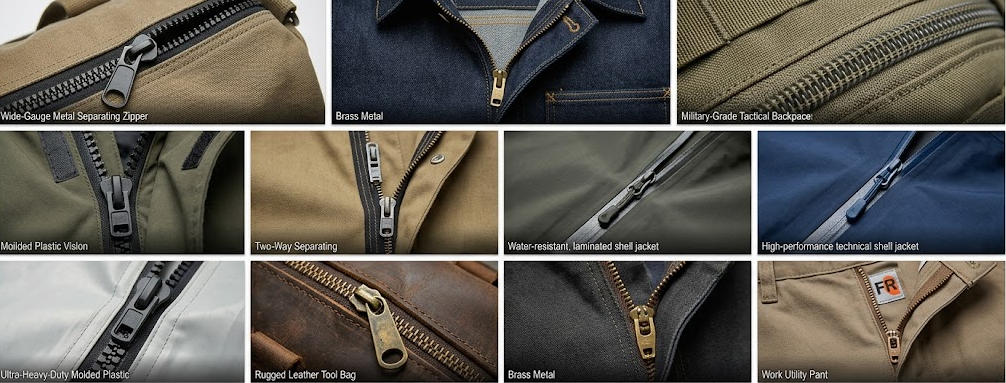
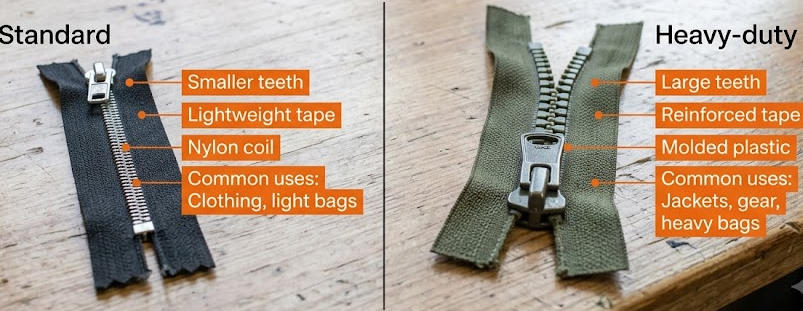
The construction design is one of the most important differences between standard and heavy-duty zippers. Standard zippers are designed with lightweight components that focus on flexibility, smooth movement, and ease of use. Their teeth, coils, and sliders are generally smaller, making them ideal for products where comfort and appearance are important.
Heavy-duty zippers use reinforced designs to improve strength and reliability. The zipper teeth are often larger, the zipper tape is thicker, and the slider is built with stronger materials. These features help prevent common problems such as tooth separation, slider damage, and zipper failure under high stress.
The difference in design allows each zipper type to perform effectively in its intended environment. A standard zipper works well for normal consumer products, while a heavy-duty zipper provides additional protection for products exposed to stronger mechanical forces.
Differences in Strength and Durability
Strength and durability are major factors that separate standard zippers from heavy-duty zippers. Standard zippers are designed for normal usage conditions. They can handle repeated opening and closing cycles but are not intended for heavy loads or extreme environments.
Heavy-duty zippers are manufactured to provide higher resistance against tension, abrasion, and repeated stress. They are often selected for products that need to carry heavy materials or operate under difficult conditions.
For example, a lightweight backpack used for school or casual travel may perform well with a standard zipper. However, a large hiking backpack carrying heavy equipment requires a heavy-duty zipper because it must withstand greater pulling forces and more frequent use.
Differences in Materials
The materials used in zipper production directly influence performance. Standard zippers often use lightweight materials such as fine nylon coils, small plastic teeth, or thin metal components. These materials provide flexibility and help reduce product weight.
Heavy-duty zippers use stronger versions of these materials. Heavy-duty nylon zippers usually have thicker coils and reinforced fabric tapes, while heavy-duty plastic zippers use larger molded teeth for increased strength. Heavy-duty metal zippers are produced with thicker metal teeth and stronger sliders to improve resistance against impact and wear.
Material selection depends on the final application. Products that prioritize comfort and appearance may use standard zipper materials, while products requiring maximum reliability often choose reinforced heavy-duty materials.
Differences in Application Areas
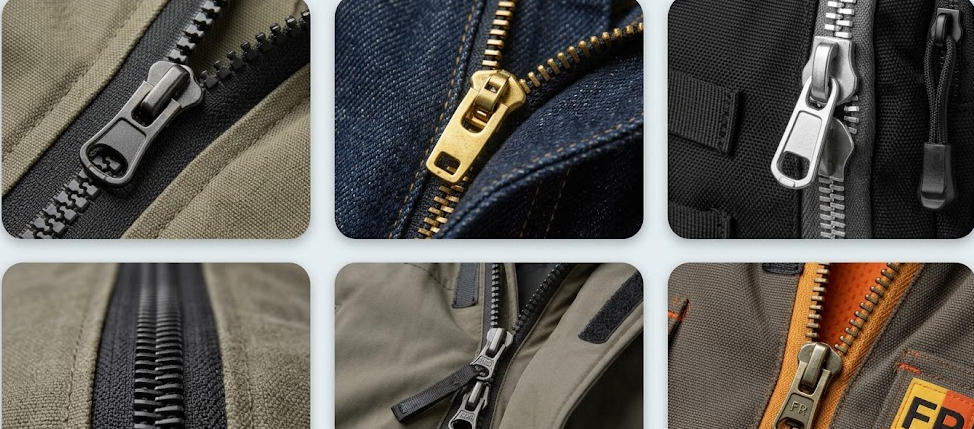
Standard and heavy-duty zippers serve different markets because they are designed for different performance levels. Standard zippers are widely used in fashion and consumer goods where lightweight construction and affordability are important.
Clothing such as shirts, jackets, dresses, and casual bags commonly use standard zippers because these products experience moderate stress during normal use. The flexibility and smooth operation of standard zippers make them suitable for these applications.
Heavy-duty zippers are preferred for products that require stronger performance. Outdoor jackets, camping equipment, luggage, work uniforms, tool bags, and industrial covers often use heavy-duty zippers because these products are exposed to greater loads and more challenging conditions.
Differences in Environmental Resistance
Environmental conditions can also determine whether a standard or heavy-duty zipper is the better choice. Standard zippers generally perform well in normal indoor and outdoor environments but may experience reduced performance when exposed to extreme conditions for long periods.
Heavy-duty zippers are designed to provide better resistance against environmental challenges. They can be manufactured with stronger materials and protective treatments to improve performance in conditions involving moisture, dust, abrasion, and temperature changes.
For outdoor and industrial products, heavy-duty zippers help maintain reliable operation even when the product is exposed to demanding surroundings.
Differences in Cost and Long-term Value
Cost is another important difference between standard and heavy-duty zippers. Standard zippers are usually more economical because they use fewer reinforced materials and simpler construction methods. This makes them a practical choice for large-scale production of everyday products.
Heavy-duty zippers generally have a higher purchase cost due to their stronger materials and more complex manufacturing processes. However, the additional investment can provide better long-term value because the zipper offers improved durability and reduces the possibility of product failure.
For products with high usage frequency or demanding working conditions, choosing a heavy-duty zipper can help reduce replacement costs and improve customer satisfaction.
How to Choose Between Standard and Heavy-duty Zippers
Choosing between standard and heavy-duty zippers depends on the requirements of the final product. Standard zippers are suitable when the product needs a lightweight, flexible, and affordable fastening solution. They are a good option for everyday clothing, accessories, and household products.
Heavy-duty zippers are more suitable when strength, reliability, and long service life are priorities. Zipper manufacturers should consider factors such as product weight, usage frequency, environmental exposure, and expected lifespan before selecting a zipper type.
The correct zipper choice ensures that the fastening system matches the product’s performance requirements and helps improve overall product quality.
Summary
Standard and heavy-duty zippers are designed for different applications and performance expectations. Standard zippers provide a lightweight and cost-effective solution for everyday products, while heavy-duty zippers deliver enhanced strength, durability, and resistance for more demanding environments.
Understanding the differences between these two zipper types allows manufacturers and designers to make better decisions when developing products. Whether used in apparel, luggage, outdoor equipment, or industrial applications, selecting the right zipper helps ensure reliable performance, longer service life, and greater user satisfaction.

