Nylon zippers have become one of the most widely used fastening solutions in the textile, luggage, footwear, outdoor equipment, and industrial product industries. Their lightweight structure, smooth operation, corrosion resistance, and flexible performance make them suitable for a wide range of applications. With increasing global demand for apparel and consumer products, nylon zipper manufacturers must produce products in large quantities while maintaining consistent quality, precise dimensions, and competitive production costs.
High-volume production of nylon zippers is a complex manufacturing process that integrates material preparation, automated machinery, precision assembly, quality inspection, and advanced production management. Large-scale zipper factories rely on highly efficient production lines to manufacture millions of zipper units while ensuring durability, appearance, and reliable performance.
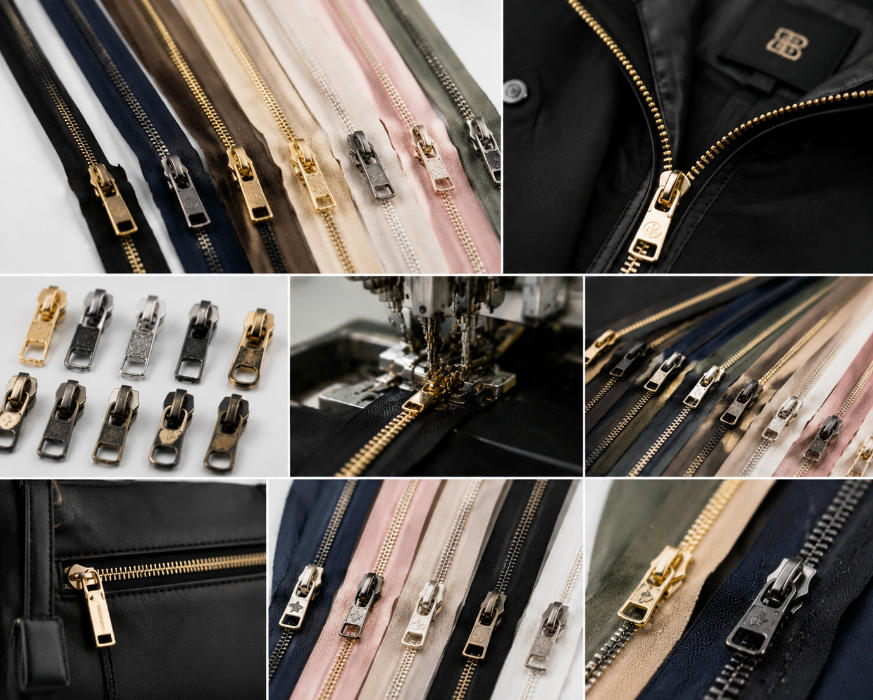
Material Preparation for Large-Scale Nylon Zipper Production
The foundation of high-quality nylon zippers begins with the selection and preparation of raw materials. Nylon resin is processed into strong and flexible filaments that form the zipper coil. During production, the nylon material must have excellent strength, elasticity, abrasion resistance, and thermal stability to withstand repeated use.
The nylon filament manufacturing process requires precise control of extrusion temperature, stretching ratio, and cooling conditions. These factors determine the thickness, flexibility, and strength of the final coil. In high-volume production environments, automated extrusion systems help maintain stable material characteristics across long production runs.
The zipper tape is another essential component. Usually made from polyester or nylon fibers, the tape provides support for the zipper coil and connects the zipper to the final product. High-speed weaving equipment produces zipper tapes with consistent width, density, and strength. Stable tape quality is especially important because any variation can affect zipper assembly efficiency and finished product reliability.
Continuous Nylon Coil Formation Process
The nylon coil is the defining feature of a nylon zipper. Unlike metal zippers or molded plastic zippers, nylon zippers use a spiral-shaped coil structure that allows smooth movement and flexibility. Producing these coils at high volume requires advanced forming equipment capable of continuous operation.
During manufacturing, nylon filaments are heated and shaped into spiral coils with carefully controlled dimensions. The forming machines regulate factors such as coil diameter, spacing, and alignment to ensure that the finished zipper operates smoothly with the slider.
In large-scale factories, automated coil-forming systems significantly increase production speed while reducing variations between batches. Precision control is necessary because even small differences in coil size or spacing can result in zipper jams, uneven movement, or reduced durability.on speed while reducing variations between batches.
Precision control is necessary because even small differences in coil size or spacing can result in zipper jams, uneven movement, or reduced durability.
Automated Sewing and Assembly of Nylon Zippers
After the nylon coil is produced, it must be securely attached to the zipper tape. High-speed sewing machines are used to stitch the coil onto the tape while maintaining accurate positioning and consistent stitch patterns.
Automation plays an important role in this stage because millions of zipper chains may need to be processed within a short production period. Modern sewing equipment can maintain stable stitching speed and tension, ensuring that the coil remains firmly attached during repeated use.
Following coil attachment, zipper assembly machines install sliders, top stops, bottom stops, and other components. Automated assembly systems improve efficiency by reducing manual operations and ensuring consistent placement of each component. These systems allow manufacturers to produce large quantities of finished zippers with minimal variation.
Dyeing and Finishing Processes in Mass Production
Color customization is an important requirement in the zipper industry because zippers must match different fabrics and product designs. High-volume manufacturers use industrial dyeing systems to process large quantities of zipper tape and coil materials efficiently.
The dyeing process requires careful management of temperature, chemical concentration, and processing time to achieve uniform colors. High-quality dyeing ensures strong color retention during washing, outdoor exposure, and long-term use.
After dyeing, additional finishing processes may be applied to improve zipper performance. Surface treatments can reduce friction, enhance smooth operation, and provide additional resistance against moisture, dirt, or environmental conditions. These finishing technologies are especially valuable for outdoor products and industrial applications.
Role of Automation in Nylon Zipper Production Efficiency
Automation is a key factor in achieving high-volume nylon zipper manufacturing. Modern production facilities combine automated machinery, digital monitoring systems, and intelligent control technologies to improve productivity and reduce production errors.
Computer-controlled equipment can monitor important manufacturing parameters such as machine speed, material tension, temperature, and alignment accuracy. Real-time data collection allows manufacturers to identify production problems quickly and optimize machine performance.
Automated handling and packaging systems further improve efficiency by reducing manual labor requirements. Finished zippers can be automatically counted, sorted, packaged, and prepared for shipment, allowing factories to manage large orders more effectively.

Quality Control During High-Volume Nylon Zipper Manufacturing
Maintaining consistent quality in mass zipper production is one of the biggest challenges. Because production volumes are extremely high, manufacturers must implement strict inspection procedures throughout the manufacturing process.
Raw materials are inspected before production begins to ensure that nylon filaments and fabrics meet required specifications. During production, machines are monitored to maintain stable operating conditions and prevent defects.
Finished zippers undergo performance testing to evaluate important characteristics such as tensile strength, slider movement, opening and closing cycles, and resistance to wear. Visual inspections are also conducted to detect issues including uneven stitching, damaged coils, incorrect dimensions, or color differences.
Many zipper manufacturers now use automated vision inspection systems to identify defects at high production speeds. These systems use cameras and image-processing technologies to improve inspection accuracy and reduce the possibility of defective products reaching customers.
Challenges in High-Volume Nylon Zipper Production
Although modern manufacturing technologies have greatly improved zipper production efficiency, large-scale production still faces several challenges. Maintaining consistent quality across millions of units requires precise process control and regular equipment maintenance.
Production cost management is another important challenge. Manufacturers must invest in advanced machinery, skilled technicians, and quality management systems while keeping prices competitive in global markets.
Customization requirements also create challenges for high-volume production. Customers often request specific zipper colors, sizes, slider designs, and functional features. Manufacturers need flexible production systems that can quickly adapt to different product requirements without significantly reducing efficiency.
Environmental concerns are also influencing the zipper industry. Traditional manufacturing processes may consume large amounts of energy and resources, encouraging manufacturers to adopt more sustainable materials, recycling methods, and energy-efficient technologies.

Future Development Trends of Nylon Zipper Mass Production
The future of nylon zipper manufacturing will be shaped by smart production technologies, sustainability initiatives, and increasing customization demands. Industry 4.0 technologies, including industrial Internet of Things systems, artificial intelligence, and predictive maintenance, are helping manufacturers create more efficient and intelligent production environments.
Smart factories can collect and analyze production data in real time, allowing manufacturers to improve equipment performance, reduce waste, and increase product consistency. Artificial intelligence-based inspection systems are also expected to become more common for automated quality monitoring.
Sustainable manufacturing is another major trend. Many companies are exploring recycled nylon materials, environmentally friendly dyeing processes, and energy-saving production methods to reduce environmental impact while maintaining product performance.
At the same time, advances in material technology will enable the development of specialized nylon zippers with improved waterproof performance, lighter weight, higher durability, and enhanced functionality for demanding applications.
Final Thoughts
High-volume production of nylon zippers requires a combination of advanced materials, automated manufacturing processes, precise quality control, and efficient production management. From nylon coil formation and tape assembly to dyeing, inspection, and packaging, every stage must be carefully controlled to achieve reliable performance at large production volumes.
As demand continues to grow across apparel, luggage, outdoor equipment, and industrial markets, nylon zipper manufacturers are adopting smarter technologies and sustainable solutions to improve efficiency and deliver high-quality products. The integration of automation, digital manufacturing, and innovative materials will continue to drive the future development of large-scale nylon zipper production.
 China manufacturers