Solvent extraction is a widely used separation technique that relies on the selective dissolution of compounds into a suitable solvent. It is commonly applied in chemical analysis, pharmaceutical production, environmental testing, food processing, metallurgy, and natural product extraction. The principle behind solvent extraction is based on the difference in solubility of substances between two immiscible phases, usually an aqueous phase and an organic solvent phase.
By selecting an appropriate solvent and extraction method, target compounds can be efficiently separated, purified, and concentrated. Different solvent extraction methods are developed according to the properties of the sample, extraction purpose, and production requirements.
Principle of Solvent Extraction
Solvent extraction works through the distribution of a compound between two phases. When a sample containing the target substance comes into contact with an extraction solvent, the compound moves into the solvent phase where it has higher solubility.
The efficiency of extraction depends on several factors, including solvent polarity, temperature, extraction time, mixing intensity, particle size of the sample, and the chemical properties of the target compound. A suitable solvent should have high selectivity, good extraction capacity, low toxicity, and easy separation characteristics.

Liquid-Liquid Extraction
Liquid-liquid extraction is one of the most common solvent extraction methods used in laboratories and industrial processes. It involves transferring a dissolved compound from one liquid phase into another immiscible liquid phase.
Typically, an aqueous solution containing the target compound is mixed with an organic solvent, such as ether, chloroform, or ethyl acetate. After mixing, the two phases separate based on density differences, allowing the target compound to be collected from the solvent layer.
This method is widely used for chemical purification, pharmaceutical separation, and analytical sample preparation. It is especially effective for separating organic compounds from water-based solutions.
Solid-Liquid Extraction
Solid-liquid extraction involves extracting soluble compounds from solid materials using a liquid solvent. The solid sample is placed in contact with the solvent, allowing the desired components to dissolve into the liquid phase.
This method is commonly used in extracting natural products from plants, such as essential oils, pigments, antioxidants, and pharmaceutical ingredients. The extraction efficiency depends on factors such as solvent selection, particle size, temperature, and extraction duration.
Examples of solid-liquid extraction include herbal extraction, coffee and tea processing, and the recovery of valuable compounds from industrial materials.
Soxhlet Extraction
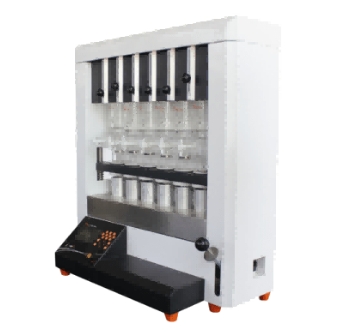
Soxhlet extraction is a traditional continuous extraction technique widely used for extracting compounds from solid samples. Adopting Soxhlet extraction fat analyzers, the solvent is repeatedly evaporated, condensed, and passed through the sample chamber.
The continuous circulation of hot solvent improves extraction efficiency and allows complete extraction of target compounds from solid materials. Soxhlet extractors are commonly applied in food analysis, environmental testing, and pharmaceutical research.
Although it provides excellent extraction performance, Soxhlet extraction usually requires long extraction times and relatively large amounts of organic solvents.
Ultrasound-Assisted Solvent Extraction
Ultrasound-assisted extraction (UAE) uses ultrasonic energy to improve solvent penetration and accelerate the release of target compounds from samples.
During ultrasonic treatment, cavitation bubbles form and collapse in the solvent, producing mechanical effects that break sample structures and enhance mass transfer. This allows faster extraction with lower solvent consumption.
Ultrasound-assisted extraction is widely used for extracting bioactive compounds from plants, including flavonoids, polyphenols, and essential oils. It is considered an efficient and environmentally friendly extraction method.
Microwave-Assisted Solvent Extraction
Microwave-assisted extraction (MAE) uses microwave energy to heat the sample and solvent, improving extraction efficiency. The rapid heating generated by microwaves increases molecular movement and helps release compounds from the sample matrix.
Compared with conventional extraction methods, microwave-assisted extraction can significantly reduce extraction time and solvent usage. It is frequently used in food chemistry, environmental analysis, and pharmaceutical research.
Supercritical Fluid Extraction
Supercritical fluid extraction (SFE) uses fluids under supercritical conditions as extraction solvents. Carbon dioxide is the most commonly used supercritical fluid because it is non-toxic, environmentally friendly, and easy to remove after extraction.
In the supercritical state, carbon dioxide has both gas-like diffusion ability and liquid-like solvating power, allowing it to extract compounds efficiently. Pressure and temperature adjustments can control extraction selectivity.
Supercritical fluid extraction is widely used for extracting caffeine from coffee, essential oils from plants, and pharmaceutical compounds. It provides high-quality extracts with minimal solvent residue.
Accelerated Solvent Extraction
Accelerated solvent extraction (ASE), also known as pressurized liquid extraction (PLE), uses high temperature and pressure to improve solvent extraction performance.
Under elevated temperature conditions, solvent viscosity decreases and penetration into the sample increases. High pressure keeps the solvent in a liquid state, allowing faster and more efficient extraction.
ASE is commonly used for environmental sample analysis, including the extraction of pollutants, pesticides, and organic compounds from soil, sediment, and waste materials.

Enzyme-Assisted Solvent Extraction
Enzyme-assisted extraction combines enzymes with solvent extraction to break down cell walls and release target compounds.
Enzymes such as cellulase and pectinase can degrade plant structures, improving solvent access to intracellular components. This method is particularly useful in extracting natural products, proteins, pigments, and bioactive substances.
It offers advantages such as mild operating conditions, improved extraction yield, and reduced damage to sensitive compounds.
Applications of Solvent Extraction Methods
Solvent extraction technologies are used across many industries. In the pharmaceutical industry, they help isolate active ingredients and purify drug compounds. In food processing, they are used to extract flavors, oils, pigments, and nutritional components.
Environmental laboratories use solvent extraction for detecting pollutants such as hydrocarbons, pesticides, and organic contaminants. In metallurgy, solvent extraction is applied to recover valuable metals such as copper, nickel, cobalt, and uranium from ores and industrial solutions.
The chemical industry also relies on solvent extraction for purification, separation, and recovery processes.
Factors Affecting Solvent Extraction Efficiency
The performance of solvent extraction depends on multiple factors. Solvent selection is one of the most important considerations because different solvents have different abilities to dissolve specific compounds. Polarity, chemical stability, and toxicity must be evaluated when choosing a solvent.
Temperature can improve extraction efficiency by increasing solubility and diffusion rates, although excessive heat may degrade heat-sensitive compounds. Extraction time and mixing conditions also influence the transfer of compounds between phases.
The particle size of solid samples affects solvent contact area. Smaller particles generally provide better extraction efficiency because of increased surface area.
Final Words
Solvent extraction remains one of the most important separation techniques in scientific research and industrial production. Traditional methods such as liquid-liquid extraction and Soxhlet extraction continue to be widely used, while advanced techniques including supercritical fluid extraction, microwave-assisted extraction, and accelerated solvent extraction provide improved efficiency and sustainability.
By selecting the appropriate extraction method according to sample characteristics and application requirements, industries can achieve better separation performance, higher product quality, and more environmentally responsible processing.

