Solvent removal is a critical process in laboratories, pharmaceutical manufacturing, chemical production, food processing, and environmental analysis. After extraction, synthesis, purification, or concentration steps, solvents must often be removed efficiently to obtain purified products, improve concentration, or prepare samples for further analysis. Selecting the appropriate solvent removal technique directly affects product quality, recovery efficiency, processing speed, operational safety, and overall production costs.
Different solvents possess unique physical and chemical properties, including boiling point, volatility, viscosity, thermal sensitivity, and toxicity. Likewise, target materials may vary in sensitivity to heat, oxygen, or pressure. Because of these variables, no single solvent removal method is suitable for every application. Understanding the characteristics, advantages, and limitations of each technique is essential for choosing the most effective solution.
Understanding the Importance of Solvent Removal
Solvent removal serves several important purposes across industries. In pharmaceutical production, residual solvents must be minimized to meet regulatory standards and ensure product safety. In chemical laboratories, solvent evaporation is commonly used to concentrate samples or isolate reaction products. Food and beverage industries use solvent removal to preserve flavors, aromas, and nutritional quality. Environmental laboratories often rely on solvent concentration methods for trace contaminant analysis.
Improper solvent removal can lead to product degradation, contamination, reduced yield, or excessive energy consumption. Therefore, selecting the correct technique helps optimize productivity while protecting sensitive compounds and maintaining process reliability.
Key Factors to Consider When Choosing a Solvent Removal Technique
Several factors influence the selection of an appropriate solvent removal method.
Solvent Properties
The boiling point and vapor pressure of the solvent strongly affect removal efficiency. Highly volatile solvents are easier to evaporate, while high-boiling solvents may require vacuum conditions or advanced drying methods. Solvent flammability and toxicity must also be considered for safe operation.
Sensitivity of the Sample
Heat-sensitive compounds such as proteins, enzymes, natural extracts, and pharmaceuticals may degrade under high temperatures. In such cases, low-temperature or vacuum-based techniques are preferred.
Desired Throughput
Small laboratory-scale applications may only require simple evaporation systems, whereas industrial production often demands continuous high-capacity equipment with automated controls.
Recovery Requirements
Some applications require solvent recovery for reuse, environmental compliance, or cost reduction. Techniques with integrated condensation and recovery systems become particularly valuable in these situations.
Energy Efficiency
Energy consumption significantly affects operating costs, especially in large-scale industrial processing. Selecting energy-efficient systems can improve sustainability and reduce expenses.
Final Product Quality
The selected technique should preserve the purity, structure, and functionality of the target material. Excessive heating or prolonged exposure to air can damage sensitive compounds.
Common Solvent Removal Techniques
Rotary Evaporation
Rotary evaporation is one of the most widely used solvent removal methods in laboratories. It operates by reducing pressure to lower the solvent boiling point while rotating the sample flask to increase surface area and improve evaporation efficiency.
Rotary evaporators are highly effective for removing volatile solvents and concentrating samples. They are commonly used in chemistry, pharmaceuticals, and natural product extraction.

Advantages include rapid evaporation, good solvent recovery, and relatively gentle processing conditions. However, rotary evaporation may not be ideal for highly viscous samples or large-scale industrial applications.
Vacuum Drying
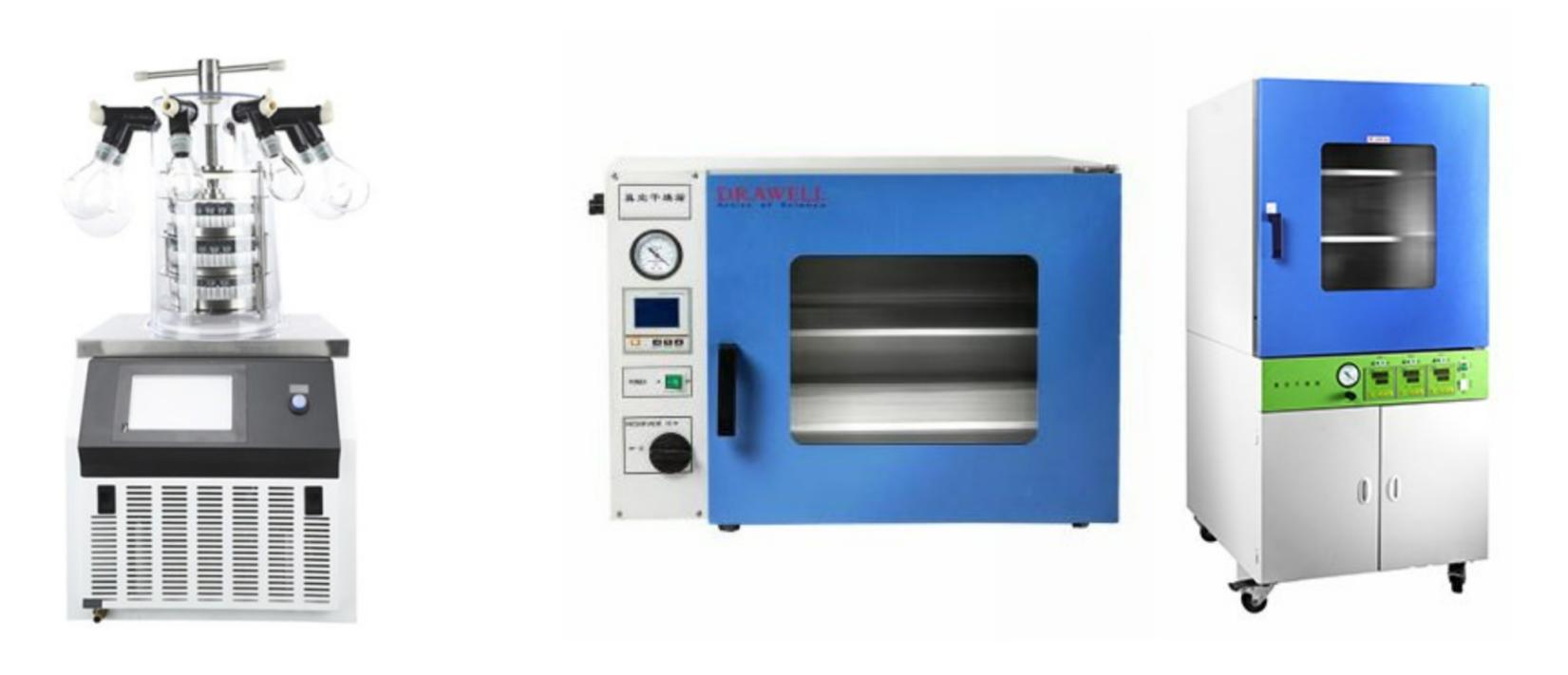
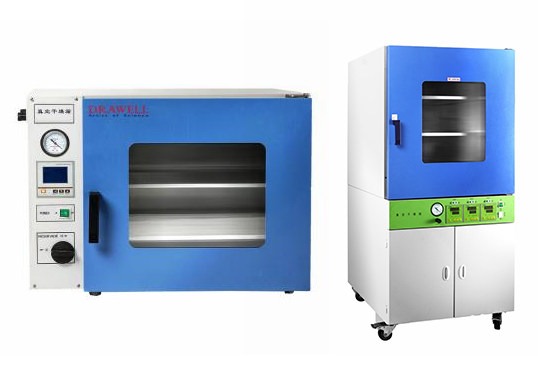
Vacuum drying removes solvents under reduced pressure, allowing evaporation at lower temperatures. This method is particularly suitable for heat-sensitive materials and products that may oxidize under atmospheric conditions.
Vacuum drying ovens are commonly used in pharmaceutical, chemical, and materials science industries. The technique provides good control over drying conditions while minimizing thermal degradation.
One limitation is that vacuum drying can require longer processing times for thick or dense materials.
Freeze Drying
Freeze drying, also known as lyophilization, removes solvents by sublimating frozen solvents directly into vapor under vacuum conditions. This method is highly effective for preserving sensitive biological materials, pharmaceuticals, and food products.
Because the process occurs at very low temperatures, freeze drying minimizes thermal degradation and preserves product structure and activity. The freeze dryer is widely used for vaccines, proteins, enzymes, and high-value biological samples.
Despite its advantages, freeze drying is relatively slow and expensive compared to other solvent removal techniques.
Thin Film Evaporation
Thin film evaporators spread liquid into a thin film over a heated surface, significantly increasing heat transfer and evaporation efficiency. These systems are commonly used for high-viscosity materials and heat-sensitive compounds.
The short residence time minimizes thermal damage while enabling continuous industrial-scale operation. Thin film evaporation is widely applied in chemical processing, polymer production, and specialty chemical manufacturing.
However, equipment complexity and higher initial investment may be limiting factors.
Spray Drying
Spray drying converts liquid solutions or suspensions into dry powders by spraying them into a heated gas stream. The solvent evaporates rapidly, leaving fine solid particles behind.
This technique is extensively used in pharmaceuticals, food processing, ceramics, and chemical manufacturing. Spray drying allows continuous large-scale production with controlled particle size and good product uniformity.
Nevertheless, exposure to elevated temperatures may not be suitable for extremely heat-sensitive materials.
Nitrogen Blowdown Evaporation
Nitrogen blowdown systems use a stream of nitrogen gas to accelerate solvent evaporation from multiple samples simultaneously. These systems are commonly used in analytical laboratories for sample concentration.
Nitrogen evaporation offers simplicity, good throughput for multiple small samples, and reduced oxidation risk. It is particularly useful in chromatography and environmental testing laboratories.
The method is generally less suitable for large-volume solvent removal.
Centrifugal Evaporation
Centrifugal evaporators combine vacuum, controlled heating, and centrifugal force to remove solvents efficiently while preventing sample bumping and cross-contamination.
This method is widely used in pharmaceutical research, biotechnology, and high-throughput analytical laboratories. It performs especially well with mixed solvents and delicate samples.
Although highly effective, centrifugal evaporation systems can be more expensive than simpler evaporation methods.
Comparing Solvent Removal Techniques
Different techniques offer varying balances between efficiency, cost, scalability, and sample protection.
Rotary evaporation is ideal for general laboratory use and moderate solvent volumes. Vacuum drying provides gentle processing for sensitive materials. Freeze drying offers superior preservation for biological products but involves high operational costs. Thin film evaporation supports continuous industrial processing with excellent heat transfer efficiency. Spray drying excels in powder production, while nitrogen blowdown and centrifugal evaporation are highly effective for analytical sample preparation.
The optimal choice depends on matching process requirements with equipment capabilities.
Safety Considerations in Solvent Removal
Safety is an essential aspect of solvent removal operations. Many solvents are flammable, toxic, or environmentally hazardous. Proper ventilation, explosion-proof equipment, and solvent recovery systems help minimize operational risks.
Vacuum systems should be regularly inspected for leaks and pressure stability. Temperature control systems must be carefully monitored to prevent overheating or sample degradation. Operators should also use appropriate personal protective equipment and follow established laboratory or industrial safety protocols.
Emerging Trends in Solvent Removal Technologies
Modern solvent removal technologies increasingly focus on automation, energy efficiency, and sustainability. Advanced control systems now provide precise temperature and pressure regulation, improving consistency and reducing operator intervention.
Energy-saving vacuum pumps, improved heat exchanger designs, and integrated solvent recovery systems are helping industries reduce operational costs and environmental impact. Additionally, compact benchtop systems with digital interfaces are improving convenience and productivity in laboratory environments.
Continuous processing technologies are also gaining popularity for large-scale manufacturing due to their efficiency and scalability.
Summary
Choosing the right solvent removal technique requires careful evaluation of solvent properties, sample sensitivity, processing scale, recovery needs, and operational efficiency. Each method offers unique advantages and limitations depending on the application.
Rotary evaporation remains a versatile laboratory solution, while vacuum drying and freeze drying provide gentle processing for sensitive materials. Thin film evaporation and spray drying support large-scale industrial production, and specialized methods such as nitrogen blowdown and centrifugal evaporation address analytical and research needs.
By understanding the characteristics of each technique and aligning them with specific process requirements, laboratories and industries can achieve efficient solvent removal, improved product quality, enhanced safety, and optimized operational performance.

