How Precise Tension Control Contributes to Sustainability and Operational Efficiency

In the ever-evolving landscape of manufacturing and industrial processes, the quest for energy efficiency and material conservation has become increasingly central. One pivotal factor in achieving these goals is precise tension control, a crucial element across diverse industries such as textiles, paper, metals, and more. Maintaining exact tension levels not only streamlines production processes but also minimizes waste, contributing to a more sustainable and cost-effective operation.

Understanding Tension Control

The management and preservation of tension within materials as they traverse various stages of production constitute tension control. Attaining precise tension control is of paramount importance, directly impacting the quality of the final product, production speed, and resource consumption.

tension control

How Tension Control Influences Energy Efficiency

Motor Power Optimization:

Fine-tuning motor power based on production process requirements becomes possible with precise tension control.

Optimal tension levels enable motors to operate efficiently, reducing energy consumption and waste.

Reduced Heat Generation:

Inaccurate tension control can lead to excessive friction and heat within machinery.

Precise tension control minimizes strain on components, reducing energy losses due to heat.

Minimized Energy Waste:

Aligning energy input with production needs becomes more efficient with accurate tension regulation.

Reduces wasted energy when procedures run at higher-than-necessary power levels.

Optimized Production Speed:

Stable tension levels allow for optimizing production speeds without compromising product quality.

Operating machinery at optimal speeds ensures efficient energy use, contributing to overall savings.

Prevention of Abrupt Tension Changes:

Precise tension control prevents sudden tension fluctuations, reducing energy spikes and strain on equipment.

Promotes a stable and energy-efficient industrial environment.

Extended Equipment Lifespan:

Uncontrolled tension variations contribute to equipment wear and tear.

Accurate tension levels extend equipment lifespan, reducing the need for frequent replacements and associated energy costs.

Improved System Reliability:

Consistent tension control enhances the overall reliability of the production system.

Reliable web tension controllers result in fewer energy-consuming stoppages and lower error rates, contributing to improved energy efficiency.

T1000 web tension controller

Energy-Aware Control Systems:

Advanced tension control systems, combined with energy-conscious technologies, optimize tension levels in real time.

Consideration of material properties and external factors further enhances energy efficiency.

drawing of tension control controller

How Precise Tension Control Contributes to Material Savings

Waste Reduction:

Consistent tension control prevents material defects, misalignments, and breakages.

Minimizes material waste by maintaining uniform tension throughout the production process.

Optimized Yield:

Precise tension control allows machinery to operate at optimal speeds without compromising material integrity.

Results in higher yields and substantial material savings over time.

Enhanced Product Quality:v

Uniform tension ensures high-quality goods with minimal variance.

Critical for meeting or surpassing client expectations and minimizing faults.

Prevention of Overstretching or Distortion:

Precise tension control prevents overstretching or distortion, preserving material integrity.

Ensures materials are processed within specified limits.

Minimized Set-Up Scrap:

During setup and adjustment phases, precise tension control facilitates quicker and more efficient calibration.

Reduces scrap generated during initial production stages, contributing to material savings.

Extended Material Lifespan:

Maintaining ideal tension levels extends the lifespan of materials.

Reduces the need for frequent replacements and conserves material use.

Reduced Rejected Batches:

Critical in processes like printing or coating applications, precise tension control minimizes the likelihood of substandard batches.

Directly contributes to material savings by avoiding disposal of rejected products.

Improved Process Efficiency:

Precise tension control streamlines the entire production process, minimizing interruptions and errors.

Contributes to material savings by reducing the need for rework or additional raw materials.

Conclusion

Accurate tension control is indispensable for manufacturers committed to sustainability and operational efficiency. Investing in modern tension control systems enables businesses to improve energy efficiency, decrease material waste, and enhance product quality. Embracing precise tension control aligns with the global push toward sustainable and responsible manufacturing practices, making it a strategic business decision for a more sustainable, efficient, and economically viable future as industries continue to expand.

Useful Tips Shared for Soxhlet Extraction

Soxhlet extraction stands as a well-established method widely employed in laboratories and industries to extract a diverse array of chemicals from solid samples. This article provides a comprehensive guide covering the steps involved in soxhlet extraction, factors affecting its efficiency, and essential safety considerations for a secure working environment.

Follow the Soxhlet Extraction Steps:

Soxhlet extraction is a continuous process involving the cycling of a solvent through a solid sample to extract the desired chemical. Follow these steps for effective Soxhlet extraction:

Prepare the Soxhlet Extractor: Assemble the apparatus, connect the condenser, and attach the syphon tube. Place glass wool or filter paper in the Soxhlet flask to prevent material escape.

Soxhlet Extractor

Weigh the Solid Sample: Measure an appropriate amount of the solid sample and insert it into the Soxhlet flask.

Add the Solvent: Pour sufficient solvent into the round-bottom flask to cover the solid material, choosing a solvent compatible with the target chemical.

Start the Extraction: Heat the round-bottom flask, causing the solvent to vaporize and extract the target component from the solid sample.

Continue the Extraction: Run the extraction for several hours or overnight, allowing the solvent to cycle through the sample, extracting the target chemical.

Collect the Extracted Solution: Once complete, separate the round-bottom flask with the solution from the Soxhlet flask containing the solid sample.

Remember the Efficiency Affecting Factors of Soxhlet Extraction:

Efficient Soxhlet extraction relies on understanding and optimizing various factors:

Sample Characteristics: Particle size, surface area, and composition influence extraction efficiency. Properly choose and prepare the sample for optimal contact with the extraction solvent.

Solvent Selection: Choose a polar solvent with a high boiling point, compatible with both the target chemicals and the solid material.

Extraction Time and Temperature: Manage the duration and temperature to balance extraction yields without degrading heat-sensitive chemicals.

Extraction Cycles: Determine the optimal number of extraction cycles for each sample and chemical to avoid diminishing returns.

Extraction Thimble: The type and condition of the extraction thimble impact extraction efficiency; choose the material and pore size carefully.

Agitation and Reflux Rate: Adjust the solvent cycling pace to promote sample-solvent interaction without causing packing or channeling.

Solvent-to-Sample Ratio: Optimize the ratio to ensure enough solvent for extraction without dilution, varying based on sample type.

Operator Skills and Experience: Operator proficiency and attention to detail during assembly and operation can influence extraction efficiency.

Soxhlet Extractors

Take Safety Considerations During Soxhlet Extraction:

Prioritize safety during Soxhlet extraction with the following precautions:

Ventilation: Perform Soxhlet extraction in a well-ventilated space or under a fume hood to reduce solvent vapor exposure.

Personal Protective Equipment (PPE): Wear appropriate gear like gloves, goggles, and a lab coat to prevent solvent contact and splashes.

Solvent Selection: Choose solvents carefully, considering toxicity and combustibility, and follow proper handling, storage, and disposal practices.

Heat Safety: Use heat-resistant gloves, secure electrical connections, and employ heating equipment with temperature controls to prevent burns or fires.

Equipment Handling: Follow manufacturer instructions for proper handling, operation, and maintenance of soxhlet extractors.

Monitoring: Regularly check the extraction process for any leaks, blockages, or other issues.

Emergency Preparedness: Keep spill kits, fire extinguishers, emergency eyewash, and showers accessible, and know how to respond to accidents.

Training and Supervision: Only experienced individuals should operate Soxhlet extraction equipment, with supervision for novices.

Proper Cleanup and Disposal: Dispose of used solvents and debris according to local regulations and ensure proper equipment cleaning.

Conclusion:

Soxhlet extraction, when approached with knowledge, skill, and safety protocols, proves to be an efficient and secure method for extracting various chemicals from solid samples. Adhering to proper procedures ensures reliable results while minimizing risks in the laboratory environment.

What are Standards and Types of Aerospace Fasteners

In the intricate world of aviation manufacturing, aerospace fasteners play a crucial role in connecting myriad components of an aircraft, facilitating load transfer, and coordinating deformation during loading. This article delves into the standards governing aerospace fasteners and explores various types of nuts, washers, and screws commonly used in the aviation industry.

Standards for Aerospace Fasteners:

NAS (National Aerospace Standards):

NAS stands as the most influential standard for British fasteners in aviation manufacturing. It extends its coverage not only to commercial aircraft but also to military aircraft.

NASM (National Aerospace Standards Community):

Originally a military standard, NASM has transitioned into NASC (National Aerospace Standards Community) for continuous maintenance and development, essentially serving as the military standard within NAS.

NA / NAM:

NA corresponds to NAS standards, while NAM corresponds to NASM, both being public products associated with specific standards.

Common US Government Standards:

In addition to British standards, several US government standards are prevalent in the aerospace industry, such as MS and AN. MIL, the US military standard, is often used to define more detailed technologies.

Aerospace Nuts:

Standard Aerospace Nuts include:

AN310 Castle Nut: Used in conjunction with AN3 to AN20 bolts, with materials like nickel alloy steel, stainless steel, and 2024 aluminum alloy.

AN320 Shear Castle Nut: Specifically designed for shear stress applications, used with AN2L to AN36 shaft pin bolts, primarily made of 2024 aluminum alloy.

AN315 Ordinary Nut: Used for parts subject to large tension, requiring anti-loose nuts or spring washers for fastening. Materials are similar to AN310 nuts, with both right-hand and left-hand threads available.

AN316 Lock Nut: A hexagonal lock nut adopting double nuts to prevent loosening, typically used with AN315 ordinary nuts.

Aerospace Nuts

Self-Locking Nuts:

Low-temperature self-locking nut models AN365 and AN364.

High-temperature self-locking nut model AN363.

Both types utilize elasticity to prevent loosening and are suitable for repeated use.

Aerospace Washers:

AN960 is a widely used standard aerospace washer, employed under hexagonal nuts, and is available in various materials such as carbon, steel, brass, stainless steel, and aluminum alloy. AN936 washers offer uniform elasticity and effective anti-loosening properties.

Aerospace Screws:

Categorized into mechanical screws, structural screws, and self-tapping screws, aerospace screws serve non-structural connections, fairings, and removable panels in non-main stressed structures.

Mechanical Screws:

Common models include AN500 and AN501 (coarse and fine round head screws), AN505 and AN507 (coarse and fine 82° countersunk screws), and AN515 and AN526 (coarse and fine round head screws).

Structural Screws:

AN509 (100° flat screw), AN525 washer head screw, AN502, and AN503 (round head screws) are among the common models. Structural screws, made of alloy steel, can be used as a structural bolt due to their polished rod section.

Self-Tapping Screws:

Characterized by fastening through tapping, self-tapping screws like AN504 and AN506 (for removable parts) and AN530 and AN531 (for metal plates) come in flat round head, 100° countersunk head, and large flat round head types.

cross hexagon flange self-tapping screws supplier

Conclusion:

This article provides an overview of the fundamental aspects of aerospace fasteners, encompassing standards and various types of nuts, washers, and screws employed in the aviation manufacturing industry. Understanding these components is essential for ensuring the structural integrity and safety of aircraft.

A Comprehensive Guide to Oil Rig Construction

The construction of oil rigs stands as an extraordinary testament to engineering prowess, addressing the global thirst for energy. Nestled in vast oceans, these monumental structures play a pivotal role in extracting petroleum resources, and powering industries, economies, and contemporary lifestyles. This article delves into the intricate realm of oil rig construction, unraveling the methods, processes, challenges, and groundbreaking innovations that characterize the creation of these offshore marvels.

Drilling Techniques

Understanding Oil Rig Construction:

Oil rig construction is a sophisticated endeavor demanding meticulous planning, cutting-edge technology, and a skilled workforce. The primary objective is to erect a resilient platform capable of withstanding the unforgiving conditions of the open sea while facilitating the extraction of oil and gas beneath the ocean floor. Two main types of oil rigs emerge fixed platforms and floating structures.

Fixed Platforms:

Ideal for shallow waters, these rigs anchor to the ocean floor. Comprising steel or concrete bases extending from the seabed to the water’s surface, fixed platforms find their niche in calm, shallow waters with a stable seafloor foundation.

Floating Structures:

Designed for deeper oceans where fixed platforms are impractical, floating rigs come in various forms like semisubmersibles, drillships, and tension leg platforms (TLPs). Leveraging buoyancy and mooring devices ensures stability in these challenging environments.

Detailed Process of Oil Rig Construction:

Oil rig construction is a collaborative achievement involving engineers, designers, technicians, and a diverse array of skilled individuals. The process unfolds through key stages:

Pre-Construction Planning and Design:

Thorough planning and design precede construction, incorporating feasibility studies and detailed engineering designs using computer-aided design (CAD) software.

Fabrication of Components:

Various components, serving distinct purposes, are fabricated off-site and then transported to the rig for assembly, including the foundation and superstructure.

Assembly and Integration:

Assembled components are integrated into the overall structure, involving the installation of foundations and superstructures with precision.

Installation of Equipment:

Drilling, extraction, and processing equipment are installed, encompassing drilling rigs, processing facilities, and crew accommodations.

Safety and Testing:

Safety Systems: Fire detection and suppression equipment, emergency shut-off valves, and evacuation routes are installed and tested on the rig.

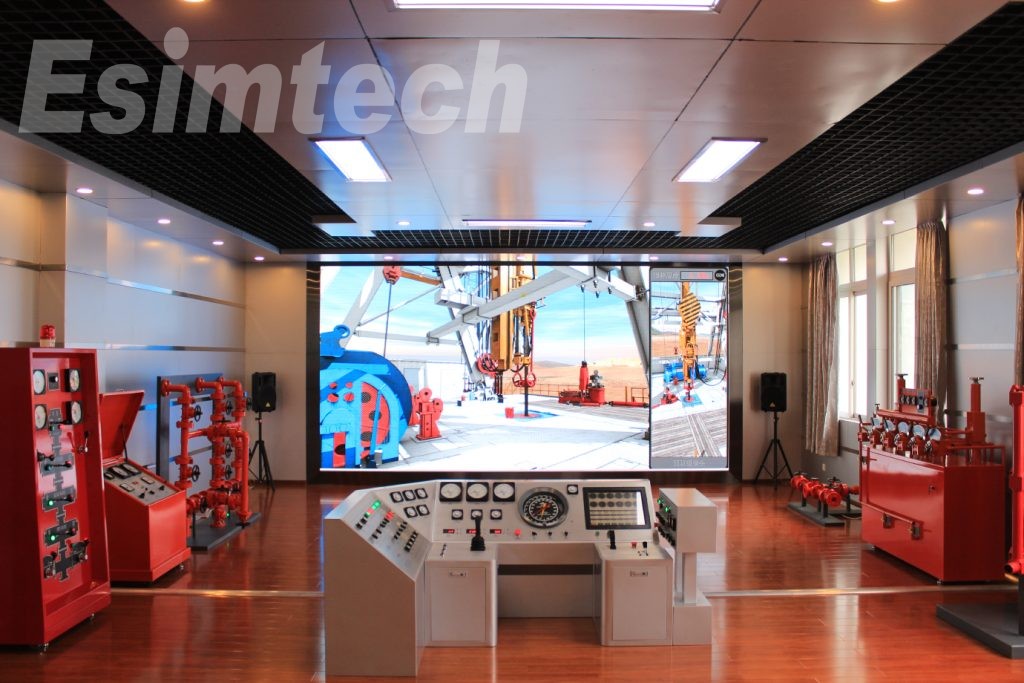
Testing and Simulations: Various systems, including drilling operations and emergency procedures, are tested through drilling simulators to ensure readiness for operational use.

drilling and well control simulation system

Transportation and Installation:

For floating oil rigs, the final construction is transported to its designated location in the open sea, employing advanced mooring systems for positioning.

Commissioning and Operation:

Commissioning involves final testing and adjustments, paving the way for drilling operations to extract oil and gas from the ocean floor.

Maintenance and Upgrades:

Regular maintenance and technological upgrades, incorporating automation and data analytics, contribute to the rig’s efficiency, safety, and environmental performance.

Challenges and Innovations for Oil Rig Construction:

Navigating challenges inherent to offshore construction, the industry embraces innovations that enhance safety, efficiency, and environmental responsibility.

Oil and Gas Drilling rigs

Challenges:

Harsh Environmental Conditions

Safety Concerns

Logistics

Depth and Pressure

Regulatory Compliance

Innovations:

Advanced Materials

Automation and Robotics

Digital Twin Technology

Drilling Technologies

Subsea Systems

Environmental Mitigation

Digitalization and Data Analytics

Hybrid Energy Solutions

Smart Sensors and IoT

Conclusion

Oil rig construction melds engineering expertise, technological advancements, and environmental consciousness. These colossal structures, whether fixed platforms or floating wonders, stand as indispensable contributors to meeting the world’s energy demands.

Advancements in Printing Quality Inspection Systems

In the dynamic realm of modern manufacturing, where efficiency and precision are paramount, the printing industry stands out for its need to balance high-speed output with flawless quality. The introduction of printing quality inspection systems has revolutionized the landscape of printing quality assurance, ensuring top-notch printing quality at unparalleled speeds. This article explores the key features, technologies, and future advancements of these cutting-edge systems.

web video inspection machine for printing quality

Key Features and Technologies of Printing Quality Inspection Systems:

Advanced Vision Systems:

High-Resolution Cameras: Equipped with high-resolution cameras, these advanced web inspection vision systems form the core of printing quality inspection. They capture detailed images of printed materials at remarkable speeds for thorough inspection.

Image Recognition Algorithms: Modern image recognition algorithms process captured images in real time, analyzing various print characteristics such as text, images, color, and registration.

Real-Time Inspection:

Continuous Monitoring: The ability to conduct real-time inspection while the material moves through the production line is a standout feature. Continuous monitoring ensures instant identification of defects or deviations from quality standards.

Instantaneous Feedback Loop: Real-time systems establish an instantaneous feedback loop, providing prompt notifications to operators about detected issues. This enables swift corrective actions, minimizing the risk of producing defective prints.

Defect Detection and Classification:

Comprehensive Defect Identification: These systems detect misprints, color variations, streaks, and missing pieces comprehensively, ensuring a thorough quality check.

Defect Classification: Beyond detection, the systems classify defects based on their nature, facilitating targeted corrective measures for issues like registration errors or color inconsistencies.

Integration with Printing Equipment:

Compatibility with Various Printing Technologies: Designed to work seamlessly with different printing equipment and technologies, these systems can integrate into production lines for flexographic, offset, or digital printing.

Synchronization with Printing Speeds: Integration ensures coordination with the pace of printing equipment, crucial for maintaining inspection accuracy in high-speed printing environments.

Automated Data Analysis:

Smart Software Solutions: Intelligent software solutions automate data analysis, interpreting collected data, identifying defects, and generating comprehensive reports.

Data Visualization: Automated analysis includes advanced data visualization features for clear and understandable presentation of inspection results, facilitating quick assessment and corrective actions.

Multi-Sensor Technology:

Diversity in Inspection Parameters: Some systems use multi-sensor technology to measure multiple parameters simultaneously, such as color, thickness, and surface quality, providing a comprehensive picture of print quality.

Comprehensive Quality Assessment: Multi-sensor technology enables a more thorough quality inspection by evaluating various aspects of the print simultaneously, particularly beneficial for high-quality standard applications.

Communication and Connectivity:

Integration with Plant Control Systems: These systems often feature communication capabilities for seamless integration with plant control systems, contributing to centralized monitoring and control for enhanced production efficiency.

Connectivity for Remote Monitoring: In the era of Industry 4.0, these systems may offer connectivity options for remote monitoring, allowing real-time access to data and inspection results from any location.

Artificial Intelligence (AI) and Machine Learning (ML):

Pattern Recognition: Advanced systems may incorporate AI and ML for pattern recognition, adapting and learning from various printing scenarios to improve the identification of subtle defects.

Predictive Maintenance: AI and ML algorithms can be applied for predictive maintenance, analyzing historical data to predict when components might require maintenance, minimizing downtime and ensuring continuous operation.

web video inspection system for printing quality

Future Technical Advancements of Printing Quality Inspection Systems:

As technology continues to advance, printing quality inspection systems are poised for further refinement and integration with other smart manufacturing technologies. The incorporation of artificial intelligence and machine learning algorithms holds the promise of even more sophisticated defect detection and analysis, further elevating the standards of print quality in high-speed production environments.

Conclusion:

Printing quality inspection systems mark a paradigm shift in the realm of printing industry quality assurance. Their seamless integration with high-speed printing lines, coupled with real-time inspection capabilities, positions them as indispensable tools for manufacturers aiming to strike a balance between speed and precision. As these technologies evolve, the future of high-speed printing appears brighter than ever, promising not only faster output but also a new level of unparalleled print quality.

Why Marine Navigation Lights are Imporant in Ensuring Vessel Safety

Marine navigation lights are indispensable tools that ensure vessel safety and prevent collisions in the open sea. These lights serve as beacons, guiding ships through darkness, adverse weather conditions, and hazardous waters. This article explores the significance of marine navigation lights, delves into their common types, and examines the technological advancements that have transformed navigation lighting.

Single-deck Boat Navigation Lights

Definition and Purpose of Marine Navigation Lights

Definition:

Marine navigation lights refer to a specialized system mounted on vessels, ships, and maritime structures to aid navigation, signal intentions, and prevent collisions at sea. Governed by international standards, these lights provide crucial visual signals for recognizing the location, size, and direction of other vessels, especially in low-light conditions such as darkness, fog, or adverse weather.

Purpose:

The primary purpose of marine navigation lights is to ensure safe navigation and prevent collisions in various maritime scenarios. They facilitate collision avoidance, vessel identification, communication of intent, precise vessel positioning, and navigation in limited visibility conditions. Adherence to international regulations, such as the COLREGs, ensures consistency in the display of lights across vessels worldwide, enhancing maritime safety.

double-deck marine navigation lights

Common Types of Marine Navigation Lights

Sidelights (Port and Starboard Lights):

Color: Red (port side) and green (starboard side)

Purpose: Communicate the direction and heading of the vessel, aiding in collision avoidance.

Sternlight:

Color: White

Purpose: Indicates the size and direction of motion of the vessel to those behind it, especially important for passing or trailing vessels.

Masthead Light (Steaming Light):

Color: White

Purpose: Mounted atop the vessel’s mast, indicates the presence of a vessel and is visible when the ship is in motion and under power.

Towing Lights:

Colors: Yellow (towing light) above a white masthead light

Purpose: Indicates vessels involved in towing, aiding in collision avoidance.

All-Round Light (360-Degree Light):

Color: White

Purpose: Emits light in all directions, used when a vessel is at anchor or not under command.

Anchor Lights:

Color: White

Purpose: Visible when a vessel is at anchor, helps avoid collisions, and indicates the vessel’s position.

Special Purpose Lights:

Purpose: Customized lights for specific vessels, such as fishing or pilot boats, conveying information about their operations to prevent accidents.

Navigation Light Combinations:

Purpose: Vary based on vessel type, purpose, and operations, aiding in determining the vessel’s type and nautical status. Governed by COLREGs for global uniformity.

Evolution Technologies for Marine Navigation Lights

Incandescent Bulbs:

Traditional bulbs emitting light when an electric current passes through a filament.

LED (Light-Emitting Diode) Lights:

Energy-efficient, long-lasting, and bright lights revolutionizing marine navigation.

Automated Systems and Sensors:

Controls light intensity based on external factors like ambient light, weather, and vessel movement.

Remote Monitoring and Control:

Allows operators to remotely monitor and control navigation lights through digital interfaces or software.

Improved Durability and Reliability:

Modern materials and sealing techniques enhance durability, protecting lights from water intrusion and corrosion.

Compliance with Regulations:

Built-in compliance functions ensure lights adhere to international norms and standards.

Wireless Communication:

Enables communication between navigation lights and other vessel systems, improving overall safety and coordination.

GPS Integration:

Integrating GPS technology for accurate positioning and displaying appropriate navigation light combinations.

marine navigation lights

Conclusion:

Marine navigation lights enabling sailors to navigate intricate waterways and reach their destinations safely, from classic sidelights to modern LED systems, symbolize the essence of maritime navigation. Through continuous technological evolution, these lights have become more reliable, energy-efficient, and adaptable, contributing to the enhancement of maritime safety on a global scale.

Principles and Methods for Dividing CNC Machining Processes and Sequences

CNC machining, utilizing advanced CNC machining tools, offers distinct advantages such as stable machining quality, high accuracy, repetition precision, and efficiency. To meet the design accuracy requirements of parts, a systematic approach to CNC machining processes is essential. This article explores the principles and methods for dividing CNC machining processes and arranging their sequences.

CNC machine rough cutting

How To Divide CNC Machining Processes

Process planning encompasses the entire machining process, requiring careful consideration of factors such as part structure, machine tool capabilities, and CNC machining content. The division of CNC machining processes can be approached through the following methods:

1. Centralized Tool Sorting Method

Divide processes based on the tools used, aiming to utilize the same tool CNC for processing all applicable parts. This minimizes tool changes, reduces idle time, and mitigates positioning errors.

2. Sorting Method of Processing Parts

For parts with extensive CNC processing, divide them based on structural characteristics such as internal shape, outer shape, or specific surfaces. Prioritize processing planes and locating surfaces, followed by holes, simple geometric shapes, and then complex shapes.

3. Rough and Fine Machining Sequence Method

Apply a sequence method for parts prone to deformation, involving separate rough and fine CNC machining. Calibration after rough machining addresses potential deformations, ensuring precision.

Metal materials CNC parts

Principles For The Sequence Arrangement Of CNC Machining Processes

1. Principle of Rough Before Fine

Sequentially progress through rough machining, semi-finish machining, and finish machining to gradually enhance precision and surface quality. Consider allowing a resting period between rough and finish machining for stress release, particularly beneficial for parts with high accuracy requirements.

2. Principle of Machining Datum Plane First

Initiate machining with the surface designated as the finishing reference, ensuring accuracy and minimizing clamping errors. Follow a sequence based on datum conversion and gradual improvement of machining accuracy.

3. Principle of Face Before Hole

Prioritize processing flat surfaces before holes, especially for parts like boxes and brackets. This approach provides a stable reference for subsequent operations and facilitates accurate hole processing.

4. Principle of Inside Before Outside

For precision sleeves, process the hole before the outer circle, ensuring high coaxiality. This simplifies fixture structures and meets stringent requirements for outer circle and hole alignment.

5. Principle of Reducing Tool Change Times

Arrange machining sequences based on the tool entering the machining position to minimize tool changes and enhance overall efficiency.

In conclusion, adhering to these principles and methods ensures a systematic and efficient approach to CNC machining processes, meeting the design accuracy and quality requirements of machined parts.

Key Factors to Consider for Selecting a Microplate Reader

Microplate readers play a crucial role in colorimetric determination, particularly in applications like ELISA. The selection of an appropriate microplate reader involves considering various factors that impact its performance. Here, we explore key considerations in choosing a microplate reader for optimal colorimetric determination.

Elisa Microplate Reader

1. Determination of Wavelength

The determination wavelength of a microplate reader is pivotal for accurate colorimetric assessment. Typically falling between 400 and 750 nm, with an extension up to 800 nm, this range caters to the color determination needs of ELISA. Enzymes like horseradish peroxidase (HRP) and substrates such as tetramethylbenzidine (TMB) contribute to color development. Dual-wavelength colorimetry, involving 450 nm or 492 nm for color development and a less sensitive wavelength like 630 nm, enhances specificity in absorbance readings.

2. Measured Absorbance Range

The absorbance measurement range of a microplate reader is critical, with a general range of 0 to 2.5 covering ELISA requirements. Advancements now allow for ranges exceeding 3.5, ensuring improved precision and linearity in absorbance readings.

3. Detection Speed

The detection speed of a microplate reader directly impacts the precision of colorimetric determination. Faster detection minimizes variations in absorbance among micropores due to different determination times, enhancing overall accuracy.

microplate reader

4. Shake Plate Function

The shake plate function is essential for uniform color distribution in ELISA plate holes before determination. This feature eliminates the need for manual shaking after the color reaction, streamlining the process and ensuring consistency.

5. Incubation Function

Microplate readers offer an incubation function, allowing precise control of internal temperature during ELISA measurements. This feature negates the need for an external thermostat, offering convenience based on laboratory conditions and requirements.

6. Software Function

The software function is a critical aspect, providing statistical analysis and reporting for ELISA qualitative determination. In situations where hardware differences are minimal, software becomes a key indicator of microplate reader quality. Robust software functions greatly assist users in practical work, with features like statistical calculation of positive judgment values, determination of the “cut-off” and “gray area,” and curve regression equation calculations enhancing the practical value of the microplate reader.

In conclusion, selecting a microplate reader involves a comprehensive evaluation of factors such as determination wavelength, absorbance range, detection speed, shake plate function, incubation function, and software capabilities. These considerations collectively contribute to the effectiveness and reliability of colorimetric determination in various laboratory applications.

A Comprehensive Guide to Knowing the Workings of an Oil Well

Beneath the Earth’s surface, a complex system of components collaborates to create the essential structure of an oil well, a vital source of energy that powers our modern world. The intricate processes involved in extracting oil from the Earth are nothing short of remarkable. This article explores the workings of an oil well, examining its fundamental components and the detailed processes that drive its functionality.

well intervention in the oil and gas industry

Fundamental Components of an Oil Well:

Wellhead:

Description: The topmost portion serving as the fluid’s entry and exit point, consisting of valves, fittings, and equipment regulating oil, gas, and fluid flow.

Casing:

Description: A network of steel pipes lining the wellbore for structural integrity, preventing collapse, and isolating distinct formations.

Cementing:

Description: The injection of cement between casing and wellbore to form a barrier, preventing fluid migration and stabilizing the well.

Tubing:

Description: A smaller pipe inside the casing allowing oil and gas movement, also housing industrial instruments like sensors and control devices.

Christmas Tree:

Description: A collection of valves and fittings regulating fluid flow, including production and injection valves, chokes, and pressure gauges.

Pumping Units:

Description: Devices like beam pumps or submersible pumps used for artificial lift methods to boost oil and gas flow.

Production Tubing:

Description: The conduit for oil and gas from reservoir to surface, typically made of corrosion-resistant materials.

Perforations:

Description: Punctures in casing and cement allowing oil and gas flow into the wellbore, often created with perforating guns.

Reservoir:

Description: The underground rock formation holding oil and gas, composed of porous and permeable rocks.

Reservoir Fluids:

Description: Oil, natural gas, and water existing in various proportions within the reservoir and extracted during production.

Wellbore:

Description: The hole bored into the ground during drilling, serving as a conduit for fluids from the reservoir to the surface.

Bottomhole Assembly (BHA):

Description: Instruments, sensors, and gadgets at the drillstring’s bottom for reservoir information, drilling control, and downhole activities.

Blowout Preventer (BOP):

Description: A safety device blocking the wellbore in case of a blowout, crucial for accident prevention and well integrity.

full size snubbing simulator

Detailed Working Process of an Oil Well:

Exploration and Site Selection:

Geologists and engineers use seismic surveys, mapping, and technology to locate potential oil reserves. The well’s location is chosen based on geological data.

Drilling:

A drilling rig with a revolving drill bit is used to dig a hole, supported by steel casing.

Drilling mud is used to cool the drill bit and transport rock fragments.

Well Completion:

Wellheads, valves, and casing are placed to ensure a safe extraction environment. Cementing is done to form a barrier between the well and surrounding rocks.

Extraction:

Oil naturally rises through porous rock formations due to reservoir pressure. Artificial means may be used to improve oil recovery if reservoir pressure is insufficient.

Primary Recovery:

Natural reservoir pressure forces oil to the surface during this phase, which can last a long time but gradually slows down as pressure declines.

Secondary Recovery:

Water or gas is injected into the reservoir to drive residual oil into the wellbore, preserving reservoir pressure and increasing recovery rates.

Tertiary Recovery (Enhanced Oil Recovery):

Advanced processes, such as chemical, steam, or CO2 injection into the reservoir, are used to extract difficult-to-reach oil.

Production and Processing:

Extracted oil is pumped to the surface, processed to remove contaminants, and transferred to storage tanks or processing plants.

Transport and Distribution:

Processed oil is transferred to refineries via pipelines, tankers, or vehicles for refining into various petroleum products.

Maintenance and Monitoring:

Continuous maintenance and monitoring ensure safe and effective operations, including inspections, well tests, and compliance with environmental rules.

Choosing Well Intervention Simulators for Efficiency Improvement:

Well intervention simulators are specialized software or physical models simulating various well intervention procedures during an oil well’s lifecycle. Operations like wireline, coiled tubing, hydraulic workover, snubbing, and fishing can be replicated.

Operation cabinet view of the full-size coiled tubing simulator

Advantages of Well Intervention Simulators:

Minimize accident risk

Improve operation efficiency

Enhance the quality of well intervention operations

Optimize operations by identifying potential difficulties and analyzing intervention options before implementation.

Conclusion:

From exploration to extraction, the intricate journey of an oil well stands as a testament to human ingenuity and technical innovation. Oil wells play a crucial role in meeting global energy demands, shaping economies, and fostering growth. Understanding the workings of an oil well offers insight into the complex mechanisms powering our modern world, underscoring the importance of responsible extraction and environmental management.

Web Tension Control in Converting Machinery: Challenges and Solutions

In the dynamic world of converting machinery, where raw materials are transformed into final products, web tension control plays a pivotal role in ensuring the quality and precision of the production process. Whether creating flexible packaging, paper, textiles, or other converted products, maintaining proper tension in the continuous material being processed (the web) is paramount. This article explores the significance of web tension control in converting machinery, delving into the challenges faced and the diverse methods employed to achieve consistent and high-quality outcomes.

tension control of the slitting machine

The Importance of Web Tension Control in Converting Machinery:

Web tension, the force applied to the material as it traverses converting machinery, is a critical parameter for several reasons:

Quality Assurance: Consistent web tension is imperative for producing high-quality final products, preventing issues like wrinkles, folds, or misalignments in the completed material.

Productivity: Precise tension control enhances the efficiency of the converting process, allowing for higher production speeds, reduced downtime due to web breaks, and ensuring a smoother workflow.

Material Savings: Accurate tension control minimizes material waste by preventing overstretching or sagging of the web, particularly important in industries where raw materials are expensive.

Challenges of Web Tension Control in Converting Machinery:

Variability in Material Properties: Processing a range of materials with different elasticity, thickness, and mechanical properties poses challenges in maintaining consistent tension.

Speed Changes: Fluctuations in tension levels occur during changes in production speed, impacting the system’s ability to maintain consistent tension.

Web Slippage: Inconsistent tension can lead to web slippage, causing faults and disturbances in the manufacturing process.

Roll Diameter Changes: The changing diameter of the roll as it unwinds affects tension, presenting challenges in managing tension with different roll diameters.

Web Splicing: Splicing two webs together may result in abrupt tension shifts if not properly regulated.

Environmental Factors: Changes in humidity, temperature, or other external factors can impact material qualities and tension control requirements.

Mechanical Wear and Tear: Components such as rollers, bearings, and brakes may wear over time, affecting performance and tension control.

Complex Machine Configurations: Converting machinery with complex configurations may pose challenges in maintaining uniform tension across the entire process.

Common Methods of Web Tension Control in Converting Machinery:

Open-Loop Tension Control:

Description: Manual setting and adjustment of tension levels based on operator judgment and experience.

Application: Suitable for simple processes with minimal tension variations but lacks precision.

Closed-Loop Tension Control:

Description: Involves feedback systems to continuously monitor and adjust tension levels based on real-time data.

Application: closed-loop tension contollers Ideal for processes requiring precise tension control, offering automated adjustments for optimal tension levels.

display interface of automatic tension controller

Dancer Systems:

Description: Use rollers or arms to accumulate and release web material, creating a buffer to absorb tension variations.

Application: Effective for low to moderate tension applications, providing mechanical tension control.

Load Cells and Tension Sensors:

Description: Measure the force applied to the web at various points in the machinery.

Application: Data from load cells and sensors are used to adjust torque or braking force, ensuring consistent tension levels.

Pneumatic and Hydraulic Systems:

Description: Use air pressure or hydraulic force to apply tension to the web.

Application: Suitable for high-tension applications, offering precise tension control but can be more complex and expensive.

Motorized Unwind/Rewind Systems:

Description: Use motors to control the speed of unwinding and rewinding rolls, thereby controlling tension.

Application: Effective for processes with varying material properties, adjusting speed to maintain consistent tension.

Brakes and Clutches:

Description: Control tension by applying resistance to the material as it moves through the machinery.

Application: Cost-effective and suitable for applications where precise tension control is not as critical.

Tension-Controlled Accumulators:

Description: Accumulate and release material in reaction to tension changes, assisting in maintaining a steady flow.

Application: Useful in processes where tension variations need to be minimized, such as in the production of sensitive materials.

T1000 web tension controller

Conclusion:

Web tension control in converting machinery is indispensable for ensuring the quality, productivity, and efficiency of the production process. As technology advances, the industry continues to explore innovative ways to overcome challenges and improve tension control systems. From open-loop to closed-loop control, and mechanical to electronic systems, manufacturers invest in technologies that assure reliable and consistent material processing. Web tension control remains a key topic for optimizing converting machinery processes across various industries, emphasizing the importance of precision in manufacturing.

通过 WordPress.com 设计一个这样的站点
从这里开始