How to Address the Challenges Faced by Web Guiding Systems in High-speed Printing

Web guiding systems play a crucial role in facilitating the seamless movement of materials through the manufacturing process in high-speed printing, where precision is of utmost importance. However, the accelerated pace of printing operations introduces new challenges that demand innovative solutions. This article explores the hurdles faced by web guiding systems in high-speed printing and delves into the solutions that pave the way for improved accuracy and efficiency.

web guide system

Challenges in Web Guiding for High-Speed Printing

Dynamic Tension Variations

High-speed printing processes often lead to dynamic tension fluctuations in the web, impacting material alignment and registration.

Substrate Variability

Variations in printing substrates and materials, including differences in elasticity and thickness, make consistent web guiding at high speeds challenging.

Accurate Registration Requirements

Perfect color and element registration are essential when printing at high speeds, presenting a significant challenge in maintaining proper alignment throughout the process.

Web Flutter and Deflection

Increased speeds may cause the web to experience flutter or deflection, introducing deviations that must be swiftly detected and corrected by the web guiding system.

Vibration and Machine Dynamics

Vibrations and dynamic motions of high-speed printing equipment can influence the web’s stability, complicating the challenge of keeping it aligned.

Material Stretch and Shrinkage

High speeds and associated forces can cause materials to stretch or shrink, impacting the accuracy of web guiding systems and necessitating real-time adjustments.

web guide machine for printing industry

Solutions to Address Web Guiding Challenges in High-Speed Printing

Advanced Sensor Technologies

Utilizing cutting-edge sensor technologies like ultrasonic or laser sensors enables real-time monitoring of web position and tension, allowing rapid adjustments to changes in material properties.

Closed-Loop Control Systems

Continuous analysis of sensor feedback by closed-loop control systems ensures real-time adjustments to the web guiding mechanism, maintaining precise alignment despite dynamic tension variations.

Smart Algorithms for Registration Control

Employing smart algorithms predicting and compensating for registration errors ensures accurate web alignment throughout the printing process, contributing to high-quality output.

Web Guiding Systems with Fast Response Times

Investing in systems with rapid response times ensures swift corrections, minimizing the impact of flutter, deflection, or sudden changes in web behavior.

Dynamic Tension Control Mechanisms

Incorporating tension control mechanisms that dynamically adjust to changes in web tension helps preserve stability, especially in settings where tension fluctuations are common.

Continuous Monitoring and Diagnostics

Implementing continuous monitoring and diagnostics through modern Human-Machine Interface (HMI) systems enables operators to identify potential issues before they affect print quality, reducing downtime.

Precision Rollers and Guiding Components

Upgrading precision-engineered rollers and web guiding components reduces friction, enhancing the overall stability of the system and mitigating the impact of vibrations and dynamic forces.

Material-specific Web Guiding Configurations

Tailoring configurations to the individual qualities of different substrates ensures the system can respond to variations in elasticity and thickness, resulting in improved performance.

Conclusion

Web guiding in high-speed printing is a delicate balance of precision and speed. Addressing the challenges posed by the rapid pace of modern printing requires the adoption of innovative technology, smart algorithms, and sensitive control systems. As the demand for high-quality, high-speed printing grows, the industry’s ability to tackle these issues becomes increasingly crucial for achieving peak performance and producing flawless prints. By focusing on adaptable solutions and continuous innovation, web guiding systems can meet the challenges of high-speed printing with unparalleled accuracy and efficiency.

Useful Tips for Optimizing CNC Machining Tools

CNC machining is a sophisticated process involving various machine tools, materials, cutting tools, and methods. Drawing from extensive experience in actual production processes, we share valuable tips for optimizing CNC machining tools. These insights cover determining cutter points, selecting tool paths, and choosing the right CNC machining tools for different applications.

CNC milling machines

Tip 1: Determining Cutter Points in CNC Machining Tools

Set the cutter point on the part to be processed, ensuring it is a reference position or a finished point.

Establish a relative cutter point position with a fixed dimension relationship to the positioning reference.

Selection Principles:

Easy to find

Easy programming

Small cutter point error

Convenient inspection during processing

Set the origin position of the workpiece coordinate system based on the cutter point after clamping, ensuring consistency with the programming coordinate system.

Tip 2: Selecting Tool Paths in CNC Machining Tools

Consider the machining accuracy requirements of parts when determining the tool path.

Seek the shortest processing path to reduce empty tool time and improve efficiency.

Reduce the number of program segments.

Ensure continuous processing of the final contour using the last tool to maintain workpiece contour surface roughness.

Carefully consider the forward and backward path of the tool to minimize tool marks and avoid scratching the workpiece during vertical cutting.

Metal materials CNC parts

Tip 3: Choosing CNC Machining Tools

Select a non-regrinding carbide end milling cutter for plane milling.

Use end milling cutters for rough milling and continuous cutting along the workpiece surface.

Utilize ball cutters and round cutters for curved surfaces and variable bevel profiles.

Adjust cutting parameters (cutting depth, spindle speed, and feed speed) based on the general principle of less cutting and fast feeding.

Conclusion:

These tips, derived from years of CNC machining and surface finishing experience, aim to enhance the efficiency and precision of the process. At KENENG, we specialize in high-precision metal shell and precision hardware CNC cutting, offering a range of CNC processing services, including milling, turning, drilling, threading, tapping, EDM, wire EDM, custom finishing, prototyping, small batch production, and modification of existing parts. Our commitment to quality includes the use of high-precision measurement tools and advanced video equipment for inspections, ensuring only qualified products reach our customers. Choose KENENG for reliable CNC machining services and products tailored to your needs.

How to Choose Between High-pressure Homogenizers and Microfluidizers

High-pressure homogenizers and microfluidizers play pivotal roles in the processing of emulsions, suspensions, and dispersions, aiming to reduce particle size and ensure a uniform particle distribution. Despite their common objective, these technologies differ in their mechanisms of action and applications. This article delves into the principles behind high-pressure homogenizers and microfluidizers and provides insights into choosing the appropriate instrument based on specific considerations.

High-Pressure Homogenizer Principle:

The high-pressure homogenizer operates by pressuring a fluid mixture through a narrow orifice after being pumped into a high-pressure chamber. This pressurization, typically achieved by a reciprocating pump, propels the fluid through a small orifice, generating intense shear forces and turbulence. This process effectively breaks down particles and droplets. As the fluid exits the orifice, a sudden pressure drop induces cavitation, further reducing particle size. The homogenized fluid is then collected for subsequent processing or immediate use.

high-pressure homogenizer

Microfluidizer Principle:

Conversely, a microfluidizer utilizes a high-pressure pumping system to propel a fluid mixture through a microfluidic chamber equipped with precisely engineered channels and chambers. As the fluid traverses these channels, it experiences significant shear and cavitation forces, leading to particle size reduction and a more uniform product. The microfluidic chamber’s design involves multiple intersecting channels that create microscale eddies and turbulence, enhancing fluid mixing and homogenization. The size and geometry of these channels can be customized to achieve specific mixing and homogenization effects, making the microfluidizer a versatile tool for particle size reduction and dispersion.

Factors for Choosing Between High-Pressure Homogenizer and Microfluidizer:

To make an informed choice between high-pressure homogenizers and microfluidizers, one must consider the following factors:

Performance:

High-pressure homogenizers are well-suited for larger-scale production requiring higher throughput.

Microfluidizers excel in smaller-scale production, offering precise control over particle size and distribution.

Maintenance and Safety:

Microfluidizers generally require less maintenance due to their simpler design and fewer moving parts.

Both devices involve high pressures and necessitate adherence to proper safety protocols during operation.

High-Pressure Homogenizers

Cost:

High-pressure homogenizers are typically more cost-effective for large-scale production.

Microfluidizers may offer cost savings through reduced energy consumption, a smaller footprint, and minimized material waste due to precise particle size reduction.

Conclusion:

Choosing between high-pressure homogenizers and microfluidizers hinges on the specific application and production requirement. While both technologies share the goal of achieving uniform particle distribution, their differences in performance, maintenance, safety, and cost must be carefully weighed to select the optimal instrument that aligns with the user’s needs.

A Comprehensive Guide to Oil Drilling Tools

For nearly a century, the oil and gas industry has been a linchpin of the global economy, providing the essential energy resources that drive our modern world. Within this vast enterprise, a realm of innovation and technology has given rise to enhanced oil drilling instruments, the unsung heroes facilitating the extraction of hydrocarbons from deep beneath the Earth’s surface. This essay delves into the captivating domain of oil drilling tools, exploring their evolution, diverse types, groundbreaking innovations, and crucial roles in the oil and gas extraction process.

drilling system - ocean and land

Evolution of Oil Drilling Tools

The evolution of oil drilling tools mirrors the advancements in the oil and gas sector, progressing from rudimentary manual methods to highly sophisticated, computer-controlled technology.

Rotary Drilling:

In the late nineteenth century, rotary drilling emerged as a transformative method. Utilizing a rotary bit attached to a drilling string, this approach facilitated faster and deeper drilling, unlocking previously inaccessible oil deposits.

Tri-cone Bits:

In the early twentieth century, the introduction of tri-cone bits marked a significant shift. These bits, with three revolving cones featuring teeth, revolutionized drilling by crushing and drilling through rocks more efficiently than previous designs.

Diamond Bits:

Mid-twentieth century saw the advent of diamond drill bits, incorporating industrial-grade diamonds for enhanced precision and durability, especially in challenging rock formations.

Key Oil Drilling Tools in Modern Operations

Modern oil and gas extraction relies on a diverse array of advanced drilling tools and equipment tailored to extract hydrocarbons from increasingly challenging locations.

1. Drill Bits:

PDC (Polycrystalline Diamond Compact) Bits: Featuring synthetic diamond cutters, these bits are robust and efficient in drilling through hard rock formations.

Roller Cone Bits: Versatile and adaptable, these bits, with revolving cones and teeth, are well-suited for various drilling conditions.

2. Mud Motors (Positive Displacement Motors – PDMs):

These downhole devices transform hydraulic pressure from drilling fluid into mechanical energy to move the drill bit, providing precise drilling control, improved efficiency, and extended drill bit life.

3. Directional Drilling Tools:

Downhole Motors: Paired with Measurement-While-Drilling (MWD) systems, these tools enable operators to control wellbore trajectory, essential for reaching distant targets and drilling multiple branches from a single well.

4. Measurement-While-Drilling (MWD) and Logging-While-Drilling (LWD) Tools:

Providing real-time data on well conditions and geology during drilling, these tools enhance precision and decision-making in drilling operations.

5. Casing and Cementing Equipment:

Critical for well integrity and limiting fluid migration, proper casing and cementing are essential for well safety and environmental protection.

6. Top Drive Systems:

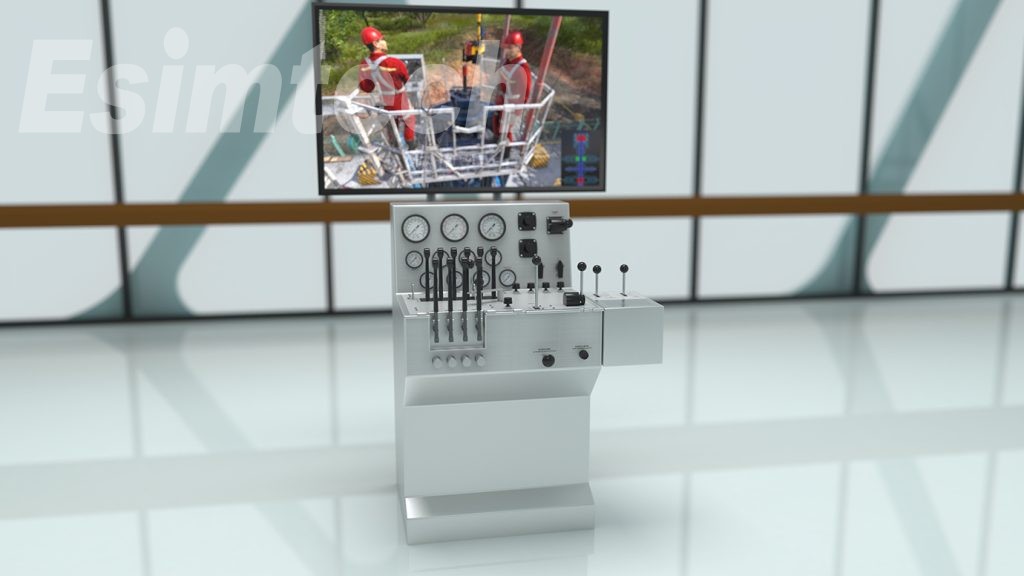
Motorized systems rotating the drill string from the top, improving efficiency and eliminating the need for manual pipe handling. The top drive simulators was created with the goal of training the functioning of the top drive device.It may provide training for all top drive operations as well as common accident handling.It can be utilized for driller/driller assistant, technician, and drilling team leader training.

Portable BOP console
Top Drive Simulator

7. Automated Drilling Rigs:

Equipped with advanced control systems and robotics, these rigs operate 24/7, enhancing safety and overall drilling efficiency.

8. Advanced Drill Pipe Materials:

Constructed from high-strength, corrosion-resistant materials, such as alloy steel or composite composites, modern drill pipes improve resilience and longevity.

9. Drilling Fluids and Mud Systems:

Formulated for optimal drilling performance and wellbore stability, advanced drilling fluids minimize friction, cool the drill bit, and remove cuttings from the wellbore.

10. Drilling Software and Data Analytics:

Sophisticated software aids in data analysis and decision-making, optimizing drilling parameters, detecting potential issues, and improving overall efficiency.

Challenges and Innovations for Oil Drilling Tools

The oil and gas industry faces a myriad of challenges, prompting continuous innovation for enhanced efficiency, safety, and sustainability.

Exploration and Reservoir Challenges:

Innovation: Advanced seismic imaging technologies, extended-reach drilling, and directional drilling enhance reservoir identification and access.

Environmental Concerns:

Innovation: Environmentally friendly drilling fluids, low-emission drilling technology, and environmental monitoring systems reduce the industry’s impact. Safety and Well Integrity:

Innovation: Blowout preventers (BOPs), managed pressure drilling (MPD) systems, and real-time monitoring technologies improve safety and well control.

Operational Efficiency:

Innovation: Automation, robotics, predictive maintenance, and data analytics optimize efficiency and reduce downtime.

Deepwater and Harsh Environments:

Innovation: Specialized equipment, subsea technology, and materials tailored for extreme conditions enable drilling in challenging environments.

Regulatory Compliance:

Innovation: Drilling methods and equipment enhancements aid in meeting regulatory requirements, while digital reporting and monitoring systems ease compliance efforts. Energy Transition:

Innovation: Diversification into renewable energy, carbon capture and storage (CCS), and low-carbon research address the industry’s long-term sustainability.

Geopolitical and Market Volatility:

Innovation: Risk mitigation, portfolio diversification, and operational improvements help navigate market changes and geopolitical uncertainties.

In conclusion, oil drilling tools have evolved into complex and high-tech equipment, driving the global oil and gas industry. Continuous innovation not only enhances hydrocarbon extraction efficiency but also contributes to the industry’s sustainability and environmental responsibility. As the industry faces new challenges, the relentless pursuit of innovation remains critical for its continued success and adaptation to changing global dynamics.

The Pivotal Role of Integration of Printing Inspection Systems with Workflow Management

The printing industry continually seeks innovations to enhance processes and ensure the highest quality in its products. A transformative shift has occurred with the integration of printing inspection systems into workflow management, revolutionizing traditional printing processes. This article explores the significance of this integration, detailing its benefits and the profound impact it has on overall productivity and product quality.

web video inspection machine

Understanding Printing Inspection Systems

Printing inspection systems employ advanced technologies like computer vision and image analysis to scrutinize printed materials for faults and discrepancies. These systems can detect issues such as misprints, color discrepancies, registration errors, and other flaws that may compromise the final product’s quality. Traditionally, manual checks were time-consuming and prone to human error. However, the integration of automated printing inspection systems has ushered in a new era of heightened accuracy and efficiency.

Key Benefits of Printing Inspection Systems Integration with Workflow Management

The collaboration between automated printing inspection systems and optimized workflow procedures offers numerous advantages to printing companies, contributing to increased productivity, enhanced quality control, and overall operational excellence.

Increased Operational Efficiency:

Automated systems eliminate the need for manual labor in quality control, accelerating production cycles and enhancing overall operational efficiency.

Cost Savings:

Reduced manual labor requirements lead to significant cost savings, as automated inspection systems minimize the risk of human oversight errors and reduce the need for reprints.

Enhanced Quality Control:

Automated systems uncover minor flaws and irregularities, maintaining a consistent high level of quality in printed materials and minimizing the risk of delivering subpar items to clients.

Real-time Monitoring and Correction:

Workflow management provides real-time visibility into the printing process. Integrated inspection systems enable immediate correction of deviations or errors, reducing the need for costly reprints.

Data-Driven Decision-Making:

Integration produces valuable data about the printing process and quality management, offering actionable insights for informed decisions on process optimization, resource allocation, and continual development.

Consistency in Product Quality:

Printing inspection systems ensure a consistent and high level of quality across all printed materials, crucial for maintaining brand reputation and customer satisfaction, especially in industries where aesthetics and print quality are paramount.

Compliance Assurance:

Integration with workflow management ensures compliance with stringent regulatory requirements in industries like pharmaceuticals and food packaging. Traceability and documentation facilitate audits and regulatory approvals.

Traceability and Accountability:

The integrated system enables traceability throughout the production process, documenting each step of the workflow and inspection results to ensure accountability, particularly for quality assurance and customer satisfaction.

Reduced Downtime:

Early detection of errors minimizes interruptions, reducing downtime associated with reworking or reproducing large batches of goods.

Scalability:

Integrated systems can adapt to fluctuating production levels, maintaining efficiency and quality control while coping with increased demand or expansion.

Conclusion

The The integration of printing inspection systems with workflow management marks a critical advancement for efficiency and excellence in the printing industry. As technology continues to progress, incorporating innovative solutions is poised to become standard practice, setting new benchmarks for efficiency and quality not only in the printing sector but also beyond.

Rubber Fenders for Efficient Energy Absorption: Crucial Mechanisms and Technologies

Maritime engineering relies significantly on the indispensable role played by rubber fenders, serving as a protective shield between vessels and structures during berthing or mooring operations. The primary objective of rubber fenders is to absorb kinetic energy, mitigating potential damage to both the vessel and the supporting infrastructure. This necessitates the utilization of various mechanisms and technologies aimed at optimizing the energy absorption capabilities of rubber fenders. This article delves into the crucial mechanisms and technologies employed in the design and construction of rubber fenders to ensure efficient energy absorption.

Applications Of Marine Rubber Fender

Material Selection and Composition for Energy Absorption

The performance of rubber fenders hinges on the meticulous selection of materials. High-quality synthetic rubber compounds, including EPDM (Ethylene Propylene Diene Monomer) and SBR (Styrene Butadiene Rubber), are extensively employed for their durability, suppleness, and resilience to environmental factors such as UV radiation and salinity. The composition of these materials is carefully tailored to achieve the necessary balance of stiffness and flexibility for optimal energy absorption.

Cellular Rubber Fenders for Energy Absorption

A key design approach involves incorporating a series of cells within the rubber fender structure. These cells, filled with air and interconnected, facilitate a uniform stress distribution, thereby enhancing energy absorption capabilities.

Conical Design and Tapered Ends for Energy Absorption

Many rubber fenders adopt a conical design, characterized by a gradual increase in diameter from one end to the other. This cone rubber fender promotes a smoother energy absorption process. Additionally, the incorporation of tapered ends reduces the reaction force exerted on the vessel during berthing, contributing to safer and more controlled mooring operations.

super cone rubber fender

Load Distribution and Performance Monitoring for Energy Absorption

To ensure even force distribution during vessel contact, rubber fenders integrate load distribution devices. This preventative measure prevents localized stress concentrations, enhancing the overall lifespan and performance of the fender. Furthermore, modern rubber fenders may include monitoring systems for real-time assessment of factors such as compression, temperature, and wear. This data aids in proactive maintenance and replacement planning.

Innovative Materials and Technologies in Rubber Fenders for Energy Absorption

High-Performance Rubber Compounds:

Natural Rubber Blends: Advances in blending natural rubber with synthetic rubbers or additives enhance strength, elasticity, and resistance to environmental factors.

High-Performance Elastomers: Development of elastomers with superior mechanical properties contributes to overall fender effectiveness.

Foam-Filled Fenders:

Closed-Cell Foam Technology: Utilizing closed-cell foam cores provides excellent energy absorption and low reaction forces during impact, enhancing buoyancy and reducing the risk of sinking.

Polyurethane Foams: Advanced polyurethane foams offer improved durability and resilience, suitable for demanding marine environments.

Fiber-Reinforced Composite Materials:

Incorporation of Aramid or Carbon Fibers: Adding high-strength fibers enhances structural integrity and energy absorption capabilities, leveraging excellent strength-to-weight ratios.

Composite Fender Panels: Some fender systems incorporate composite materials with layers of rubber and reinforcing fibers, striking a balance between flexibility and strength.

SA super arch fender

Smart Fender Technologies:

Sensor Integration: Integration of sensors, such as pressure sensors or strain gauges, enables real-time monitoring for predictive maintenance and optimized port operations.

IoT Connectivity: Internet of Things (IoT) technologies allow remote monitoring and management, enhancing overall safety and efficiency in port operations.

Sustainable Materials:

Recycled Rubber: Incorporating recycled rubber aligns with sustainability goals, maintaining or improving fender performance while reducing environmental impact.

Bio-Based Materials: Exploring bio-based rubber alternatives contributes to the development of eco-friendly fender materials.

Advanced Manufacturing Techniques:

3D Printing: Additive manufacturing techniques, such as 3D printing, provide innovative possibilities in designing complex fender shapes for optimized energy absorption.

Molded-In Features: Advanced molding techniques enable the incorporation of specific features, such as grooves or patterns, improving the fender’s performance under different impact scenarios.

Conclusion

The mechanisms and technologies employed in rubber fenders for energy absorption are diverse and continually advancing. The meticulous selection of materials, thoughtful design considerations, and integration of modern technologies collectively contribute to the effectiveness and reliability of rubber fenders in safeguarding vessels and infrastructure during berthing and mooring operations. As the marine industry progresses, the anticipation lies in the continual improvement of materials and technologies, ensuring enhanced safety and sustainability in port operations.

What are Key Considerations to Choosing the Right Compression Spring

A compression spring serves as a mechanical element that resists external pressure, becoming shorter when subjected to a load, resisting that load, and then returning to its original length. This dynamic property allows compression springs to effectively store and release energy. These versatile springs find applications in a wide array of products, ranging from large-scale items like automobile engines and major appliances to precision instruments, medical equipment, mobile phones, and more. Selecting the right compression spring requires careful consideration of the industry and working conditions, as this directly influences the choice of spring material.

How to Choose a Compression Spring: 3 Tips

Consider the Number of Turns:

The total number of turns includes all coils from one top of the spring to the other, while effective turns refer to complete turns performing the spring’s function.

Determining the number of turns is crucial for strength, with the effective turns expanding under pressure to resist it.
Counting turns involves tracking complete rotations, where 360° is a full coil. This method applies to tension and torsion springs as well.

how to calculate the turn of the compression spring

Examine the End Type:

Compression spring end types include standard and custom ends, impacting pitch, crush height, total turns, effective turns, free length, and support characteristics.

Standard ends can be open or closed, ground or not ground, affecting the spring rate.

The verticality of the end influences axial spring force transmission; closed ends offer better perpendicularity and stability.

Evaluate Material Selection:

Compression springs are made from various materials, including carbon spring steel, piano wire, stainless steel, and alloy spring steel.

compression springs

Carbon spring steel, characterized by low plasticity and strong elasticity, is suitable for various grades like 65#, 70#, and 65Mn.

Stainless steel provides corrosion resistance, heat resistance, and good workability, with common grades such as 301, 302, and 304.

Alloy spring steel, featuring a high yield point, is suitable for heavy-duty applications with grades like 60Si2MnA and 50CrVA.

Popular Material: Piano Wire (High Carbon Spring Steel)

Piano wire is a favored material for high-strength applications like exercise equipment and home improvement items.

This high carbon spring steel is cost-effective, offers strong strength, and ensures a good service life.

Ideal for applications where the spring is not a visible part but needs to meet specific working life requirements, especially in dry environments.

In conclusion, understanding the intricacies of compression springs, including the number of turns, end types, and material choices, is vital for selecting the right spring for a particular application. Careful consideration of these factors ensures optimal performance and longevity of the compression spring in its intended use.

A Comprehensive Guide to Laboratory Refrigerators

Laboratory refrigerators, also known as laboratory freezers, play a crucial role in scientific, medical, and research environments by providing precise temperature control for the safe storage of perishable materials such as sensitive samples, reagents, vaccines, and medications. These lab refrigerators are designed with features like digital temperature display, alarms, energy-efficient technology, and compliance with regulatory standards to ensure optimal storage conditions.

laboratory refrigerator

Types of Laboratory Refrigerators:

General-Purpose Laboratory Refrigerators:

Commonly used for general storage of samples, reagents, vaccinations, and perishable products.

Temperature range typically from 2 to 8 degrees Celsius.

Available in various sizes and capacities.

Flammable Material Storage Refrigerators:

Designed with spark-free interiors and specialized ventilation systems.

Mitigates the risk of fire and explosions when storing combustible goods.

Explosion-Proof Refrigerators:

Intended for use in potentially explosive situations.

Features spark-free interiors, explosion-proof components, and safety measures.

Pharmacy/Vaccine Refrigerators:

Specifically built for vaccines, pharmaceuticals, and temperature-sensitive medications.

Accurate temperature control, alarm systems, and backup power supply.

Ultra-Low Temperature (ULT) Freezers:

Capable of reaching extremely low temperatures (-40 °C to -86 °C).

Used for the long-term preservation of temperature-sensitive items.

Ultra-Low Temperature Freezers

Blood Bank Refrigerators:

Designed for the safe storage of blood and blood products.

Equipped with precise temperature control and specialized compartments.

Blood Bank Refrigerator

Chromatography Refrigerators:

Exclusively built for the storage of chromatography columns used in analytical chemistry.

Features accurate temperature control and specialized storage designs.

Maintenance and Best Practices:

Regular Temperature Monitoring:

Monitor temperature frequently with a calibrated thermometer or a monitoring system.

Proper Cleaning:

Regularly clean the interior and exterior to prevent dirt accumulation.

Proper Storage Organization:

Organize samples for optimal storage, preventing cross-contamination.

Avoiding Overloading:

Do not exceed recommended capacity to maintain optimal performance.

Regular Defrosting:

Defrost regularly to prevent ice buildup and ensure effective cooling.

Door Management:

Avoid frequent and extended door openings to maintain temperature stability.

Regular Maintenance Checks:

Schedule inspections to evaluate and calibrate temperature sensors, test cooling systems, and inspect seals.

Power Outage Preparedness:

Install backup power sources to maintain temperature stability during power outages.

Compliance with Manufacturer’s Recommendations:

Follow manufacturer’s guidelines for operation, maintenance, and safety precautions.

In summary, laboratory refrigerators are indispensable tools in maintaining the integrity and viability of stored samples, contributing to accurate experimental results and research outcomes in laboratory settings. Adhering to proper maintenance practices ensures optimal performance and extends the lifespan of these crucial devices.

What are Common Causes of Oil Rig Injuries and What are the Preventive Measures

Oil rigs play a pivotal role in the global energy industry, facilitating the extraction of essential fossil fuels that power our modern world. Despite their crucial role, working on an oil rig involves inherent risks, with potential consequences for both workers and the environment. This article explores the common causes of oil rig injuries, their repercussions, and preventive measures aimed at ensuring safer working conditions.

oil rig explosion

Common Causes of Oil Rig Injuries

Oil rig workers confront various hazards daily, requiring a comprehensive understanding to prevent accidents. The following are common causes of oil rig injuries:

Slips, Trips, and Falls:

Slippery surfaces, uneven walkways, and unpredictable weather conditions create an environment conducive to slips, trips, and falls.

Resulting injuries range from minor bruises to severe head injuries, with the proximity to the ocean heightening the danger.

Machinery Accidents:

Heavy machinery crucial for drilling and extraction, if not operated and maintained properly, can lead to crush injuries, amputations, or fatalities.

Fires and Explosions:

Flammable materials and chemicals make oil rigs susceptible to catastrophic fires and explosions, causing severe burns, smoke inhalation injuries, and fatalities.

Chemical Exposure:

Regular exposure to drilling, maintenance, and production chemicals can result in burns, respiratory problems, and long-term health issues.

Falling Objects:

Work at considerable heights increases the risk of falling objects, causing serious injuries, including head trauma and fractures.

Weather-Related Incidents:

Unpredictable and harsh offshore weather conditions can lead to accidents, including vessel collisions and equipment damage.

Consequences of Oil Rig Injuries

The repercussions of oil rig injuries extend beyond the injured workers, affecting families, colleagues, and the environment. These consequences include:

Physical Injuries:

Range from minor cuts and bruises to life-altering conditions like fractures, burns, amputations, and spinal cord injuries.

Emotional and Psychological Impact:

Traumatic events offshore can result in anxiety, depression, PTSD, and substance abuse among workers.

Financial Consequences:

Substantial medical bills, lost wages, reduced earning potential, and financial strain on families.

Environmental Impact:

Oil spills, chemical leaks, and other incidents can harm marine ecosystems, disrupting marine life and affecting coastal communities.

Preventive Measures of Oil Rig Injuries

To mitigate risks and ensure safety, the oil and gas industry has implemented preventive measures, including:

Training and Education:

Oil and gas simulators for emergency response, drilling operations, equipment operation, navigation, and safety protocols. Personal Protective Equipment (PPE):

Land Rig Installation Simulator

Workers mandated to wear appropriate PPE to reduce the risk of injuries.

Equipment Inspection:

Regular safety inspections of equipment and machinery to identify and address potential issues.

Emergency Response Plans:

Comprehensive plans for fires, explosions, and critical incidents, with regular drills to familiarize workers.

Environmental Safeguards:

Measures to prevent and mitigate environmental impact, including containment booms and rapid response teams.

Improved Technology:

Advancements in drilling techniques, automation, and remote monitoring systems to enhance safety and efficiency.

Conclusion

Oil rig injuries pose serious risks, prompting the industry to adopt strict safety measures, extensive training, and advanced technology. By learning from past incidents and prioritizing safety, the industry aims to ensure the well-being of oil rig workers and protect the environment. As the demand for oil persists, these efforts contribute to making oil drilling safer and more sustainable for the future.

How to Design Marine Watertight Doors

Securing vessels from potential threats in the maritime industry is of utmost importance, where safety is a paramount concern. Among the critical components ensuring safety and integrity at sea are marine watertight doors. These doors are specifically designed to resist water penetration during emergencies or severe conditions. This article delves into the design concepts that contribute to the success of marine watertight doors.

Purpose and Importance of Marine Watertight Doors

Watertight doors strategically placed throughout a ship are intended to compartmentalize it. Their primary purpose is to contain flooding in case of damage while maintaining the buoyancy and stability of the vessel. These marine doors act as barriers, limiting the movement of water and averting catastrophic consequences in emergencies.

marine watertight doors

Key Considerations and Design Principles of Marine Watertight Doors

Marine watertight door design requires a blend of engineering expertise, adherence to safety regulations, and a deep understanding of the challenging marine environment.

Material Selection:

Corrosion Resistance: Marine settings are corrosive due to saltwater exposure. Choosing corrosion-resistant materials like marine-grade stainless steel or aluminum alloys ensures longevity and structural integrity.

Durability: Selected materials must endure physical loads and impacts during routine and emergency operations.

Sealing Mechanisms:

Compression Gaskets: Forming a tight seal when closed, compression gaskets prevent water infiltration. Tough materials retain their effectiveness even under high pressure.

Inflatable Seals: Advanced designs may incorporate inflatable seals that adjust to different pressures, adding an extra layer of protection.

Hinges and Locking Systems:

Heavy-Duty Hinges: Frequent opening and closing necessitate heavy-duty hinges for durability, longevity, and optimum alignment.

Secure Locking Mechanisms: Reliable and secure locking mechanisms prevent unintended door openings during normal or emergency operations.

Testing and Certification:

Rigorous Testing: Doors undergo rigorous testing simulating real-world conditions such as high-pressure water flow and shifting sea states.

Certification Compliance: Adherence to international norms, such as those defined by the International Maritime Organization (IMO), confirms doors meet safety and performance criteria.

designing of marine watertight doors

Design for Easy Operation:

Ergonomics: Consideration for ease of operation is crucial, especially during emergencies where quick and efficient closure is vital.

Accessibility: Designing doors to be easily accessible and operable by the crew ensures effective response, considering factors like size, weight, and manual or automated operation.

Integration with Automation:

Remote Monitoring and Control: Automation technologies enable real-time monitoring and control, allowing quick responses to emergency situations and enhancing operational efficiency.

Maintenance Protocols:

Regular Inspection: Scheduled inspections and maintenance protocols identify and address issues promptly.

Training: Proper training of crew members on maintenance procedures and emergency protocols ensures effective functioning when needed.

Environmental Considerations:

Temperature Variations: Doors should endure frequent temperature fluctuations without compromising sealing capabilities.

UV Resistance: If exposed to sunlight, considering UV-resistant coatings or materials prevents deterioration over time.

Conclusion

Watertight design for marine doors is indispensable for maritime safety, acting as the first line of defense against potential flooding. Watertight doors, through meticulous material selection, rigorous testing, and modern sealing technology, play a crucial role in ensuring the safety and resilience of vessels at sea. The ongoing commitment to watertight door design remains vital to the overall safety and security of seafaring vessels and their crew as the maritime sector continues to evolve.

通过 WordPress.com 设计一个这样的站点
从这里开始