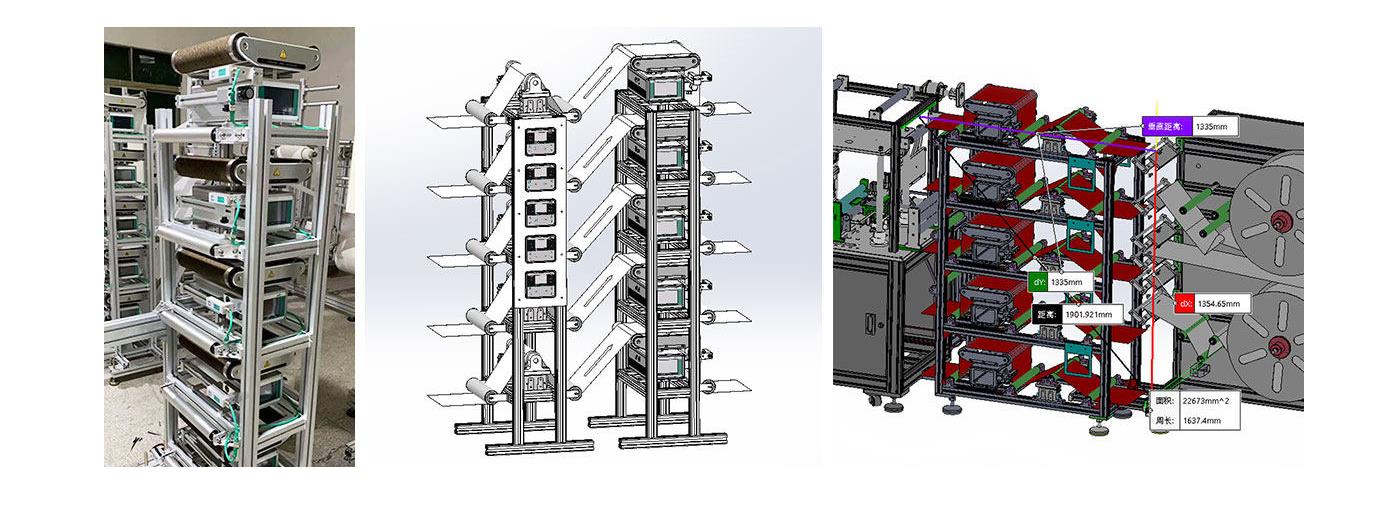
What Is The Accuracy Of Web Guide System

The accuracy of web guide system

High accurate web guiding system will help greatly improve productivity and reduce production waste. As a web guide system manufacturer, the question you will be asked commonly is that what is the accuracy of your web guiding? The answer always will be doubted, because the definition of the accuracy of the web guide systemvaries for different people. Before learning the accuracy of the web guiding system, there’s a simple question that why the web guide system is required?

Why web guide system Is required?

The edges or center lines of the process of coating, printing, compounding, dividing, and winding, otherwise, the transverse dislocation of the coil will cause the waste or even downtime. This is why the web guide system is required. It is the technique which will always coil side is neat and consistent. Usually, the tracking method of the web guide includes three types of edge, center and line.

What determines the accuracy of web guide system

The accuracy of the web guide is determined by three factors: the deviation of the invasive web, the accuracy of the web guide system, the installation accuracy of the system. Further, the unique features of the coiling are that the deviation of the invasive web, the lateral movement or swing size of the coil, which are important factors in determining the accuracy of the web guide.

The definition of the accuracy of web guide system

The web guide machine is typically upstream of a critical process, and the closer the process is, thus the maximum reduction in position deviation errors when entering the critical process. As a manufacturer of web guiding, need to follow the edge, center, or line position of the coil just from the probe. So it is recommended that installing the machine in the location closest to the key process.

For more professional knowledge, please visit the article page of The accuracy of web guide system.
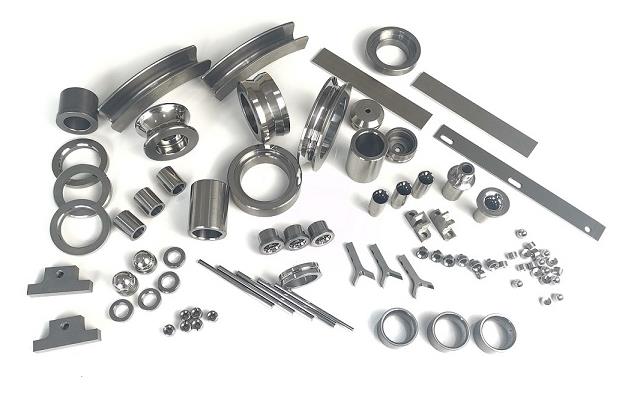
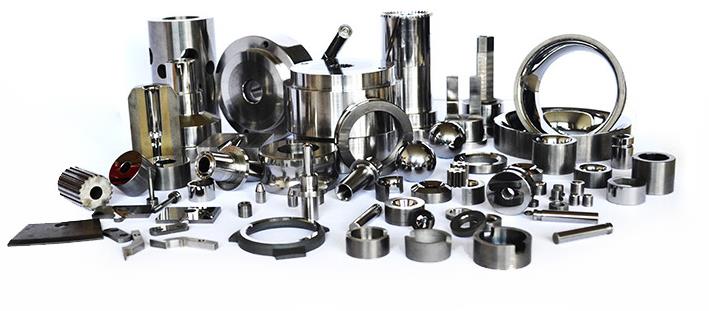
Useful Knowledge Shared For Tungsten Carbide

carbide wear parts

With high hardness, excellent wear resistance & corrosion resistance, tungsten carbide has a high performance in the high-tech manufacturing field which has a strict requirement of quality, stability and reliability.

Characteristics of tungsten carbide

1. High hardness and wear resistance. Generally, between HRA86 ~ 93, decreases with an increase in cobalt.

2. Thermohardening. Under the temperature of 500°C is basically unchanged and there is still a high hardness at 1000°C.

3. High anti-bending strength. The bending strength at normal temperature is between 90 and 150 MPa and the higher the cobalt, the higher the anti-bending strength.

4. More stable chemical properties. Carbide material has acid-resistance, alkali-resistant, and even significantly oxidation even at high temperatures.

5. High thermal conductivity. Cemented carbide has higher thermal conductivity than that of high-speed steel, which increases with the increase of cobalt.

6. The coefficient of thermal expansion is relatively small. It is lower than high-speed steel, carbon steel and copper, and increases with the increase in cobalt.

The manufacturing method of tungsten carbide

The production of the cemented carbide is to mix tungsten carbide and cobalt in a certain proportion, pressurize into various shapes, and then semi-sintered. The sintering temperature is 1300-1500°C.

When manufacturing cemented carbide, the selected raw material powder has a particle size between 1 and 2 microns, and the purity is very high. The raw materials are mixed according to the specified composition ratio, and the medium is added into the wet ball mill to wet-grind them for making them fully mixed and crushed. After drying and sieving, the forming agent is added, and then the mixture is dried and sieved. Then, when the mixture is granulated and pressed, and heated to close to the melting point of the binder metal (1300-1500°C), the hardened phase and the binder metal will form a eutectic alloy. After cooling, a solid whole is formed. The hardness of cemented carbide depends on the hardened phase content and grain size, that is, the higher the hardened phase content and the finer the grains, the greater the hardness. The toughness of cemented carbide is determined by the bond metal. The higher the content of the bond metal, the greater the bending strength.

Hardness test of tungsten carbide

The cemented carbide is a metal, which can reflect the difference in mechanical properties in chemical components, tissue structures, and heat-treatment process. Therefore, the hardness test is widely used in the inspection of carbide properties, which can supervise the correctness of the heat treatment process and the research of new materials. The hardness detection of tungsten carbide mainly uses a Rockwalk hardness tester to test HRA hardness values. The test has a strong shape and dimensional adaptability of the test piece with high efficiency.

For more professional knwoledge, please visit the introduction page of tungsten carbide knowledge.

Benefits of Use of Lube Oil Purifier

Lube Oil Purifier Application:

• Marine fuel oil treatment ( diesel, Lube, HFO purification )

• Fuel Oil Process industry

• Lube Oil Processing

• Waste oil industries

• Bio-Diesel / VCO industries

Advantages of Lube Oil Purifier

Powerful, productive and cost-effective

Removes both water and solids in one operation

Effective cleaning of even small particle sizes

Minimal maintenance, enabling more process uptime

Prolongs equipment lifetime

Low total cost of ownership (TCO)

The water is released while the contaminating solids are stored separately. If your processes result in low amounts of solid waste, you can generally remove it manually. Higher waste amounts are automatically cleaned. Yuneng Lube oil purifier can also handle large cleaning volumes and a temporary high influx of water.

A Guide To Lube Oil Purifier

A ship has hundreds of machinery and systems which helps in its day to day operations.

Lubrication plays a vital role in the smooth running of this machinery by overcoming and reducing heat, neutralizing acid combustion by-products, preventing scuffing, lessening friction and thereby combating wear and tear between two running surfaces.

The main engine lube oil system on ships ensure lubrication of the main bearings through pumping of lube oil by duplex oil filters, to the crossheads, and guides, piston cooling and bottom end bearings through the swivel jointed pipes in the engine casings.

The engine cylinders have their own lube oil system, which lubricates the surfaces between the cylinder wall and the piston rings through a set of concentric nozzles or quills fitted around the cylinder liner.

There are various properties of lubricating oils to be maintained, such as viscosity, volatility, alkalinity, oiliness, detergents.

It is imperative to maintain the lubricating oil’s properties and to ensure it is in good condition.

Therefore, we need a Lube oil purifier on ships for proper purification of lube oil with minimum throughput or batch purification in case of heavy contamination.

The Transformer Oil Purifier/Filtration System

Removes impurities and restores / improves the electrical, chemical and physical properties of transformer insulating oils. This oil is an integral part of most large power transformers.  It serves two major roles, as a cooling agent and as an electrical insulator between internal components. Contamination of this oil compromises the insulating properties and leads to premature failure of the transformer. This contamination can be in the form of water, dissolved gases, or foreign particles. By processing this oil with a vacuum dehydration unit like the Yuneng Transformer Oil Purifier, this contamination can be removed returning the insulating oil to its original specifications.

The system incorporates high vacuum and mechanical filtration to dehydration, degasification and filter contaminated oil. Engineered with functionality and versatility to meet a wide range of applications with features such as: an inlet pump capable of drawing oil from long distances and low elevations, a unique multi-level vacuum chamber design for rapid degasification, a sophisticated heating control scheme to ensure safe and efficient processing of the contaminated oil, and a variable speed outlet pump to return the processed oil to the transformer being serviced. Control, monitoring, and user interaction are accomplished through an industrial grade touchscreen operator interface. All parameters are easily viewed and adjusted through this interface along with viewing of current and historical data.

Advantages for Transformer Oil Purifier

Here is we have listed some advantages for transformer oil purifier:

Improved insulation properties of the oil and hence the other media like paper/cellulose insulation

Better the insulation of transformer, longer the life of the transformer and lesser the breakdown of the transformer

Longer the life of the transformer asset, good returns on investment of the asset

Lesser breakdowns and failure of the transformer results in uninterrupted power supply

The YUNENG transformer oil purifier can achieve transformer oil thoroughly dehydrated and remove fine toner. Restore transformer oil to return to raw performance. We have a variety of transformer oil purifiers to choose from, for example, a small online on-Load tap changer (OLTC) transformer oil purifier machine, intelligent transformer oil purifier. Each type of oil purifier has its own features, you can choose from in your own needs.

The Need for Transformer Oil Filtration

The increasing rating requirements of modern transformers and electrical apparatus results in greater electrical stress in insulating material and fluids. In order to handle these greater stresses, oils are required to have better dielectric strength, and lower residual water content must be maintained. The timely and proper treatment of these insulating fluids will result in the improvement of the properties of the entire insulating system of power transformers. The principal functions of the insulating fluid are to serve as a dielectric material and an effective coolant. To perform these functions, the insulating fluid must have specific necessary qualities at the time of initial impregnation and filling at the factory which must be maintained at the same quality level in field operation if optimum performance is to be assured.

Almost 75 percent of the transformer failures happen due to contaminated and deteriorated oil. It is important to filter the transformer oil. Regular maintenance is of utmost significance as it is a great financial burden to replace or repair the transformer. Ignoring transformer oil filtration can lead to:

Arcing

Overheating, which reduces electrical efficiency as well as the life of the transformer

Corona Discharges

Decrease in insulating strength of the transformer oil, and more.

Transformer Oil Filtration Plant

The transformer is one of the main assets in the electrical power industry which needs to be maintained for guaranteed uninterrupted power transmission in order to get assured revenue benefits. Transformer oils are important for functional transformers and are the dielectric substance that helps in maintaining their temperature. Transformer oils are vital for the proper running and functioning of the transformers.

About Transformer Oil Filtration:

Transformers require filtered and dried oil. During its usage, the insulating oil absorbs moisture and gets polluted by sopping fibres, dirty particles, aging products, and soot. Even unused oil is not clean enough as it may have absorbed moisture from the air or may have got polluted in the barrel it was stored in. The efficiency of the oil as an insulating material is highly reduced as the moisture level increases. Hence, transformer oil filtration is an important process that eliminates solid particles, dissolved gasses, and dissolved water. The electrical properties of the oil can be enhanced by filtering, dehydration, and degassing. Oil Filtering keeps the transformer in good condition and increases its life.

Tungsten Carbide With High Material Properties

carbide wear parts

Tungsten carbide has high hardness and wear-resistance, The cutting speed of carbide tools is 4 to 7 times higher than that of high-speed steel with 5 to 80 times higher service life. Carbide products can cut hard materials of about 50HRC.

Cemented carbide is mainly micron-sized powders of carbides (WC, TiC) of high-hardness refractory metals. The main components are powder metallurgical products sintered in a vacuum furnace or a hydrogen reduction furnace with cobalt (Co), nickel (Ni), and molybdenum (Mo) as the binder.

The matrix of cemented carbide is composed of two parts: one part is the hardening phase and the other part is the bonding metal.

The hardened phase is the carbide such as tungsten carbide, titanium carbide, and tantalum carbide. Their hardness is very high, and their melting points are above 2000°C, and some even exceed 4000°C. The existence of the hardening phase determines the carbide has extremely high hardness and wear resistance.

Tungsten carbide WC grain size requirements for cemented carbide use different grain size WC according to different applications.

Carbide cutting tools

Carbide cutter is widely used for metal cutting and machining. Fine machining alloys such as foot cutter blades and V-CUT knives use ultra-fine, sub-fine, and fine-grained WC; rough-machining alloys use medium-grain WC; gravity cutting and heavy-duty cutting alloys use medium and coarse Granular WC as raw material.

carbide brazed tips

Carbide mining tools

The rock has high hardness and a large impact load. Coarse WC is adopted, and the rock impact is small with a small load. Medium-sized WC is used as raw material.

carbide mining tips

Carbide wear-resistant parts

When emphasizing its wear resistance, compression resistance and surface finish, adopt ultra-fine, sub-fine, fine, and medium-grain WC as raw material and use medium and coarse-grain WC raw materials as the main material for impact-resistant carbide wear parts.

tungsten carbide parts

The theoretical carbon content of WC is 6.128% (atomic 50%). When the carbon content of WC is greater than the theoretical carbon content, free carbon (WC+C) appears in the WC. The presence of free carbon causes the surrounding WC grains to grow during sintering, resulting in uneven grains of cemented carbide. Tungsten carbide parts generally requires high combined carbon (≥6.07%), free carbon (≤0.05%), and total carbon is determined by the production process and scope of application of cemented carbide.

The bonding metal is generally iron group metals and cobalt and nickel are commonly used.

TYPES OF HYDRAULIC FLUID CONTAMINANTS

Hydraulic fluid may become contaminated as a result of several factors. First, we need to understand the basic difference between primary and secondary pollution. Primary pollution occurs in the system before commissioning. Accordingly, secondary pollution is the pollution that occurs directly during equipment operation. Primary system contamination occurs due to the presence of residues of machining and assembly, as well as the impurities contained in fresh oil. Secondary contamination is most often caused by machining residues, products of abrasion and corrosion, and dirt, which gets into the system from sealing materials of cylinders or through breather channels in tanks.

Previously, less attention was paid to the dependence between hydraulic equipment service life and the purity of hydraulic oil. But recent studies have shown that there is a strong relationship between these parameters. Therefore, hydraulic oil purifier should be a mandatory procedure, an important part of measures aimed at the extension of the service life of machinery and equipment and reducing failure rate.
For example, the all-knowing statistics say that the main causes of premature failure of roller bearings include inadequate lubrication, the presence of particulate matter in oil and overload.

在 WordPress.com 上免费创建您自己的网站。创建您自己的网站。
免费开始