Here, we’ll introduce the common problems that occur in the solvent-free composite and the effective solutions. Adopting the solutions can greatly improve the work efficiency of the solventless laminator.
Knife Line
The main reason is that the coating units are not cleaned up. At this point, the coating unit should be downtown, or the transfer roller is changed, and the blanket is eliminated.
Poor Drying Of Adhesive
1. The adhesive is not configured in accordance with the correct matching requirements.
2. The adhesive has not been working.
3. Mixed glue contains moisture content or a large amount of ethyl acetate.
Composite Membrane Bubble
1. Since the material is not smooth and the ink particles are thick, the glue coating is insufficient. It should use high-quality materials or increase coating.
2. CO2 generated in curing cannot form in a film which has a good barrier property, mainly due to the use of a single-component solventless. So it should use a two-component adhesive.
3. The surface wettability is poor. It should increase the surface wetting tension of the material and improve the wettability of the adhesive.
4. Transfer roller is attached with foreign matter or scars and should be scrapped with bamboo pieces.
Poor Adhesion
1. The adhesive coating is too much, and the Internal curing of adhesive is slow.
2. When using a single-component adhesive, the humidification moisture content is insufficient.
3. The amount of coating is too small and the infiltration of the surface is incomplete.
4. Poor solubility of the ink and the adhesive, such as using polyamide ink.
Here, we give a detailed analysis of the undesirable phenomenon in the solventless composite and solventless laminating machine, such as the uniform winding, poor coating effect, etc and how to solve the problems.
Poor Coating Performance
1. The pressure of the transfer roller is not enough.
2. Mechanical brake adjustment error of transfer roller.
3. The coating roller is not clean well.
4. The poor finish of the glue pressure roller, the transfer roller, or the composite roller.
Poor Coating Performance Of Thin Film Edge
1. The adhesive close to the baffle does not replace for a long time, as long as it often swings the spray nozzle to maintain the adhesive fresh.
2. The coated pressure roller of the composite roller has glue or other impurities.
Uneven Section Of Rewinding
1. The glue amount is too large.
2. The cooling performance of the back film roll which is from the composite roller, is poor.
3. Tension is not suitable.
4. The flatness of the squeeze roll in the rewinding is poor.
5. The glue coating amount in the left and right sides of the film is too large and it is best to control the difference within 0.2g.
The paper core is not aligned with the film.
White Spot
1. Low glue coating
There is not enough adhesive to penetrate into ink. At this time, it appears as a small and uniform spot in the entire composite film. The solutions are to appropriately increase the amount of glue and adjust the composite temperature and composite pressure.
2. The glue portion, the composite portion of the rollers have a poor surface finish. At this time, it is expressed as partial intermittent repeated spots. It can be judged by measuring the spacing of the two spots to find that which rolls have foreign matter and clean up.
3.The tension of substrate film is uneven and wrinkles before entering the composite roller, resulting in poor partial composite performance, and the bubbles will appear, the macroscopic manifestation is a white spot. The solution is to adjust the deflection roller and keep the film neat before entering the composite roller. The tension can be appropriately adjusted or replace film.
4.The pressure of the composite portion of the glue portion is not properly set.
5. The solubility of the ink and adhesive is not good, white spots will occur at no adhesive penetrated ink, and the suitable adhesive or ink should be replaced.
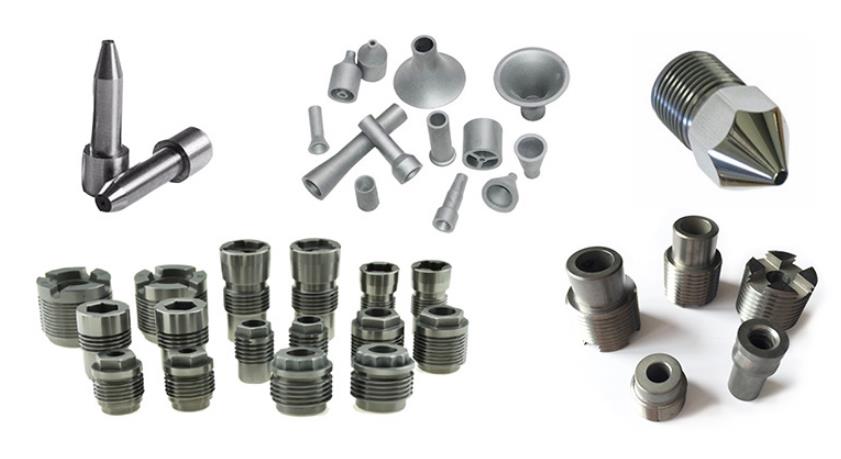
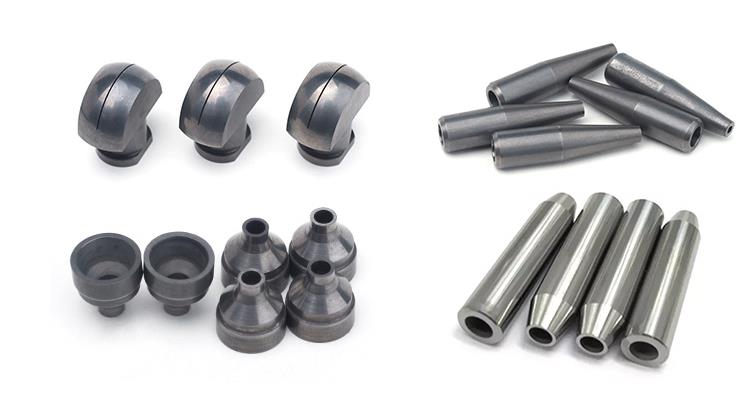
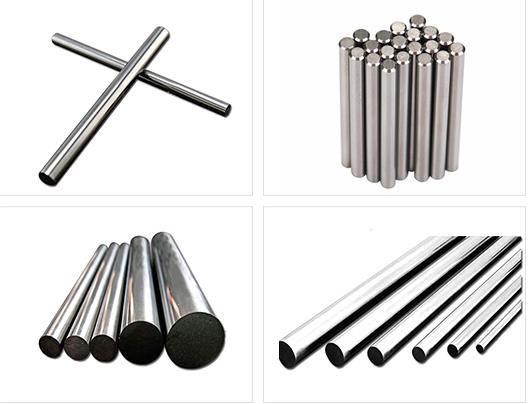
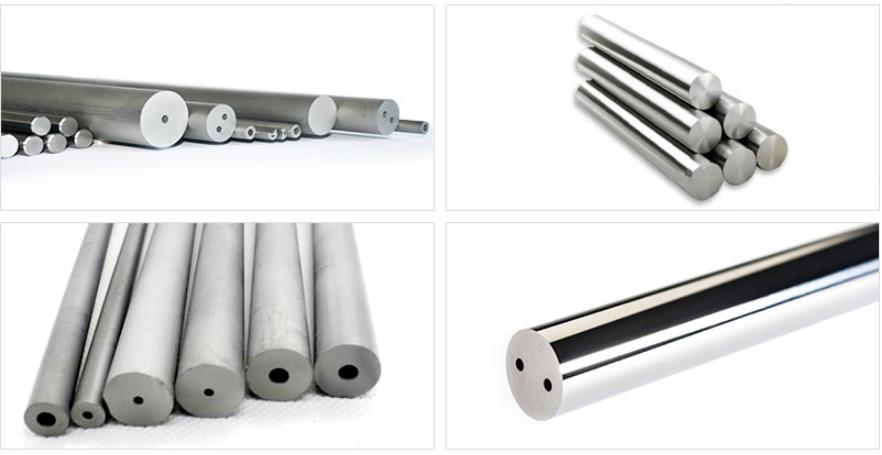
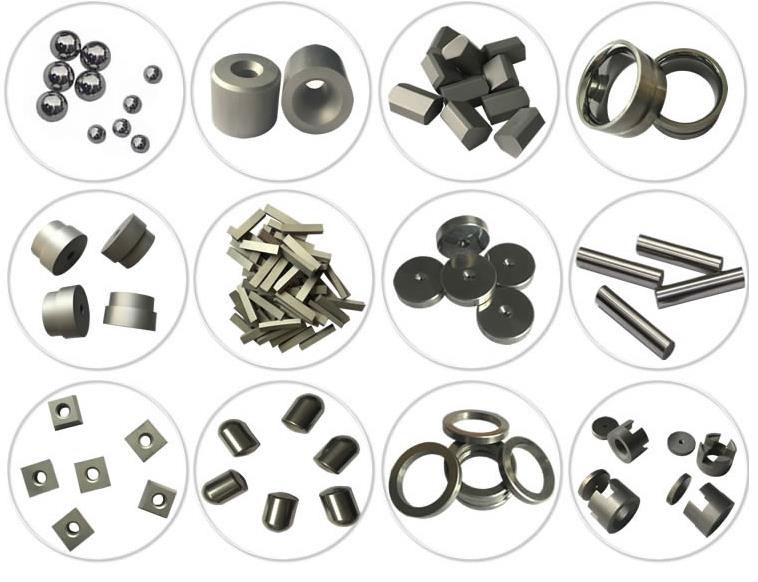
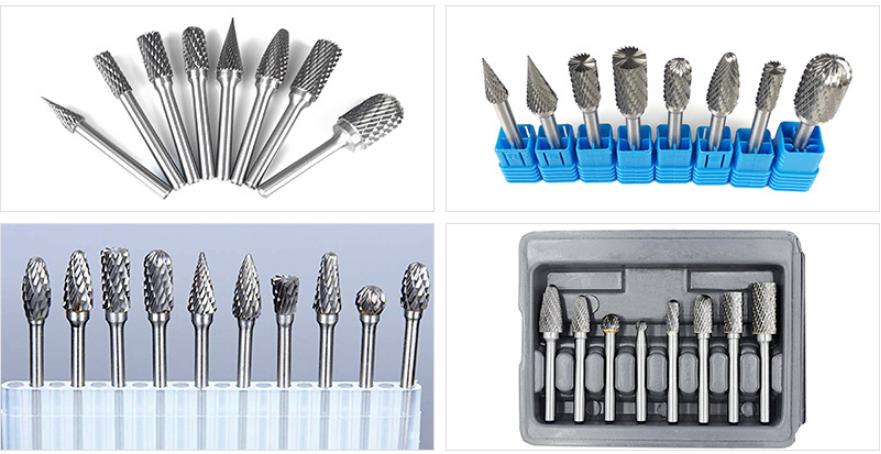
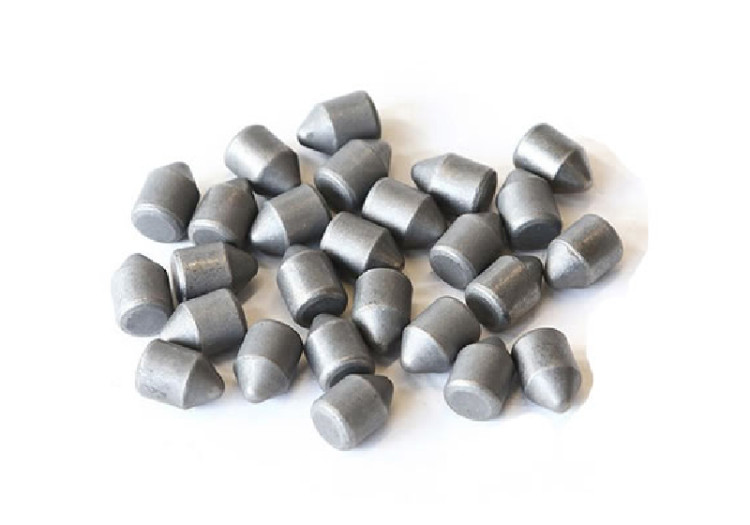
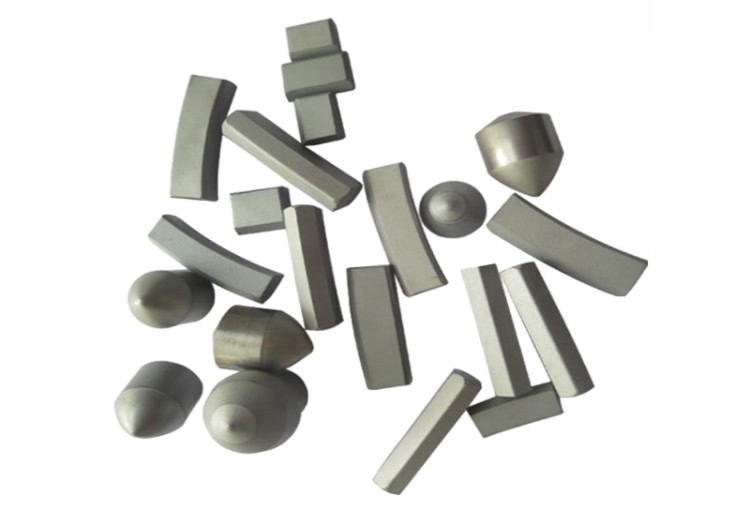
Tungsten carbide material has good conductivity, thermal conductivity and corrosion resistance with high density of 16 g/cm3 to 18.5 g/cm3. It has very good mechanical strength, small coefficient of thermal conductivity and elastic coefficient. XYMJ is a professional carbide manufacturer, providing excellent quality custom tungsten carbide parts with advanced equipment and strict quality control, the most competitive price guaranteed.
Tungsten Carbide Roller
Tungsten carbide roller has superior performance, stable quality, high precision, good wear resistance and high impact resistance. Carbide roller has high hardness, which is not affected by environmental or external temperature change, therefore it can be used in an extremely hot or cold environment.
Features
1. Excellent surface mirror finish.
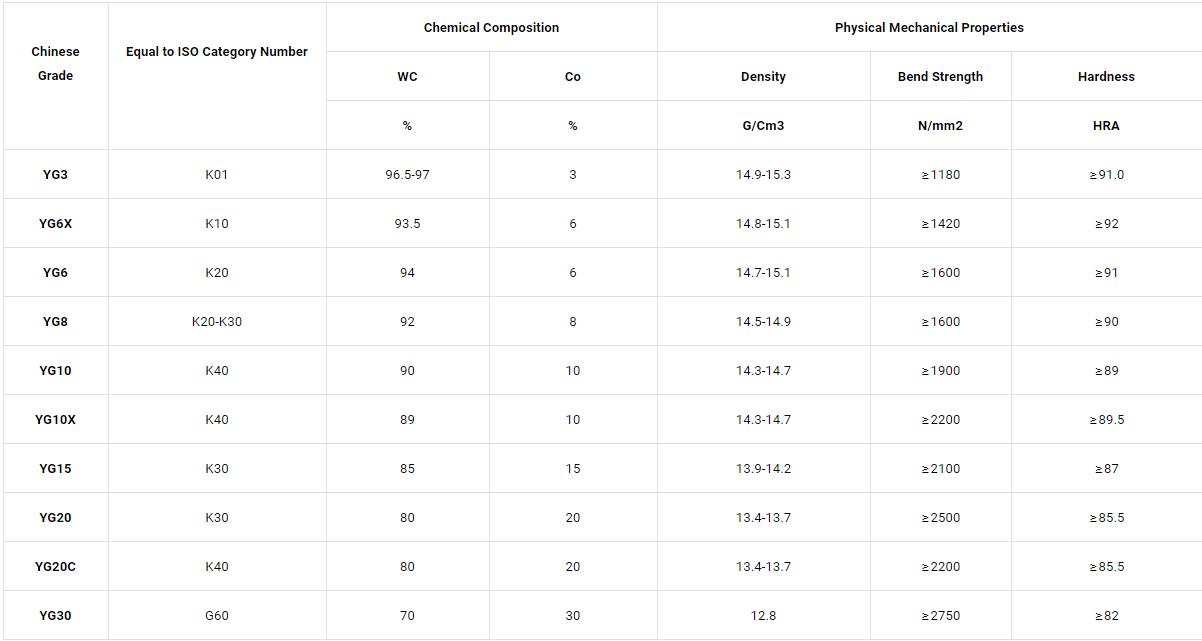
2. High hardness, round HRA 87 or even to HRA91.
3. High wear resistance and corrosion resistance.
4. The service life of tungsten carbide is 50 times longer than common steel tools.
Tungsten Carbide Bush
Tungsten is known for its high melting point and durability. It’s also resistant to corrosion, which is ideal for industrial and manufacturing use. Likewise, bushings made from carbide offer an outstanding shelf life. That means you’ll spend less time switching out worn-down bushings, and more time getting the job done. In terms of stamping dies, carbide bush is widely used. Because of its wear resistance and good surface finish, it does not need to be replaced frequently, which can achieve higher utilization of equipment.
Tungsten Carbide Nozzle
When Inevitable to rough handling and media used for cutting abrasives (glass beads, steel shots, minerals, or cinder), tungsten carbide nozzle has the advantages of being more economical and longer service life. Traditionally, tungsten carbide is the best choice for the material of the nozzles.
They are widely used in surface treatment, sandblasting, painting, electronics, chemical processes and other industries with different applications such as wire straightening, wire guides, and other aspects.
Advantages
1.Sufficient strength and rigidity.
2. Good impact toughness.
3.Abrasion resistance.
4.Corrosion resistance.
5.Long service life.
6. Anti-compression.
7.Excellent thermal shock resistance.
8.Good sealing character.
Tungsten Carbide Valve Seat
As the main material of carbide seat, tungsten carbide has unique properties: long working time, corrosion resistance, and wear resistance. Also, the carbide valve seat can withstand high pressure. It can be widely used for most passenger vehicles, light and heavy-duty trucks, diesel engines and industrial engines. We provide carbide seat, superior quality with advanced equipment and perfect workmanship.
Outstanding Features Of Carbide Valve Seat
1.Corrosion resistance and wear resistance
2.Longer life-time
3.High pressure
4.High precision
5.Excellent endurance to high temperature
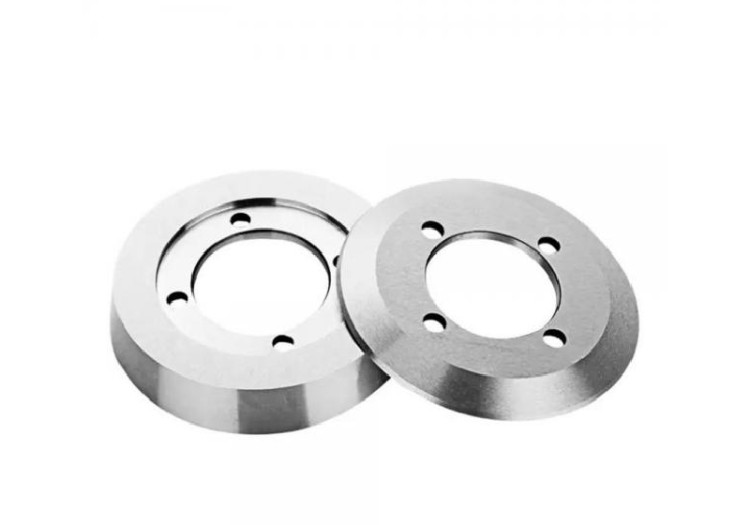
Tungsten Carbide Seal Ring
The mechanical seal ring is one of the most important tungsten carbide wear parts. Tungsten carbide seal ring is made with Cobalt (Co) as binder material. Nickel(Ni) Bonded Rings are also provided, widely used as seal faces in pump and seal, compressors, and agitators, suitable in high-speed wire rod finishing block, oil in refineries, fertilizer plants, petrochemical plants, pharmaceutical industries.
XYMJ has more than 20 years of experience in manufacturing mechanical seal rings and metal parts with tight tolerances, ISO certified, OEM available and the excellent wear resistance of TC roll rings bring high pass performance with superior surface finish.
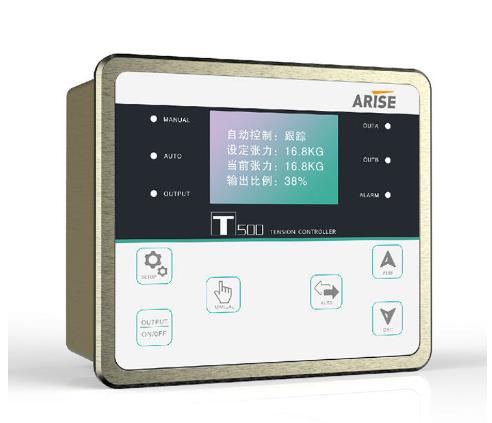
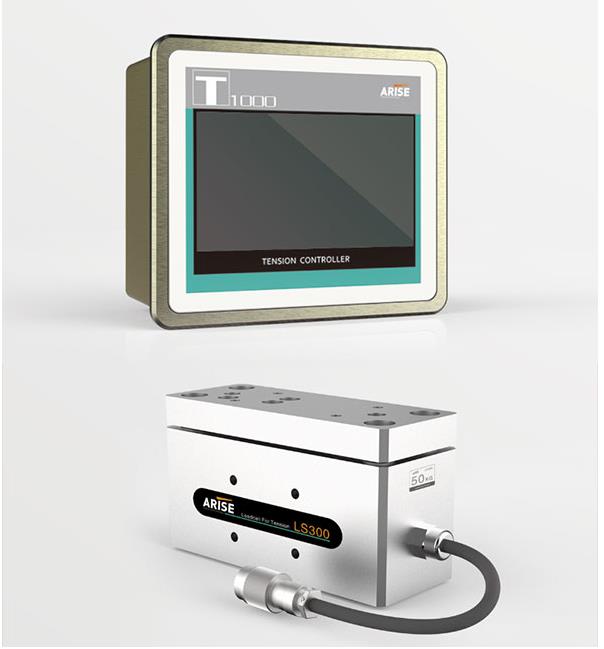
During the entire solventless composite process, tension control is important, and the precise tension control of solventless laminator is the premise of ensuring the quality of the composite film.
Tension Control Methods Of Solventless Lamination Machine
The solventless lamination machine mainly has two tension control modes, one mode is a “floating roller” and the other mode is a “micro shift”.
The “floating roller” tension control has the advantages of large range control, adapting to the wide substrates, but the structure is more complicated.
The “micro displacement” type tension control has the advantages of high precision, high sensitivity, but since the detection range is small, the absorbance of the material roll fluctuation is small, so this method is generally only suitable for relatively thick or non-molar material.
In actual solventless composite production, a solventless laminating machine may adopt different tension control methods in different sections.
Instruction For Tension Control Of Solventless Lamination Machine
1. During the solvent-free composite, the requirements for tension control are higher than that of ordinary compounds. The main reason is that there is no solvent composite initial adhesion, and the operational control is difficult, which may lead the quality problems. In addition, the solvent-free composite speed is much higher than the dry lamination machine.
During the solvent-free composite, the tension after the thin film is slightly greater than the main arrangement, and the winding tension is greater than the rewinding tension. The winding taper is controlled within 20%. For different materials, each part of the tension control is different, and even the film of the same material produced by different manufacturers, its tension has to be slightly adjusted.
2. In the solventless composite, not only the accuracy of the tension control system, the matching of the tension between the two composite rolls is emphasized. Under the current technical conditions, many tension control systems have very high accuracy performance, which can meet the needs of solventless composite production. However, in the process of solventless composite operation, this is often encountered, which the matching of the two-layer materials is more difficult, which not only requires a good tension control system but also carefully understand the material features. More accurately, the tension of solvent-free composite requires that the elongation of the two-layer rolls is consistent by controlling the tension to ensure that the two-layer material does not occur the relative slip during the solventless composite.
3.The rewinding tension and pressure are the key to solventless composite tension control. Since the combination of the composite film and the overall condition of the material roll, are determined by the rewinding tension and pressure, adopting the segmentation independent tension and segment tension taper are the most ideal control mode.
It should be noted that the segment tension taper is mainly to compensate for the need for linear tension to the requirements of different material winding tension. Different tension tips can be effectively guaranteed to ensure the neatness of the winding while reducing the generation of core wrinkles.
Unwinding Device And Loading Pattern Of Solventless Lamination Machine
Unwinding device The solventless laminator is mounted with an aluminum foil unwinding frame and an ordinary unwinding frame. In general, the path of the aluminum foil unwinding frame is shorter with a smooth guide roller, often adopting “micro displacement” tension control. The ordinary unwinding frame is long, often adopting the “floating roller” tension control.
When using an aluminum foil unwinding frame, only one frame is in a working condition during the composite process, that is, the ordinary unwinding frame is in a non-working state. Due to the simultaneous compounds of the two films, two unwinding frames are required to work at the same time.
Accordingly, there must be two tension control systems in the working condition.
Loading Pattern
There are two main methods of the solventless laminating machine and the reliability of the air shaft and shaftless pneumatic shaft are high.
The shaftless cone top type of loading pattern has the advantages of simple, fast, high efficiency, low operation intensity, but it has high requirements for the core tube and in order to ensure safety, this loading pattern has a higher requirement for equipment parts Also the manufacturing cost is relatively high.
In the current market, medium and high-speed solvent-free lamination machines with speed at 400 to 600 m / min, basically adopt air shaft loading patterns.
Tension control plays an important role for the whole solventless composite process and learning the tension control well can do a great favor for the work efficiency of solventless laminating machine.
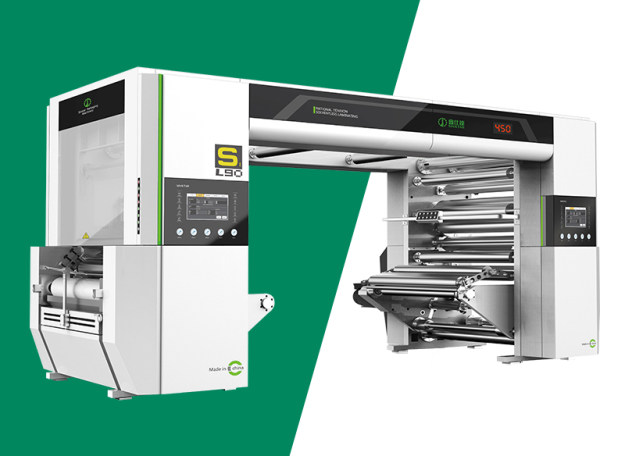
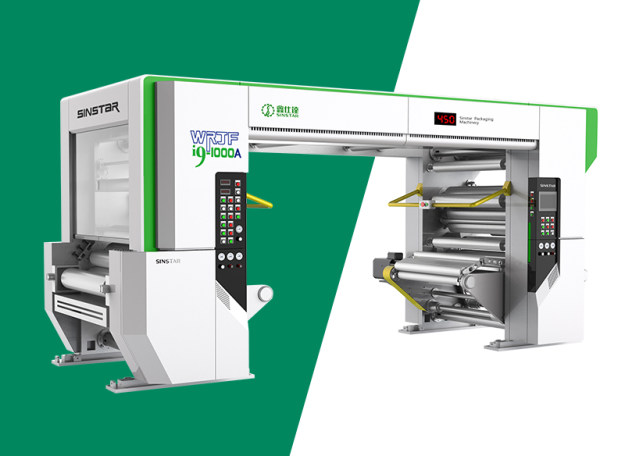
Sinstar Packaging Machinery Co., Ltd is founded in 2005, is a professional solventless laminating machine manufacturer with advanced systems, such as “Coating Clearance Memory System”, “Foolproof Glue Preparation System”, “Accurate Coating Weight Detecting System”, “Zero Error Tension Stabilizing System”, types including WRJi9 series, S1L90 series, and WRJFi9 series solventless laminator. Sinstar has professional and unique invention patents, appearance patents and utility model patents.
Why should choose Sinstar solventless lamination machine
1. Adopts advanced green and eco-friendly packing technology
2. No wrinkle when 0.06 mm thickness aluminum foil goes through the running roller.
3. Process parameters online printing out.
4. High viscosity glue feeding and coating applicable.
5. Active unwinding for aluminum foil through motor control.
6. Simple operation.
7. More capable, more refined, with a five roller coating system.
8. Width setting for digital glue spray.
9. Digital tension system
10. Intelligent dynamic analyzing system
The solventless lamination machine is equipment which is applied to solvent-free adhesive composite. There’re two types including single station solventless lamination machine and double station type. Sinstar solventless laminating machine will be one of the best choices for advanced flexible packaging machinery.
Solventless lamination is a method of compositing two or more substrates by using a solvent-free adhesive. The solventless lamination machine is mainly composed of two major parts including the solventless laminator and adhesive mixer. It mainly completes the operation of the unwinding, tension control, glue, composite and rewind. The adhesive mixer is a special device for quantifying the adhesive to the host. Here, we mainly introduce the types of solventless laminating machines.
Single Station Solventless Lamination Machine
Today, the single station solventless machine is widely used, which is determined by a variety of factors.
1. Due to the low initial adhesion of the solvent, the tension control requirements of the substrate are high. Therefore, during the solvent-free composite, the single-station solventless lamination machine has the advantages of shorter material feeding, high accuracy tension control and low waste rate.
2. Since the solvent-free adhesive has a certain opening time, it does not require a dry composite high-temperature drying system, using a single station solventless laminating machine, can realize the operation of the roll change during the downtime.
3. the manufacturing of the single station solventless laminator is relatively simple, and the cost is low. Moreover, the single station solvent-free lamination machine is compact, covering a small area, and one person can operate in general.
Overall, most of the solventless lamination machines, are the single station model, accounting for more than 70%.
Double Station Solventless Lamination Machine
The double-station solvent-free lamination machine is installed on an unwinding rack with two material rolls and can realize the reel alternation without downtime.
Advantages And Disadvantages Of Double Station Solventless Lamination Machine Advantages
Compared with the single station solventless laminating machine, the double station type mainly has the following advantages.
1. High efficiency. Normally, the stable working speed of the solventless laminating machine is 300 ~ 600 m / min, which is about 2 to 3 times higher than the dry laminating machine. The double-station solventless laminator can greatly reduce the time of roll changing and downtime, improving production efficiency, with generally 70% higher yield.
2. Significantly reducing operational difficulties. Single station solventless laminating machine requires frequent replacement rolls, one unwinding or rewinding unit is replaced once every 15 to 30 minutes, which greatly consumes the operator’s physical strength. The physical strength of the personnel will be accompanied by a certain degree of tension, which will inevitably affect the progress and product quality. The roll changing without the downtime of a double station solventless lamination machine can avoid this.
3. Improve production stability. The double-station solventless lamination machine greatly reduces downtime, improving tension control and adhesive viscosity consistency, which will improve production stability.
Disadvantages
However, there are some potential disadvantages for double station solventless lamination machine, because the material feeding is long with higher tension control requirements and the waste rate will also increase accordingly, and there may be unfavorable effect for solventless composite products with lower initial adhesion. In addition, the cost of a double-station solventless lamination machine is also significantly higher than the single station type.
Additive manufacturing changes not only how products find their way to the consumer but also the form and function of those products. With additive manufacturing, you’re no longer bound by traditional manufacturing techniques. JTR Machine’s 3D printing service is revolutionizing the way we create products, not simply with developments in technologies and materials properties but particularly with the design. The role of design in the optimization of the supply chain and business strategy is something that should not be overlooked.
As you may know, to create 3D printed parts, you need to get a design. Designing for additive manufacturing requires skills and knowledge to take full advantage of additive manufacturing. What is design for additive manufacturing and what are the benefits for your parts ? From complex geometries to mass customization, this technique will provide many advantages for your manufacturing process.
What is Design for Additive Manufacturing (DfAM)?
Design for Additive Manufacturing is the ability to produce designs specifically for 3D printing. Indeed, designs produced for 3D printing are quite different from traditional designs, developed for other manufacturing techniques. Creating a design for additive manufacturing, a technique consisting into building parts layers by layers, is really different from subtractive manufacturing methods or injection molding. Design for additive manufacturing enables a new way of thinking but you also have to keep in mind that 3D modeling and design for additive manufacturing are two different things. While designing for 3D printing, you create a file that has to be understood by a 3D printer. Moreover, 3D printing technologies all have their specificities, from FDM to Selective Laser Sintering or Selective Laser Melting technologies, which have to be taken into consideration during the designing process.
Design engineering allows going even further, using advanced software to get incredibly optimized parts. 3D printing and design are changing the way companies are thinking and operating!
When the inflatable life raft is used, the raft and the storage cartridge can be thrown directly into the water. The life raft can be automatically inflated. When the ship sank too fast under the water, it is too late to throw it into the water surface. The hydrostatic pressure release on the raft will automatically remove and the emergency inflatable life raft will be released, floated automatically.
The detailed steps as follows
1.Take the hook opening on the hydrostatic pressure release and launch the small ring, making the chain hook fall, or rotating the manual release device, and the raft will slide to the sea.
2.When the height is less than 11m from the water surface, or when the raft is thrown into the water, it is necessary to continue to pull out the first cable and open the valve of the inflatable cylinder, so that the raft is floated above the seawater.
3.If there is an overturned state, it should be centered. The person should wear a life jacket, and climb the bottom of the raft. When standing in the steel bottle, the hands pull the bottom, squatting and hypokinesis.
The Installation Of Inflatable Life Raft
When the inflatable life raft is folded, it is stored in the glass steel storage cartridge. Generally, it is generally arranged on the two-port boards. When installing, the raft is welded to the ship deck, ensuring that the storage cartridge is in the hierarchical position, and the fix is with the kundy which is connected to the raft and the manual detachment assembly. The assembly components are connected to the hydrostatic pressure release.
1. The bowline that is taken from the life-saving raft cylinder, is firmly connected to the hydrostatic pressure release ring, and there is an easy-to-break rope on the connecting ring, and the other end of the easy-to-break rope should be connected in the hydrostatic pressure release.
2. It is not allowed to pull the bowline from the storage cartridge.
What Should Be Paid Attention To The Use Of Inflatable Life Raft
1. When the life raft is drifting too urgently, the sea anchor can be put into water and reduce the rafting speed.
2. in order to avoid the wind and waves, the enter-exit door should be put down, and the duty for looking out will be strengthened through the hoping window on the raft hanger.
3. If there is water in the raft, take out the water scoop from the repair bag and drain it with the absorbent sponge.
4.In the night, using the flashlight to emit a Mousta signal, during the day, the mirror is transmitted by the sunlight.
5. When it is raining, utilize the drinking water bottle and the water pipe and deposit the rainwater to prepare for drinking.
Every month, we’re putting together a Technology Showcase, highlighting some of the print and digital-only product information that Production Machining received from supplier companies. For March, we’re focusing on turning machines, including a chucker-convertible Swiss-type lathe, an 8-axis Swiss-type turning center that features a subspindle, a 20-mm machine with a rotary synchronous guide bushing and more.
Sinstar, the full name is Sinstar Packaging Machinery Co., Ltd, which is founded in 2005 with location at high-tech industry zone of Rongchang District Chongqing City and is a professional supplier which is engaged in the research, development, production, sales and service of solventless laminating machine with annual production capacity of 200 sets.
Since the very beginning, Sinstar has been adhering to the design concept of “Innovation Changes The World, Innovation Masters The Future”, insisting on continuous technological innovation. We develop many unique technologies such as “Coating Clearance Memory System”, “Foolproof Glue Preparation System”, “Aimed Coating Weight Direct Input System”, “Accurate Coating Weight Detecting System”, “Multiple Mixing Ratio Protection System”, “Zero Error Tension Stablilizing System”, “Fast Cleaning System”. Now we have several series of solventless laminators including WRJi9 series, WRJFi9 series, S1L90 series, WRJSLi5 series and in China market so far we have more than 1000 customers because of the excellent characters of our machines: simple operation, safety, durability and perfect service.
Sinstar has a strong team of research and development, 30% of the company’s total staff are engineering and technical personnel who have been engaged in flexible packaging machinery industry for more than 20 years. Some of them are packaging industry engineers or doctoral talents and have ever participated in the formulation of the national standard GB/T 34150-2017 for non solvent laminating machine. In 2015, the design of Sinstar solvent free laminating machine won the second prize (Innovation category) of the second Cross-strait (Zhangzhou) Industrial Design Innovation Competition.
Sinstar has 220 authorized patents, including 8 for invention, 204 for utility model and 8 for appearance design. It has 10 trademarks and 2 software copyrights. The company has been awarded as “National High-Tech Enterprise”, “National Intellectual Property Advantage Enterprise”, “Chongqing Gazelle Enterprise”. In the 2019 Boao Forum for Chinese Entrepreneurs, Sinstar was selected as one of the brands symbolizing China’s economic resilience.
Determined to provide green and environment friendly flexible packaging machinery for the world, Chongqing Sinstar Packaging Machinery Co., Ltd helps to set up the first line of defense for food and drug.