What You Should Learn About Bolts

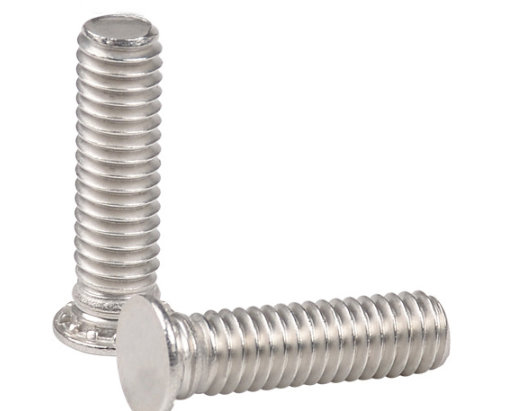
KENENG can produce and manufacture various types of bolts, screws, and other fasteners. Not only is there a large stock of standard sizes, customized bolt according to specific drawings also is available.

customized bolts

Anchor bolts

Anchor bolts are a general term for all post-anchoring components used to fix objects on concrete. The bolt head is usually placed in the concrete before it cures, or before the concrete is poured, leaving the threaded end exposed. The different anchoring mechanisms can be divided into expansion anchor bolts, reaming anchor bolts, bonding anchor bolts, concrete screws, shooting nails, etc.

Expansion Anchor Bolts

Expansion anchor bolts use the relative movement of the cone and the expansion sheet (or expansion sleeve) to promote the expansion of the expansion sheet, generate expansion and extrusion force with the hole wall concrete, and generate anchor bolt pullout strength through shear and friction to achieve anchoring of the connected parts.

Reaming type anchor Bolts

The reaming type anchor bolt is through the re-grooving and reaming of the concrete at the bottom of the borehole, and the mechanical interlock between the concrete bearing surface formed after reaming and the expansion head of the anchor bolt is used to realize the anchoring of the connected parts.

Bonding Anchor Bolts

Bonded anchor bolts use a special chemical adhesive (anchor glue) to glue and fix the shaft and the inner threaded pipe in the drilling hole of the concrete substrate. The anchoring of the connected parts is realized through the bonding and locking function of the adhesive and the shaft and the adhesive and the concrete hole wall.

concrete screw

The concrete screw is a hard and sharp knife-edge thread screw that is rolled and quenched by a special process. When installing, pre-drill a straight hole with a smaller diameter, then screw in the screw, and use the occlusal effect between the thread and the hole wall concrete to generate a pullout force to anchor the connected piece.

shooting nails

Shooting nails are a type of gunpowder-powered, high-hardness steel nails, including screws, that are shot into concrete. Using its high temperature (900 ℃), the steel nails and the concrete are integrated by chemical fusion and clamping to realize the anchoring of the connected parts.

Arbor bolts

An arbor bolt is a bolt with a permanent connection washer and reverses thread. Used in miter saws or other tools, it automatically tightens during use to prevent the blade from falling off.

Carriage bolts

Carriage bolts are bolts with a smooth round head and a square section. Carriage bolts are divided into large round head carriage bolts (corresponding to standard GB/T14 and DIN603) and small round head carriage bolts (corresponding to standard GB/T12-85) according to the head size. The carriage bolt consists of a head and a screw (a cylinder with an external thread), which needs to be matched with a nut to fasten and connect two parts through holes.

Hex Bolts

Hex bolts have a hex head and a threaded body. The part directly under the head may or may not be threaded.

J Bolt

J-Bolts are shaped like the letter J and are used for tie-downs. Only the non-bent part is threaded to allow the nut to be attached.

Lag Bolts

Lag bolts are not true bolts, also known as lag screws.

Rock bolt

Rock bolts are used in mines and also in engineering technology to reinforce the main body of slopes, tunnels, and dams. As a tension member that goes deep into the stratum, one end of the bolt is connected to the engineering structure, and the other end goes deep into the stratum.

Stud

The stud bolts have threads at both ends, and the screw in the middle is thick or thin. Generally used in mining machinery, bridges, automobiles, pendants, long-span steel structures, and large buildings.

U-Bolt

U-bolts are bolts shaped like the letter U with threads on both ends that can be combined with a nut. A straight metal plate with two bolt holes is used with nuts to secure pipes or other round objects to U-bolts.

U bolts

Shoulder bolt

Shoulder bolts are bolts with broad, smooth shoulders and small threaded ends that are used to create pivots or attachment points.
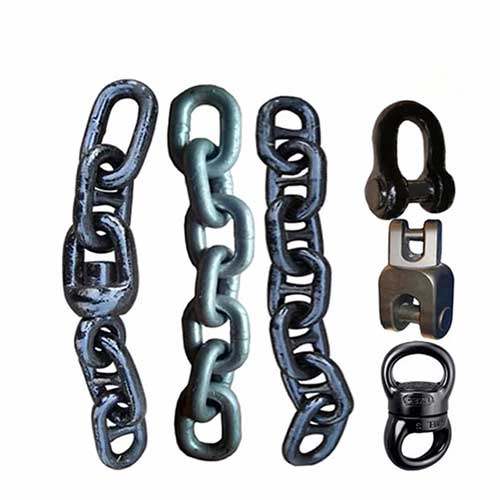
Useful Tips For The Installation And Inspection Of Marine Anchor Chains

The marine anchor chain can counteract the effect of external forces on the ship to ensure that the ship can safely berth in the designated waters. Therefore, attention should be paid to the anchor chain installation, inspection and maintenance during use.

Stud link anchor chain

What Are The Installation Requirements

Before the installation of anchor, anchor chain, swivel ring, and connecting ring, the product number of the ship inspection, the manufacturer’s product number, and the anchor quality shall be carefully copied. After inspection, the specification and quantity can be shipped only when they meet the requirements of the drawing, and the number shall be recorded.

According to the number of marine anchor chain required in the drawing, it is connected into a whole anchor chain through the connecting ring and swivel ring. The anchor chain is required to be firmly connected and installed and fixed with lead sealing. The two ends of each anchor chain shall be painted to identify the number of knots thrown by the anchor chain. This work can be completed at an appropriate time in the future.

How To Inspect Marine Anchor Chain

The chain link and shackle will be worn, cracked, deformed, and loose after long-term use, so marine anchor chain Inspection must be carried out, including wear inspection, crack inspection, deformation inspection, and loose structure inspection.

1. Wear Inspection

Check the contact point between rings and the friction point of the chain pipe, and measure its diameter with a caliper. The limit of anchor chain wear is: the average diameter of the anchor chain worn by ships in ocean shipping area shall not be less than 88% of the original diameter; The average diameter of the worn anchor chains of ships in offshore and coastal navigation areas shall not be less than 85% of the original diameter.

If the wear of the chain link or marine anchor shackle without guard exceeds 8% of the original diameter, it cannot be used again.

2. Deformation Inspection

Check whether the chain link is bent or twisted by visual inspection or measurement.

3. Structural Looseness Inspection

The pins of connecting chain links (after being disassembled for inspection, grease shall be applied to the inner joints before reassembly) and shackles will become loose due to the lead seal falling off, so they should be carefully inspected one by one.

4. Crack Inspection

Knock each chain link and shackle with a hammer to see if the sound is clear.

The anchor and anchor chain shall be deducted and painted regularly. After each repair and inspection, two coats of coal tar asphalt paint shall be applied, and then the anchor chain shall be marked.

YSmarines is a professional marine anchor chains supplier with the best prices. All the chains are tested by UT and MT detection and proof and loading test have been passed. Their surface could be blacking painting or hot-dip galvanized. All the chains could be approved by marine classification society such as ABS, DNV, RINA, LR, BV, CCS, BKI, etc.

Useful Knowledge Shared For Hexagon Socket Head Screws

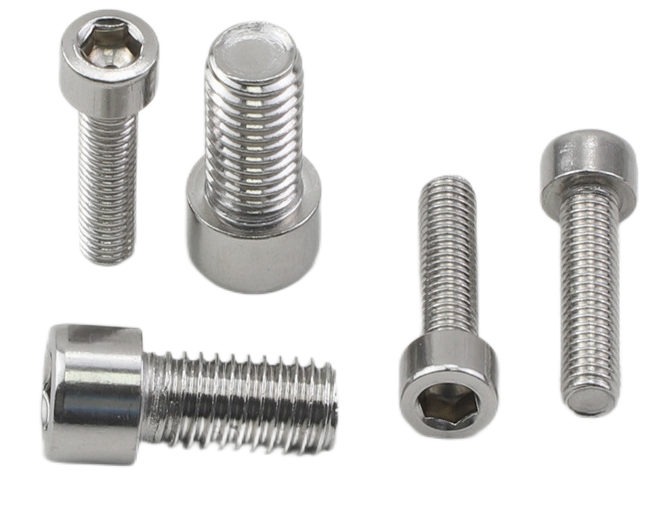
Cylindrical head socket screws are also referred to as socket head bolts, cup head screws, and socket head screws. Although they have different names but have the same meaning. There are also 4.8, 8.8, 10.9, and 12.9 commonly used hexagon socket head screws. It is also called a hexagon socket screw and hexagon socket bolt. Its head is hexagonal and cylindrical.

hexagon socket head screws

1. Classification of hexagon socket head cap screws

According to the materials, they are classified as carbon steel, stainless steel, and iron.

Stainless steel has stainless steel SUS202 hex socket cap screws, which are common materials of stainless steel. There are stainless steel SUS304 hexagon socket head cap screws and stainless steel SUS316 hexagon socket head cap screws.

The iron material is classified according to the strength grade of the hexagon socket head screw. There are 4.8-grade hexagon socket head screws, 8.8-grade hexagon socket head screws, 10.9-grade hexagon socket head screws, and 12.9-grade hexagon socket head screws. Grade 8.8-12.9 hexagon socket head cap screws are called high-strength and high-grade socket head bolts.

According to the head shape

The hexagon socket screws can be divided according to the shape of the head of the hexagon socket screws. The most commonly used is the cylindrical head hexagon socket screws.

According to the shape of the head of the hexagon socket screw, the hexagon socket screw can also be divided into half round head hexagon socket bolts, which are also called pan head hexagon socket bolts, and countersunk head hexagon socket bolts.

The head of the countersunk hexagon socket bolt is flat, and the inside of the bolt is also hexagonal. Headless hexagon socket bolts are also widely used, which are commonly referred to as stop screws, machine screws, and set screws. There is also a type of flower-shaped hexagon socket screw, which is generally difficult to buy or see in the market.

2. The production standard of hexagon socket head screws

The production standard of hexagon socket head screws depends on whether it is the national standard, German standard, British standard, American standard, etc. each standard is different.

Take the national standards, for example, the standards of hexagon socket head screws include grade 8.8 hexagon socket head screws for half teeth GB 5782, grade 8.8 hexagon socket head screws for full teeth GB 2783, and grade 8.8 hexagon socket head screws GB 70-85 DIN912.

All product sizes in production must comply with relevant standards, and the product quality of each screw must comply with the certification of the quality standard system ISO 9001-2000. Therefore, the manufacturer must produce stable and reliable products. Moreover, the standard GB 70-85 DIN912 for grade 8.8 hexagon socket head screws requires that the tensile strength of the hexagon socket head screws produced by the manufacturer must be higher than 640MPa, and the standard GB 2076 for grade 4.8 hexagon socket head screws requires that the tensile strength of the hexagon socket head screws produced by the manufacturer must be 320MPa, the diameter of the thread gauge M4 must be equal to or less than 7mm, and the minimum diameter must be greater than 6.7mm.

3. Common standards for Grade 12.9 hexagon socket head cap screws

Grade 12.9 hexagon socket screws are the most commonly used series of high-strength bolts: grade 12.9 hexagon socket screws are generally used on occasions with high mechanical performance requirements. Such as injection molding machinery, hydraulic equipment, mold assembly, and other places. The surface hardness of grade 12.9 hexagon socket screws after heat treatment can reach 39-44 degrees. The production standards of grade 12.9 hexagon socket screws are all produced with reference to the German standard DIN912, the national standard GB / t70.1, the American Standard, and the British standard. The supply range of American grade 12.9 socket head screws is from # 4 — 1-1 / 2, and the supply range of British grade 12.9 socket head screws is from 1 / 4 — 1-1 / 2.

Grade 12.9 hexagon socket bolts have knurled and non-knurled heads. Generally, grade 12.9 hexagon socket bolts have knurled heads, and low-strength hexagon socket bolts do not have knurled heads. For example, grade 4.8 hexagon socket bolts do not have knurled heads.

The surface of grade 12.9 hexagon socket bolts is treated with cyaniding and blackening. The product itself also has a certain anti-rust function. However, these 12.9-Grade high-strength bolt series products are mostly used in some exported equipment, and the surface of the 12.9-Grade hexagon socket head screws will be corroded by customers in some harsh environments during transportation (such as shipping). However, some equipment itself requires that the supporting hexagon socket screws be treated with nickel plating and zinc plating to enhance the corrosion resistance and appearance of grade 12.9 high-strength bolts (such as bread machinery and baking equipment).

Grade 12.9 hexagon socket bolts are generally of natural color, black and oily.

4. Advantages of KENENG hexagon socket head cap screws

Shape regularity and finish of the hexagonal inner wall.

Symmetry of hexagon.

Flatness of hexagon socket inner bottom.

Especially if the customer needs to make through holes for the hexagon socket head screws, the above requirements will be more strict and accurate.

What you should learn about screw thread

Screw thread refers to a continuously raised portion of a helical shape and of a specific cross-section made on the surface of a cylindrical or conical base. It is a shape with uniform spiral bulge on the external or internal surface of the products. It has the functions of tightening, connection and sealing, suitable for mostly used screw products.

Classification of screw threads

Threads can be divided into cylindrical threads and conical threads according to their parent shape.

According to its position in the parent body, it is divided into external thread and internal thread.

According to its cross-sectional shape (tooth type), it is divided into triangular thread, rectangular thread, trapezoidal thread, serrated thread, and other special shape threads.

Development

1. After the first industrial revolution, the British invented the screw-rod lathe, screw die, and taps, which laid the technical foundation for the mass production of threads.

2. In 1841, the British Whitworth proposed the world’s first thread standard (characteristic code BSP, BSW, BSF). As a result, the screw thread standard technical system was born.

3. In 1905, British Taylor invented the principle of thread gauge design (Taylor principle). The United Kingdom became the first country in the world to fully master the technology of thread processing and testing, and the inch thread standard was the first to be recognized worldwide.

4. After the Second World War, the American thread was transformed into a unified thread standard (characteristic code UN) used by the Allies in World War II. The American pipe thread standard is independently developed by the Americans, and together with the British pipe thread, it constitutes the two major standards of the pipe thread in the world today.

5. The metric common thread (code M) standard is the standard formed after the American thread. Metric thread standards are widely used around the world and are incorporated into ISO standards. When the metric system of units was determined as the international legal unit of measurement, the status of the metric common thread in the international standard was further improved.

Machine Screw → Self Tapping Screw → Self Drilling Tapping Screw

Machine thread: When assembling, first drill and tap teeth on the assembly and the internal thread to be tapped should be the same as the external thread of the screw, and use a small torque for assembly.

Self-tapping thread: When assembling, drill holes on the assembly first, without tapping the inner teeth, and use a large torque to assemble.

Self-drilling tapping thread: used directly on the assembly, the screw drilling and tapping are formed at one time.

Screw thread processing method:

The thread processing method was mass-produced after the British invented the screw-rod lathe, screw dies, and taps. Later, the processing methods of threads became more, such as thread turning, thread milling, thread rolling, etc.

screw thread

Screw thread turning

The tools for thread turning are cost-effective and the machining techniques are easy to master. However, the processing efficiency is relatively low, and it can only be applied to the processing of threaded parts in small and medium batches.

Thread milling is a new machining method after thread turning.

Advantages of screw thread milling

Thread milling is suitable for machining special-shaped parts that are not suitable for rotation, and most of them are used in machine tools and compound machining machines with milling functions. It can not only ensure high-precision thread tolerances but also complete the machining of parts in one clamping.

Disadvantages of screw thread milling

The processing efficiency is low, the processing cost is high, and it is not suitable for the processing of batch parts.

Thread rolling

Rolling processing is suitable for the production of large batches of standard parts. Roll forming has some specific advantages over cutting threads. It is a processing method that uses a roll-forming die to plastically deform the workpiece to obtain a thread. According to the different rolling dies, thread rolling can be divided into two types: thread rolling plate processing and thread rolling roller processing.

Useful Knowledge Shared For Rubber Fenders

Marine Rubber Fender

The rubber fender will affect the safety of the wharf and the ship’s pilot berthing, and affect the scheduling of production ships. This paper introduces the placement, use, and manufacture of rubber fenders.

What Are The Production Quality Requirements For Rubber Fenders

During the molding of rubber fender products, the cohesive force of the elastomer cannot be removed after being pressed with a large pressure, and there is an unstable trend during molding (the shrinkage rate of rubber depends on the type of rubber).

Therefore, when designing rubber products, both the formula and the mold should carefully calculate the mixing quality, otherwise, the product size may be unstable, thus reducing product quality problems.

When designing and producing rubber fenders, the rubber fender manufacturers shall consider the reaction force acting on the hull and the port berthing position, the deformation of rubber fenders after absorbing the ship’s kinetic energy, and the reaction force acting on the hull.

Which Marine Rubber Fender Material To Choose

Filler Material

Generally, rubber fender enterprises use polyester cord fabric for filling, but the tensile and elastic properties of polyester are not as good as nylon, so nylon with high elastic properties is selected for a better fender.

Nylon is mainly used in two kinds of airbags and fenders, 126D2 and 126D3. These two kinds of cord fabrics are well made and have a very long service life.

How To Place Rubber Fenders

The spacing and elevation of marine rubber fenders are very important. It is necessary to ensure that the ship can not directly touch the quay wall under the most unlucky berthing sight point allowed by the standard. It is also necessary to ensure that the ship can safely berth at different tide levels and draughts, and has strong adaptability to ships of different tonnage. Fender is an energy-absorbing device for ship berthing stability. Due to the effect of wind, wave, and current, as well as the difference between wharf azimuth, and the influence of high and long period wavelet waves on the harbor basin, a large amount of energy can occur when a ship collides with a dolphin, which requires that the fender has a good energy absorption characteristics.

How To Use The Combined Rubber Fender

The combined use method of the rubber fender aims to overcome the shortcomings of the prior art and provide a rubber fender that can be used in combination.

Even if a single fender can not meet the needs of large ships, several fenders can be combined into a longer fender to meet the needs of a longer fender.

The rubber fender is a cylindrical ring, which is characterized by a plurality of projections on one end face of the rubber fender and a plurality of grooves on the other end face. The number of pins and slots is the same. The shape of the pin and groove is the same, both are cylindrical. The positions of the protrusions and grooves on the end face correspond to each other. The grooves and projections of two adjacent fenders can be used together.

How Much Knowledge Do You Learn About Spring

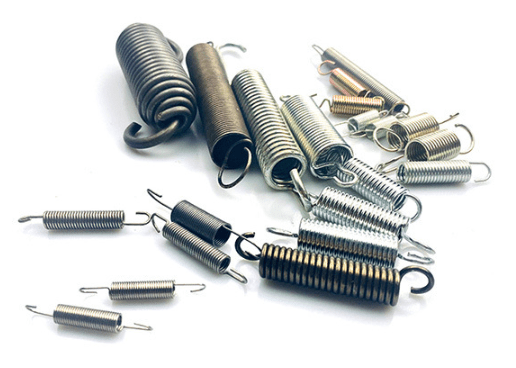
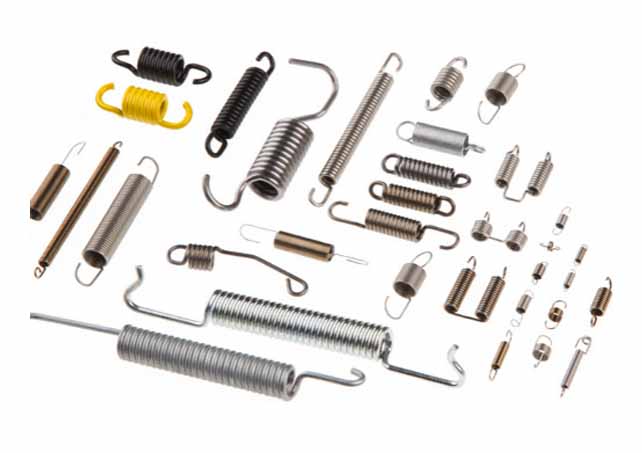
custom spring manuafcturer

Spring is a mechanical part using elasticity to work. The parts made of elastic materials are deformed under the action of external force and the original state is restored after removing the external force.

Spring has the characteristics of elongation and compression. The rigidity of the spring can be determined according to the application. The rigidity depends on the diameter of the steel wire, the elastic modulus of the material, and the length according to the stress and expansion.

Spring manufacturing materials generally should have high elasticity, high impact toughness and good thermal treatment performance. The spring is commonly made of carbon spring steel, alloy spring steel, stainless spring steel, copper alloy, nickel alloys and rubber materials.

The Main Functions of The Spring

Control the movement of the machinery, such as the valve spring in the internal combustion engine and the control spring in the clutch.

Absorb vibration and impacting energy, such as the buffer springs used in the cars and trains, torsion springs used in the couplings.

Storing and outputting energy as power, such as clock springs, springs in firearms, etc.

Used as measuring components, such as the springs used in the dynamometer, spring scales, etc.

Tightly pressing function. You will find one of the two contacts in the switch must be equipped with springs after observing various electrical switches, which ensures that the two heads are in tight contact.

Buffer function. Springs are installed between the locomotive frame and the wheels, and the elasticity of the spring is used to slow down the bumping of the vehicle.

Wide Applications Of The Spring

In the development of the national industry, spring products play an important role. The expansion and the improving quality of the spring are the requirement for mechanical equipment upgrading and the improved performance of supporting the host machine. The spring is widely used in the daily product, hardware industry, automobile industry, etc, including toys, locks, staplers, ballpoint pens, fitness equipment, mattress, sofa, suspension springs for passenger cars and small vehicles, detection instruments, automatic devices, pressure meters, etc.

The Main Categories of The Spring

According to the mechanical properties, the spring can be divided into tension springs, compression springs, torsion springs and bending springs.

According to the shape, it can be divided into disc springs, ring springs, leaf springs, coil springs, truncated cone scroll springs, torsion bar springs, etc.

Compressed springs and tension springs are most widely applied, most of which can be customized by professional spring manufacturers that adopt CNC computer control or mechanical spring machinery for the manufacturing process, ensuring automatic and labor-saving production.

Compression Spring

It is a coil spring and the used material often has a circular cross-section. It is made of rectangular and multi-steel rolls. Their shapes usually are cylindrical, conical, medium convex, medium concave. It has a stable rigidity, simple structure, convenient manufacturing process, and wide application, mostly used in machinery equipment with buffer, vibration damping, energy storage and control activities functions.

Disc Spring

Disc spring has a strong capacity for bearing buffer and damping. Different combinations can obtain different characteristics, widely used for the pressure safety valves, automatic transfer devices, reset devices and clutch.

Wire Spring

The elasticity coefficient of the thickness and density of the wire spring from top to bottom, is a fixed value. This design of this spring can make the vehicle get a more stable and linear dynamic response, which is conducive to the driver and better controlling the car. It is mainly used for performance-oriented modified vehicles and competitive vehicles.

Lowering Spring

The lowering spring is shorter and thicker than the original spring. Installing the spring can effectively reduce the gravity of the car body and inclination when turning, making the turning more stable and smooth and improving the handling of the vehicle in curves.

Professional custom spring manufacturer – KENENG

KENENG is one of the leading spring suppliers in China, providing both standard stock products and customized service, with 20 years of designing, researching and developing, manufacturing experience, and a variety of standard and customized sizes available. As a professional custom spring manufacturer, KENENG can meet various industrial requirements, and the diameter can be customized ranging from 0.1 to 80mm. KENENG can provide spring customization as the drawings, turning direction including left hand and right hand, material, finishing, wire diameter, spring force, end type including closed, grounded, close and grounded, open, special processing technology for the spring all can be selected.

Basic Knowledge For Various Types Of Springs

Spring is everywhere in various machines. From consumer goods to heavy industrial equipment, as long as you remove anything involving mechanical devices, you may find the spring inside, which is a mechanical storage device.

KENENG Spring

Cylindrical Helical Spring

Circular cross-section type

It is a compression spring with a circular section.

The characteristic line is linear, stable in stiffness, with a simple structure, convenient manufacturing, and wide application. It is mostly used as a buffer, vibration reduction, energy storage, and control movement in mechanical equipment.

Rectangular cross-section type

Under the same space conditions, the cylindrical spiral compression spring with a rectangular cross-section has greater rigidity and more absorption energy than the circular section type. The characteristic line is closer to the straight line and the stiffness is closer to the constant.

Flat-shaped section type

Compared with the circular cross-section type, the cylindrical helical spring with a flat-shaped section has large storage energy and large compression. Therefore, it is widely used in the installation space such as engine valve mechanisms, clutch, and automatic transmission.

Variable pitch type

When the load is increased to a certain degree, as the load increases, the spring gradually tightens the spacing from the section, and the stiffness gradually increases. Therefore, its autobiography frequency becomes a variable value, which has a good effect on eliminating or easing resonance and is widely used for high-speed load-changing mechanisms.

Multi-wire type

The material is steel wire rope. When it is not loaded, the contact between the steel wires is relatively loose. When the external load reaches a certain degree, the contact is tight and the spring rigidity has been increased. It is widely used in weapons and aero motors.

Extension Spring

The performance and characteristics of extension springs, are the same as the cylindrical helical spring with a circular cross-section. It is mainly used in situations under tensile load.

Torsion Spring

The torsion spring is under the torsion load, mainly used for compression, energy storage, and the elasticity of the transmission system. It has a linear characteristic line and wide applications, such as measuring metering and the compulsory air valve closure mechanism.

Conical Coil Spring

The role is similar to the variable pitch cylindrical helical spring. After the loading reaches a certain degree, the spring is gradually tightened from the large coil to the small coil. The stiffness increases gradually and the natural frequency is variable. It is conducive to eliminating or easing resonance and the anti-resonance capacity is strong. This spring structure is compact and stable. It is mostly used to withstand large loads and vibration reduction. For example, suspension springs are applied in heavy vibrating screens and automobile transmissions.

Spiral Spring

Compared with other springs, the spiral spring can absorb larger energy in the same space, and the friction between the plates can be used to attenuate vibration. It is often used to absorb thermal expansion deformation. The disadvantage is that the gap between the board is small and difficult to quench and the spray treatment cannot be performed. In addition, the manufacturing accuracy is not high enough. It can be used as a measuring element and pressing element.

Torsion Bar Spring

The torsion bar spring has a simple structure, but the requirements for the quality of materials and manufacturing accuracy are high. It is mainly used as a suspension spring for cars and small vehicles.

Ring-shaped Spring

The ring spring is widely used in occasions that need to absorb large energy but is limited by space, such as springs for locomotive traction devices, and buffer springs for cranes and cannons.

Leaf Spring

A leaf spring is a metal piece that has a rectangular cross-section, which is mainly used for situations when the loading and deformation are not large. It can be used as a sensitive element in the detection instrument or automatic device.

Plate Spring

The plate spring is laminated of multiple spring steel plates. It is widely used as a suspension device in cars, tractors, and trains, as a role of buffer and vibration reduction.

Rubber Spring

Due to the small elastic modulus of rubber springs, it can get greater elastic deformation, and it is easy to achieve the required non-linear characteristics. The shape is not restricted and the rigidity of each direction can be freely selected according to the design requirements. The rubber spring can withstand multi-directional loads at the same time, so it can simplify the structure of the system. The application of rubber springs on machinery equipment is increasing.

Rubber-metal Spring

The characteristic line is gradually increased. This rubber-metal helical spring has a larger rigidity compared to the rubber spring and has larger damping compared to metal springs. Therefore, it has the advantages of large loading capacity, strong vibration reduction, and wear resistance, suitable for suspension structures for mining machinery and heavy vehicles.

Air Spring

Air spring is a non-metallic spring that uses the compression of air to achieve elastic effects. It is widely used in vehicle suspension device, which can greatly improve the power performance of cars, so air spring is widely used on cars and trains.

Commonly Used Marine Rubber Fenders

marine rubber fender

The quality of rubber fenders has always restricted the use of production berths, troubled the safety of wharf and ship pilot berthing, and affected the scheduling of production ships. We should analyze and study the placement, type selection, use, and fabrication of fenders.

The spacing and elevation of marine rubber fenders are very important. It is necessary to ensure that the ship can not directly touch the quay wall under the most unlucky berthing sight point allowed by the standard. It is also necessary to ensure that the ship can safely berth at different tide levels and draughts, and has strong adaptability to ships of different tonnage. Fender is an energy-absorbing device for ship berthing stability. Due to the effect of wind, wave, and current, as well as the difference between wharf azimuth, and the influence of high and long period wavelet waves on the harbor basin, a large amount of energy can occur when a ship collides with a dolphin, which requires that the fender has a good energy absorption characteristics.

Various Types Of Rubber Fenders

Arch V-Type Rubber Fender

At present, arched V-type rubber fenders are mostly used. Although fenders have been widely used and bridge piles are densely distributed, due to the small energy absorption of fenders, the surface is easy to be scratched and damaged, falling off and aging.

Rotary Rubber Fender

The rotary rubber fender uses a relatively large offset to solve the stress problem when the bridge pile is impacted. It is also a wise choice to use it in some narrow transport holes. However, due to the high engineering cost of the product, it is unlikely to be applied on a large scale.

Pneumatic Rubber Fender

As a key product of anti-collision, shock absorption, and energy absorption, pneumatic rubber fenders are simplified in model selection due to the emphasis on ports, which can achieve a good anti-collision effect and save costs. Except for tugs and small ships, large tonnage ships equipped with rubber fenders mainly use inflatable rubber fenders to protect ports and hulls when berthing.

What are the main factors causing spring failure

spring failure

Many reasons can cause spring failure, but in general, it can be from two aspects, one is the spring quality, and the other is improper use. The quality problems of the spring itself include unqualified spring material, unqualified heat treatment, damage in the manufacturing process, and so on. Improper use includes use beyond the limit of use, use in an environment where the temperature is too high, use in a corrosive environment, etc. The main failure modes are as follows:

The Main Forms of Spring Failure

Plastic deformation

The stress produced by the external load is greater than the yield strength of the material. After plastic deformation, the spring cannot return to its original size and shape.

Rapid brittle fracture

Some springs have material defects, processing defects (such as folding, and scratches), heat treatment defects (such as excessive quenching temperature leading to coarse grains, insufficient tempering temperature leading to insufficient material toughness), and so on. These springs may experience sudden brittle fractures when subjected to excessive shock loads.

Fatigue fracture

Under the action of alternating stress, the surface of the spring is defective, resulting in a crack fatigue source. Fracture failure occurs after crack propagation.

Springs used in corrosive media are prone to stress corrosion cracking failure.

Spring fittings used at high temperatures are prone to creep and stress relaxation, resulting in permanent deformation.

The main factors causing spring failure can be divided into 3 categories: spring material, spring design, and spring manufacturing process.

Spring Material

The chemical composition and mechanical properties of different steel grades in spring steel have their own characteristics. Generally speaking, the manufacturing material of spring should have a high elastic limit, fatigue limit, impact toughness, and good heat treatment performance. Commonly used are carbon spring steel, alloy spring steel, stainless spring steel and copper alloy, nickel alloy, and rubber. The spring material should be selected reasonably and correctly according to the stress requirements, service life requirements, and working environment requirements of the spring. Generally, we divide the tensile strength Rm into three levels, that is, the standards are given according to high, medium, and low.

If we use low-strength spring materials to produce springs bearing high stress in production, it is easy to produce permanent deformation and fail. If high-strength spring materials are used to produce spring products that require high fatigue life, the possibility of brittle failure of the spring under high-stress conditions increases.

The higher the strength of the spring material, the greater the tendency of the material to brittle fracture. Therefore, the correct and reasonable selection of spring materials with moderate mechanical properties can not only make the spring workload excellent, but more importantly, it can have excellent working performance under high fatigue life. Therefore, spring failure is closely related to the spring material.

Spring Design

A spring with good fatigue life needs to be designed by many people and through the knowledge of many disciplines.

When designing a spring, you need to understand what is necessary for a good spring fatigue life. Many spring products will fail due to unreasonable design parameters, resulting in permanent deformation in the early stage of use.

Spring Manufacturing Process

The forming, stamping, and bending of the spring during the manufacturing process may cause certain damage to the spring material. Some of these damages are obvious and some are invisible, especially for tension springs, torsion springs, and other special-shaped springs.

The maximum stress of the spring is on the surface of the spring material, and the fatigue fracture of the spring often starts from a small surface defect on the surface of the spring material. Then, under the action of alternating load, it gradually transitions and expands, and after a certain stress cycle, it will lead to spring fatigue failure.

Useful Knowledge Shared For Screw Surface Treatment

KENENG has more than ten years of experience in manufacturing fasteners such as screws, nuts, bolts, etc., and can perform various surface treatments on them.

Common white screws mainly include electroplating white nickel, white zinc, and so on.

The process of electroplating white zinc is degreasing-cleaning-weak acid activation-electro-galvanizing-cleaning-white passivation-cleaning-drying. The difference from black zinc is that there is no over-sealing paint, and the passivation solution is also different. White passivation is a colorless and transparent zinc oxide film that contains almost no chromium, so the corrosion resistance is worse than that of black zinc, blue zinc, and color zinc.

white zinc plated screws

The corrosion resistance of white zinc is better than that of white nickel, and its appearance is darker than that of white nickel.

The process of electroplating white nickel is degreasing – cleaning – weak acid activation – cleaning – copper plating bottom – activation – cleaning – nickel plating – cleaning – passivation – cleaning – drying – or sealing. The process of electroplating white nickel and electroplating black nickel is basically the same, the difference lies in the formula of the electroplating solution, without the addition of zinc sulfide.

Other Color Plated Screws

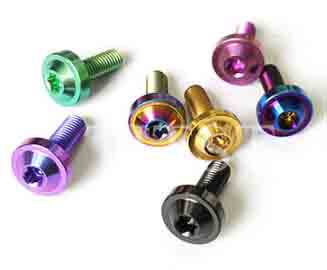
color plated screws

The plating of other colors mainly includes blue zinc, green zinc, colored zinc, and Dacromet.

The electroplating process of blue zinc and green zinc is roughly the same as that of white zinc. Blue zinc is a passivated zinc oxide film containing 0.5-0.6 mg/dm2 of trivalent chromium. Green passivation is due to the fact that the passivation solution contains phosphate ions, and the resulting green film is composed of chromate and phosphate.

The corrosion resistance of blue zinc is better than that of white zinc, and the corrosion resistance of green zinc is better than that of blue zinc.

Color zinc has relatively good corrosion resistance. The passivation process is: galvanizing – cleaning – 2%-3% nitric acid to emit light – cleaning – low chromium color passivation – cleaning – baking aging. Too low temperature during passivation will result in slow film formation and thin color film. The high temperature will cause the film to be thick and loose, and the adhesion will not be strong. It’s best to control around 25 degrees to ensure that you get the same color for a certain amount of time. After passivation, it needs to be baked to improve the adhesion and corrosion resistance of the film.

Dacromet

Dacromet is a new type of screw surface treatment, anti-corrosion coating with zinc powder, aluminum powder, chromic acid, and deionized water as the main components. The process flow is organic solvent degreasing – mechanical polishing – spraying – baking – secondary spraying – baking – drying.

The advantage of the Dacromet process is that the corrosion resistance is very good, but the disadvantage is that the coating is not uniform.

通过 WordPress.com 设计一个这样的站点
从这里开始