What Is Oil And Gas Gathering And Transportation Simulation Training System

The oil and gas gathering and transportation virtual simulation training system developed and produced by Esimtech can explain and train the principles and techniques of oil and gas gathering and transportation to the trainees. There’re three main types

Gas Production Simulator

The comprehensive simulation system of gas production combines petroleum engineering knowledge, oil and gas storage and transportation knowledge and technology, computer technology, virtual reality technology, etc. The large screen can display the working status of the equipment, and the whole process is clear and easy to understand, which not only greatly shortens the training time of the trainees, but also allows the trainees to have a deeper and more comprehensive understanding.

Gas Production Simulator

The training system allows trainees to understand the internal structure and principles of various gas production equipment, and to familiarize themselves with typical stations and processes in the block.

The training is divided into multiple levels, which can be used for the training of junior workers, intermediate workers, senior workers, technicians, and senior technicians.

The Oil and Gas Gathering and Transportation Simulation System

The oil and gas gathering and transportation simulation system uses an electronic sand table, process board, and touch screen as the medium, and applies computer, virtual reality, and other technical means to truly simulate the entire process of oil and gas storage and transportation from wellhead to joint station, to oil depot, and then to oil and gas export. The oil and gas gathering and transportation simulation system is based on the professional skill appraisal standard in the field of oil and gas gathering and transportation and is developed in combination with the actual situation on site.

The oil and gas gathering and transportation simulation system can simulate the main process links, process flow, and process devices such as the collection of oil well products, gas-liquid separation, crude oil dehydration, crude oil stabilization, sewage treatment, oil and gas storage and transportation. The training system can realize the operation simulation training of technicians in the five major parts of the combined station, the long-distance crude oil pipeline pump station, the pressurized sub-transmission stations, the oil depot, and the LNG terminal.

Oil Recovery Simulator

The oil recovery simulation training system is based on advanced technologies such as computer simulation technology, virtual reality technology, field bus communication, distributed control, etc., and adopts the display method of image fusion, 3D projection ring screen, or LED large screen. It can intuitively and vividly display the various links of the station and yard process in the field of oil production engineering and the interconnection between them.

Oil Recovery Simulator

The oil production process simulation training system is used to realize various skill training and target assessment for oil production workers and water injection workers.

1. The system can display a section of a single device.

2. The system can preset faults during the training process

3. The system can automatically judge and score the operations of the trainees, and print the final scores, thus greatly improving the training efficiency.

4. The system can effectively make up for the deficiencies of the existing training system, not only its operation cost and maintenance costs are low, but also it can prevent students from damaging the training equipment due to misoperation.

Using the system in conjunction with the existing training system can help students complete a good transition from theoretical learning to actual equipment operation, so as to consolidate theoretical knowledge and standardize operation.

Advanced Well Logging Simulator From Esimtech

Esimtech provides 3 types of well logging simulators, more customized products according to specific needs available.

Production Well Logging Simulator

The production well logging simulator conducts pre-job training and skill assessment for logging technicians and workers by using logging theory, virtual reality technology, computer technology, multimedia technology, etc.

Production Well Logging Simulator

What are the training programs?

1. Operation training for wellhead workers

The training items include wellhead test valve or non-test valve tubing injecting operation, wellhead test valve or non-test valve casing injection operation, and wellhead test valve or non-test valve oil pumping operation.

2. Operation training for winch workers

Training items include normal descent, normal ascent, obstacle descent, and obstacle ascent.

3. Operator operation training

Training programs include five-parameter comprehensive logging, oxygen activation logging, impedance logging, audio logging, caliper logging, electromagnetic flow logging, single magnetic orientation logging, and pre-magnetic orientation logging.

Open Hole Well Logging Simulator

The open hole well logging simulator has the same operating consoles and panels as the real equipment. By using 3D technology to demonstrate the structure and working principle of logging equipment, the entire process from logging preparation to completion. And through the combination of live scenes and live sound effects synchronized with the operation, a real training environment is created.

open hole well logging simulator

What are the training programs?

1. Training programs for wellhead workers

Including wellhead equipment installation, bridle production, the connection of logging tools, casing injection operation without test valve at the wellhead, cut-threak freeing and fishing, equipment disassembly, etc.

2. Winchman’s training program

Includes normally raising, normally lowering, etc.

3. Various animations

Various logging methods are included: conventional resistivity logging, lateral logging, spontaneous potential logging, microresistivity logging, acoustic logging, gamma-ray logging, induced well-logging, density logging, open hole diameter logging, neutron logging, etc.

Introduction to various logging operations and maintenance: introduction to basic logging material, maintenance of logging wellhead equipment, making and maintenance of bridle, basic operation and maintenance of surface unit, working principle and maintenance of basic downhole logging tools, the technology of cable perforation, the technology of tubing conveyed perforation, the technology of open hole logging and horizontal well logging. These various operational animations are used for the learning and training of technicians and workers.

Compound Logging Simulator

The whole process of composite logging is introduced by using advanced logging software, a full-scale logging machine room designed by Esimtech, a sand table well site model, drilling accident modeling software, and sensor detection software. Composite logging simulators are used to train operators, training center logging staff, and petroleum academies. Through the training of this system, the trainees can master various operational skills to deal with drilling accidents.

What are the training programs?

1. Tripping in operation

Including lost circulation when tripping out, kick when tripping out, oil or water immersion when tripping in, kick when tripping in, blowout when tripping in, getting blocked when tripping in, stuck pipe when tripping in, nozzle plugged, and abnormal standpipe pressure.

2. Monitoring circulation and static state

Including lost circulation, oil or water immersion, overflow, kick, and blowout.

3. Accidents when drilling and reaming

Including bit service life end, bit wore out, drilling string broken, lost circulation, well immersion, overflow, drill pipe not well braked, percussion drilling, lost nozzle, stuck pipe, wall collapse, pump water feeding failure, high-pressure pipe leaking.

4. H2S detection

Including formation H2S and non-formation H2S.

5. Monitoring formation pressure

6. Damper failure

How Simulator Used For Offshore Oil Drilling

Esimtech has successively developed petroleum engineering simulation training system for drilling, well control, logging, oil production, gas production, downhole operations, oil and gas gathering and transportation, fracturing and acidizing, drilling rig installation, coiled tubing, and snubbing operations.

What is Offshore Oil Drilling?

Exploring and developing oil and gas in the ocean is the focus of modern marine geological exploration. It requires a large drill ship or platform to load drilling equipment to drill on the coast or offshore.

Drilling ships can be divided into single body and double body (suitable for water depth of 30-200 meters).

Platforms include bottom-mounted (suitable for water depths less than 30 meters) and pile-inserted (suitable for water depths of about 90 meters) fixed platforms, as well as semi-submersible floating platforms (suitable for water depths greater than 200 meters), which can be selected according to actual needs.

What is the Difference Between Offshore Oil Drilling and Land Drilling

1. The composition of organic matter and the ratio of some chemical elements in offshore oil are different from those in continental oil.

2. In terms of exploitation, the exploitation of land crude oil and seabed crude oil is different. Conventional crude oil on land is relatively easy to exploit, while the exploitation of seabed crude oil involves more complex processes, including platform construction, drilling, and pipeline laying, which are different from land oil exploitation.

One is how to erect the derrick stably above the water surface and withstand the attack of wind and waves.

The second is how to build a special wellhead device between the turntable and the seabed to isolate the seawater from the wellbore.

Third, there are fewer vertical wells and more inclined wells in offshore drilling, so there must be offshore drilling platforms that can ensure the normal operation of drilling rigs and other drilling equipment.

3. The cost of offshore drilling is high, about 3 to 10 times higher than that of land drilling.

Chengdu Esimtech Petroleum Equipment Simulation Technology Co., Ltd. is based on the Sichuan Provincial Department of Education Petroleum Engineering Computer Simulation Technology Key Laboratory. It is a company engaged in scientific research, design, production, maintenance, sales and computer application technology in the field of oil and gas industry An integrated high-tech enterprise.

Esimtech is committed to the development of simulation and simulation systems for petroleum engineering and petroleum equipment, and has achieved a series of application results with completely independent intellectual property rights, continuously providing users with the best products and creating value for users. After more than 20 years of persistence and unremitting efforts, training simulation system, the product line covers the complete field of oil and gas industry application sites. In addition, the drilling simulator is constantly updated and the technology is becoming more and more mature. It has become recognized by the industry as the drilling simulator product with the most complete functions, the best performance and the most reasonable price at home and abroad.

What Is Emergency Exercise Simulation Training System

Emergency exercise simulation training system developed by Esimtech is a set of virtual simulation solutions for typical well drilling accident emergencies. It can enable relevant operators or learners to receive training on blowouts, explosions, hydrogen sulfide leakage, and other accidents during drilling, and enhance safety awareness and emergency response, handling, and escape capabilities.

Emergency Exercise (VR)

The emergency exercise (VR) is developed based on the emergency drill software platform. The purpose is to train and test drilling emergency drills.

VR Emergency Training Simulator

Trainees can have realistic VR interactions and an immersive experience. Through the super simulation system and human-computer interaction, students can get real feedback on the environment during the operation process. Through the training and testing of this system, the trainees can cultivate their own psychological quality and complete the training in emergency response drills and emergency escape.

Drilling Emergency Practice Training Platform

The drilling emergency training platform can make the trainees feel the real situation as much as possible, and make the trainees deeply impressed with the emergency situation handling process in the oil industry. In this way, when students encounter real blowouts, explosions, and hydrogen sulfide leakage accidents, it will help them to calmly take correct emergency measures.

The training items of the training system include the above-mentioned emergency treatment and escape training when blowout is out of control, emergency treatment and escape training in case of fire and explosion, and emergency treatment and escape training in case of hydrogen sulfide leakage and poisoning.

Drilling Emergency Exercise Simulation Training System

The drilling emergency exercise simulation training system can realize emergency treatment and training for typical drilling accidents. The R&D and manufacturing of the simulation training system combine technologies such as 3D simulation, 3D interaction, and network communication. Through 3D technology, the system can simulate the drilling site environment, drilling equipment and facilities, and operators, and show the actual occurrence and progress of accidents. It allows students to perform 3D interactive operations in it to achieve the purpose of training.

Drilling Emergency Exercise Simulation Training System

The training system not only enables trainees to receive drilling accident training but also evaluates trainees’ completion of training and displays problems and errors in trainees’ operations.

Why Drilling And Well Control Safety Technology Is Important

Drilling and well control safety technology directly affects the development of oilfield companies. If the well control safety technology cannot be guaranteed, it will seriously affect the safety of life and property.

Application of well control safety technology in drilling

In drilling work, due to the influence of exploration well depth, long period, complex formation, high formation pressure, and high hydrogen sulfide content, well control safety technology may encounter many difficulties in the drilling process.

First, when drilling in high-sulfur areas, the combination of hydrogen sulfide and well control issues presents a significant safety risk in well control technology. This particular operating environment brings difficulties to materials or tools such as wellhead equipment, casing, and tubing when conducting exploration operations in high-sulfur areas. In the event of a blowout or leakage, it is very easy to cause serious poisoning of hydrogen sulfide.

Second, there is the difficulty of degassing in well control safety technology. When drilling ultra-high pressure oil and gas wells, it is generally necessary to increase the drilling concentration to balance the formation pressure so that the drilling fluid system can develop stably. Degassing in high density and high viscosity drilling fluids is difficult.

Third, the pressure bearing capacity of drilling equipment is limited.

Ways to strengthen well control safety technology

Strictly standardize the design of well control safety technology

Drilling and well control safety technology should be designed in strict accordance with the standards so that the drilling and well control safety technology develops in the direction of standardization and management. In installing equipment, we must adhere to the principles of high standards and strict requirements to eliminate potential safety hazards in the installation of equipment, which is in line with the design of drilling and well control safety technology.

Improve the professional quality of well control personnel

In drilling work, well control safety work is the most basic work. Because employees’ well control safety knowledge is essential, educating and training employees’ safety well control knowledge is a major event in well control work. The company should formulate a practical training plan so as to improve the safety awareness of well control personnel. It is necessary to strengthen emergency drills, and through actual combat drills, employees’ awareness of drilling and well control can be greatly improved.

To strengthen the special inspection of drilling and well control

In daily life, to constantly check the drilling equipment, it is also necessary to carry out special inspections of the drilling and well control equipment. For problems found in the inspection, the company shall arrange technical personnel to deal with the problems in a timely manner.

Improve and perfect well control safety technology

Improve the dynamic control capability of well control equipment

In order to ensure the safety of well control technology, firstly, it is necessary to continuously improve the structure of the choke valve, improve the strength, precise control ability, and anti-erosion ability of the choke valve so that the choke pressure can be easily adjusted, thereby improving the downstream of the choke valve’s impact resistance. Second, to develop a new multi-stage throttling system.

Carry out research on well control technology to solve hidden dangers in well control equipment

Carry out sulfur prevention work and do an excellent job in the protection of hydrogen sulfide

In view of the sulfur content in different regions, each inspection area shall take corresponding measures in terms of sulfur-resistant equipment and technology to ensure the safety of well control technology.

When conducting exploration in high-sulfur areas, artificial ignition should be avoided, and an all-weather remote control ignition device should be installed. In areas with high sulfur content, formulate standards for hydrogen sulfide protection and monitoring equipment.

drilling simulator

In the drilling and well control safety work, we can use the drilling and well control simulator to conduct simulation training among the staff in advance to strengthen the safety control. We offer portable drilling well control simulation, cyberchair drilling simulator, top drive simulator, drilling simulation training system, land rig installation simulator, etc. It can highly simulate the real on-site equipment, panel layouts, operation methods, etc. It can produce visual effects similar to the scene, coupled with realistic sound effects of live equipment, giving people a sense of immersion and realism.

Analysis For Safety Management Of Downhole Operations

This article will discuss various risk factors that may exist in the process of downhole operations. The problems and deficiencies in the safety management of downhole operations are analyzed, and corresponding solutions are proposed for these problems.

Suppose a safety accident occurs in the downhole operation. In that case, it will cause serious economic losses to the enterprise and the country, and the personal safety of the relevant personnel will be affected. Therefore, it is very important to ensure downhole operations’ safety, stability, and efficiency. We need to pay attention to safety management in the drilling and production process.

We should try to avoid the occurrence of unsafe downhole operations and safety accidents and strive to control the occurrence of downhole operation accidents to zero.

Inadequate Safety of Downhole Operations

Downhole operation is a technological method to guarantee the regular manufacturing of oil and also water wells in the process of oilfield expedition and growth. Mainly include oil and water well maintenance, oil and water well overhaul, reservoir reconstruction, and oil testing.

During the long-term production process of oil and water wells, due to the interference of various underground liquids and gases and the action of gas flow, the well conditions will gradually deteriorate, corrode, eccentric wear, and various types of failures will occur, resulting in oil and water wells not producing normally. The downhole repair of oil and water wells with problems and failures to ensure normal oil and water well work, and a series of measures implemented to relieve oil and water well failures, restore or improve their production capacity in the process of repairing various downhole failures. The process is downhole work.

There are many construction points in underground operations involving various constructions, and the hidden dangers of safety are also more complicated. Due to the influence of factors such as humans, environment, equipment, and facilities, underground operations are highly dangerous.

Unsafe underground operation mainly refers to the forcible operation of underground workers without excluding unsafe factors such as unsafe conditions and unsafe behaviors. Unsafe behavior mainly refers to operating errors, ignoring safety, ignoring warnings, using unsafe equipment, venturing into dangerous places, etc.

Unsafe factors caused by machinery, facilities, and humans should be avoided as much as possible. Underground operators must eliminate unsafe operations, master certain safety knowledge, and at the same time strengthen safety awareness, so as to avoid unsafe operations and safety accidents to the greatest extent and ensure safe production.

Fracturing and Acidizing Simulator

Problems Existing in the Safety of Downhole Operation

1. Lack of safety awareness of downhole operators

Safety knowledge means that people always keep in mind the importance of safety and know what to do when faced with danger. When working at ordinary times, know how to operate and know what preventive measures, treatment measures, or emergency rescue measures to take in emergencies. However, the safety awareness of underground operators is often weak.

2. Inadequate safety management system

The underground operation sites are often in relatively remote areas, the construction environment is relatively poor, and there are great difficulties in the safety management of the construction site. The production tasks are tight, the construction personnel is many, the workload is large, the work intensity is high, and the production links are many, which leads to the lack of serious implementation of the safety management system.

3. Incomplete standardization scheme for downhole operation safety

A comprehensive safety management system should be established. In addition, a corresponding safety standardization scheme is established for each link in the production process of underground operations to ensure safe production, and the details must be sufficiently standardized.

Actions to be Taken:

1. Strengthen the safety awareness education of underground operators.

2. Improve the safety management system.

3. Improve the safety standardization plan for underground operations.

4. Use simulation systems. The downhole simulators can give students an immersive experience through the 3D animation synchronized with the operating conditions. And it can use mathematical models to simulate various working conditions and parameters in petroleum engineering operations and strive to achieve the same effect as actual drilling operations. In this way, students can intuitively experience and quickly master the relevant knowledge and skills of fracturing and acidizing production.

Workover Simulator

How Much Do You Know About Drilling and Well Control Simulation Training System

Oil drilling well control is an essential link in the process of oil and natural gas exploration and development and is the premise and guarantee for the safe production of oil and natural gas. Every effort must be made to ensure the smooth progress of construction and the safety of personnel on-site. Therefore, we must control the oil drilling well control link. From online and offline, both theory and practice need to be learned and mastered in all aspects. This article will introduce two kinds of drilling and well control simulation training systems developed and manufactured by Esimtech.

Full-scale drilling simulation training system

full-scale drilling simulation training system

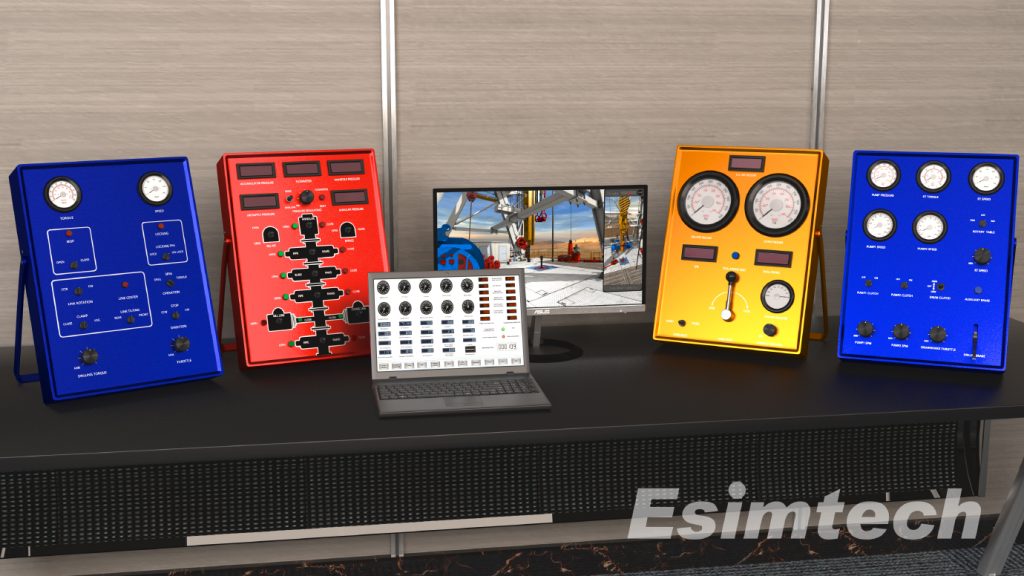
All hardware systems of the full-scale drilling simulation training system highly simulate real equipment on site. Various panel layouts, operation methods, parameter display methods, etc., in the simulation system, are consistent with the production site. The system can produce visual effects similar to the scene by projecting the three-dimensional graphics synchronized with the operating conditions onto the front screen. Combined with realistic sound effects of live equipment, it gives people an immersive sense of immersion and realism.

The system is based on advanced computer industrial control technology, artificial intelligence technology, scientific visualization technology, virtual reality technology, and advanced network technology, combined with strict simulation of the actual process of drilling engineering, using high-reliability classical physical and mathematical models based on real on-site well conditions and well history information provides users with various training operations such as tripping, drilling, well control, equipment fault detection, and handling of drilling accidents and complex situations.

The system highly simulates well conditions and equipment operations, improves the flexibility of trainers’ operations, and greatly improves the training efficiency and effectiveness of trainers.

The operation items involved in the training system include five modules: tripping module, drilling module, downhole accident handling module, well shut-in operation, and well-cementing operation.

Portable Drilling Well Control Simulation Training System

Portable Drilling Well Control Simulation Training System

Features of Portable Drilling Well Control Simulation Training System:

The drilling well control simulation training system is easy to carry and has perfect functions.

The system is compliant with IADC and IWCF standards.

Various drilling parameters can be flexibly set, such as drilling tool structure, formation parameters, equipment parameters, etc., making training more flexible and targeted.

The software system adopts an unordered architecture, which can realistically simulate various operations of the drilling rig, making the system closer to reality.

Using virtual reality technology to construct a realistic perception environment, using three-dimensional animation synchronized with the operating conditions, combined with simulated on-site sound effects, gives people an immersive feeling.

The operation items involved in the training system include shut-in operations and well-killing operations.

What Is A Drilling Simulator

Due to the limitations of traditional training, we have been paying attention to the development of online training for petroleum occupations and are committed to helping major drilling training centres or petroleum colleges complete training tasks under different conditions. Esimtech has developed an online drilling simulation training system by conducting research on online training. At the same time, through an in-depth understanding of the training needs of IADC and IWCF, we are committed to creating a fully functional online drilling simulation training system.

A drilling simulator is a new training method developed through the concept of virtual manufacturing technology, based on modern computer control technology, computer graphics technology, computer simulation technology, and computer network technology, combined with the actual technology of drilling engineering. It changes the traditional drilling training method and can provide users with the simulation of the operation process of drilling, tripping, well control, drilling accidents and complex situation processing. The training assessment provides a teacher scoring system, which solves the technical problems that cannot be solved objectively in the traditional training process.

Portable Drilling Well Control Simulation Training System

The drilling simulator cooperates with three-dimensional interactive equipment through VR virtual reality technology, which can simulate the well site environment, equipment and facilities, and workflow, as well as the formation structure, wellbore trajectory, drilling targets and other objects that are prone to deviations when observed with the naked eye. The display effect is accurate, intuitive and diverse.

drilling and well control simulation system

Advantages of Drilling Simulator

1. Compared with traditional training methods, it is not limited by time and space.

2. It is convenient for teachers to carry out one-to-many training

3. Support personal practice and review after class

drilling simulator

With the support of virtual reality technology, the ideal virtual environment can make the trainees in the realistic environment of the training project objects, and it is difficult to distinguish the true from the false. Moreover, virtual reality technology can carry out personalized education and training according to the foundation and ability of different students. This is not possible with traditional training methods.

Why Choose EPC Web Guiding System

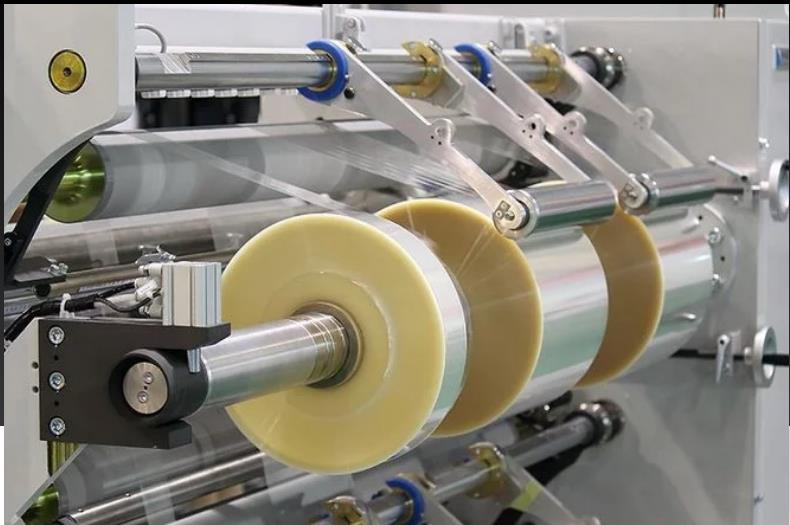
EPC is an abbreviation for edge position control. During the high-speed transmission process, the EPC web guiding system is used to manipulate and correct the direction deviation of the coil raw material. It performs real-time testing, active tracking, and active correction.

Arise web guiding system

What Causes Acceleration Offsets In The Process Of The Edge Position Control

One of the most troublesome edge position deviations is known as the acceleration offset. When the machine speed is increased or decreased, the web moves sideways. The rate of movement is usually greatest at the top and bottom of the speed difference rather than on the speed ramp itself. Unfortunately, the term “acceleration offset” misrepresents the true nature of the edge movement. Indeed, the web has no idea how fast it is moving.

The various web tracks through a machine shown in Figure 6 illustrate the cause of most acceleration offsets. We demonstrate how the web moves through a machine with one of the rollers misaligned. When there is absolute traction, the web will follow the Normal Entry law on all rollers, including the misaligned one. Take note of how the web shifts as a result of this misalignment. However, in the case of pure flotation, the web is not steered by the ‘roller’ and thus passes directly through the machine. The case of sliding is intermediate in that there is a small offsetting of the web.

As a result, every roller or element that touches the web also steers it. The path of the web, on the other hand, will remain constant if the roller is stationary and the state of traction is constant. That is not to say it is straightforward. The web will obviously snake through the machine in accordance with web handling laws. What we mean is that the path will, for the most part, remain consistent.

However, if the web switches from full to partial tracking, the web’s path will shift slightly in response. This shift in traction will be subtle and difficult to detect using traditional observations and measurements. Nonetheless, it will move the web in response.

The EPC web guiding system provides edge alignment to avoid deviation of the waterproof coiled material during the entire production and processing process, as well as ensuring accurate and stable performance of the waterproof coiled material during the entire production process with the neatly divided rewinding machine.

The control board can choose the method of tracking the edge or line based on the various raw materials and choose the electric eye test to take into account the requirements of various raw materials.

edge position control

How Does The EPC Web Guiding System Work

A sensor, an actuator, and a controller comprise a web guiding system. Any detector that can reliably detect the edges of a web can be used as the sensor. Pneumatic (nonporous webs), photoelectric (opaque webs), and paddies are the most common (thick webs). Through the edge sensor, the web must be flat (no curl) and stable (no flutter). The sensor is frequently placed near a roller for this and other reasons. The web could be guided to the front edge, back edge, or center if two sensors are used.

The sensor’s output is routed to a controller, which sends a movement command to the actuator. If the controller’s gain is too low, the guide’s response will be sluggish and slow to correct. If the controller’s gain is too high, the guide will be hot but overshoot, and may even be unstable. For smaller assemblies, the actuator may be a stepper motor and ball-screw, while for larger assemblies, it may be a hydraulic cylinder. For responsive operation, the actuator and framework must be stiff.

Professional EPC Web Guiding System Provider- Arise

Arise is a leading EPC web guide system manufacturer in China. High-accurate Arise web guiding can ensure continuous, precise control of various coil materials in various manufacturing processes, ensuring that the material does not deviate from the correct position and minimizing waste and downtime.

What Is Land Rig Installation Simulator

The land rig installation simulation training system is a simulation training system with advanced technology and complete functions in the current industry. It can meet the training needs of oil companies and training institutions.

The simulation system is a training product developed based on computer simulation technology by combining petroleum engineering technology with computer technology and virtual reality technology. It simulates the drilling process of the land drilling rig realistically with reference to the actual operation process of the drilling operation site. The training objects are mainly technical skills training for new employees, drilling rig installers, drillers and assistant drillers, drilling team technicians, drilling team leaders, and other drilling site operators.

land rig installation simulation training system

Compared with the traditional training method, it enhances the sense of participation and immersion in the training, effectively improves the training effect, and reduces the training cost. The system can train trainees, including the whole process of land drilling rig installation and safety precautions, the lifting and lowering process of land drilling rig derrick base, drilling rig tripping, and drilling operations, and top drive operations.

The Composition of the Land Drilling Rig Installation Simulation Training System

The Training System Mainly Consists of 5 Components:

The animation display module of the whole process of rig installation

Derrick/base lifting and lowering training module

Rig Virtual Assembly Module

Drilling rig simulation operation module

Electronic Atlas

The simulation system adopts high-definition animation to clearly show the whole land drilling rig installation process, and the displayed process is completely consistent with the actual land drilling rig installation process steps. The purpose is to standardize the entire installation process, making the land rig installation process more standard, regulated, and safe.

The simulation system utilizes a large number of mathematical and physical models to simulate and display various parameter changes in engineering operations, such as pressure, torque, drilling speed, and more, by accurately reflecting the relationship between these physical parameters to achieve the same performance as the actual drilling rig.

The land rig installation simulator adopts virtual reality technology and computer simulation technology to construct a realistic perception environment. The three-dimensional animation synchronized with the operating conditions is used to display the scene on a three-channel ring screen or three-channel LCD, combined with high-simulation on-site sound effects, giving people an immersive experience.

Components of a Training System for Land Rig Installation Simulator

Driller’s console

Top drive console

Graphic system

Supporting software

Land Rig Installation Simulator

Advantages of a Land Rig Installation Simulation Training System

1. The parameter display, layout, and even operation mode of various equipment panels in the system are completely consistent with the actual products. And the height of each operation console and the real equipment on the drilling site is also the same.

2. The relevant hardware equipment is composed of industrial-grade PLC to ensure the reliability of the equipment to the greatest extent possible.

3. The system’s input cost and maintenance cost is relatively low.

4. The system has no security risk.

通过 WordPress.com 设计一个这样的站点
从这里开始