Metal zippers are widely used in apparel, handbags, luggage, footwear, and various industrial products because of their durability, distinctive appearance, and reliable fastening performance. Compared with nylon coil and plastic zippers, metal zippers offer a substantial feel and a classic metallic appearance that can enhance both the functionality and style of finished products.
However, different applications have different requirements for zipper size, tooth material, strength, flexibility, corrosion resistance, and surface finish. Choosing the right metal zipper helps manufacturers improve product quality, extend service life, and achieve the desired appearance.
For clothing brands, bag manufacturers, footwear producers, and other businesses, understanding how to select metal zippers for specific applications is essential for balancing performance, aesthetics, and cost.
Understand the Different Types of Metal Zippers
Before choosing a metal zipper, manufacturers should understand the characteristics of the different materials and finishes available. Brass and aluminum are common choices, while other metal alloys and surface treatments may be used for specialized requirements.
Brass Metal Zippers
Brass metal zippers are popular because of their durability, versatility, and attractive appearance. They are widely used in denim jeans, jackets, leather bags, workwear, and fashion accessories. Their teeth can provide reliable fastening performance under regular use.
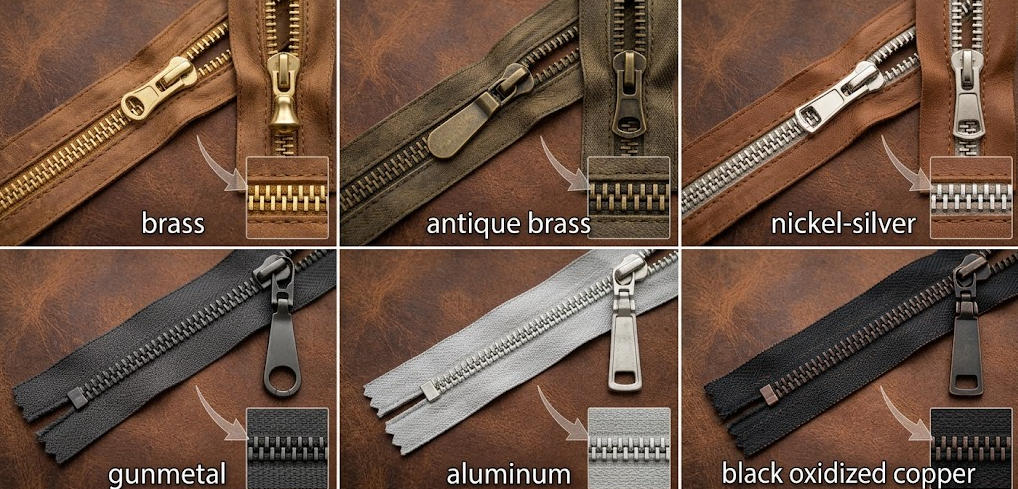
Brass zippers are available in finishes such as polished brass, antique brass, and other decorative colors. These options allow manufacturers to coordinate zipper details with different fabrics, leather materials, and product styles.
Aluminum Metal Zippers
Aluminum metal zippers are relatively lightweight and offer a distinctive metallic appearance. They are suitable for products where reducing component weight is important while maintaining the visual appeal of metal teeth.
Common applications include fashion jackets, handbags, lightweight luggage, and selected outdoor accessories. However, aluminum may have different strength and wear characteristics from brass, so manufacturers should evaluate the expected load and usage conditions before making a decision.
Metal Zippers with Different Surface Finishes
Metal zippers can feature finishes such as nickel-tone, antique silver, gunmetal, black, and gold-tone. These finishes help manufacturers create different visual effects and coordinate zippers with other hardware.
It is important to distinguish the base metal from its surface finish. For example, a silver-colored zipper does not necessarily use silver as its base material. Buyers should confirm the material composition, plating or coating specifications, and relevant compliance requirements with their suppliers.
Choose the Appropriate Metal Zipper Size
Zipper size is one of the most important factors affecting performance and appearance. Common metal zipper sizes include #3, #5, #8, and #10, although specifications and availability may vary between manufacturers.
Smaller sizes, such as #3, are often used for lightweight garments, small pockets, wallets, and accessories. Medium sizes, such as #5, are widely used for denim jeans, jackets, and everyday handbags. Larger sizes, such as #8 and #10, may be suitable for heavy-duty bags, luggage, and products requiring a more substantial closure.
The appropriate size depends on the material thickness, expected mechanical load, opening length, and overall product design. A zipper that is too small may not provide sufficient strength, while an oversized zipper can add unnecessary weight and stiffness.
Manufacturers should also consider the relationship between zipper size and slider compatibility. Selecting compatible components helps ensure smooth operation and reduces the risk of jamming, tooth damage, or premature wear.
Selecting Metal Zippers for Different Applications
Metal Zippers for Jeans and Denim Apparel
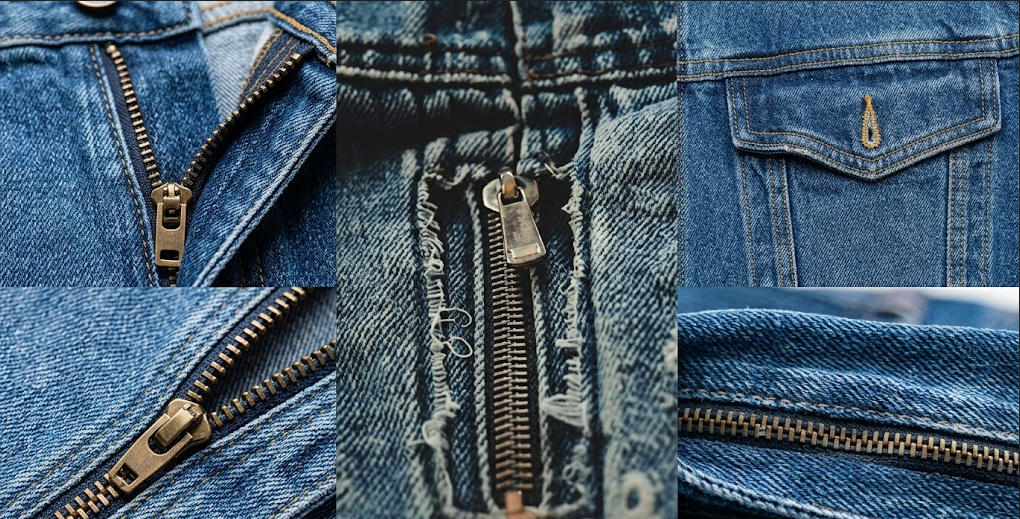
Metal zippers are commonly used in jeans because they combine dependable fastening performance with a classic appearance. Denim garments can place considerable stress on the zipper during sitting, bending, and other movements, making durability and tooth engagement important considerations.
Brass metal zippers are a popular option for denim jeans. Manufacturers should evaluate the strength of the zipper chain, slider movement, zipper length, and resistance to deformation. The zipper should open and close smoothly without separating during normal use.
The surface finish should also complement the denim design. Antique brass and traditional brass finishes work well with classic denim styles, while silver-tone and dark finishes may suit contemporary collections.
For washed or distressed denim, buyers should confirm that the zipper finish can withstand the garment’s washing and finishing processes. Testing samples before mass production helps prevent discoloration, corrosion, or other finish-related problems.
Metal Zippers for Jackets and Outerwear
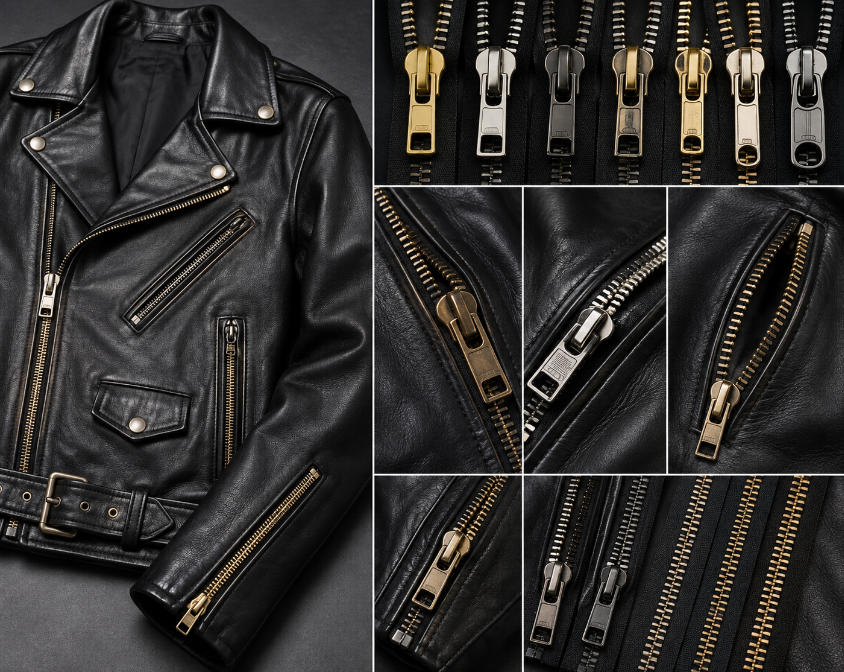
Jackets and outerwear require a balance of strength, smooth operation, and visual appeal. Metal zippers are frequently used in leather jackets, denim jackets, casual coats, and fashion outerwear.
For lightweight jackets, a medium-sized zipper may provide sufficient strength without making the garment too rigid. Heavy leather jackets and structured outerwear may benefit from larger teeth and a more robust construction.
The opening structure is another important consideration. Separating metal zippers are appropriate for jacket fronts that need to open completely, while closed-end zippers are commonly used for pockets and certain garment openings.
For outdoor jackets, manufacturers should consider exposure to moisture, humidity, perspiration, and temperature changes. Suitable materials and finishes can help improve corrosion resistance and maintain the zipper’s appearance. However, standard metal zippers are not inherently waterproof, so additional design features may be necessary for products requiring weather protection.
Metal Zippers for Handbags and Leather Goods
Handbags, wallets, purses, and other leather goods often use metal zippers as both functional fasteners and decorative elements. In these applications, appearance, smooth operation, and compatibility with other hardware are particularly important.
Brass metal zippers can create a premium, traditional appearance, while silver-tone and gunmetal finishes may suit modern, minimalist designs. Gold-tone finishes are also popular for coordinating with decorative buckles, chains, and other handbag accessories.
Manufacturers should consider the zipper size, slider design, tape color, and consistency of the surface finish. The zipper must also be compatible with the thickness and stiffness of the leather or synthetic material.
For handbags designed to carry heavy items, the strength of the zipper chain, slider, end stops, and surrounding stitching should be evaluated together. Even a high-quality metal zipper may fail if it is installed incorrectly or attached to unsuitable material.
Metal Zippers for Luggage and Travel Bags
Luggage and travel bags are exposed to frequent handling, abrasion, heavy contents, and changing environmental conditions. Their zippers must provide reliable operation while resisting damage during transportation.
Larger metal zippers, including #8 and #10 options, may be suitable for certain travel bags and heavy-duty designs. However, the appropriate size depends on the bag’s structure, loading conditions, and closure design.
Manufacturers should pay attention to chain strength, slider durability, tooth engagement, and the quality of the zipper’s attachment. A strong zipper assembly requires more than large teeth; the tape, stitching, stops, and surrounding fabric must also withstand the expected forces.
Corrosion resistance deserves attention when luggage is used in humid or coastal environments. Buyers should select suitable materials and finishes based on the expected exposure conditions.
For luggage that prioritizes lightweight construction or requires extensive curved zipper paths, nylon coil zippers may offer practical advantages. Manufacturers should compare the complete product requirements before deciding whether metal is the most suitable choice.
Metal Zippers for Footwear
Metal zippers are widely used in boots, fashion footwear, and selected leather shoes. They provide convenient opening and closing while contributing to the overall appearance of the footwear.
Footwear zippers must withstand repeated bending and movement as the wearer walks. Manufacturers should select a suitable zipper size and position it carefully to minimize unnecessary stress on the chain.
Smooth slider movement, secure tooth engagement, appropriate length, and reliable attachment are essential. The zipper tape should also be compatible with the leather or synthetic materials used in the shoe.
Because footwear can be exposed to rain, mud, perspiration, and cleaning products, corrosion resistance is particularly important. A suitable base material and surface treatment can help maintain performance and appearance throughout the product’s service life.
Metal Zippers for Workwear and Heavy-Duty Products
Workwear, tool bags, utility pouches, and rugged fabric products may require zippers that can withstand frequent operation, abrasion, and mechanical stress.
For these applications, manufacturers should prioritize functional reliability rather than appearance alone. Important considerations include tooth strength, slider durability, chain alignment, and resistance to deformation under expected loads.
Brass and other suitable metal zippers can be considered when their properties meet the application’s requirements. Larger sizes may be appropriate for heavy materials, but the final selection should also account for the product’s construction and the quality of the zipper components.
For specialized industrial applications involving chemicals, saltwater, or extreme temperatures, buyers should define the operating environment and carry out material compatibility testing before approving a zipper for production.
Consider Zipper Length and Opening Structure
In addition to size and material, zipper length and construction must match the finished product’s design.
Closed-end metal zippers are commonly used for jeans, wallets, pockets, and many bags. Their bottom ends remain joined, creating a fixed closure that does not separate completely.
Separating metal zippers are commonly used for jacket fronts and other garments that need to open fully. Their bottom components allow the two sides to disengage when the zipper is opened.
Two-way metal zippers use two sliders or another compatible construction to allow access from different directions. They can be useful for long outerwear, selected luggage, and equipment covers where flexible access is beneficial.
The zipper length should be determined according to the product pattern and installation requirements. A zipper that is too short may restrict access, while an excessively long zipper can interfere with seams, pocket placement, or garment proportions.
Manufacturers should also confirm slider compatibility, puller dimensions, top and bottom stops, and installation tolerances before approving a zipper for mass production.
Evaluate Corrosion Resistance and Surface Finish
The surface finish of a metal zipper affects its appearance and may influence its resistance to environmental exposure. However, an attractive finish does not automatically guarantee good corrosion resistance.
Products intended for humid climates, outdoor use, footwear, or frequent washing may require more careful material selection and testing. Buyers should ask suppliers about the base metal, plating or coating process, corrosion-test methods, and compatibility with cleaning or finishing chemicals.
Finish consistency is equally important for fashion products. Zipper teeth, sliders, pullers, and other metal accessories should have a coordinated appearance. Variations between production batches can be particularly noticeable on premium handbags, leather goods, and branded apparel.
When a specific color is required, manufacturers should approve samples and establish acceptable color tolerances before bulk production. They should also verify that the finish remains stable after relevant washing, rubbing, or environmental tests.
Test Metal Zipper Quality and Durability
Choosing a metal zipper requires more than comparing photographs or unit prices. The zipper must perform consistently under the conditions expected for the finished product.
Manufacturers should evaluate chain alignment, tooth engagement, slider movement, end-stop security, tape strength, and finish uniformity. These factors influence both the user’s experience and the overall reliability of the finished product.
Repeated opening-and-closing tests can help identify premature wear, jamming, or chain separation. Pull tests and other mechanical evaluations can help determine whether the zipper assembly can withstand the intended loads. Corrosion, washing, and colorfastness tests may also be necessary depending on the application.
Testing should reflect the actual operating environment. A zipper used in a leather handbag may require different evaluations from one installed in frequently washed workwear or outdoor footwear.
It is also advisable to inspect samples from production batches and maintain clear quality specifications. Consistent inspection procedures help manufacturers identify defects early, reduce waste, and minimize customer complaints.
Work with a Reliable Metal Zipper Manufacturer
A reliable metal zipper manufacturer can help buyers match zipper specifications to product requirements, particularly when a project involves custom colors, unusual lengths, special finishes, or large production volumes.
When evaluating a supplier, manufacturers and purchasing teams should consider production capabilities, material options, quality-control procedures, sample availability, customization services, and delivery schedules.
Clear communication is especially important when ordering metal zipper chains in rolls or developing zippers for multiple product lines. Buyers should specify the required size, tooth material, surface finish, tape color, roll length, slider compatibility, and packaging requirements.
For customized products, requesting pre-production samples is a practical way to verify appearance, dimensions, and operating performance before approving a bulk order. Buyers should also clarify minimum order quantities, production lead times, and the supplier’s process for managing quality issues.
An experienced zipper manufacturer can help identify potential compatibility problems before production begins, making it easier to balance performance, appearance, and cost.
Balance Performance, Appearance, and Cost
The best metal zipper is not necessarily the most expensive or the largest. It is the option that meets the finished product’s functional and aesthetic requirements at an appropriate cost.
For basic denim garments and everyday accessories, a standard metal zipper may provide a practical balance of performance and price. Premium leather goods may justify specialized finishes, custom pullers, or tighter appearance tolerances. Heavy-duty luggage and workwear may require additional testing and stronger components to meet their service requirements.
Manufacturers should also consider the total cost of ownership rather than focusing exclusively on the purchase price. Defective components, production delays, installation difficulties, product returns, and warranty claims can increase the overall cost of choosing an unsuitable zipper.
By assessing the expected service life and the consequences of zipper failure, manufacturers can make more informed purchasing decisions and select components that provide long-term value.
Summary
Choosing metal zippers for different applications requires careful consideration of size, base material, surface finish, zipper length, opening structure, durability, and environmental conditions. Jeans, jackets, handbags, luggage, footwear, and workwear each have distinct requirements that should guide the selection process.
Manufacturers should evaluate the zipper as part of the complete product, ensuring that its chain, slider, stops, tape, and installation method work together reliably. Sample testing, clear specifications, and cooperation with an experienced zipper supplier can further improve product consistency and reduce production risks.
Ultimately, the right metal zipper combines dependable fastening performance with an appearance and cost structure suited to the intended product. By selecting zipper components according to actual application requirements, manufacturers can improve product quality, strengthen brand value, and deliver finished goods that meet customer expectations.

