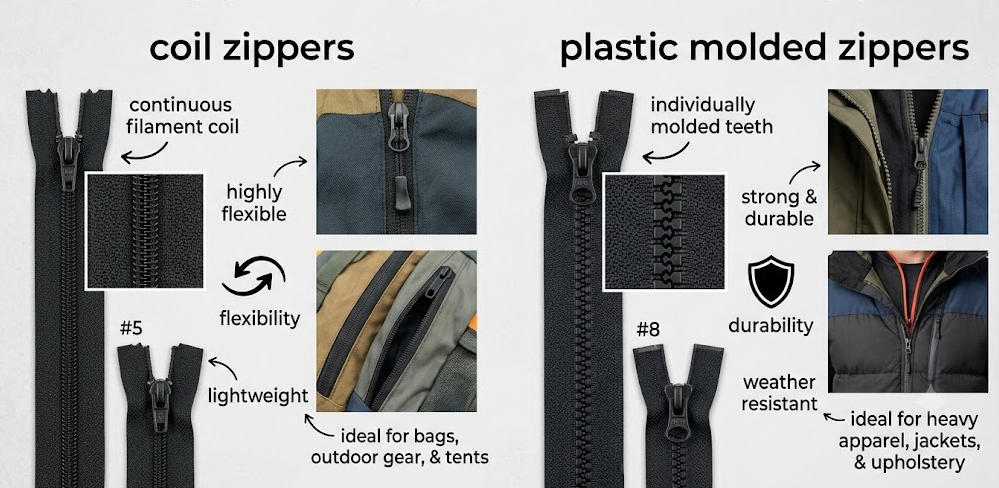
Coil zippers and plastic molded zippers are two common zipper types used in garments, bags, luggage, outdoor equipment, and other textile products. Although both are designed to provide secure and convenient fastening, they differ in construction, flexibility, appearance, durability, and application. Understanding the differences between coil zippers and plastic molded zippers can help manufacturers choose the most suitable option for a specific product.
What Are Coil Zippers
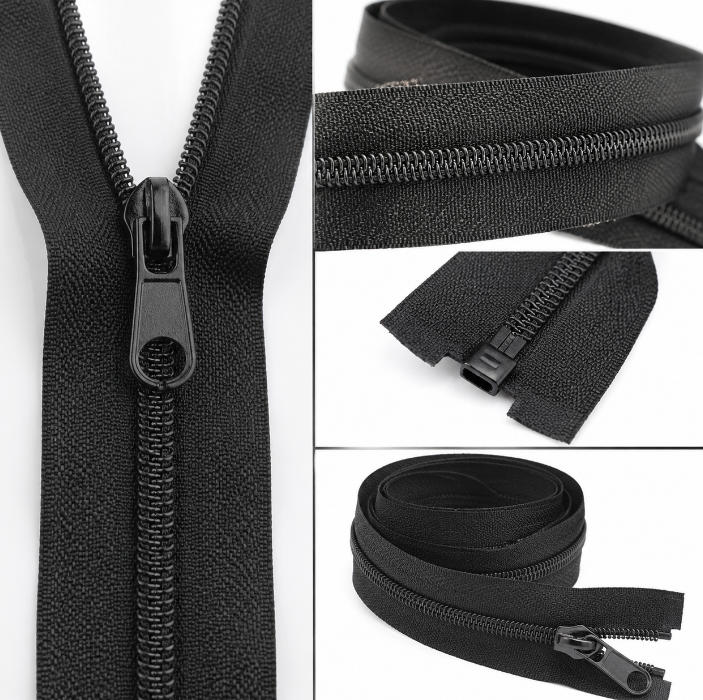
Coil zippers are manufactured with a continuous spiral-shaped element, commonly made from nylon. The coil is attached to the zipper tape and interacts with the slider to open and close the zipper. Because the fastening element is formed as a continuous coil, the nylon coil zipper can bend and flex relatively easily.
This flexibility makes coil zippers particularly suitable for products that require smooth movement around curved surfaces. They are widely used in clothing, handbags, backpacks, luggage, tents, sleeping bags, and various textile accessories. Different coil sizes and constructions can also be produced to meet requirements for lightweight, standard, or heavy-duty applications.
What Are Plastic Molded Zippers
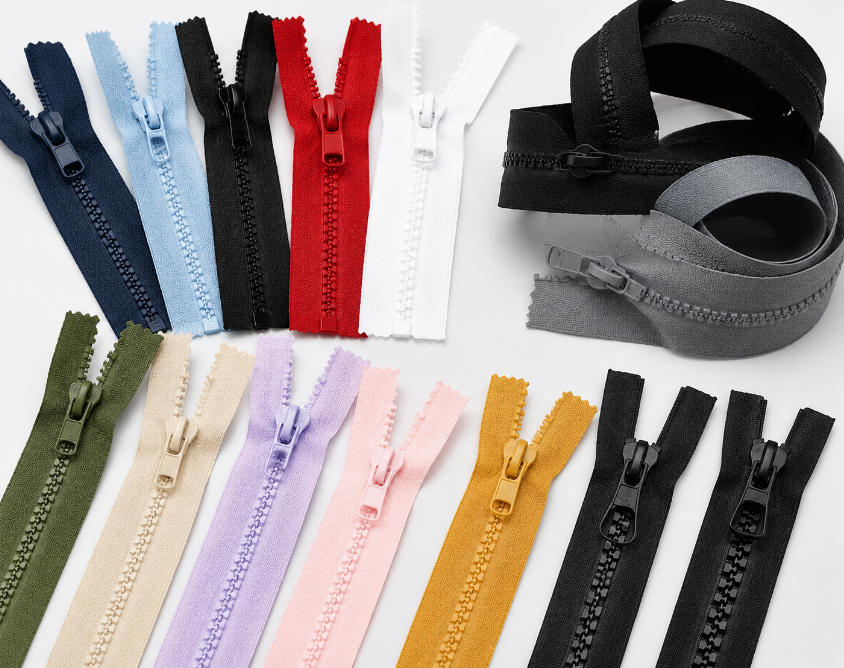
Plastic molded zippers are made with individual teeth that are molded from synthetic plastic materials and attached to the zipper tape. The teeth interlock when the slider moves along the zipper, creating a stable fastening structure.
Compared with coil zippers, plastic molded zippers usually have a more prominent and structured appearance. They are commonly used in jackets, sportswear, backpacks, luggage, outdoor equipment, and workwear. Different tooth sizes, shapes, and colors can be selected to match the functional and visual requirements of a product.
Construction Differences Between Coil and Plastic Molded Zippers
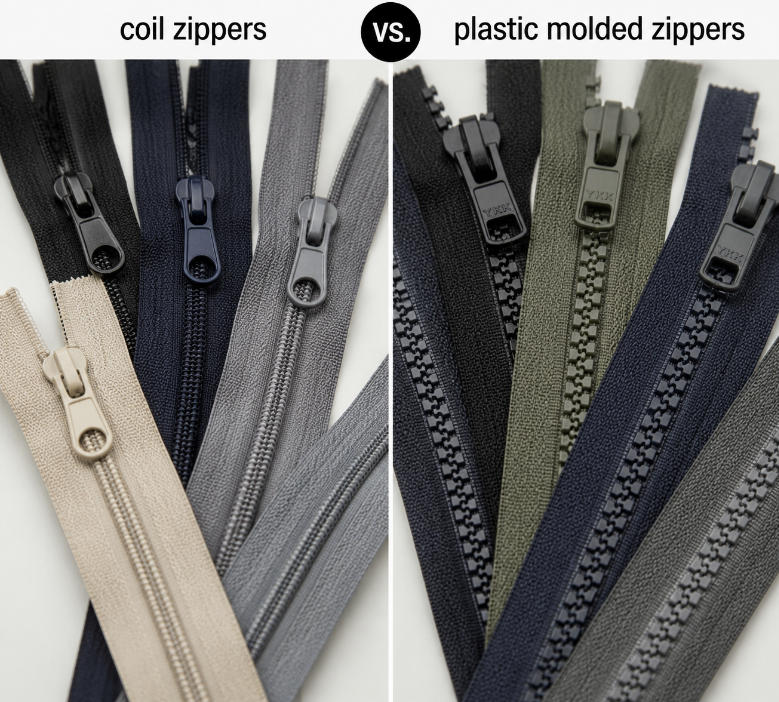
The most fundamental difference is the structure of their fastening elements. A coil zipper uses a continuous spiral element, while a plastic molded zipper uses separate molded teeth.
This structural difference affects how each zipper behaves during use. Coil zippers generally offer greater flexibility because the continuous coil can follow curves more easily. Plastic molded zippers have a more defined tooth structure, which can give the zipper a stronger and more substantial appearance.
The construction also influences the overall feel of the finished product. Coil zippers are often associated with smooth and lightweight designs, while molded zippers are frequently chosen when manufacturers want a more technical or rugged appearance.
Flexibility and Smooth Operation
Flexibility is one of the main advantages of coil zippers. The continuous coil construction allows the zipper to bend naturally, making it suitable for curved openings and flexible textile products. This characteristic is particularly useful in garments, bags, and products where the zipper must move with the material.
Plastic molded zippers are generally more structured because of their individual teeth. They can still be installed on curved products, but the resulting zipper line may feel firmer than a comparable coil zipper.
Both types can provide smooth operation when the zipper tape, teeth, slider, and manufacturing quality are properly matched. Slider design and installation quality can have a significant influence on the actual opening and closing performance.
Durability and Strength
Both coil and plastic molded zippers can be manufactured for different levels of durability. Their actual performance depends on factors such as zipper size, material quality, tooth construction, slider design, tape strength, and manufacturing process.
Plastic molded zippers are frequently used for products that require a robust and visually substantial fastening system. Larger molded teeth can provide strong mechanical engagement, which is useful for backpacks, outdoor equipment, luggage, and heavy-duty clothing.
Coil zippers can also provide excellent durability, particularly when heavy-duty coil constructions are selected. Their flexibility can be an advantage in applications where the zipper is repeatedly bent or exposed to continuous movement.
Appearance and Design Considerations
The visual difference between the two zipper types can be important for fashion and product design. Coil zippers generally have a fine, smooth appearance because the fastening element consists of a continuous coil. When installed, the zipper can appear relatively subtle and streamlined.
Plastic molded zippers have clearly visible individual teeth. Their tooth size and color can therefore become an important part of the product’s overall appearance. Designers can use contrasting or matching teeth to create different visual effects.
For sportswear and outdoor products, the larger and more prominent appearance of molded teeth can complement a technical or rugged product design.
Applications of Coil Zippers
Coil zippers are commonly used when flexibility, lightweight construction, and smooth movement are important. They are frequently found in garments, pockets, handbags, backpacks, luggage compartments, tents, sleeping bags, and other textile products.
They are also available in specialized constructions for applications requiring greater resistance to moisture or demanding operating conditions. The wide range of coil sizes and colors gives manufacturers considerable flexibility when developing different products.
Applications of Plastic Molded Zippers
Plastic molded zippers are widely used in products that require a structured and durable fastening system. They are common in jackets, sportswear, backpacks, luggage, workwear, outdoor equipment, and technical textile products.
The availability of different tooth sizes allows manufacturers to select a construction appropriate for lightweight products as well as more demanding applications. Colored molded teeth can also be coordinated with garment fabrics or used as a contrasting design element.
How to Choose Between Coil and Plastic Molded Zippers
The right choice depends on the construction and performance requirements of the finished product. When flexibility and smooth bending are priorities, a coil zipper can be a suitable choice. Its flexible structure works particularly well with curved openings and soft textile materials.
When a more structured appearance and robust fastening construction are required, a plastic molded zipper may be preferable. It can be particularly suitable for backpacks, luggage, outdoor products, and garments where the zipper is intended to contribute to the product’s technical appearance.
Manufacturers should also consider size, tape material, slider type, color, tensile requirements, operating frequency, environmental conditions, and production cost before selecting a zipper.
Coil Zippers vs. Plastic Molded Zippers
There is no universal choice between coil zippers and plastic molded zippers. Each type is designed to meet different product requirements. Coil zippers provide excellent flexibility and are well suited to lightweight and curved applications, while plastic molded zippers provide a more structured fastening system and distinctive tooth appearance.
For garment manufacturers and product designers, the best approach is to evaluate the zipper together with the fabric, product structure, expected usage conditions, and desired appearance. Selecting the appropriate zipper construction can improve fastening performance while also contributing to the overall quality and design of the finished product.
Summary
Coil zippers and plastic molded zippers differ mainly in their fastening-element construction, flexibility, appearance, and typical applications. Coil zippers use a continuous spiral element and are known for their flexible performance, while plastic molded zippers use individual molded teeth and provide a more structured appearance.
Understanding these differences allows manufacturers to select a zipper that matches the functional and design requirements of each product. With the right zipper construction, size, slider, and materials, both coil and plastic molded zippers.

