Rubber fenders are essential components in marine infrastructure, providing protection for vessels and berthing structures during docking operations. When a ship approaches a quay, jetty, terminal, or offshore platform, significant impact energy is generated. A properly selected rubber fender absorbs this energy, reduces collision forces, and minimizes potential damage to both the vessel and the marine structure.
However, choosing the right rubber fender is not simply a matter of selecting the largest or strongest option available. The ideal rubber fenders must match the operational requirements of the facility, including vessel characteristics, berthing conditions, environmental factors, and structural limitations. A well-designed rubber fender solution improves safety, reduces maintenance costs, and ensures reliable performance throughout its service life.
Understanding the Importance of Rubber Fender Selection
The primary purpose of a rubber fender is to control the energy produced during vessel impact. When a ship makes contact with a berth, the fender compresses and converts kinetic energy into deformation energy, preventing excessive forces from being transferred to the vessel hull and dock structure.
An unsuitable rubber fender can create several problems. If the fender has insufficient energy absorption capacity, the impact force may damage the vessel or berth. If the reaction force is too high, it may place excessive stress on the supporting structure. On the other hand, selecting an oversized fender may increase project costs and require unnecessary modifications to the installation system.
Therefore, the selection process must consider the balance between energy absorption, reaction force, durability, and overall operational requirements.
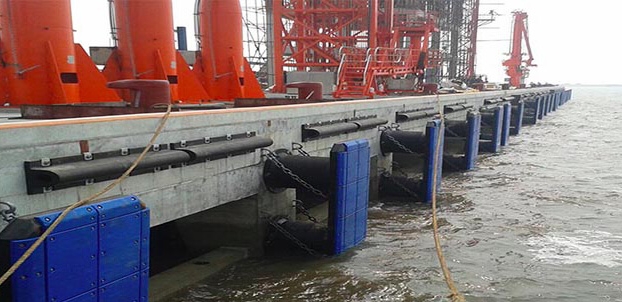
Considering Vessel Characteristics and Berthing Conditions
One of the most important factors when choosing a rubber fender is understanding the vessels that will use the facility. Vessel size, displacement, hull shape, loading condition, and berthing frequency all influence the required fender performance.
Large commercial vessels such as container ships, tankers, and bulk carriers generate considerable impact energy during berthing. These vessels typically require high-performance fender systems capable of absorbing large amounts of energy while maintaining controlled reaction forces. Smaller vessels, including ferries, fishing boats, and service vessels, may require simpler and more flexible fender solutions.
The speed and angle at which vessels approach the berth are also important considerations. A facility with frequent vessel movements or challenging berthing conditions may require fenders with greater energy capacity and better resistance to repeated compression cycles.
Evaluating Energy Absorption and Reaction Force
Energy absorption capacity is a key performance indicator for rubber fenders. It determines how much impact energy the fender can absorb before reaching maximum compression. The selected fender should provide enough energy absorption to safely handle the expected berthing impact while allowing an appropriate safety margin.
Reaction force is another critical factor because it represents the force transmitted to the vessel and supporting structure during compression. A high reaction force may damage sensitive structures or create excessive stress on the vessel hull. Therefore, an effective fender system should achieve a balance between absorbing sufficient energy and limiting reaction forces.
Modern rubber fender designs are engineered to provide improved energy absorption efficiency while maintaining relatively low reaction forces. This balance is especially important for large ports, offshore terminals, and facilities with strict structural requirements.

Selecting the Suitable Rubber Fender Design
Different rubber fender designs offer different performance advantages depending on the application. Cone fenders are often selected for heavy-duty marine facilities because they provide high energy absorption, excellent stability, and low reaction forces. Their compact structure makes them suitable for large vessels and demanding berthing environments.
Cell fenders are widely used in commercial ports because they provide reliable compression performance and a good balance between energy absorption and reaction force. They are commonly installed at cargo terminals, bulk carrier berths, and multipurpose docks.
Cylindrical rubber fenders are valued for their flexibility and simple installation. They are commonly used for smaller vessels, floating docks, and general marine applications where moderate impact protection is required. Their ability to accommodate different contact angles makes them suitable for facilities with changing vessel movements.
Arch fenders provide durable protection in medium-duty applications. Their curved structure allows them to resist compression and shear forces effectively, making them suitable for ferry terminals, small ports, and general berthing facilities.
For shipyards, naval facilities, and repair docks where vessels frequently move along the berth, sliding fenders can provide better performance by reducing friction and controlling horizontal movement. Pneumatic rubber fenders are often selected for offshore operations and ship-to-ship transfers because their air-filled structure provides flexible impact absorption and adaptability to different operating conditions.
Considering Environmental Conditions
Marine environments expose rubber fenders to seawater, ultraviolet radiation, temperature variations, and mechanical stress. These factors can affect rubber performance over time, making environmental resistance an important consideration during selection.
Facilities located in harsh offshore environments require fenders made from high-quality rubber compounds with excellent resistance to aging, corrosion, and weather exposure. In regions with extreme cold temperatures, the rubber material must maintain flexibility to prevent cracking or reduced performance.
Tidal variations should also be considered, especially in ports where water levels change significantly. The fender system must maintain effective contact with vessels at different heights to ensure continuous protection throughout the tidal cycle.
Considering Installation Requirements and Maintenance
The installation conditions of a marine facility can influence the choice of rubber fender. Available space, mounting structure, access conditions, and replacement procedures should all be evaluated before selecting a fender system.
Some advanced fender systems require additional components such as mounting frames, chains, frontal panels, and support brackets. Proper installation is essential because incorrect mounting can reduce energy absorption efficiency and increase wear.
Regular inspection and maintenance also contribute to long-term performance. Over time, rubber fenders may experience surface wear, deformation, cracking, or damage caused by repeated impacts. Selecting a durable fender design that allows convenient inspection and replacement can reduce downtime and maintenance expenses.
Evaluating Material Quality and Manufacturing Standards
The quality of the rubber material directly affects the durability and reliability of a fender system. High-quality rubber fenders are manufactured using carefully developed compounds that provide excellent elasticity, tensile strength, abrasion resistance, and resistance to environmental aging.
Advanced manufacturing processes and strict quality control help ensure consistent performance. Reliable rubber fenders are typically tested for compression characteristics, physical properties, and long-term durability before being used in marine applications.
Choosing products from experienced manufacturers that follow recognized marine industry standards can improve safety and reduce the risk of premature failure.

Balancing Cost and Long-Term Performance
Although initial purchase cost is an important factor, the overall value of a rubber fender should be evaluated throughout its service life. A low-cost fender may appear economical initially but could require frequent replacement or create higher maintenance costs if it cannot withstand operational demands.
A properly selected high-quality rubber fender provides long-term benefits by reducing damage, improving operational efficiency, and extending the lifespan of marine infrastructure. Considering lifecycle costs rather than only initial investment helps achieve a more economical and reliable solution.
Final Thoughts
Choosing the right rubber fender requires a comprehensive understanding of vessel requirements, berthing conditions, environmental challenges, and structural limitations. The ideal fender system must provide sufficient energy absorption, controlled reaction force, reliable durability, and compatibility with the installation environment.
By carefully evaluating these factors, marine operators and engineers can select rubber fenders that deliver effective protection and long-term performance. A well-designed fender system not only prevents costly damage but also supports safer, more efficient, and more reliable maritime operations.
 China manufacturers