Quality control in the print industry plays a decisive role in ensuring that final products meet customer expectations and regulatory requirements. Whether producing packaging, labels, commercial materials, or publication prints, manufacturers must decide how to inspect output efficiently while maintaining consistent quality. Two primary approaches dominate this decision-making process: sampling inspection and 100% inspection. Each method reflects a different balance between cost, accuracy, and production efficiency, and the choice between them often shapes the entire quality assurance strategy.
Understanding Sampling Inspection
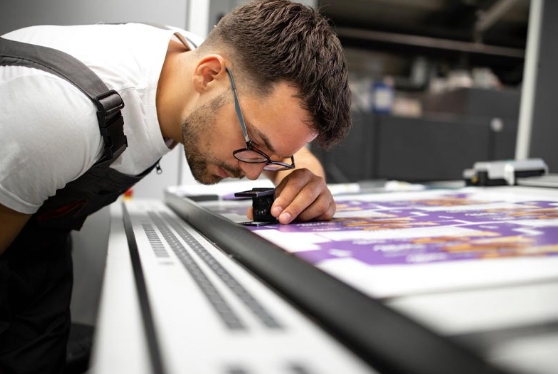
Sampling inspection is based on evaluating a limited number of printed items from a larger production batch. Instead of checking every sheet, label, or package, inspectors examine selected samples and use the results to infer the quality of the entire lot. This statistical approach assumes that a properly chosen sample can represent the overall production quality with an acceptable level of confidence.
In practical print production environments, sampling inspection is often used when production processes are stable and historical defect rates are low. It is also common in high-volume jobs where inspecting every item would slow down delivery schedules and significantly increase labor costs. However, the reliability of this method depends heavily on how representative the selected samples are and how consistent the production process remains over time.
Understanding 100% Inspection
100% inspection takes a fundamentally different approach by examining every single printed item produced. Rather than relying on probability or inference, this method aims to ensure that no defective product leaves the production line. In modern printing operations, this approach is increasingly supported by automated inspection systems that use machine vision, real-time monitoring, and defect detection algorithms.
The 100% inspection systems for printing quality is especially important in applications where even a minor defect can lead to serious consequences. High-value packaging, pharmaceutical labeling, and safety-critical printed materials often require this level of scrutiny. Because every item is checked, the method provides a much higher level of assurance, but it also demands more advanced technology and system integration to avoid slowing down production.

Differences in Quality Assurance Philosophy
The fundamental difference between sampling inspection and 100% inspection lies in how quality is defined and verified. Sampling inspection accepts a degree of uncertainty, relying on statistical confidence to represent batch quality. In contrast, 100% inspection aims for complete certainty by eliminating reliance on probability altogether.
This philosophical difference also affects how manufacturers manage risk. Sampling inspection assumes that occasional defects may pass undetected, as long as they remain within acceptable limits. 100% inspection, on the other hand, seeks to eliminate defect escape entirely, prioritizing zero-defect outcomes over statistical estimation.
Impact on Production Efficiency and Cost
From an operational standpoint, sampling inspection is generally more cost-effective and faster to implement. It requires fewer resources and is well suited to high-volume, standardized print runs. However, its lower inspection intensity means that some defects may only be discovered after the batch has been completed or delivered.
100% inspection typically requires a higher initial investment, particularly when automated systems are deployed. Despite this, it can reduce long-term costs associated with recalls, reprints, and customer complaints. When properly integrated into high-speed production lines, automated 100% print inspection can operate in real time without significantly slowing down output, although system complexity and maintenance requirements are higher.

Suitability for Different Printing Applications
Sampling inspection is most appropriate in environments where production processes are stable, defect rates are predictable, and products are not safety-critical. It is frequently used in commercial printing, newspapers, and general marketing materials where minor variations may be acceptable.
100% inspection is better suited for industries where precision and compliance are essential. Pharmaceutical packaging, food labeling, and high-end brand packaging often require absolute consistency and traceability. In these contexts, even a single defective unit can have serious regulatory or reputational consequences.
Final Thoughts
Sampling inspection and 100% inspection represent two distinct strategies for managing print quality, each with its own strengths and limitations. Sampling inspection offers efficiency and cost advantages when processes are stable and risk tolerance is higher, while 100% inspection provides comprehensive assurance in environments where quality cannot be compromised. As printing technologies continue to advance, many manufacturers are moving toward hybrid systems that combine the efficiency of sampling with the precision of full inspection, creating a more balanced and data-driven approach to quality control.
 China manufacturers