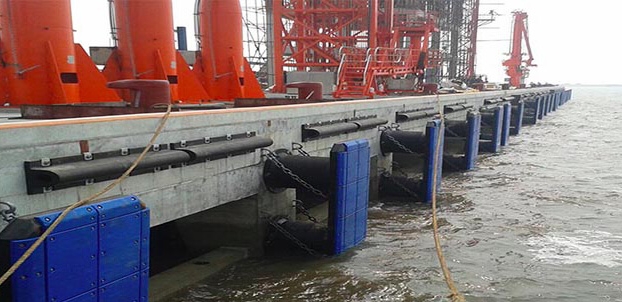
Rubber fenders serve as the primary protective interface between vessels and port infrastructure, absorbing kinetic energy during berthing and minimizing structural damage. Their durability is not merely a performance attribute but a fundamental requirement for ensuring operational safety and cost efficiency. In demanding marine environments characterized by saltwater exposure, UV radiation, fluctuating temperatures, and repeated mechanical stress, fenders must maintain their elasticity and structural integrity over long periods. A durable rubber fender system reduces downtime, lowers replacement frequency, and enhances the overall reliability of port operations.
Material Innovation as the Foundation of Longevity
The durability of rubber fenders begins with advanced material engineering. High-performance fenders are typically manufactured using a combination of natural rubber and synthetic elastomers such as styrene-butadiene rubber (SBR) or ethylene propylene diene monomer (EPDM). These blends are carefully formulated to balance elasticity, tensile strength, and resistance to environmental degradation. Additives that improve resistance to ozone, ultraviolet radiation, and oxidation play a vital role in preventing surface cracking and hardening. In more aggressive environments, specialized compounds with enhanced oil and chemical resistance are employed to ensure consistent performance even in polluted or industrial port conditions.
Structural Design Strategies for Enhanced Durability
Beyond materials, the structural design of rubber fenders significantly influences their lifespan. Modern designs such as cone, cell, and arch fenders are engineered to distribute stress evenly across the structure, minimizing localized fatigue and deformation. By optimizing geometry, these designs achieve high energy absorption with relatively low reaction forces, reducing strain on both the fender and the supporting infrastructure. The integration of internal reinforcements, including steel plates or composite layers, further enhances load-bearing capacity and resistance to repeated impacts. Advanced simulation techniques, such as finite element analysis, enable engineers to predict stress distribution and refine designs for maximum durability under real-world operating conditions.
Manufacturing Excellence and Quality Assurance
The manufacturing process is a decisive factor in determining the long-term durability of rubber fenders. Precision in molding and vulcanization ensures uniform material properties and eliminates internal defects that could lead to premature failure. Controlled curing conditions are essential for achieving optimal cross-linking within the rubber matrix, which directly affects strength and elasticity. In addition, rigorous quality control procedures, including mechanical testing and fatigue analysis, are implemented to verify that each fender meets international performance standards. The adoption of automated production technologies further enhances consistency, reduces variability, and ensures that each unit delivers reliable performance over its service life.
Surface Protection and Environmental Resistance
Given their constant exposure to harsh marine conditions, rubber fenders benefit significantly from protective surface treatments. Anti-corrosion coatings are applied to embedded metal components such as chains and mounting hardware to prevent rust and structural weakening. Low-friction surface layers can be incorporated to reduce abrasion caused by vessel movement, thereby minimizing wear. In regions prone to biofouling, anti-fouling treatments help prevent the accumulation of marine organisms such as algae and barnacles, which can degrade material properties and affect performance. These protective measures collectively extend the operational lifespan of the fender system.
Installation Practices and Their Impact on Service Life
Proper installation of rubber fenders is essential to fully realize the durability potential. Incorrect alignment or inadequate mounting can lead to uneven load distribution, resulting in accelerated wear or structural damage. Ensuring that fenders are positioned according to design specifications allows them to function as intended, effectively absorbing impact energy. Secure anchoring systems must be used to prevent excessive movement, while compatibility with vessel types, berthing speeds, and environmental conditions should be carefully considered during system selection. A well-installed fender system operates more efficiently and experiences less stress over time.
Maintenance as a Key to Sustained Performance
Even the most robust rubber fenders require regular maintenance to preserve their durability. Periodic inspections are necessary to identify early signs of wear, such as surface cracks, deformation, or loss of elasticity. Monitoring performance characteristics, including energy absorption and reaction force, helps ensure that the fender continues to meet operational requirements. Routine cleaning to remove salt deposits and marine growth prevents long-term degradation. When minor damage is detected, timely repair or component replacement can prevent more serious failures and extend the overall service life of the system.

Addressing Environmental and Operational Challenges
The durability of rubber fenders is also influenced by external environmental and operational factors. Extreme temperature variations can alter the mechanical properties of rubber, affecting its flexibility and strength. High-frequency berthing operations increase cumulative fatigue stress, necessitating more resilient designs and materials. Exposure to chemicals, oils, and pollutants in certain ports requires the use of specialized rubber compounds to maintain integrity. Understanding these conditions and tailoring the fender system accordingly is essential for achieving optimal durability in diverse marine environments.
Future Directions in Rubber Fender Durability
Advancements in technology are driving the development of more durable and intelligent rubber fender systems. The integration of sensors enables real-time monitoring of stress, deformation, and environmental conditions, allowing for predictive maintenance and improved asset management. Innovations in material science are leading to the creation of eco-friendly rubber compounds that offer enhanced durability while reducing environmental impact. Hybrid designs that combine rubber with advanced composites are also emerging, providing superior strength and resistance to wear. As digital design tools continue to evolve, engineers can create increasingly optimized fender systems that meet the growing demands of modern maritime infrastructure.

Summary
Enhancing the durability of rubber fenders requires a holistic approach that encompasses material selection, structural design, manufacturing precision, installation quality, and ongoing maintenance. By addressing each of these aspects in a coordinated manner, marine operators can significantly extend the service life of their fender systems while ensuring safe and efficient berthing operations. As innovation continues to reshape the maritime industry, the durability and performance of rubber fenders will remain a key factor in supporting sustainable and resilient port infrastructure.
 China manufacturers