Rubber fenders play a crucial role in maritime infrastructure, protecting vessels and docks from impact damage during berthing operations. Among the various types available, cone and cylindrical rubber fenders are two of the most commonly used. While both serve the same primary purpose—absorbing kinetic energy and minimizing structural damage—their designs and performance characteristics differ significantly. This article offers a comparative overview of cone and cylindrical rubber fenders to help stakeholders choose the most suitable solution for their marine applications.
Understanding Cylindrical Rubber Fenders
Cylindrical rubber fenders are the oldest and most widely used type of marine fender. As the name suggests, these fenders feature a simple cylindrical shape, typically installed horizontally or vertically along quay walls or on vessels.
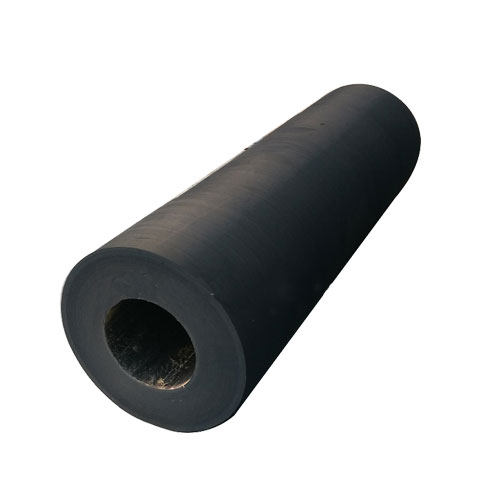
Key Characteristics:
Simple design and easy installation
Available in a wide range of diameters and lengths
Uniform stress distribution under compression
Cost-effective and durable in moderate berthing conditions
Applications:
Cylindrical fenders are best suited for:
Small to medium-sized vessels
Inland ports and harbors
Tugboats and workboats
Understanding Cone Rubber Fenders
Cone rubber fenders are a more modern and high-performance evolution of cell fender technology. Their design features a wide base, a tapered body, and a narrow top—resembling a cone—which offers superior deflection and energy absorption.
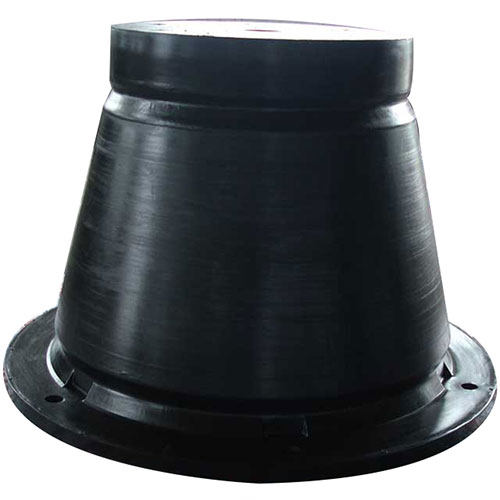
Key Characteristics:
High energy absorption-to-reaction force ratio
Excellent stability even under high shear forces
Suitable for high tidal variations and larger berthing angles
Long service life with low maintenance
Applications:
Cone fenders are ideal for:
Large container ships, tankers, and Ro-Ro vessels
Heavy-duty ports and high-energy berthing environments
Terminals with demanding tidal conditions
Key Differences Between Cone vs. Cylindrical Rubber Fenders
1. Design Structure
Cone rubber fenders feature a modern conical shape with a broad base and tapered body. This geometry enhances stability and distributes stress evenly under compression. In contrast, cylindrical rubber fenders have a simple tube-like shape that has been used for decades in marine applications. While less sophisticated, this design allows easy adaptation to various vessel and dock configurations.
2. Energy Absorption Capability
One of the standout advantages of cone fenders is their ability to absorb high levels of kinetic energy while maintaining low reaction forces. This makes them ideal for large vessels with significant impact potential. Cylindrical fenders offer moderate energy absorption, which is sufficient for smaller ships but may be inadequate for high-tonnage berthing operations.
3. Performance Under Pressure
Cone fenders maintain structural stability and effectiveness even under high shear forces and during angular berthing. Their design also compensates for large tidal variations. Cylindrical fenders, though reliable in standard conditions, tend to deform more under intense pressure and are less suitable for complex docking scenarios.
4. Installation and Maintenance
Cylindrical fenders are relatively easy to install and can be fitted horizontally or vertically, making them popular for basic applications. Cone fenders, however, require more engineering precision and robust mounting systems due to their advanced performance features. Despite this, cone fenders tend to have lower maintenance needs over time.
5. Cost Considerations
From a budget perspective, cylindrical fenders offer a lower upfront investment, making them attractive for small to medium ports. Cone fenders, while more expensive initially, offer a better return on investment in high-traffic or high-impact zones due to their extended service life and reduced maintenance costs.
6. Best-Fit Applications
Cone rubber fenders are well-suited for modern terminals, especially those serving container ships, oil tankers, and Ro-Ro vessels. Their performance is optimized for high-energy environments. Cylindrical fenders, on the other hand, are ideal for small ports, tugboats, barges, and workboats where the berthing force is comparatively low.

Final Words
The choice between cone and cylindrical rubber fenders depends largely on the operational demands of your port or vessel. Cylindrical fenders are ideal for general-purpose and low-impact applications, offering a cost-effective and reliable solution. In contrast, cone fenders are better suited for high-performance environments, where vessels are larger and the need for superior energy absorption and structural protection is paramount.
 China manufacturers