A hot rolling mill is a machine referring to the pressure shaping of the metals. It is basically an automatic system or cluster of machines to perform both rolling and auxiliary operations including transportation of billets to heating furnaces and mill rolls, rolled material, metal after rolling, and many other functions. The mill rolls out by subjecting the slabs to extremely high temperatures in a heating furnace and high pressures through a successive arrangement of rolls. The types of a hot rolling mill include Φ200-650 hot rolling machine, short-stress rolling mill, etc. Hot rolling mill provides high-accuracy control of thickness, width, shape, and process technology for the water cooling to create ductility and strength, widely used in various applications such as for automobiles, rail cars, and home appliances.
Hot Rolling Mill Line
TINVO provides the hot rolling mill line to finish the whole hot rolling process. The main equipment includes Reheating Furnace, High-Pressure Water Descaling, Mill Stands, Flying Shear, Cold Shear, Cooling Bed, Packing and Collection Machine, Electric, Air, Lubrication System, etc. The hot strip machines are the most commonly used. The process is that Scrap steel —-melting—- casting—-mold unloading—-sorting—–deliver to reheating furnace—-heating to 1150~1200°C—- come out furnace—- rolling—- finished product —-packing.
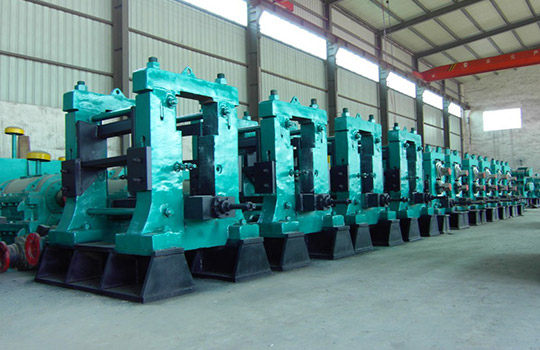
Hot rolling refers to rolling performed above the metal recrystallization temperature. When the annealing temperature is high enough and the time is long enough. new strains (recrystallized cores) without stress change are generated in the fiber structure of the deformed metal or alloy, and the new grains continue to grow until the original deformed structure completely disappears, the properties of metals or alloys also change significantly. This process is called recrystallization. The temperature at which new grains begin to form is called the recrystallization temperature. The temperature at which the microstructure is completely occupied by the new grains is called the end recrystallization temperature. Generally, the recrystallization temperature is mainly affected by the alloy composition, the degree of deformation, the original grain size, and the annealing temperature.
Features:
1. Low energy consumption, good plastic working, low deformation resistance, insignificant work hardening, easy rolling, and reduced energy consumption required for metal deformation.
2. Hot rolling mill usually uses large ingots/billet and large degrees of down rolling. The production speed is fast and the yield is high, which creates conditions for large-scale production.
3. The cast structure is transformed into the processed structure by hot rolling, and the plasticity of the material is greatly improved through the transformation of the structure.
4. The characteristics of the rolling method determine that there is anisotropy in the properties of the rolled parts. Firstly, there are obvious performance differences in the longitudinal, horizontal and high directions of the material. Secondly, there is an obvious directionality in the performance.
TINVO offers design, manufacture and onsite service of the whole bar or rebar hot rolling mill line with computer control for advanced international standards.
 China manufacturers