Forging Steel Roll
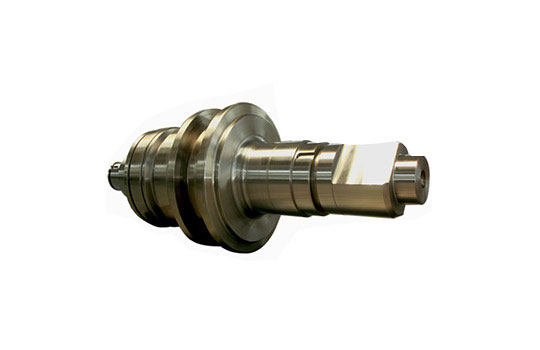
Forge steel rolls have better toughness, surface hardness uniformity and fatigue resistance, are used to rough rolling rolls and backup roll for cold rolling mill and hot rolling mill.
Forged steel rolls are made from steel ingots by forging. Forging can solve metallurgical defects such as loose and shrinkage holes in the ingot, and crush the coarse cast structure to obtain a high-quality roll with dense structure and uniform composition. Forged steel rolls have better toughness, surface hardness uniformity and fatigue resistance than similar casting rolls. In order to meet the specific requirements of different rolling mills and rolling conditions, different alloy elements can be added into the steel for improving the performance of rolls.
The production process of forged steel rolls includes smelting, ingot casting, forging, post-forging heat treatment, rough processing, final heat treatment and finishing. Forged steel rolls are heat-treated differently depending on the material and application.
Standard includes ISO, GB, ASTM, DIN, JIS.
OEM and ODM are available
Application
cold rolling mill work roll and strip rolling mill working roll and backup roll
H-type steel universal –shaft
High-speed roll(HSS roll)
Cr4 steel backup roll
Cr5 forged steel roll
Graphitic Steel Roll
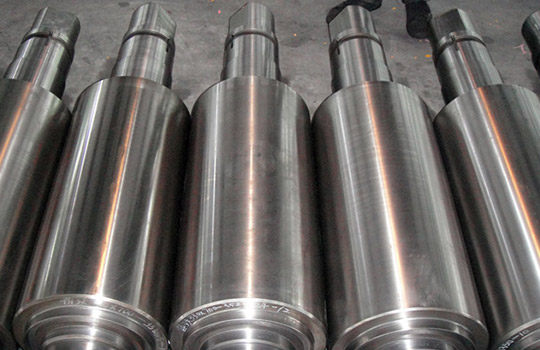
The graphitic steel roll has similar features and usage to semi-steel adamite roll.Standard includes ISO, GB, ASTM, DIN, JIS.
Application
Work roll of two-high strip mills machine, medium plate reversible rolling mill,
rough rolling mill, blooming mill, steel billet rolling mill, high-speed wire rod roughing mill bar, frame.
Metallographic Structure
The metallurgical structure of roll-body work layer is: Pearlite + carbide or fine pearlite + a little bainite + carbide
 China manufacturers